20:1 Student-Teacher Ratio at Candiidus International School: The Mathematics of Personalized Attention in Hyderabad
When parents in Patancheruvu and surrounding areas of Hyderabad evaluate educational options for their children, they encounter numerous impressive claims about personalized learning, individualized attention, and student-centered approaches. However, these aspirational statements often remain theoretical in classrooms where a single teacher manages forty or fifty students simultaneously. The reality is simple: genuine personalization requires manageable numbers. At Candiidus International School, this understanding translates into a carefully maintained 20:1 student-teacher ratio—a deliberate commitment that transforms educational philosophy into daily classroom reality. For families seeking schools where their child won't disappear into overcrowded classrooms, understanding what this ratio truly enables offers crucial insight into how the institution delivers on its promises of world-class, personalized education.
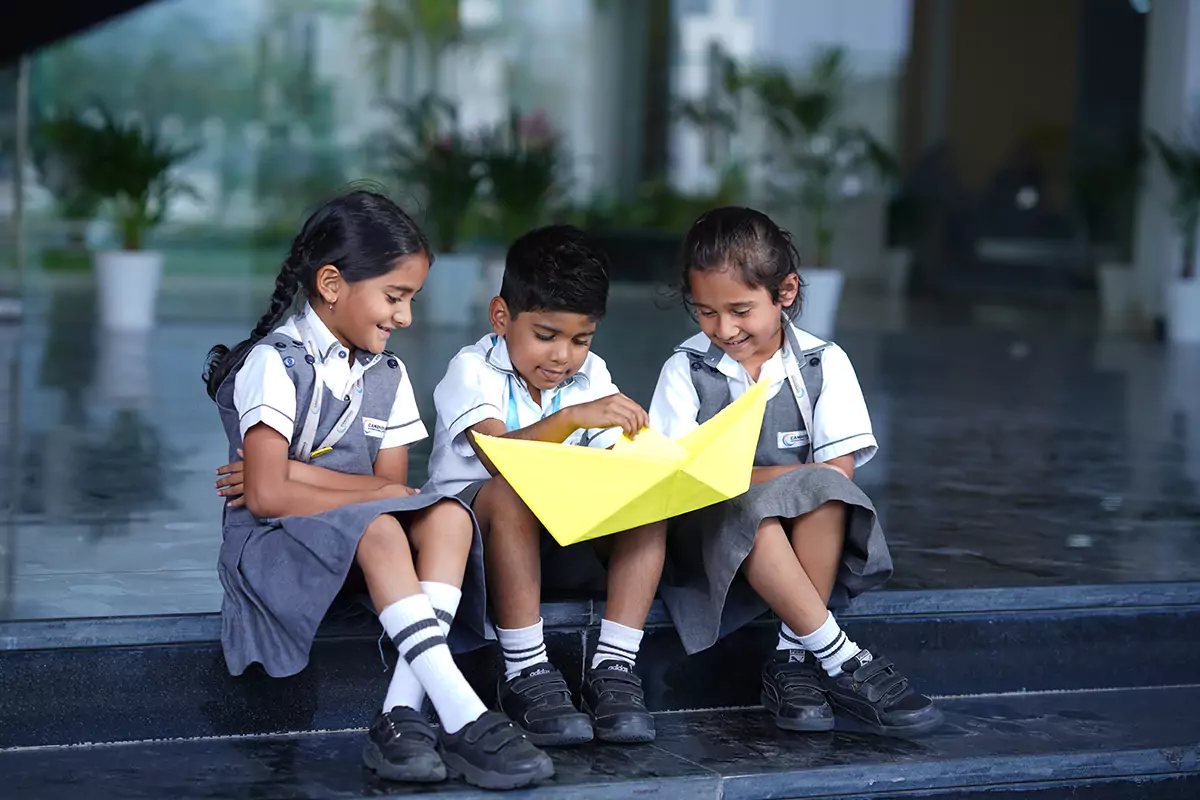
The Foundation: What 20:1 Actually Means for Your Child
A 20:1 student-teacher ratio means that for every twenty students, Candiidus International School provides one dedicated teacher. While this mathematical relationship seems straightforward, its practical implications profoundly shape every aspect of your child's educational experience. In a classroom with twenty students rather than forty, teachers possess twice the time and attention to devote to each individual learner. This isn't merely about answering more questions—it fundamentally changes the nature of teacher-student relationships and what becomes possible during instructional time.
Consider a typical school day: when teachers manage forty students, they spend significant portions of class time on crowd control, attendance logistics, and addressing behavioral issues that emerge when children feel anonymous or overlooked. In contrast, at Candiidus International School, teachers with twenty students can invest their energy in actual teaching and learning. They genuinely know each student—not just names and faces, but learning styles, strengths, challenges, interests, and individual needs. This depth of knowledge enables the differentiated instruction and personalized learning paths that define the school's approach.
Enabling the Candidus Global Curriculum Through Manageable Numbers
The 20:1 ratio becomes particularly crucial when understanding how Candiidus International School implements its proprietary Candidus Global Curriculum (CGC). This innovative framework blends CBSE and Cambridge pedagogical approaches while fostering interdisciplinary connections across Mathematics, Science, English, Social Studies, Technology, and Arts. Such sophisticated integration requires teachers who can facilitate complex, thematic learning experiences—something nearly impossible in overcrowded classrooms.
The CGC emphasizes inquiry-based learning, where students don't simply receive information but actively investigate questions, design solutions, and construct understanding through guided discovery. This approach demands significant teacher involvement with individual students and small groups. When Candiidus International School maintains a 20:1 ratio, teachers can effectively facilitate these inquiry processes, providing scaffolding when students struggle, extending challenges when they excel, and ensuring that discovery remains productive rather than frustrating or aimless.
Furthermore, the school's thematic and interdisciplinary learning approach creates curriculum models connecting multiple subjects for comprehensive understanding. Teachers need adequate time with each student to help them perceive these connections, recognize patterns across disciplines, and develop the conceptual understanding that forms the first pillar of "The CIS Way" methodology. The 20:1 ratio provides this essential time.
Differentiated Instruction: From Theory to Practice
One distinguishing feature of Candiidus International School is its commitment to embracing individuality and diverse learning styles. The school's philosophy explicitly recognizes that every child learns at their own unique pace and through different modalities—visual, auditory, kinesthetic, or combinations thereof. However, this beautiful philosophy becomes empty rhetoric in classrooms where teachers lack the capacity to implement truly differentiated instruction.
With a 20:1 ratio, differentiated instruction transitions from aspiration to reality. Teachers at Candiidus International School can genuinely adapt their teaching approaches to meet diverse needs. Some students might explore concepts through hands-on experimentation in the robotics lab, while others engage through visual representations or verbal discussions. The manageable class size allows teachers to prepare and implement these varied approaches simultaneously without becoming overwhelmed.
Moreover, the ratio enables timely identification of learning difficulties and rapid intervention. In overcrowded classrooms, students who struggle often go unnoticed until problems become severe. At Candiidus International School, teachers monitoring twenty students can quickly recognize when a child isn't grasping concepts, investigate the underlying causes, and provide targeted support before minor confusion compounds into significant knowledge gaps.
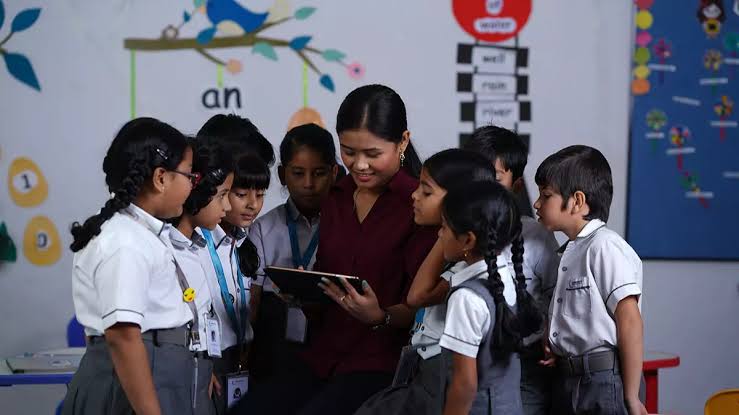
Fostering 21st Century Skills Through Collaborative Learning
The school's curriculum emphasizes developing critical 21st century competencies including communication, collaboration, critical thinking, and creativity. These skills don't develop through passive listening or independent seat work—they require active, collaborative learning experiences carefully facilitated by skilled educators. The 20:1 student-teacher ratio proves essential for creating effective collaborative environments.
When Candiidus International School teachers organize collaborative problem-solving activities, group projects, or design thinking challenges, they can meaningfully monitor and guide four or five groups of four to five students each. They can observe group dynamics, ensure equitable participation, provide strategic interventions when groups encounter obstacles, and assess individual contributions within collaborative contexts. This level of facilitation becomes impossible when managing eight or ten groups simultaneously in larger classes.
Additionally, the ratio supports the communication skills development that begins from Grade 1, including public speaking, presentations, and articulating reasoning. With twenty students, each child receives more opportunities to speak, present, and receive constructive feedback during class time. They're not waiting weeks for their turn to present projects or participate in discussions—they're actively engaged regularly, building fluency and confidence through consistent practice.
Age-Appropriate Curriculum Design Supported by Appropriate Numbers
The curriculum at Candiidus International School is carefully designed according to age appropriateness at every stage. In the Primary Years Program (Grades 1 to 4), students learn through active participation, storytelling, touch, and interactive methods. These hands-on, experiential approaches require teachers who can supervise manipulatives, facilitate multiple learning stations, and ensure safe, productive engagement with materials—all significantly easier with twenty students than forty.
During Middle Years (Grades 5 to 8), the focus shifts toward developing logic, reasoning, and problem-solving skills within the Cambridge Lower Secondary Program. These cognitive skills develop through dialogue, questioning, and guided practice. Teachers need time with individual students to understand their thinking processes, identify logical gaps or misconceptions, and provide the scaffolding that advances reasoning capabilities. The 20:1 ratio ensures adequate time for these crucial intellectual conversations.
In High School (Grades 9 to 12), where students pursue IGCSE, CBSE, and international system courses, the manageable ratio enables teachers to provide sophisticated academic guidance, college counseling, and support for research projects and independent investigations that characterize advanced secondary education.
Assessment That Actually Informs Learning
At Candiidus International School, assessment is continuous and formative, designed to promote deeper engagement rather than merely measure achievement. The school utilizes diverse assessment tools including theme-end evaluations, skill checklists, rubrics, portfolio reviews, and peer and self-assessments. These sophisticated, personalized assessment approaches require substantial teacher time and attention per student.
When teachers manage twenty students rather than forty, they can provide the personalized, constructive feedback that actually helps students improve. They can thoroughly review portfolios, offer detailed comments on projects, engage in individual conferences about progress, and help students develop metacognitive skills through guided self-assessment. This feedback isn't generic or superficial—it's specific, actionable, and tailored to each learner's needs and goals.
Furthermore, the 20:1 ratio allows for the kind of benchmarking through Cambridge Progression Tests that tracks individual student growth over time, identifying trends and informing instructional adjustments that keep each learner progressing optimally.
Beyond Academics: Supporting Holistic Development
The benefits of the 20:1 ratio extend beyond academic instruction to encompass the holistic development that characterizes education at Candiidus International School. Teachers with manageable class sizes can notice when students seem emotionally distressed, socially isolated, or disengaged. They can have private conversations, connect students with appropriate support resources, and monitor social dynamics to ensure healthy peer relationships.
The ratio also supports the character-building emphasis that forms the third pillar of "The CIS Way" methodology. Developing qualities like empathy, resilience, and responsibility requires modeling, coaching, and reflective dialogue—all of which demand teacher availability and attention that overcrowded classrooms cannot provide.
Making Your Decision: Why This Ratio Matters
For families in Patancheruvu, Chanda Nagar, Gachibowli, and surrounding areas evaluating schools, the 20:1 student-teacher ratio at Candiidus International School represents more than a statistic—it's the foundation enabling everything else the school promises. The personalized learning, differentiated instruction, inquiry-based approaches, collaborative projects, sophisticated assessments, and holistic support all depend on teachers having adequate time and attention for each student.
When you visit the campus, observe classrooms in action. Notice how teachers interact with students, whether children appear engaged or merely compliant, and whether the learning environment feels energizing or overwhelming. The difference that a thoughtfully maintained student-teacher ratio makes becomes immediately apparent.
To experience firsthand how the 20:1 ratio at Candiidus International School translates into exceptional personalized education for your child, schedule a campus visit or contact the admissions office. Discover why manageable numbers create immeasurable benefits for student learning and development.
Note: Blogs by Yellow Slate are written based on information, knowledge and perspective of the writer. While every caution has been taken to provide readers with accurate information, please use your discretion before taking any decisions based on the information in this blog. In case you find any information that is factually wrong or something that could be made better, please write to us at contact@yellowslate.com.
Curious about how we arrived at this list? We believe parents deserve full transparency on how schools are evaluated and selected. to understand our school selection methodology.


