IB and CBSE Curriculum at Manchester Global School, Hyderabad: A Dual-Pathway Approach to Excellence
When parents in Hyderabad research schools offering an international curriculum, they often face a challenging dilemma: choosing between the globally recognized International Baccalaureate (IB) framework and the rigorous CBSE board that dominates Indian higher education admissions. However, at Manchester Global School Hyderabad, this either-or decision transforms into a both-and opportunity.
The school offers a unique dual-curriculum approach, providing IB Primary Years Programme (PYP), Middle Years Programme (MYP), and Diploma Programme (DP) alongside CBSE from Grade 4 onwards. This distinctive positioning enables families to access world-class international education while maintaining options for CBSE pathways, creating flexibility rarely found in Hyderabad's educational landscape.
This dual-pathway model supports seamless academic progression for students, whether they aim for global universities or competitive Indian institutions, making Manchester Global School one of the few schools in Hyderabad offering such future-proof flexibility.
This dual-pathway approach recognizes that different students benefit from various educational frameworks. Some families prioritize international university admissions, where IB credentials carry significant weight, while others prefer CBSE's structured approach, which aligns with Indian competitive examinations and domestic higher education requirements.
Furthermore, the availability of both curricula at the same institution eliminates the disruption families typically face when switching schools to change boards. Students can potentially transit between pathways while maintaining the same campus, peer relationships, and institutional culture.
This structure also reflects Manchester Global’s vision of inclusivity and personalized learning, where the child’s potential, not the curriculum, determines the path.
The grade-level distribution demonstrates thoughtful planning. The IB pathway begins from Nursery, allowing young learners to develop within the inquiry-based, concept-driven framework from their earliest educational experiences. The CBSE pathway commences from Grade 4, recognizing that by this stage, students have developed sufficient foundational skills to engage effectively with CBSE's content-focused approach.
Understanding Manchester Global School's Dual Curriculum Structure
Manchester Global School Hyderabad operates with a carefully designed curriculum structure that accommodates both international and national educational frameworks. The school offers the complete International Baccalaureate continuum, PYP, MYP, and DP, spanning from Nursery through Grade 10 and DP 1. Simultaneously, the CBSE curriculum operates from Grades 4 to 9, providing families with genuine choice based on their children's educational needs and future aspirations.
This dual-pathway model supports seamless academic progression for students, whether they aim for global universities or competitive Indian institutions, making Manchester Global one of the few schools in Hyderabad offering such future-proof flexibility.
This dual-pathway approach recognizes that different students benefit from various educational frameworks. Some families prioritize international university admissions, where IB credentials carry significant weight, while others prefer CBSE's structured approach, which aligns with Indian competitive examinations and domestic higher education requirements.
Furthermore, the availability of both curricula at the same institution eliminates the disruption families typically face when switching schools to change boards. Students can potentially transition between pathways while maintaining the same campus, peer relationships, and institutional culture.
The International Baccalaureate Pathway: PYP, MYP, and DP
Manchester Global School, Hyderabad, offers the complete IB continuum, providing seamless progression from early childhood through pre-university education under a consistent philosophical framework emphasizing inquiry, international-mindedness, and holistic development.
IB Primary Years Programme (PYP): Foundation of Inquiry
The PYP at Manchester Global School serves students from Nursery through the primary years, establishing foundational learning approaches that emphasize inquiry-based education. Rather than treating young learners as passive recipients of information, the PYP framework positions children as active investigators who construct understanding through exploration, questioning, and discovery. This approach aligns with developmental research demonstrating that young children learn most effectively when engaged in meaningful, hands-on experiences rather than abstract instruction disconnected from their lived experiences.
The inquiry-based methodology cultivated through PYP develops critical thinking from the earliest ages. Students learn to formulate questions, investigate topics systematically, evaluate information critically, and communicate findings effectively, competencies that serve them throughout their educational journeys and professional lives. Moreover, the PYP's transdisciplinary approach helps students understand connections between subject areas rather than viewing knowledge as isolated compartments, fostering integrated understanding that reflects how real-world challenges actually present themselves.
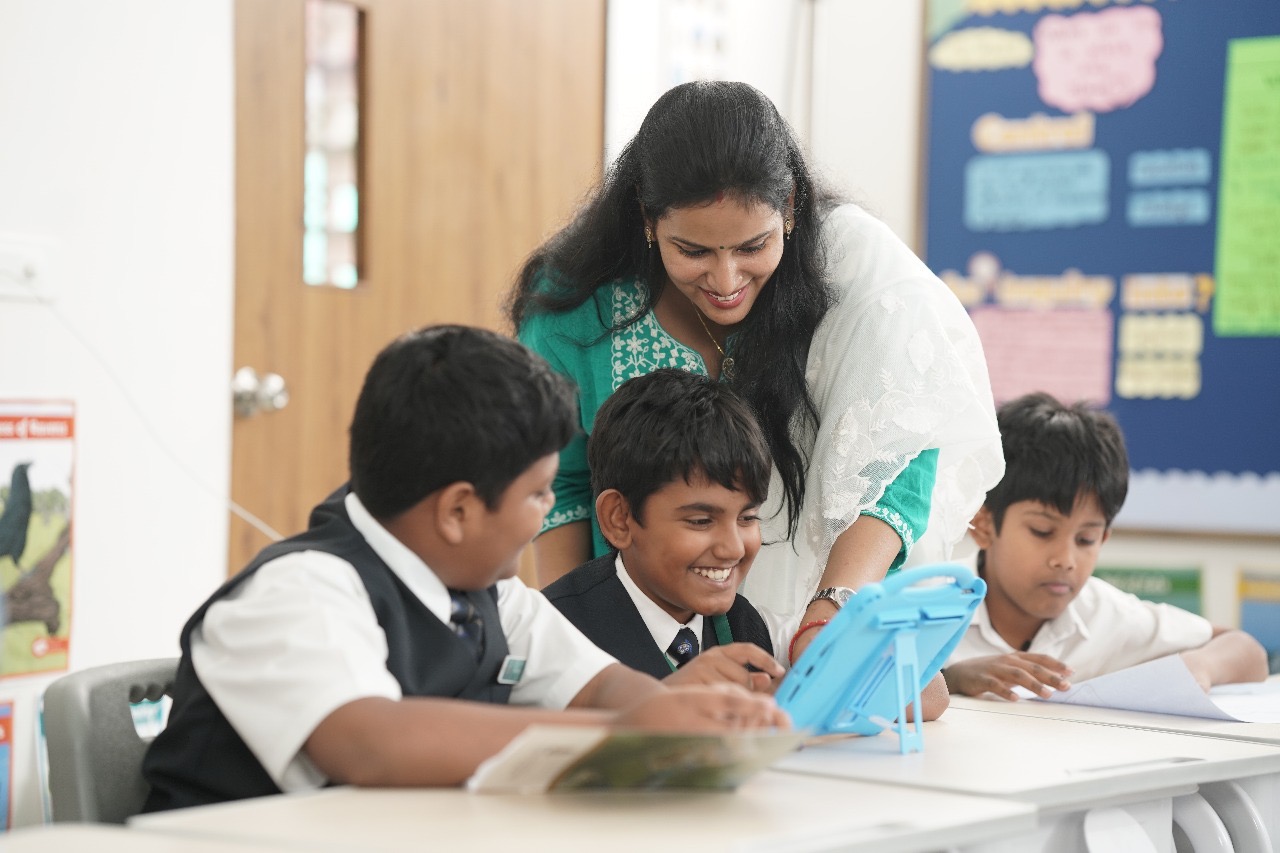
Parents appreciate how the PYP cultivates natural curiosity and confidence, helping children express ideas clearly and learn through meaningful, real-world connections.
The inquiry-based methodology develops critical thinking from the earliest ages. Students learn to formulate questions, investigate topics systematically, evaluate information, and communicate findings effectively. The transdisciplinary approach helps students connect subjects naturally, reflecting real-world understanding.
IB Middle Years Programme (MYP): Developing Global Perspectives
The MYP continues the inquiry-based approach through middle school years, adding increased academic rigor while maintaining emphasis on conceptual understanding, global contexts, and interdisciplinary connections. Students in the MYP programme at Manchester Global School engage with challenging academic content across eight subject groups while developing approaches to learning that prepare them for the demands of the Diploma Programme and beyond.
Service-learning projects, research exhibitions, and global exchange programs give Manchester Global’s MYP students opportunities to apply classroom knowledge to social challenges, fostering empathy and leadership.
This global perspective proves invaluable in an interconnected world where cross-cultural awareness and global problem-solving are critical.
The MYP framework particularly emphasizes developing internationally minded students who recognize their connection to broader global communities. Through studying subjects within global contexts, identities and relationships, orientation in space and time, personal and cultural expression, scientific and technical innovation, globalization and sustainability, and fairness and development students understand how academic learning connects to real-world issues and challenges. This global perspective proves increasingly valuable in an interconnected world where cross-cultural competence and awareness of international issues represent essential capabilities.
IB Diploma Programme (DP): Pre-University Excellence
The IB Diploma Programme represents the culmination of the IB continuum at Manchester Global School Hyderabad, providing rigorous pre-university education recognized by universities worldwide. The DP's distinctive structure requires students to study six subject groups simultaneously alongside three core components: Theory of Knowledge, Extended Essay, and Creativity, Activity, Service (CAS) creating breadth and depth rarely found in other pre-university programmes.
This comprehensive approach ensures IB Diploma graduates develop as well-rounded individuals rather than narrow specialists. The requirement to study languages, sciences, mathematics, humanities, and arts prevents premature specialization while the core components develop critical thinking, research skills, and commitment to community service. Universities globally recognize that IB Diploma holders arrive with sophisticated academic preparation, independent research experience, and well-developed thinking skills that enable a smooth transition to university-level work.
IB Diploma graduates from Manchester Global have successfully gained admission to leading universities in India, the UK, USA, and Australia, demonstrating the global value of this qualification.
This structure develops well-rounded individuals with academic preparation, independent research experience, and social responsibility, hallmarks of IB learners.
The CBSE Pathway: Rigorous Academic Structure
Alongside the IB continuum, Manchester Global School offers the CBSE curriculum from Grades 4 to 9, providing families with access to India's most widely adopted educational board. The CBSE framework brings its own strengths—systematic content coverage, alignment with Indian competitive examinations, and acceptance across Indian universities—making it a valuable option for families prioritizing these factors.
Structured Academic Progression
The CBSE curriculum at Manchester Global School follows the systematic progression characteristic of this board, ensuring students master foundational concepts before advancing to more complex material. This structured approach provides clarity about learning expectations at each grade level, enabling students, parents, and teachers to maintain a shared understanding of academic goals and monitor progress effectively against established benchmarks.
Manchester Global complements CBSE's content-rich curriculum with modern digital learning tools, continuous assessments, and interactive teaching to make lessons engaging and application-based.
This systematic approach particularly benefits students who thrive with structured expectations and measurable learning outcomes.
The grade-wise progression from Grade 4 through Grade 9 covers essential content across languages, mathematics, sciences, and social studies, building a comprehensive knowledge base, preparing students for secondary and senior secondary education. The systematic nature of the CBSE curriculum particularly benefits students who thrive with clear structure, defined expectations, and incremental skill development.
Alignment with the Indian Educational Ecosystem
The CBSE pathway at Manchester Global School Hyderabad provides alignment with India's broader educational ecosystem, particularly valuable for families considering domestic higher education options. CBSE's widespread adoption means that curriculum content, assessment patterns, and learning outcomes align closely with entrance examinations for Indian engineering, medical, and other professional programmes.
Furthermore, CBSE's national presence means students maintaining this pathway can transfer between CBSE schools across India with minimal curriculum disruption, an important consideration for families whose professional circumstances might require relocation. The familiarity of the CBSE curriculum and examination patterns also provides comfort to families who themselves studied under this board and understand its structures, expectations, and outcomes.
The Blended Teaching Approach: Where IB Meets CBSE
What truly distinguishes Manchester Global School's curriculum offering isn't simply having both IB and CBSE available but the blended teaching approach that synthesizes strengths from both frameworks. The school explicitly embraces pedagogy that blends "the inquiry-based, global outlook of the IB with the rigorous academic structure of the CBSE," creating educational experiences that combine international perspective with academic depth.
Inquiry-Based Learning with Academic Rigor
The blended approach at Manchester Global School Hyderabad nurtures critical thinking, creativity, and cultural awareness through inquiry-based methodology while maintaining rigorous academic standards. Rather than treating inquiry and rigor as opposing forces, the school recognizes them as complementary elements of effective education. Students engage in questioning, investigation, and discovery, hallmarks of inquiry-based learning, while simultaneously developing strong content knowledge and academic skills.
This synthesis proves particularly valuable in contemporary educational contexts where employers and universities increasingly seek graduates who possess both strong foundational knowledge and sophisticated thinking skills. The ability to master content while also questioning assumptions, analyzing evidence, and constructing original arguments represents precisely the capability set that distinguishes exceptional learners from merely competent ones.
This blended approach also aligns with the National Education Policy (NEP) 2020, which emphasizes experiential learning, critical thinking, and global competencies.

Experiential and Collaborative Learning
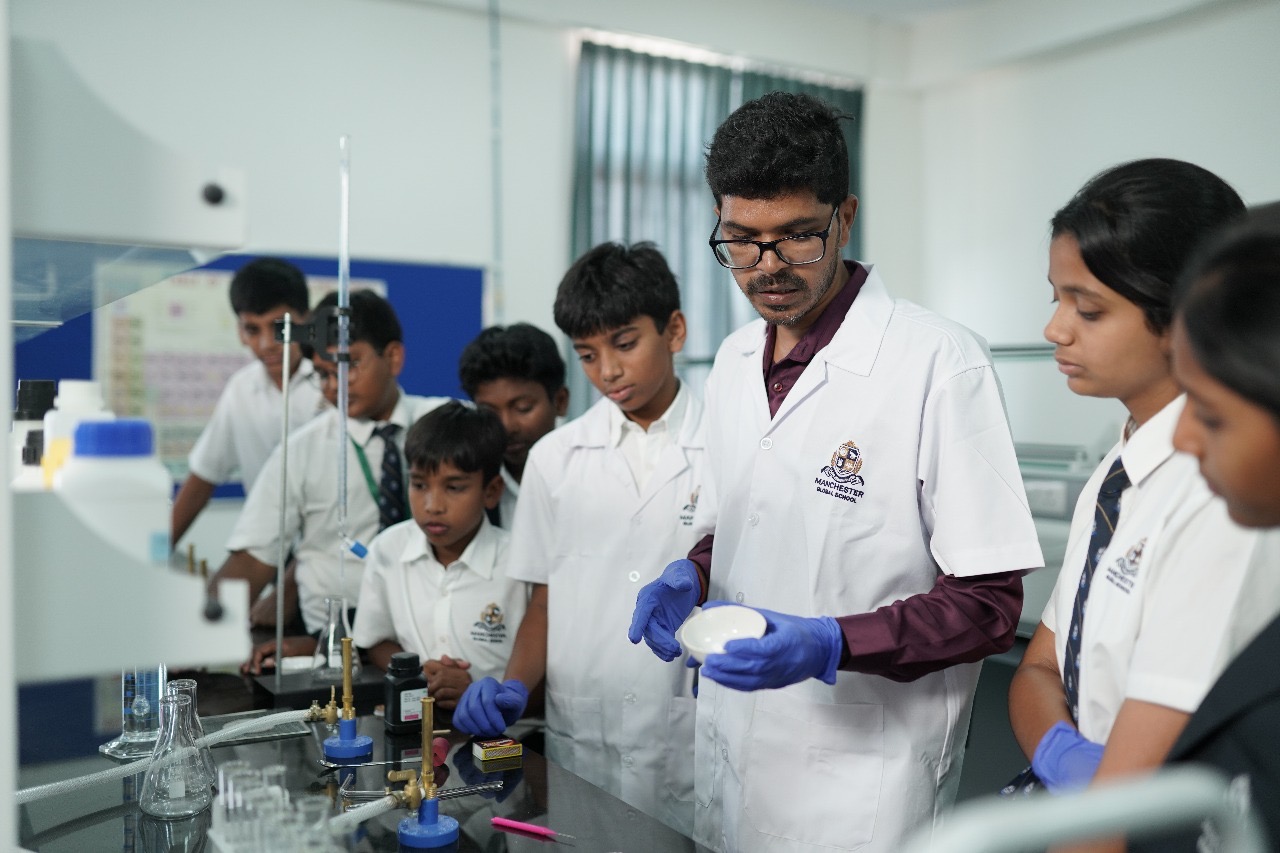
The teaching approach emphasizes experiential learning where students engage directly with concepts through hands-on activities, experiments, projects, and real-world applications rather than limiting learning to textbook reading and lecture attendance. This experiential emphasis recognizes that deep understanding develops when students actively manipulate ideas, test hypotheses, encounter challenges, and construct meaning rather than passively receiving information.
Collaboration represents another key element of Manchester Global School's pedagogical approach. Students regularly work in groups, learning to communicate effectively, navigate disagreements constructively, leverage diverse perspectives, and achieve shared goals, competencies essential for professional success in virtually every career field. The collaborative emphasis also reflects how real-world problems actually get solved through teams pooling expertise rather than isolated individuals working independently.
Real-World Applications and Connections
The curriculum at Manchester Global School maintains close links to real-world applications, helping students understand why their learning matters and how it connects to challenges and opportunities they'll encounter beyond school walls. This emphasis on authentic connections addresses the perennial student question "when will I ever use this?" by explicitly demonstrating how academic concepts apply to professional fields, civic participation, personal decision-making, and global challenges.
Real-world connections also increase engagement and motivation. When students understand that mathematical concepts enable financial planning, that scientific principles inform environmental policy decisions, that historical analysis illuminates contemporary political dynamics, they invest more deeply in learning because they recognize its practical value rather than viewing education as an arbitrary hurdle to clear.
Language Programmes: Multilingual Development
Manchester Global School's curriculum includes comprehensive language education spanning English, Hindi, Telugu, Spanish, and French. This multilingual approach reflects both the practical realities of India's linguistic diversity and the educational philosophy that values cross-cultural competence and communication capabilities.
English serves as the primary language of instruction, ensuring students develop strong English proficiency essential for international higher education and global professional opportunities. Hindi and Telugu maintain a connection to India's linguistic heritage, enabling students to engage with India's rich cultural traditions and communicate effectively within diverse Indian contexts. Spanish and French as additional language options provide access to major global language families, enhancing students' ability to engage with international communities and access cultural resources beyond English-speaking contexts.
The emphasis on multilingual development aligns with research demonstrating cognitive benefits of bilingualism and multilingualism, including enhanced executive function, improved problem-solving capabilities, and greater cognitive flexibility. Moreover, language learning inherently develops cultural awareness as students encounter different ways of expressing ideas, organizing thought, and understanding relationships, expanding their conceptual frameworks beyond single-culture perspectives.
Mission and Vision: Guiding Educational Philosophy
Understanding Manchester Global School's curriculum requires appreciating the mission and vision that inform all educational decisions. The school's mission focuses on "growing leaders for society and industry" through holistic education, developing "value-based pioneers in an environment of research, innovation, and entrepreneurship." This mission explicitly connects education to leadership development, recognizing that schools serve broader social purposes beyond individual achievement, preparing students who will contribute meaningfully to society's progress.
The emphasis on value-based education ensures that intellectual development occurs alongside character formation. Students don't simply acquire knowledge and skills but develop ethical frameworks guiding how they apply those capabilities. In contemporary contexts where technological capabilities increasingly enable both beneficial and harmful applications, this emphasis on values proves particularly crucial.
The vision of becoming "a world-class institution of excellence through the creation and dissemination of knowledge by educators with a core commitment to learning and the holistic growth of students" establishes aspirational standards guiding institutional development. This vision emphasizes educator quality and commitment, recognizing that curriculum quality depends ultimately on teachers who implement it with skill, dedication, and ongoing professional learning.
This philosophy translates into daily practice through leadership programs, house councils, student-led clubs, and community service projects.
Manchester Global School’s vision, to become a world-class institution of excellence, anchors every educational decision in purpose and integrity.
Supporting Infrastructure for Curriculum Excellence
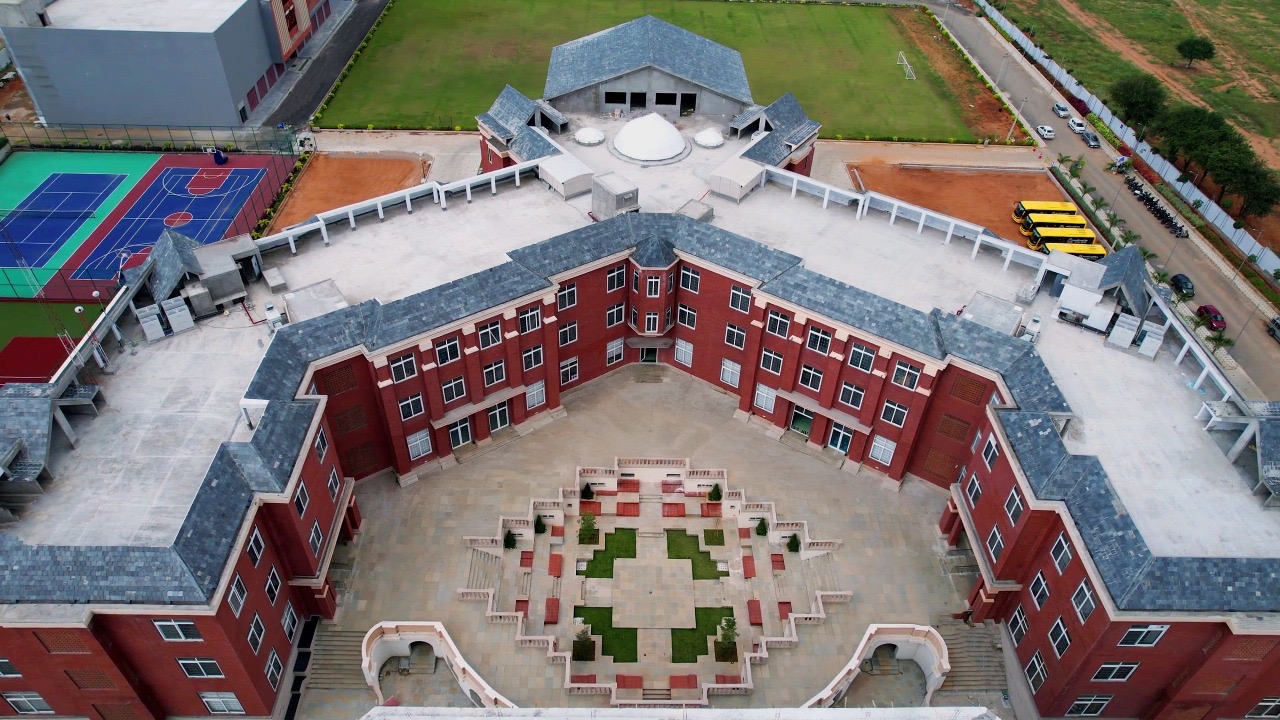
The curriculum at Manchester Global School Hyderabad receives support from extensive infrastructure, enabling effective implementation. Smart classrooms facilitate technology-enhanced learning. Science and computer labs provide hands-on experimentation opportunities essential for inquiry-based learning. The 16,500 square foot library, one of the largest school libraries, offers extensive resources supporting research, independent learning, and intellectual exploration.
Specialized facilities like the makers space support innovation and creativity, enabling students to design, prototype, and construct solutions to problems they identify. Robotics facilities introduce students to emerging technologies shaping future careers. Culinary labs provide practical life skills alongside academic learning. The amphitheatre supports presentations, performances, and community gatherings that extend learning beyond traditional classroom formats.
These facilities demonstrate institutional commitment to providing resources that the curriculum requires rather than merely describing aspirational approaches unsupported by actual infrastructure. The 20-acre campus setting surrounded by a 600-acre green forest provides a natural environment complementing formal facilities, enabling outdoor education and environmental learning integrated with classroom instruction.
Conclusion: Choosing the Right Curriculum Path
For families in Hyderabad seeking educational environments offering genuine curriculum choice, Manchester Global School's dual-pathway approach provides valuable flexibility. The availability of both IB and CBSE curricula enables families to select frameworks matching their children's learning styles, future educational goals, and family values rather than forcing compromise between international and national educational options.
The blended teaching approach synthesizing inquiry-based, global outlook with rigorous academic structure ensures that regardless of curriculum choice, students develop as critical thinkers with strong academic foundations, cultural awareness, and practical capabilities. The emphasis on experiential, collaborative, and real-world connected learning prepares students for higher education and professional contexts requiring adaptability, creativity, and sophisticated problem-solving.
Moreover, the supporting infrastructure, extensive library, specialized labs, technology-enhanced classrooms, and specialized learning spaces provide tangible resources enabling curriculum implementation at high-quality levels. Combined with the school's mission of growing leaders and vision of world-class excellence through holistic education, the curriculum at Manchester Global School represents a comprehensive approach to developing capable, ethical, internationally minded graduates prepared for meaningful contributions to society.
Note: Blogs by Yellow Slate are written based on information, knowledge and perspective of the writer. While every caution has been taken to provide readers with accurate information, please use your discretion before taking any decisions based on the information in this blog. In case you find any information that is factually wrong or something that could be made better, please write to us at contact@yellowslate.com.
Curious about how we arrived at this list? We believe parents deserve full transparency on how schools are evaluated and selected. to understand our school selection methodology.


