Participatory Engagement and Experiential Learning: The Teaching Methodology at Indic International School Kompally
When parents in Kompally and surrounding areas of Hyderabad evaluate schools for their children, they often encounter impressive mission statements and curriculum descriptions. However, the real question remains: how do teachers actually facilitate learning on a daily basis? At Indic International School, the answer lies in a distinctive pedagogical approach that recognizes children as natural explorers and positions education as far more than textbooks and classrooms. The Indic International School teaching methodology blends tradition with participatory engagement, creating learning experiences where students don't simply absorb information passively but actively experiment, discover, and grow through meaningful interaction with their environment. For families seeking education that nurtures physical, emotional, and spiritual development alongside academic achievement, understanding this teaching methodology reveals how Indic International School transforms learning from a compulsory obligation into an exciting journey of exploration and self-discovery.
The Foundation: Children as Natural Explorers
The Indic International School teaching methodology begins with a fundamental belief: every child is an explorer of the natural world. This isn't merely poetic language or educational rhetoric; it represents a core philosophical stance that shapes every aspect of how teachers approach their work. Rather than viewing children as empty vessels waiting to be filled with knowledge or passive recipients of instruction, Indic International School recognizes that children arrive at school already curious, already questioning, already eager to understand their world.
This perspective fundamentally alters the teacher's role. Instead of serving primarily as information deliverers or authority figures dispensing facts, educators at Indic International School function as facilitators who provide resources, create environments, and guide experiences that allow children's natural exploratory instincts to flourish. The school acknowledges that it is their responsibility to facilitate the resources that help children experiment and grow—a responsibility taken seriously through thoughtful curriculum design, physical space planning, and instructional approaches.
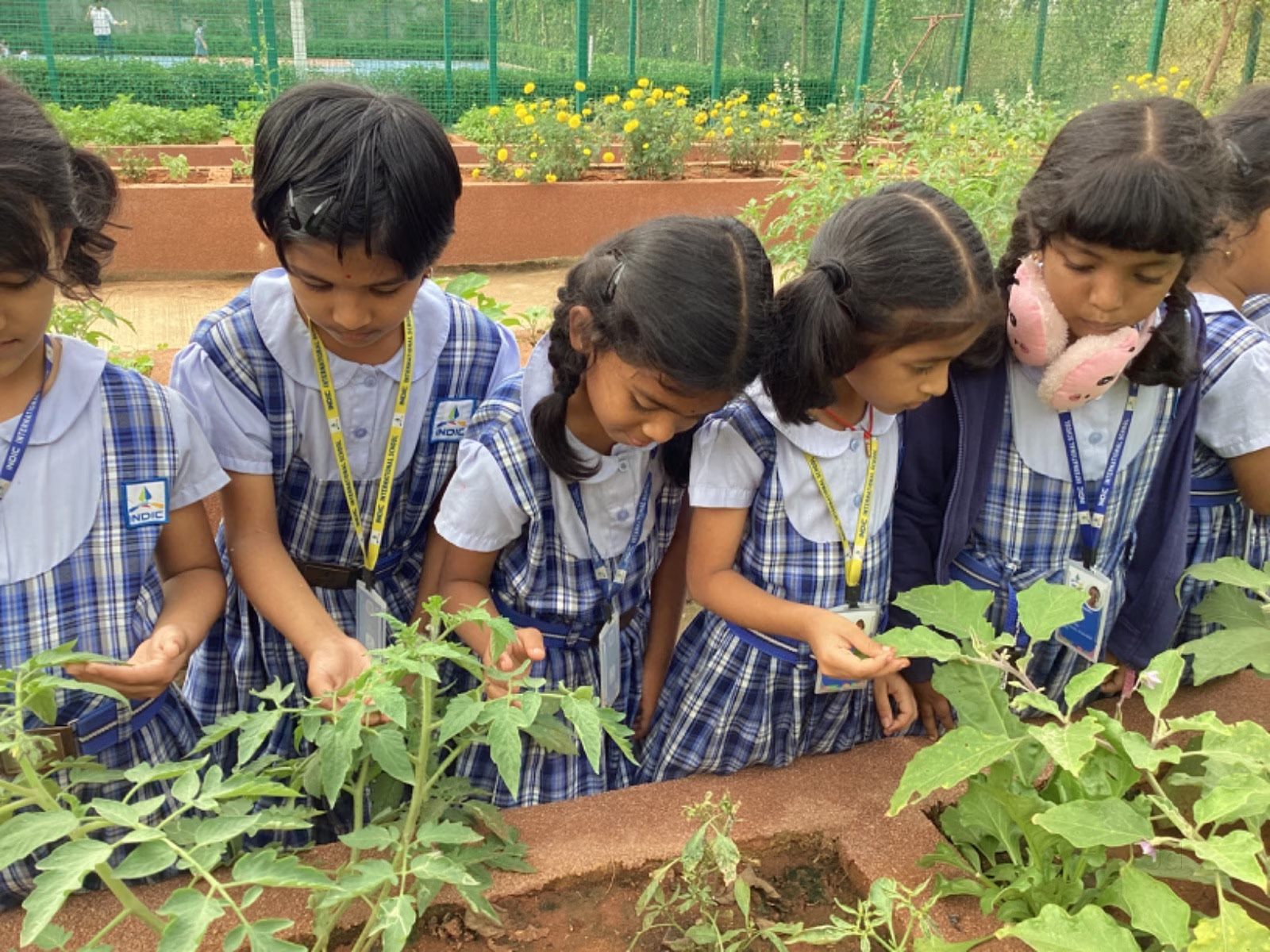
This child-as-explorer philosophy within the Indic International School teaching methodology recognizes that children are open to every experience. Whether gardening in the school's outdoor spaces, interacting with animals through petting activities, or simply making friends with peers from diverse backgrounds, each experience becomes a learning opportunity. Teachers don't artificially separate "academic time" from "play time" or "learning activities" from "social activities." Instead, they understand that children learn continuously through all their experiences and interactions, making every moment potentially educational when properly supported.
Participatory Engagement: Moving Beyond Passive Learning
A cornerstone of the Indic International School teaching methodology is participatory engagement—an approach that transforms students from spectators of education into active participants in their own learning journeys. The curriculum at Indic International School deliberately blends tradition with this participatory approach, ensuring students connect with their cultural heritage while simultaneously developing the active learning habits essential for future success.
Participatory engagement means students don't simply listen to lectures about scientific principles; they conduct experiments, make predictions, observe outcomes, and draw conclusions. They don't merely read about historical events; they analyze primary sources, debate different perspectives, and connect past events to present circumstances. They don't just study mathematics abstractly; they apply mathematical thinking to real problems, create models, and discover patterns through hands-on investigation.
This approach within the Indic International School teaching methodology recognizes that genuine understanding develops through active construction of knowledge rather than passive reception. When students participate directly in their learning—asking questions, testing hypotheses, making mistakes, refining approaches—they develop deeper comprehension that persists far beyond examination dates. The knowledge becomes theirs in a way that memorized information never can.
Furthermore, participatory engagement at Indic International School prepares students for challenges of the future in ways traditional teaching cannot. In an ever-changing and interconnected world, success requires more than knowledge recall. It demands critical thinking, creativity, collaboration, adaptability, and problem-solving—precisely the capabilities that participatory learning cultivates. Students who actively engage with content, who struggle through challenges with teacher guidance, who learn from both successes and failures, develop resilience and competence that serve them throughout life.
Experiential Learning Through Real-World Connections
The Indic International School teaching methodology emphasizes experiential learning that connects classroom concepts to tangible real-world experiences. This goes beyond occasional field trips or special projects to represent a fundamental approach infusing daily instruction. Teachers constantly seek opportunities for students to experience what they're learning rather than simply hearing or reading about it.
The school's emphasis on activities like gardening provides a perfect example of this experiential approach. When students plant seeds, tend growing plants, observe biological processes, and eventually harvest vegetables or flowers, they're not just learning about botany abstractly. They're experiencing plant biology, understanding ecological relationships, developing patience and responsibility, connecting with nature, and even exploring nutrition and sustainability. A single experiential activity touches multiple curriculum areas while engaging students holistically—intellectually, physically, and emotionally.
Similarly, when Indic International School provides opportunities for students to interact with animals through petting or care activities, they're not simply having fun (though enjoyment certainly matters). They're developing empathy, understanding animal behavior and needs, learning responsibility, overcoming fears, and building connections with living creatures. These experiences cultivate values and capabilities that pure academics cannot address.
The experiential emphasis within the Indic International School teaching methodology also extends to social and emotional learning. The school recognizes that making friends, navigating conflicts, collaborating on group projects, and participating in community activities all constitute vital learning experiences. Teachers facilitate these social interactions intentionally, helping students develop the interpersonal skills, emotional intelligence, and collaborative capabilities increasingly recognized as essential for personal and professional success.
Blending Tradition with Progressive Pedagogy
One distinctive aspect of the Indic International School teaching methodology is how it honors tradition while embracing progressive educational approaches. The school celebrates Indian identity and cultural heritage, ensuring students develop deep connections with their roots. However, this cultural grounding doesn't mean clinging to outdated teaching methods that emphasized rote memorization and passive listening.
Instead, Indic International School demonstrates that respecting tradition and employing progressive pedagogy aren't contradictory. Students can learn about ancient Indian philosophy, classical arts, traditional values, and cultural practices through participatory, experiential methods that make these traditions come alive. When students participate in traditional art forms, celebrate cultural festivals with understanding rather than rote ritual, or explore Indian philosophy through discussion and reflection rather than memorization, they develop authentic connections with heritage.
This blending within the Indic International School teaching methodology prepares students to adapt and thrive in an ever-changing and interconnected world while remaining grounded in their cultural identity. They develop what educators call "glocal" competence—global awareness and capabilities combined with local cultural rootedness. This balanced preparation proves increasingly valuable as students navigate futures where they may work internationally while maintaining connections to Indian communities and values.
Holistic Development: Beyond Academic Achievement
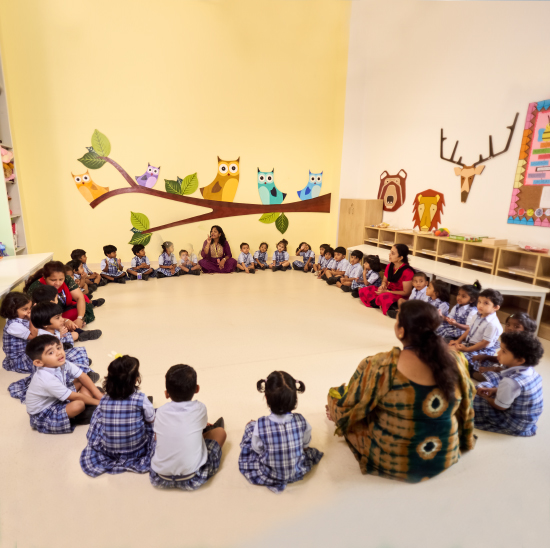
Perhaps the most defining characteristic of the Indic International School teaching methodology is its commitment to holistic education that nurtures physical, emotional, and spiritual growth alongside intellectual development. The school explicitly rejects the notion that education means only academics or that student success can be measured solely through test scores and grades.
Teachers at Indic International School constantly strive to inculcate values including respect, empathy, and emotional belonging. These aren't separate "character education" lessons disconnected from regular instruction; instead, values development infuses all teaching. When facilitating group work, teachers help students practice respect and collaboration. When addressing conflicts, they guide students toward empathy and understanding. When celebrating achievements, they foster inclusive community where everyone belongs.
The holistic approach within the Indic International School teaching methodology recognizes that true educational experience encompasses the whole child. Physical education isn't merely recreation but essential development of bodily awareness, health habits, and stress management. Arts aren't optional extras but vital channels for expression, creativity, and cultural connection. Social-emotional learning isn't separate from academics but integral to creating safe, supportive environments where intellectual risk-taking flourishes.
This holistic philosophy means teachers at Indic International School concern themselves with more than curriculum coverage. They notice when students seem emotionally distressed. They celebrate personal growth and character development alongside academic achievement. They create classroom communities where every child feels valued and where diverse strengths receive recognition. They understand that their responsibility extends far beyond delivering content to genuinely nurturing whole human beings.
Making Your Decision: Why Teaching Methodology Matters
For families in Kompally evaluating schools for their children from Pre-Primary through Grade 9, the Indic International School teaching methodology offers a compelling alternative to traditional approaches that often leave children disengaged or stressed. When education treats children as natural explorers, employs participatory engagement, provides experiential learning opportunities, honors cultural traditions while embracing progressive pedagogy, and commits to holistic development, something fundamental shifts. Learning becomes joyful rather than burdensome. School becomes a place of discovery rather than obligation.
To experience firsthand how the Indic International School teaching methodology translates into daily classroom experiences, schedule a campus visit to observe classes, meet teachers, and see participatory, experiential learning in action. Discover whether this approach to education aligns with your hopes for your child's academic, emotional, and personal growth.
Note: Blogs by Yellow Slate are written based on information, knowledge and perspective of the writer. While every caution has been taken to provide readers with accurate information, please use your discretion before taking any decisions based on the information in this blog. In case you find any information that is factually wrong or something that could be made better, please write to us at contact@yellowslate.com.
Curious about how we arrived at this list? We believe parents deserve full transparency on how schools are evaluated and selected. to understand our school selection methodology.


