Understanding the IB and ICSE Curriculum at Amrita International Vidyalayam Bangalore: A Complete Parent's Guide
Choosing a school often comes down to one fundamental question: what kind of education do you want for your child? The curriculum shapes everything—from how your child learns to think, to the skills they'll carry into adulthood. At Amrita International Vidyalayam, located off Sarjapur Road in Bangalore, parents don't have to choose between internationally recognized education and traditional Indian academic rigor. The school offers both the International Baccalaureate (IB) programmes and the ICSE curriculum under one roof, giving families flexibility while maintaining a foundation built on value-based education and holistic development.
The Dual Curriculum Advantage at Amrita International Vidyalayam Bangalore
What makes Amrita International Vidyalayam stand out among the best international schools in Bangalore is its unique curriculum blend. The school offers both the IB Primary Years Programme (PYP) and Middle Years Programme (MYP) alongside the well-known ICSE curriculum from the Council for the Indian School Certificate Examinations.
This dual pathway approach means families can choose between global frameworks and Indian curricula based on their child's learning style, future aspirations, and family circumstances. Whether you're planning for universities abroad or looking for strong board examination preparation within India, Amrita International Vidyalayam Bangalore accommodates both directions without requiring you to switch schools mid-journey.
The IB Primary Years Programme (PYP): Building Curious Learners
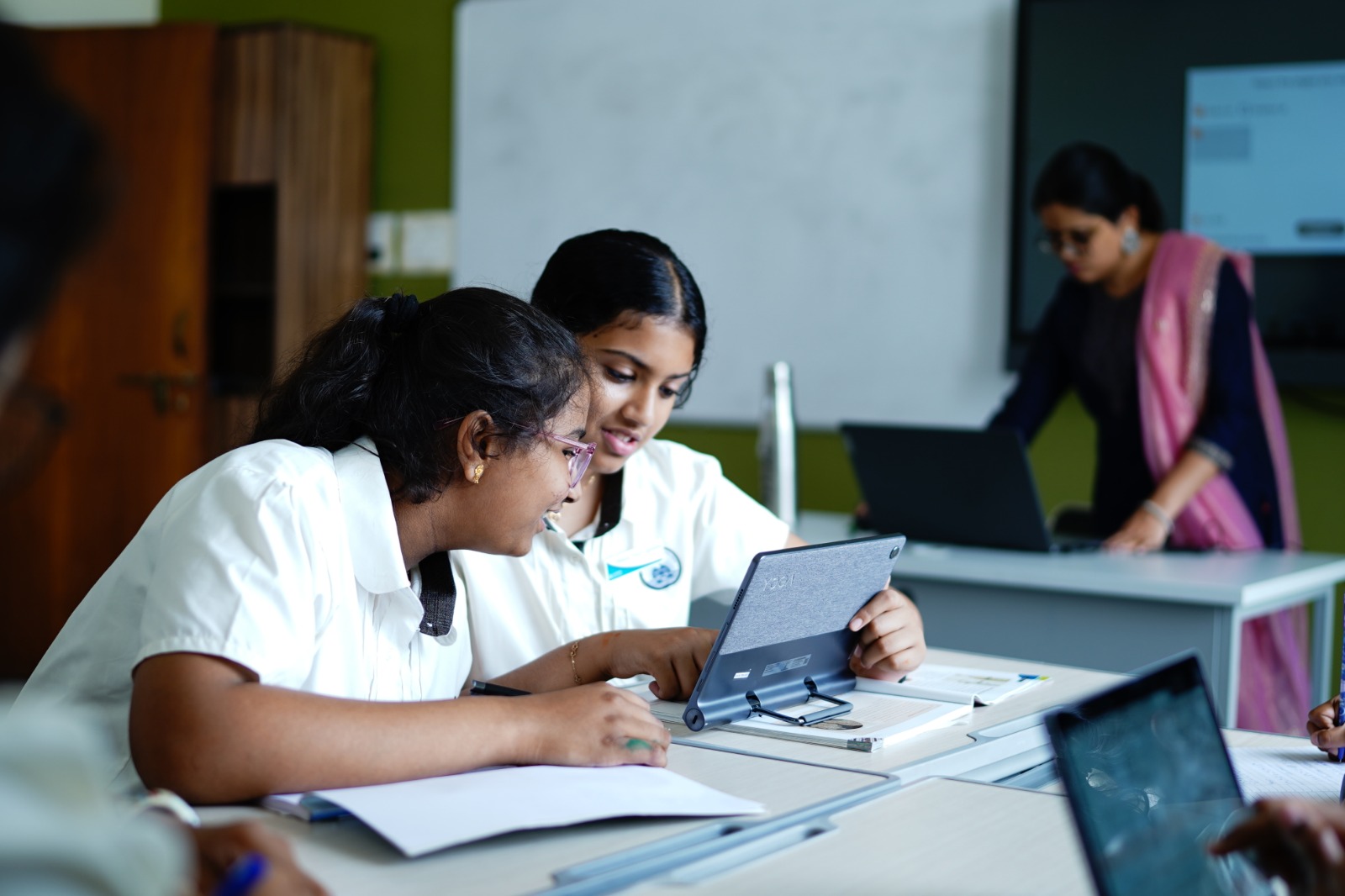
The IB Primary Years Programme at Amrita International Vidyalayam caters to young learners in PYP 1 through PYP 5, recognizing a child's natural curiosity, creativity, and ability to reflect. The programme creates a stimulating, challenging learning environment designed to nurture these qualities and foster a lifelong love of learning in every child.
Unlike traditional curricula that compartmentalize subjects, the PYP takes a transdisciplinary approach. Students learn across subject areas while investigating big ideas that connect to real-world contexts. This approach addresses not just academic development but also students' social and emotional well-being. Children are encouraged to develop independence and take responsibility for their own learning from an early age—a skill that serves them well throughout their educational journey and beyond.
The PYP framework also emphasizes developing international mindedness, helping students establish personal values as a foundation upon which global awareness and cultural understanding can flourish. At Amrita International Vidyalayam Bangalore, this aligns naturally with the school's own emphasis on creating caring, open-minded citizens who understand their role in a connected world.
The IB Middle Years Programme (MYP): Developing Independent Thinkers
For students in grades 6 through 10, the Middle Years Programme builds upon the foundation established in PYP while introducing more structured academic disciplines. The MYP at Amrita International Vidyalayam covers eight subject groups, emphasizing critical thinking, research skills, and global perspectives.
A distinctive feature of the MYP is its Approaches to Learning (ATL) framework, which serves as a cohesive element across all subject groups. ATL establishes a groundwork for independent learning and promotes the application of knowledge and skills in novel situations. The curriculum places significant emphasis on nurturing these fundamental skills—thinking, communication, social skills, self-management, and research—to facilitate students' ability to learn autonomously throughout their lives.
The MYP also incorporates meaningful projects that give students ownership of their learning. The Community Project can be initiated starting from MYP 3, while the Personal Project is undertaken by MYP 5 students. These projects involve substantial work over extended periods, teaching students to manage long-term commitments, conduct independent research, and present their findings—skills that prove invaluable in higher education and professional life.
The ICSE Curriculum: Strong Academic Foundations
For families preferring the Indian curriculum pathway, Amrita International Vidyalayam Bangalore offers the ICSE curriculum from grades 1 through 10. The ICSE is recognized for its comprehensive approach that goes beyond examination scores, emphasizing a well-rounded education that develops essential life skills alongside academic knowledge.
The ICSE curriculum at Amrita International Vidyalayam is thoughtfully organized across grade levels. In primary school (grades 1-5), the focus is on building strong foundations in English Language and Literature, Mathematics, Environmental Studies (integrating Science and Social Studies until grade 2, then separate subjects from grade 3 onwards), Hindi and Kannada, General Knowledge and Value Education, Arts, Music, Dance, Computer Awareness, and Physical Education with Yoga.
Middle school (grades 6-8) introduces more structured, discipline-based subjects including English Language and Literature, a second language choice (Hindi, Kannada, or Sanskrit), Mathematics, Science (Physics, Chemistry, Biology), Social Studies (History, Civics, Geography), Computer Applications, Value Education, Arts and Music, and Physical Education with Yoga.
Secondary school (grades 9-10) prepares students for the ICSE Board Examination with compulsory subjects including English, Second Language, History and Civics, Geography, Environmental Education, Mathematics, and Science. Optional subjects allow students to align their studies with their interests and future goals.
What distinguishes the ICSE approach here is the early introduction of subjects that other boards often delay. Unlike curricula where social studies and sciences appear only in later grades, ICSE introduces these subjects as early as grade 6, taught by subject specialists. This means students develop deeper understanding over more years, arriving at grades 9 and 10 well-prepared for board examinations.
The Montessori Foundation: Where It All Begins
The curriculum journey at Amrita International Vidyalayam begins with the Montessori programme for early years (Mont 1 through Mont 3). This approach fosters independence, concentration, and self-confidence through hands-on, self-correcting activities. Rather than passive learning, children engage with materials designed to develop foundational skills in language, numbers, art, music, yoga, and practical life skills.
The Montessori philosophy recognizes that young children learn differently—they need to touch, manipulate, and explore. This tactile, experiential approach creates neural pathways that support later academic learning. Children develop curiosity, confidence, and independence before transitioning to formal schooling, giving them a head start that compounds over their educational journey.
Inquiry-Based Learning: The Teaching Philosophy
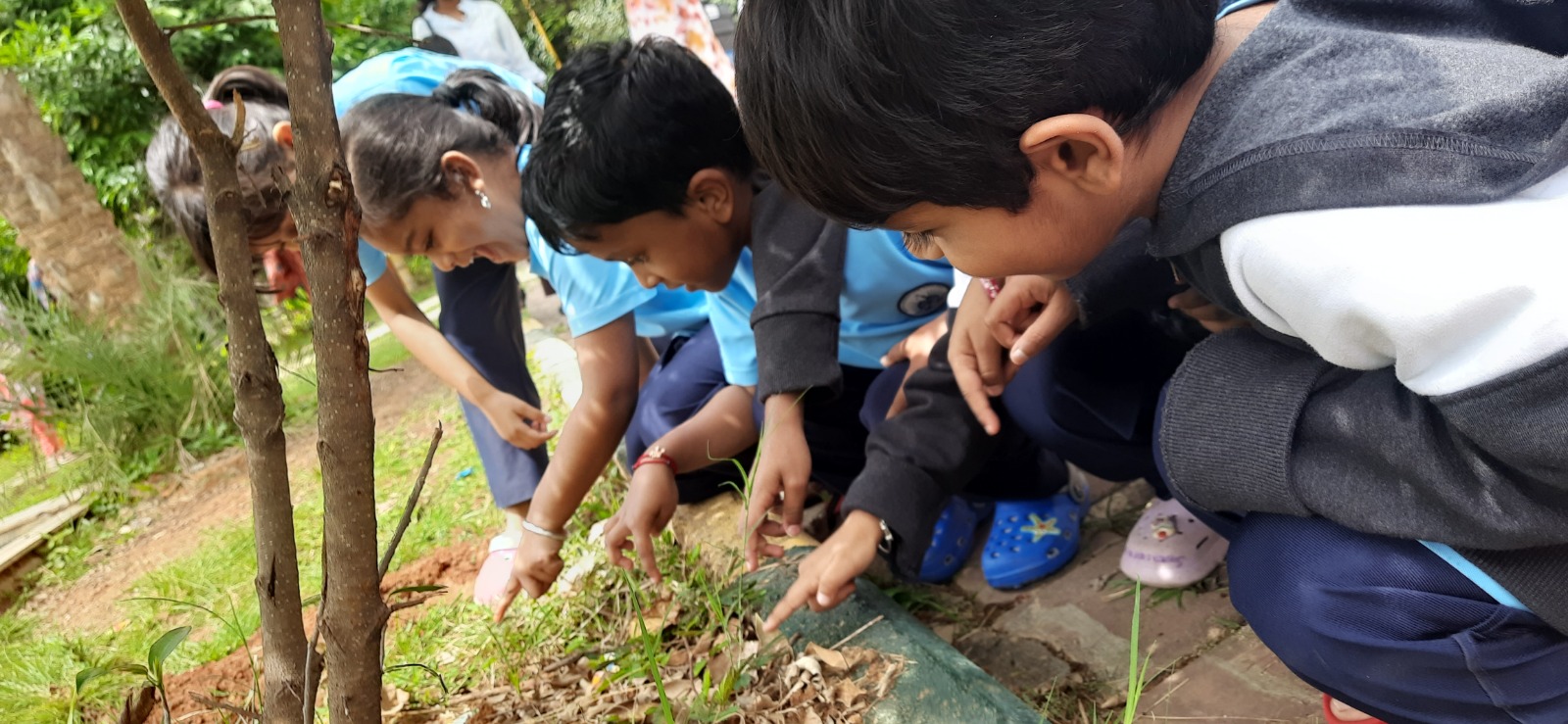
Across both IB and ICSE pathways, Amrita International Vidyalayam Bangalore emphasizes inquiry-based learning as its core teaching methodology. Teachers encourage students to ask "why" and "how," letting natural curiosity shape classroom discussions and projects. Instead of passive textbook learning, students engage in experiments, field visits, nature walks, model-making, and interactive activities that bring concepts alive.
A recent example from the school illustrates this approach in action. MYP 1, 2, and 3 learners explored literary genres through a dynamic "Bus Stop Activity" that transformed the classroom into an interactive hub. Students moved from one station to another, discussing, reflecting, and recording ideas about different genres including fiction, poetry, drama, and non-fiction. This collaborative process encouraged critical thinking about what makes each genre unique while demonstrating the power of teamwork and dialogue in shaping learning experiences.
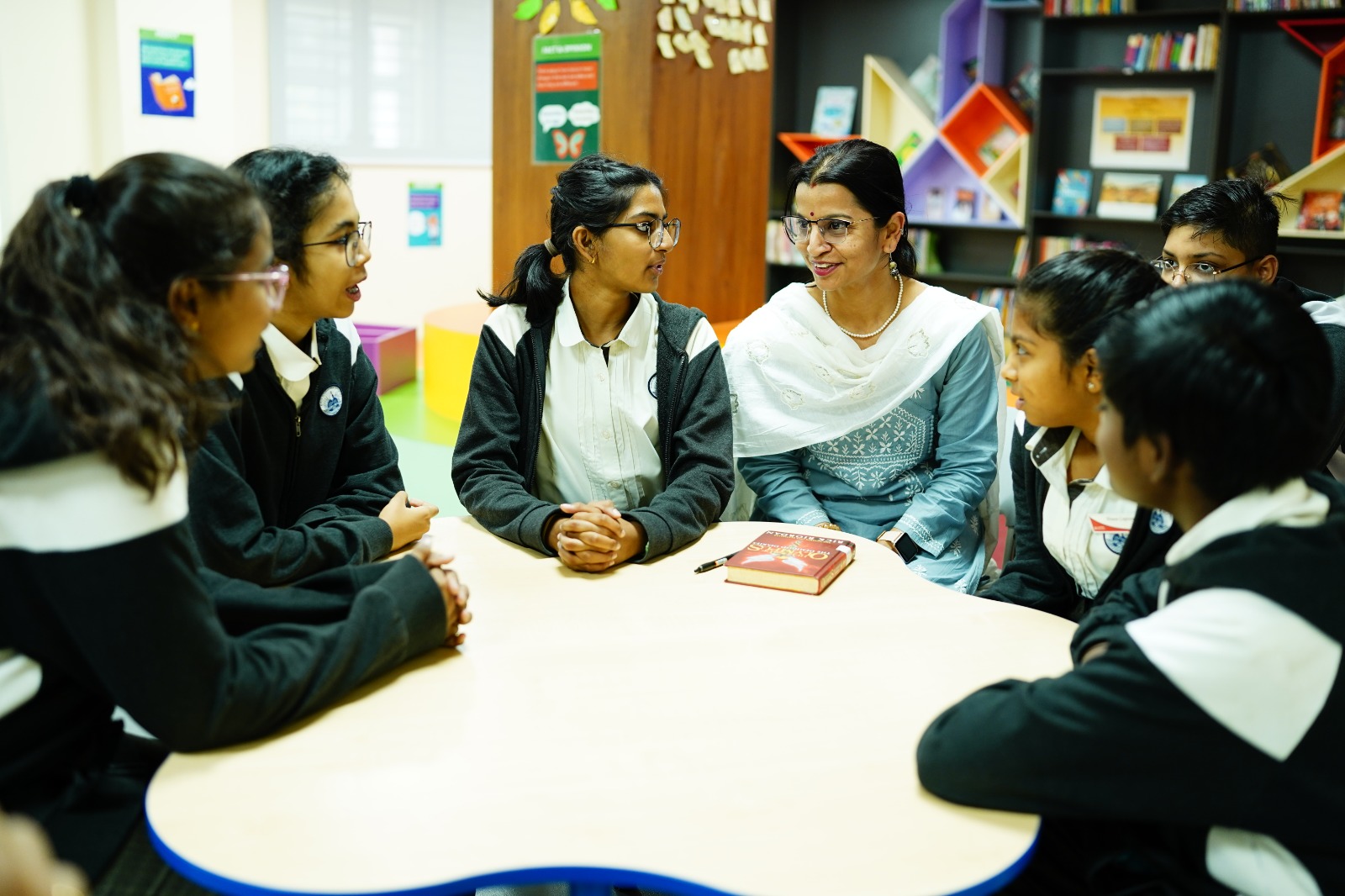
Student choice and voice play central roles in this methodology. Learners choose topics for projects, exhibitions, and presentations, giving them agency to explore areas they're passionate about. Reflection and self-assessment help students understand not just what they learned, but how they learned it and how it connects to life beyond school—strengthening critical thinking and lifelong learning habits.
Supporting Diverse Learners at Amrita International Vidyalayam
Not every child learns the same way, and Amrita International Vidyalayam recognizes this through its inclusive education approach. The school partners with the Stepping Stone Center to provide support tailored to students with varying learning needs, ensuring every learner has access to meaningful educational experiences.
This partnership provides specialized assistance addressing diverse requirements, including learning difficulties, behavioral challenges, and developmental issues. Teachers adapt their strategies to meet the needs of every child—extra support through remedial classes for those who need it, while independent thinking is encouraged through higher-order questions that spark curiosity and critical thinking.
The school's commitment to personalized learning extends beyond special needs support. With a student-teacher ratio of 20:1 for IB and 25:1 for ICSE, teachers can provide individualized attention. Regular assessments and personalized feedback help identify each child's strengths and areas for growth, with enrichment programmes and remedial sessions provided as needed.
Value Integration: What Makes This Curriculum Different
Among the best ICSE schools in Bangalore and best IB schools in Sarjapur, Amrita International Vidyalayam distinguishes itself through deep integration of values with academics. Founded and blessed by Her Holiness Satguru Sri Mata Amritanandamayi Devi, the school is part of a network of over 90 value-driven institutions across India.
Five foundational values—Respect, Empathy, Service, Self-Regulation, and Lifelong Learning—shape the school's ethos and are embedded throughout the curriculum and daily practices. Yoga, meditation, and Gita chanting help students stay focused, disciplined, and emotionally balanced—qualities that directly enhance academic performance while building character.
This integration of values with academics ensures students develop not just intellectually but also emotionally and spiritually. The school's mission emphasizes creating students with high scientific temper who are also deeply rooted in culture and values—a combination that prepares them to contribute meaningfully to society.
Academic Excellence and Board Exam Preparation
For parents concerned about examination outcomes, Amrita International Vidyalayam Bangalore has demonstrated strong results. The school's ICSE topper scored 95% in the 2025 board exams, and students have earned multiple medals in Olympiad and Spell-bee competitions.
Exam preparation balances academic rigor with emotional well-being. Students develop strong conceptual foundations from early years, with emphasis on deep understanding rather than rote learning. Systematic preparation includes regular practice tests, mock exams, and past paper discussions that familiarize students with exam patterns and time management strategies.
Expert faculty provide targeted coaching and clarify doubts through extra sessions where needed. Individual progress is tracked, with tailored guidance to strengthen weaker areas while sharpening existing strengths. Logical reasoning, analytical thinking, and problem-solving skills are built into classroom learning—preparing students not just for board exams but for competitive examinations like Olympiads as well.
Making Your Decision: IB or ICSE?
For families weighing IB versus ICSE at Amrita International Vidyalayam, consider your child's learning style and your family's future plans. The IB pathway suits learners who thrive on inquiry, enjoy connecting ideas across subjects, and may pursue higher education abroad. The ICSE pathway offers structured subject expertise, strong preparation for Indian competitive examinations, and recognized credentials for Indian universities.
Both pathways share the school's emphasis on holistic development, value-based education, and personalized attention. Both prepare students to be confident, capable individuals. The choice comes down to which framework best matches your child's strengths and your family's educational goals.
Note: Blogs by Yellow Slate are written based on information, knowledge and perspective of the writer. While every caution has been taken to provide readers with accurate information, please use your discretion before taking any decisions based on the information in this blog. In case you find any information that is factually wrong or something that could be made better, please write to us at contact@yellowslate.com.
Curious about how we arrived at this list? We believe parents deserve full transparency on how schools are evaluated and selected. to understand our school selection methodology.


