Beyond the Classroom: Embassy Academy's Experiential Learning Philosophy That Transforms Education
Education, at its essence, shouldn't be confined to textbooks and standardized tests. It should be alive — filled with discovery, problem-solving, and genuine engagement with ideas that matter. At Embassy Academy, this isn't mere philosophy; it's the beating heart of how students learn every single day. For parents in Devanahalli and across North Bangalore seeking best CBSE schools that go beyond traditional instruction, understanding Embassy Academy's experiential learning approach becomes essential to making an informed school choice. This comprehensive exploration reveals how Embassy Academy Bangalore has built an educational experience where learning transcends classroom walls, where students don't simply absorb information but actively construct their own understanding through hands-on engagement with real-world challenges. The philosophy isn't revolutionary in concept — educators have long understood that experiential learning creates deeper understanding. Yet translating this philosophy into consistent daily practice across an entire school requires intentional design, thoughtful facilitation, and genuine commitment.
Understanding Experiential Learning: More Than Just "Learning by Doing"
Before exploring how Embassy Academy implements experiential learning, it helps to understand what experiential learning actually means. The term "learning by doing" is often used as shorthand, but genuine experiential learning is far more sophisticated. It's not simply about hands-on activities; it's about a complete cycle of learning that begins with concrete experience, moves through reflective observation, continues into abstract conceptualization, and concludes with active experimentation.
Consider a traditional classroom scenario: a teacher explains fractions, students complete worksheets, a test follows. The information flows one direction — from expert to novice. Contrast this with experiential learning: students encounter a genuine problem requiring fractional thinking (perhaps dividing ingredients for a recipe, splitting a pizza fairly among friends, or calculating portions for a school event). They grapple with the problem, make mistakes, discover their own misconceptions, and develop understanding through their own reasoning. The knowledge they construct through this process becomes theirs in a way that transmitted information never can be.
Embassy Academy Bangalore has built its entire educational approach around this understanding. The school recognizes that when students experience genuine problems, wrestle with solutions, and witness the real-world relevance of what they're learning, something fundamental shifts in how they engage with education. They move from passive recipients to active constructors of knowledge.
The Philosophy Behind Embassy Academy's Approach
The philosophy underlying Embassy Academy's educational model reflects deep thinking about how humans actually learn. The school operates from the conviction that the "joy of experiential learning" isn't an add-on or enrichment — it's the foundation. This philosophy manifests in several core beliefs.
First, Embassy Academy believes that learning happens most powerfully when it occurs outside traditional textbooks. This doesn't mean textbooks have no value; rather, it means they're tools supporting learning, not its sole source. When a student reads about the water cycle in a textbook, they're accessing information. When they design and run a water filtration system, observe evaporation through their own observation apparatus, and troubleshoot why their model isn't working as expected, they're learning the water cycle at a depth that surpasses textbook knowledge.
Second, the school recognizes that real learning requires struggle. Not struggle that damages confidence, but productive struggle — the kind where students face genuine challenges, employ various strategies, sometimes fail, reflect on what didn't work, and try again. In this struggle, they develop not just knowledge but resilience, creativity, and the confidence that they can solve problems they've never encountered before. This confidence, perhaps more than any specific knowledge, determines success in higher education and professional life.
Third, Embassy Academy's philosophy emphasizes that understanding deepens through application. A student might understand photosynthesis conceptually but develop profound understanding when they design conditions to optimize plant growth, hypothesize about variables affecting growth rate, test their hypotheses, and interpret results. The process of applying knowledge to novel situations forces deeper thinking than passive consumption ever could.
How Experiential Learning Manifests Across the School
At Embassy Academy, experiential learning isn't confined to science classes or special projects. It's woven through the curriculum from the earliest grades through upper primary. Here's how this philosophy translates into daily educational practice.
Early Years: Building Foundations Through Play and Discovery
Even in the youngest grades, Embassy Academy students engage in experiential learning, though their version is age-appropriate, centered in play, exploration, and discovery. Rather than worksheets teaching letter recognition, young children explore letters through tactile experiences, discovery games, and real-world connections. They don't memorize number facts in isolation but encounter numbers through counting games, building projects, and real distributions of materials.
This early emphasis on exploration and hands-on engagement establishes fundamental attitudes toward learning. Children develop the understanding that they're capable of figuring things out, that mistakes are information rather than failures, and that the world is full of fascinating puzzles waiting to be solved. These attitudes, established early, provide the foundation for sophisticated academic learning that comes later. Beyond academic learning, Embassy Academy's rich extracurricular activities further nurture these holistic qualities from the very beginning.
Primary Years: From Observation to Experimentation
As students progress through primary grades at Embassy Academy Bangalore, the experiential approach becomes more structured while maintaining its engagement and authenticity. Students begin engaging in genuine scientific investigations, mathematical problem-solving rooted in real contexts, and creative projects that require them to apply learning across disciplines.
In science, rather than memorizing facts about ecosystems, students might design and maintain a living terrarium, observe the creatures within it, hypothesize about their needs and relationships, and test their hypotheses through careful observation. They're doing science, not reading about science. In mathematics, rather than solving abstract equations, students tackle real problems requiring mathematical thinking — calculating materials needed for a school garden project, determining angles for an optimal water catch system, or creating fair systems for distributing scarce resources.
Language learning at Embassy Academy similarly moves beyond grammar exercises. Students engage in meaningful communication — writing for authentic purposes (creating newsletters, composing letters to real audiences), speaking to present their ideas and findings, reading materials they've selected based on genuine interest. Language becomes the vehicle for expressing thought rather than an end in itself. This same spirit of authentic expression comes alive through Embassy Academy's Creative Performing Arts Program, where students find their voice through theatre, music, and movement.
Upper Primary: Complex Challenges and Integration
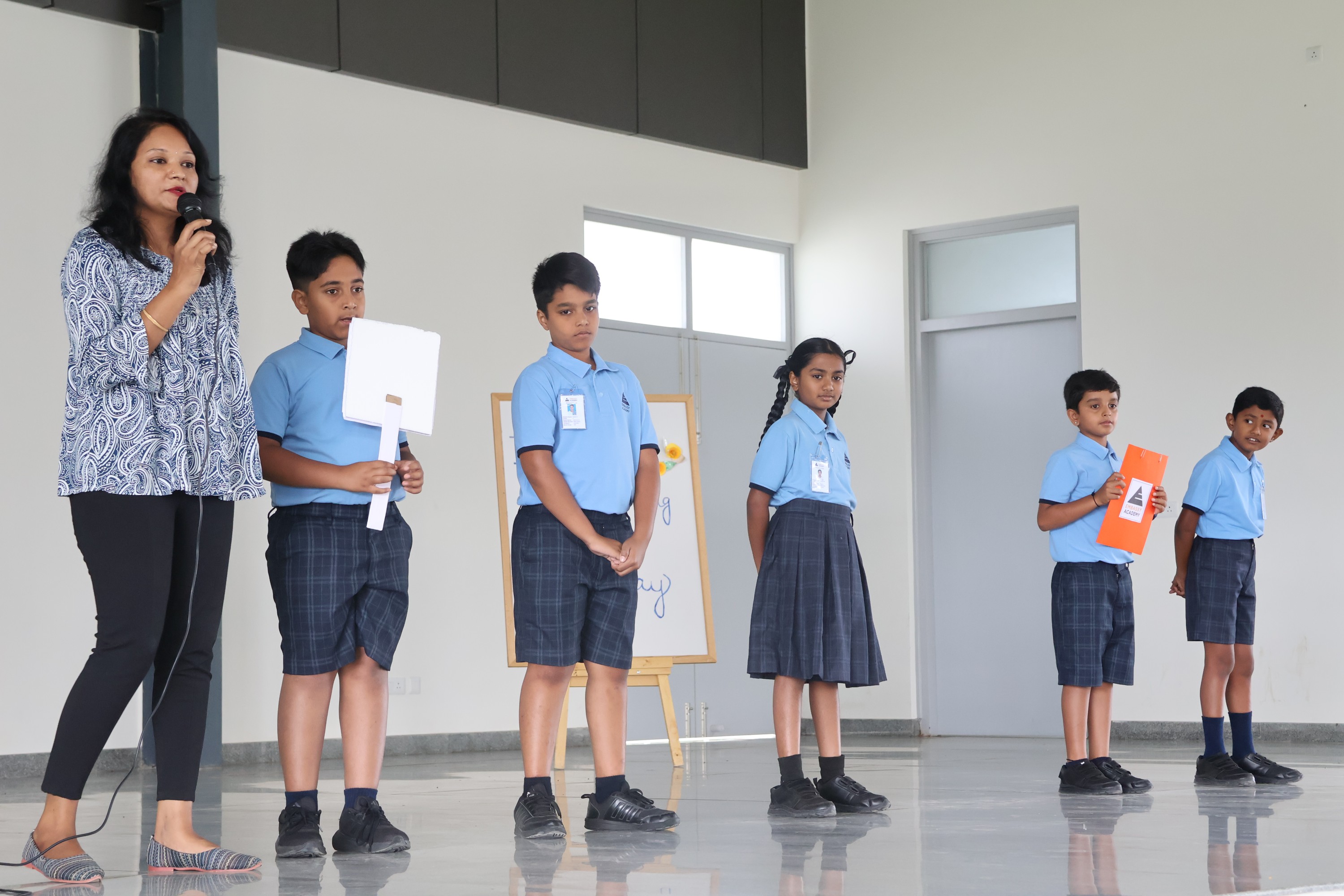
By upper primary grades, students at Embassy Academy tackle increasingly complex problems that require integration of knowledge across multiple disciplines. A student might work on a project exploring water sustainability that involves scientific investigation of water quality, mathematical analysis of consumption patterns, writing to persuade community members to conserve water, and artistic expression communicating environmental values. Through this integrated project, multiple learning objectives are achieved, but more importantly, the student experiences learning as interconnected rather than as isolated subjects.
The makerspace at Embassy Academy exemplifies this integrated approach. Students don't simply use 3D modeling software or prototyping equipment as discrete technical skills. They use these tools to bring to life solutions to real problems they've identified. A student might design and prototype an accessibility device for a community member with a physical challenge. Through this project, they're learning engineering, design thinking, empathy for users with different needs, persistence in problem-solving, and the satisfaction of creating something genuinely useful. To understand how deeply the makerspace shapes STEM learning, read our detailed look at how Embassy Academy's Makerspace transforms STEM education in Devanahalli.
The Role of Teacher Facilitation
A common misconception about experiential learning is that teachers step back and let students do whatever they want. Embassy Academy's approach demonstrates something more nuanced and skillful. Teachers function as facilitators — they don't provide direct instruction on every concept, but they're anything but passive. Their role is to carefully design experiences, ask powerful questions that deepen thinking, provide resources and guidance when students need it, and help students extract learning from their experiences.
This facilitation requires significant skill. A teacher must recognize when a student needs a hint versus when they need to continue struggling. They must ask questions that invite thinking without providing answers. They must create environments where productive struggle happens but where frustration doesn't become overwhelming. They must help students see connections between their concrete experiences and abstract concepts. These aren't skills that standardized teacher training always develops, so Embassy Academy's commitment to hiring and supporting excellent teachers becomes crucial to implementing its philosophy successfully.
Real-World Relevance: Making Learning Matter
One of the most powerful aspects of Embassy Academy's experiential approach is its emphasis on real-world relevance. Students aren't simply completing assignments isolated from meaningful context. They're solving problems that matter, investigating questions they've genuinely wondered about, and creating artifacts that have genuine purpose beyond earning a grade.
This relevance dramatically shifts student motivation. A student working on a math problem in a workbook might experience it as arbitrary. The same student investigating how to fairly distribute limited resources in their school community, using mathematical thinking to determine equitable distribution, experiences the mathematics as meaningful. The motivation shifts from "because the teacher assigned it" to "because I need to solve this actual problem."
Embassy Academy Bangalore intentionally creates opportunities for students to understand how what they're learning applies beyond school. A student studying water systems doesn't simply answer questions from a textbook; they investigate water issues in their actual community, interview local experts, propose solutions, and see how their learning could contribute to real environmental challenges. This real-world orientation is one of the reasons parents consistently praise Embassy Academy for the transformation they see in their children's attitude toward learning.
The Makerspace: Experiential Learning at Its Most Tangible
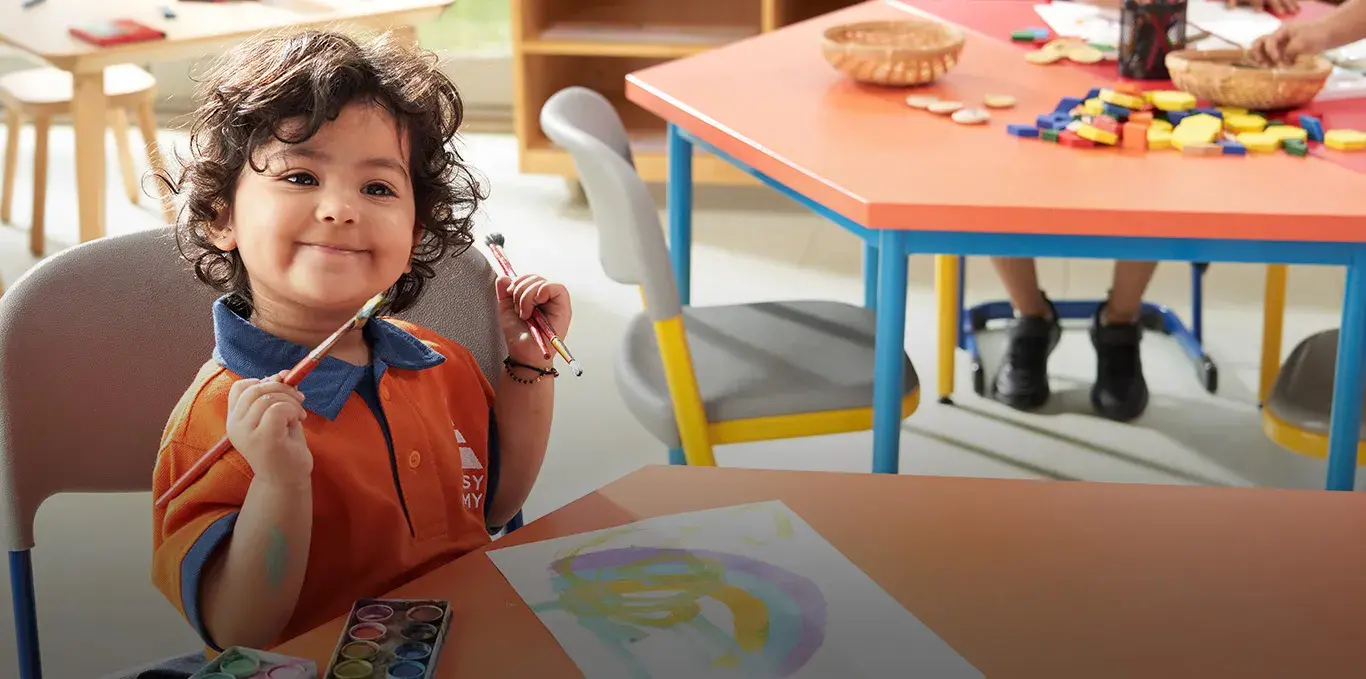
The makerspace at Embassy Academy serves as a physical embodiment of the school's experiential philosophy. This isn't a classroom with scattered craft supplies. It's a sophisticated space equipped with 3D printers, modeling software, prototyping materials, and tools that enable students to bring their designs to life.
What makes the makerspace genuinely experiential is how it's integrated into the curriculum. A student doesn't simply spend time in the makerspace as an extra-curricular activity. Rather, when students are working on projects requiring physical design and prototyping, they use the makerspace as their workshop. They encounter real design challenges — a prototype that doesn't function as intended, materials that don't behave as expected, structural problems requiring problem-solving. They iterate, test, redesign, and test again. Through this cycle, they develop genuine design thinking and the understanding that the pathway from idea to working solution involves failure, learning, and persistence.
This experiential engagement with making and design develops skills increasingly recognized as essential for the 21st century: the ability to envision solutions to problems, persist through challenges, understand how materials and systems work, collaborate with others toward a shared goal, and think creatively about possibilities.
Beyond Test Scores: What Experiential Learning Actually Develops
While standardized test scores remain important to many parents evaluating best schools in Devanahalli, Embassy Academy's commitment to experiential learning reflects understanding that education's purpose extends far beyond test performance. That said, research consistently shows that students engaged in experiential learning often perform well on traditional assessments — when learning is deeper and more meaningful, understanding translates to better performance across measurement types.
More importantly, experiential learning develops capabilities that tests don't measure but that predict long-term success: the ability to tackle novel problems without clear solutions, persistence in the face of setbacks, creativity and flexible thinking, ability to collaborate and communicate effectively, confidence in one's capacity to learn and grow. These are the qualities employers seek, that success in higher education demands, and that contribute to meaningful contributions to communities.
Creating a Culture of Inquiry and Curiosity
When a school commits genuinely to experiential learning, something shifts in the entire culture. At Embassy Academy, this shift manifests as a school where curiosity is celebrated rather than suppressed, where questions are more valued than right answers, where mistakes are reframed as learning opportunities, and where students develop ownership of their learning.
In such a culture, a student feels safe taking intellectual risks. They ask questions they wonder about rather than only answering questions the teacher asks. They pursue projects based on genuine interest. When they encounter difficulty, they don't immediately give up or blame themselves; they experiment with different approaches. Over time, this orientation toward learning becomes internalized. Students develop the understanding that they're capable learners, that challenges are opportunities for growth, and that learning is something they do rather than something that happens to them.
This cultural shift has implications that extend far beyond academics. Students who've experienced genuine inquiry-based learning often make different choices about what to study in higher education, pursue careers aligned with genuine interests rather than simply following expected paths, and continue learning throughout their lives because they've experienced learning as genuinely engaging rather than as obligation. During holidays and breaks, Embassy Academy continues to nurture this curiosity through immersive experiences like Embassy Academy's Sizzling Summer Camp, which keeps the spirit of exploration alive even beyond the school year.
Integration with Flexible Curriculum
Embassy Academy's experiential approach is complemented and enhanced by the school's flexible curriculum. Rather than a rigid sequence of topics that all students must master at the same pace, the flexible curriculum allows some responsiveness to student interests and learning needs. While core learning objectives remain consistent, the pathways to achieving them can vary.
This flexibility creates space for experiential learning to flourish. A student deeply engaged in a project exploring water systems doesn't need to abandon that project to move on to a preset topic sequence. Instead, that project can deepen, expand, and continue until genuine learning has occurred. Similarly, if a student's curiosity pulls them toward investigating something unexpected — a question that arose during a lesson, an observation they made in the community, a connection they noticed — that curiosity can be channeled into learning rather than seen as distraction from the "real" curriculum. To understand how this flexibility translates into measurable student success, explore how Embassy Academy's flexible curriculum boosts engagement and outcomes.
The Role of Facilities and Spaces
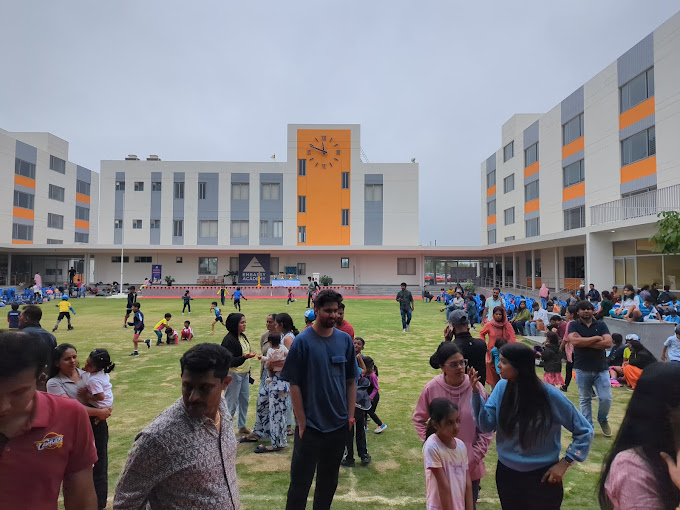
While experiential learning can happen anywhere, Embassy Academy's physical spaces have been intentionally designed to support hands-on, project-based engagement. The school's 5-acre campus provides room for outdoor learning, gardens and natural spaces to explore, and community to observe. State-of-the-art science labs aren't simply equipped for traditional lab exercises; they're designed as spaces where students can pursue genuine investigations. The makerspace, as discussed, provides tools and environment enabling design and prototyping. Even classrooms are designed to support collaborative work, flexible grouping, and the messiness of experiential learning.
These physical spaces communicate important messages to students. They signal that the school values hands-on engagement, that making and building are legitimate educational activities, that investigation and experimentation are expected parts of learning. For many students, these spaces are revelations — they've never experienced school environments that seemed to expect and welcome the kind of engaged, active learning that experiential education requires. Physical excellence extends to athletics as well: Embassy Academy's world-class Sports Arena ensures students develop discipline, teamwork, and resilience through sport alongside their academic journey.
Supporting Different Learning Styles and Needs
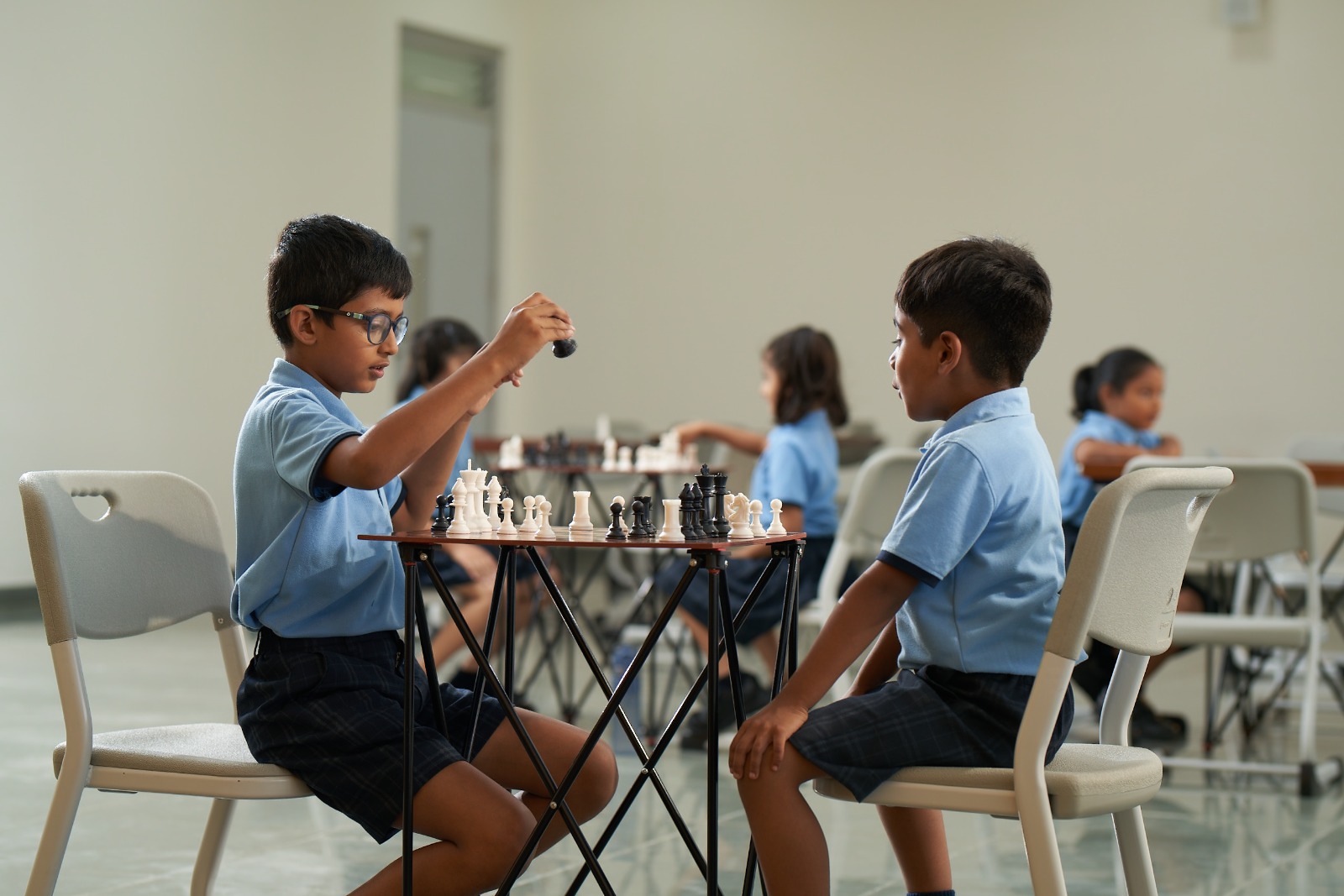
One often-overlooked benefit of experiential learning is that it naturally accommodates diverse learning styles and needs. When learning happens through multiple modalities — hands-on exploration, visual representation, verbal discussion, independent work, collaborative projects — students with different learning preferences all find pathways to engagement. A student who struggles with abstract reasoning might excel when engaged in concrete experimentation. A student who finds traditional assessment anxiety-producing might demonstrate profound understanding through project-based work.
Embassy Academy's commitment to experiential learning also means the school must be thoughtful about supporting students with various learning needs. A student with attention challenges might find sustained focus comes more easily during hands-on project work than during traditional instruction. A student processing information more slowly might benefit from the extended timeframe projects allow for understanding to develop. A student with significant anxiety might discover confidence through successfully completing a real-world project.
Addressing Common Concerns About Experiential Learning
Some parents worry that experiential learning comes at the cost of academic rigor or coverage of essential content. Embassy Academy's approach addresses this concern by demonstrating that experiential learning and academic rigor aren't contradictory. In fact, pursuing genuine problems often requires more rigorous thinking than completing textbook exercises. A student designing a water filtration system must understand principles of chemistry and physics more deeply than one memorizing facts about filtration. They must understand not just what works but why it works, how to test whether it works, how to modify it if it doesn't work, and how to explain their solution to others.
Similarly, the worry that experiential learning means neglecting foundational skills — like reading, writing, and mathematics basics — underestimates how these skills develop through meaningful application. A student communicating their research findings must write clearly and persuasively. A student managing a project must engage in mathematical thinking. A student reading to find information for a project they care about engages with text more closely than one reading for a quiz.
Preparing for Future Success: Beyond School
Perhaps the most significant benefit of Embassy Academy's experiential learning philosophy is how it prepares students not just for immediate academic success but for lifelong learning and meaningful contribution. The world beyond school increasingly demands the capabilities that experiential education develops: the ability to identify problems, gather information, design solutions, collaborate with others, persist through setbacks, and communicate findings.
Students educated through experiential learning understand that they have capacity to learn throughout their lives, that challenges are opportunities rather than threats, that failure is information rather than verdict on their ability. They've experienced the satisfaction of solving genuine problems, creating something meaningful, and understanding something deeply. These experiences create trajectories toward engagement and contribution rather than resignation and disengagement.
Creating the Conditions for Experiential Learning
For parents considering Embassy Academy or any school, understanding that experiential learning requires specific conditions helps evaluate implementation. Genuine experiential education requires:
- Well-trained teachers who understand facilitation, not just direct instruction
- Thoughtfully designed experiences that challenge students appropriately
- Time for projects to develop, learning to deepen, understanding to solidify
- Physical spaces that support hands-on engagement
- Flexibility to allow curriculum to respond to student learning
- Assessment approaches that measure understanding beyond test performance
- Administrative support for teachers taking risks and trying new approaches
- Clear connections between classroom learning and real-world relevance
Embassy Academy Bangalore has invested in all these conditions, which distinguishes it among best schools in Devanahalli and North Bangalore.
The Experience of Being a Student at Embassy Academy
What's it actually like to be a student at a school committed to experiential learning? Rather than sitting passively while information is transmitted, students are engaged with genuine challenges. Rather than waiting to be told what to do, they're investigating questions they find interesting. Rather than viewing mistakes as failures, they're treating them as information guiding next steps. Rather than learning in isolation, they're collaborating with peers toward shared goals.
This experience often feels quite different from traditional school. It's more engaging, more challenging, sometimes messier, and more intrinsically motivating. Students who've experienced genuine experiential education often report that school became less about earning grades and more about genuine engagement with learning itself. Read what parents have to say about the transformation they've witnessed in their children since joining Embassy Academy.
Conclusion: Education That Transforms
Embassy Academy's commitment to experiential learning reflects a deep conviction that education should be transformative — that it should develop not just knowledge but capability, not just skills but confidence, not just test performance but engagement and capacity for lifelong learning. The philosophy that learning happens most powerfully outside textbooks, through engagement with genuine challenges, through hands-on exploration, and through real-world application isn't new. Yet consistently implementing this philosophy across an entire school requires vision, commitment, and carefully designed systems.
For parents seeking best CBSE schools in Devanahalli and North Bangalore, Embassy Academy's experiential approach represents something increasingly rare: a school that takes seriously the idea that how students learn is as important as what they learn. The school recognizes that students who've experienced genuine inquiry-based, hands-on, real-world-connected learning develop different orientations toward learning, different confidence in their capacity to tackle challenges, and different understandings of education's purpose.
If you're considering Embassy Academy for your child, observe classrooms in action. Look for evidence of students genuinely engaged with problems, not simply following instructions. Listen to conversations between students about their projects. Ask teachers how they support student inquiry and handle questions they don't have answers to. Visit the makerspace and science labs. Imagine your child spending daily hours engaged with challenges they find genuinely interesting, working collaboratively with peers, creating solutions they're proud of, and developing confidence that they're capable learners. Ready to take the next step? Read our complete parent's guide to Embassy Academy admissions to understand the process, eligibility, and what to expect. This is Embassy Academy's promise — an education that transforms not just what students know, but who they become as learners and thinkers.
Note: Blogs by Yellow Slate are written based on information, knowledge and perspective of the writer. While every caution has been taken to provide readers with accurate information, please use your discretion before taking any decisions based on the information in this blog. In case you find any information that is factually wrong or something that could be made better, please write to us at contact@yellowslate.com.
Curious about how we arrived at this list? We believe parents deserve full transparency on how schools are evaluated and selected. to understand our school selection methodology.


