Beyond the Classroom: Wellbeing, Mindfulness and Habit-Building at Prarthana.in World School
If you've ever sat across from your child at the dinner table and wondered whether school is teaching them anything about how to be a person - not just how to pass a test - you're asking the right question. At Prarthana.in World School, Banashankari, that question sits right at the centre of how the school is designed. Beyond academics at Prarthana.in World School isn't an afterthought tucked into a Friday activity period; it's woven into the rhythm of every single day.
Founded in 2002 by the late Shri Ravi Belagere, Prarthana.in World School has always leaned into the idea that a child's education is bigger than a syllabus. What that looks like in practice - mindful pauses between classes, yoga sessions, nutrition programmes, reflective journaling, and a growth-mindset approach to feedback - is what this piece is about. If you're comparing options and searching for beyond academics at Prarthana.in World School specifically, or trying to understand how the school approaches a child's wellbeing outside the classroom, this should give you a clear, honest picture.
What "Beyond Academics" Actually Means Here
A lot of schools use the phrase "holistic development" as a slogan. At Prarthana.in World School, it's closer to an operating philosophy. The school describes its approach as helping children flourish not just as students, but as "self-sufficient individuals who have the power of self-awareness, self-belief, self-confidence and self-motivation." That's a mouthful, but it maps onto twelve specific principles the school has built into daily school life - everything from how feedback is given to how lunch is structured.
This is a meaningfully different emphasis from the pure curriculum coverage you'll find in Prarthana.in World School's IGCSE curriculum or in how the school structures its academic programme. Where those pieces focus on subjects and progression, beyond academics at Prarthana.in World School is about the emotional and physical scaffolding around all of that learning.
Mindful Pauses Between Transitions
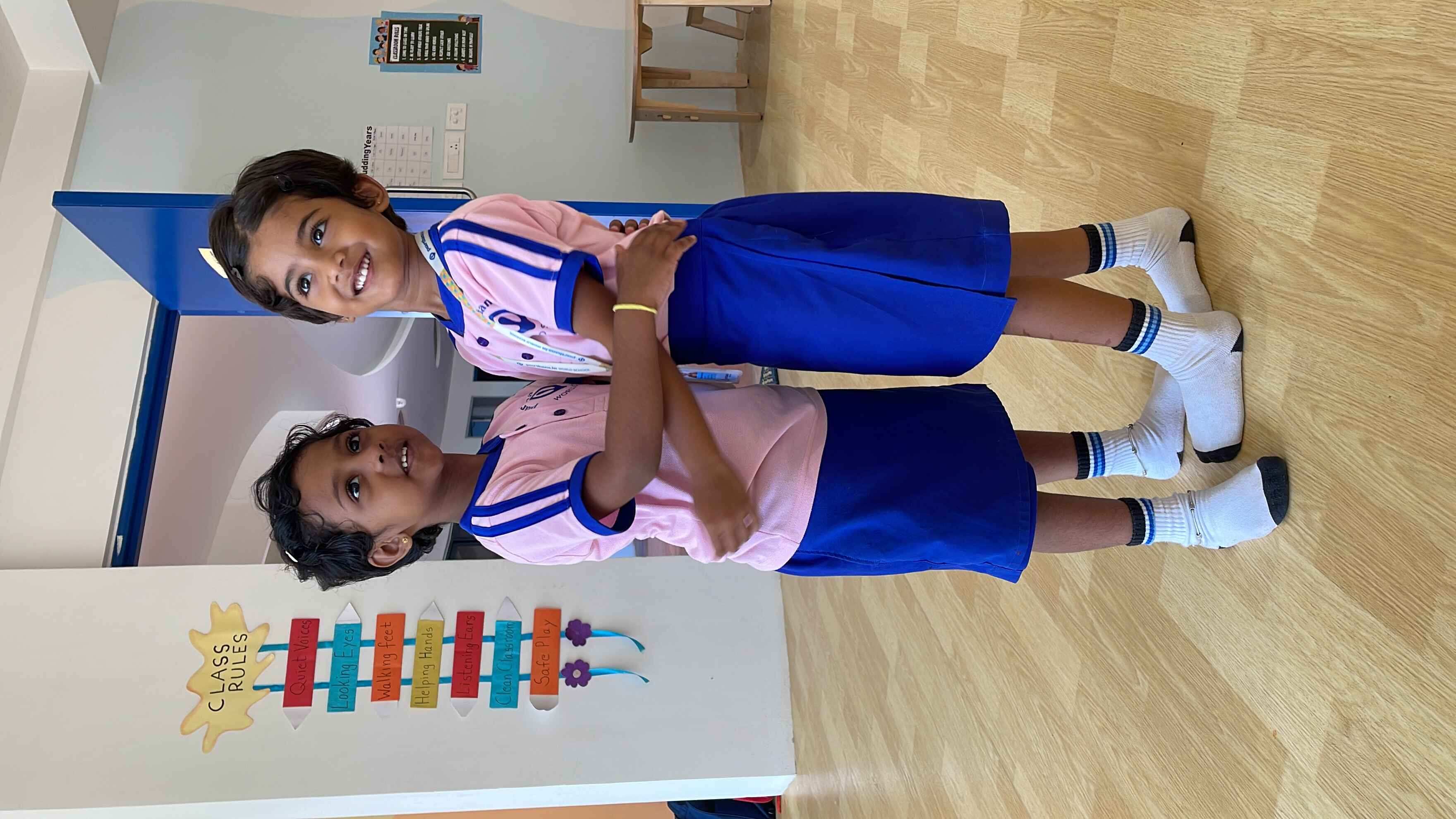
One of the more distinctive elements of student wellbeing here is the idea of the "Pause." Rather than rushing students from one subject straight into the next, the school builds in mindful pauses during transitions - short moments where children can settle, breathe, and reset before moving on. It sounds small, but for many parents this is exactly the kind of thing that's missing from a purely academic-first school day: a chance for a child to simply collect themselves rather than being pushed, back-to-back, from maths to Kannada to science.
Yoga and Purposeful Movement
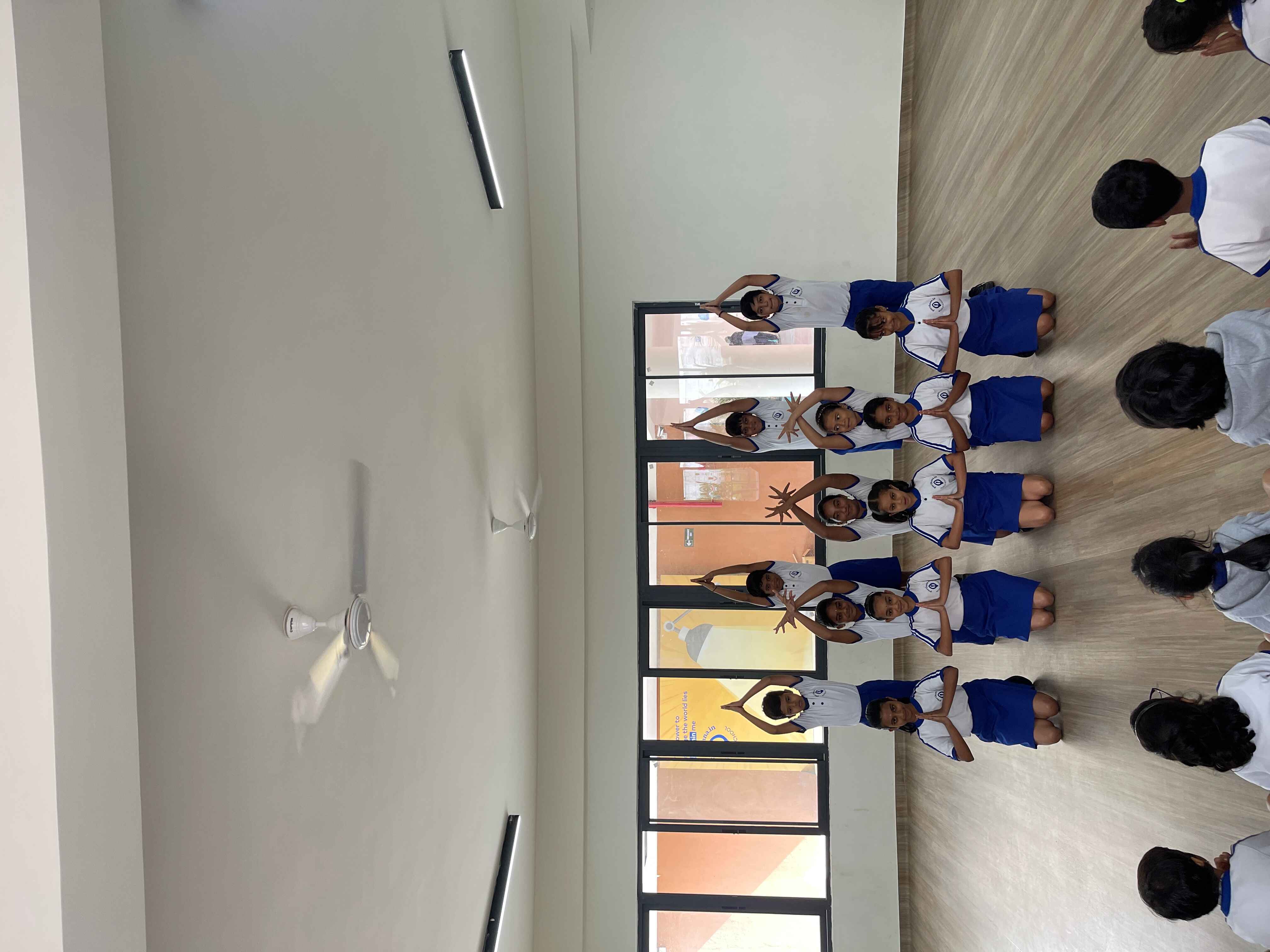
Yoga isn't treated as an occasional wellness activity at Prarthana.in World School - it's positioned as an essential part of the curriculum. The idea is straightforward: combining physical movement with mindfulness helps children harmonise body and mind, which in turn supports mental clarity and self-awareness. For parents whose children struggle to sit still through a long academic day, or who simply want physical activity to be a built-in habit rather than an extracurricular add-on, this is worth knowing about.
Habits, Affirmations and How the School Talks About Growth
Beyond academics at Prarthana.in World School also shows up in something less visible than a yoga mat - the language teachers and staff use with students day to day.
The school leans heavily on affirmations and habit development as a way of building a "culture of success" that's separate from grades. Rather than comparing a child's marks to their classmates, feedback is anchored to the child's own growth chart. In practice, that means when your child's teacher hands back an assessment, the conversation is framed around their progress against their own baseline - what's improved, and what's next - rather than where they rank against thirty other kids in the class.
This growth-mindset approach to assessment is one of the more parent-relevant details buried in how Prarthana.in World School operates, because it directly affects how a child experiences failure or a bad test day. Constructive feedback that acknowledges both areas for improvement and genuine progress tends to reduce the anxiety that comes with high-stakes comparison - something that matters a great deal for younger children in particular, given the school currently spans Nursery through Grade 8.
Reflective Journals
Journaling, group discussions and project reflections are used as a way for students to build a deeper understanding of themselves and the world around them. After completing a project, students are asked to reflect on their journey - what hurdles came up, and what they actually learned. This is a fairly deliberate attempt to make self-reflection a habit rather than a one-off exercise, and it connects neatly with the school's Legacy of Excellence in Education, which was built on the founder's belief that education should nurture individual potential rather than force conformity.
Nutrition as Part of the Wellbeing Picture
It's easy to overlook nutrition when evaluating a school, but Prarthana.in World School treats it as one of its twelve core principles rather than a cafeteria afterthought. The stated approach includes nutritious meals, nutrition education, and gardening programmes - the idea being that a child's ability to focus and learn is directly tied to what and how they eat. For parents who've dealt with the daily headache of packed lunches and picky eaters, a school that folds nutrition education directly into its philosophy (rather than leaving it entirely to families) is a meaningfully different starting point.
How This Fits the Bigger Picture at Prarthana.in World School
None of this exists in isolation. The wellbeing-first approach connects directly to how the school's leadership team has framed the institution's purpose from the start - reducing unnecessary pressure and comparison in favour of self-improvement. It also lines up with what's covered in the school's admission process, where the evaluation for younger children is a counselling-based conversation rather than a formal test, reflecting the same underlying philosophy of meeting a child where they are rather than screening them out.
If you're researching the best schools in Banashankari, Bengaluru, or comparing international schools in Bangalore more broadly, this dimension - how a school actually treats a child's day-to-day emotional and physical wellbeing - is worth weighing just as heavily as board affiliation or fee structure. Reading through parent reviews of Prarthana.in World School alongside this can help you get a fuller picture of how these principles actually play out for current families.
For readers comparing best IGCSE schools in Bangalore, it's also worth noting that this beyond-academics framework runs alongside - not instead of - the school's core curriculum, so it isn't a trade-off between rigour and wellbeing.
In Summary
Beyond academics at Prarthana.in World School isn't a single programme you can point to - it's a set of habits distributed across the school day: pauses between classes, yoga as a curricular fixture, growth-oriented feedback instead of comparison, structured reflection through journaling, and nutrition treated as an educational priority rather than an operational detail. If you're a parent trying to figure out whether a school will support your child's wellbeing and not just their exam scores, these are the specific, concrete things to ask about on a school visit.
For families still deciding, it's worth pairing this with a look at the school's admission process and the 5 reasons parents consistently cite for choosing Prarthana.in World School, Bangalore, before visiting the campus in Uttarahalli Hobli, Banashankari, to see how these principles show up in daily school life. You can also check the school's FAQs for quick answers on grades offered, board, and other basics before you visit.
Note: Blogs by Yellow Slate are written based on information, knowledge and perspective of the writer. While every caution has been taken to provide readers with accurate information, please use your discretion before taking any decisions based on the information in this blog. In case you find any information that is factually wrong or something that could be made better, please write to us at contact@yellowslate.com.
Curious about how we arrived at this list? We believe parents deserve full transparency on how schools are evaluated and selected. to understand our school selection methodology.


