From Curiosity to Competence: NCFE Mandur's Student-Centric Learning Approach Explained
In today's rapidly changing world, parents often ask themselves: what kind of education will truly prepare my child for success? It's not enough for schools to simply deliver information — children need to develop the critical thinking skills, confidence, and adaptability that will carry them through challenges both now and in the future. NCFE Mandur takes a fundamentally different approach to learning — one that treats each student as an active participant in their own education rather than a passive recipient of knowledge. At the heart of NCFE Mandur's philosophy is a genuine commitment to making learning joyful while building the competencies that matter. The school's student-centric learning approach doesn't just teach subjects; it cultivates curious minds, encourages creativity, and equips students with 21st-century skills. For parents searching for the best schools in Bangalore, understanding how NCFE Mandur actually teaches — not just what it teaches — makes all the difference in finding the right fit for your child.
What Does Student-Centric Learning Really Mean?
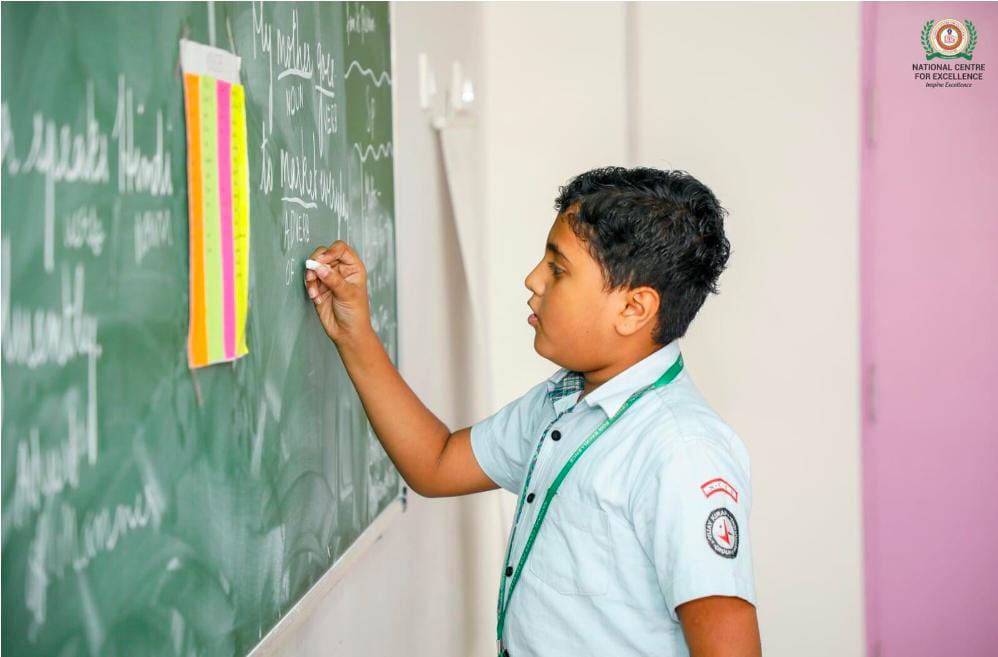
Student-centric learning is a departure from the traditional lecture-based classroom where the teacher stands at the front, dispensing information to rows of passive students. Instead, NCFE Mandur creates learning environments where students are actively engaged, thinking critically, solving problems collaboratively, and taking responsibility for their own learning journey. Rather than asking "What do I need to memorize?" students are encouraged to ask "Why does this matter?" and "How can I apply this?"
This shift is particularly important in today's context. The skills employers value most — creativity, communication, collaboration, and problem-solving — cannot be developed through rote memorization alone. When NCFE Mandur embraces a student-centric approach, it's investing in children's long-term capability, not just their immediate exam performance. Furthermore, research consistently shows that when students feel ownership of their learning and understand the relevance of what they're studying, they're more motivated, more engaged, and ultimately more successful. Among the best schools in Kodigehalli, this pedagogical commitment distinguishes NCFE Mandur as an institution genuinely invested in how children learn.
The Eight Pillars of NCFE Mandur's Student-Centric Approach
NCFE Mandur has structured its teaching methodology around eight interconnected elements that work together to create a truly student-centered learning experience. Understanding these components helps parents see exactly how daily classroom life differs from traditional schooling.
Collaborative Learning: Building Tomorrow's Team Players
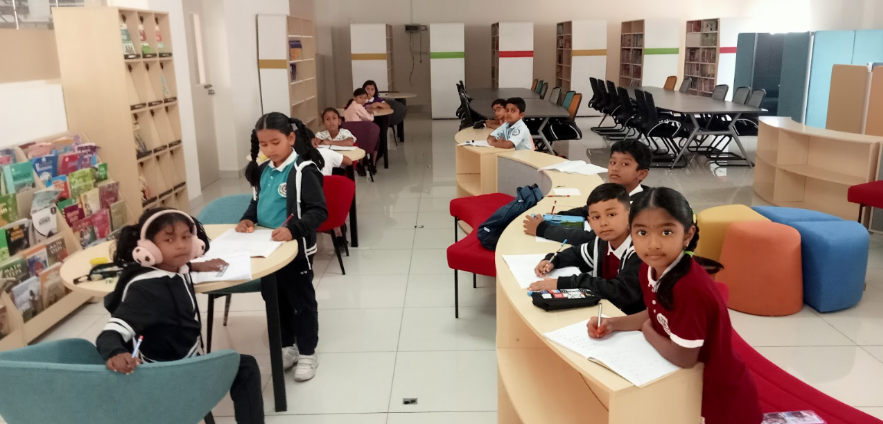
In most traditional classrooms, students work individually, competing against one another for grades. NCFE Mandur recognizes that modern workplaces value people who can collaborate effectively. The school intentionally structures lessons around group work, project-based learning, and peer-to-peer interactions. When students work together on a science project, for instance, they're not just learning the content — they're developing communication skills, negotiation abilities, and the maturity to respect different perspectives. This collaborative approach means your child learns to both contribute their ideas and listen to others, skills that will serve them far beyond the classroom.
Varied Teaching Techniques: Meeting Every Learning Style
Not every child learns the same way. Some students are visual learners who thrive with diagrams and videos, others are kinesthetic and need hands-on experiences, while some prefer listening and discussion. Rather than relying on one teaching method, NCFE Mandur teachers employ diverse instructional strategies. One lesson might incorporate a short video, followed by a hands-on experiment, followed by small group discussion. This variety keeps students engaged and ensures that children with different learning preferences all have opportunities to access the material in ways that work for them.
Active Engagement: Learning by Doing
Passive note-taking is replaced with active participation. Students are regularly asked to analyze problems, conduct experiments, create presentations, and engage in discussions. Rather than being told "the capital of France is Paris," students might research French geography, culture, and history through projects that require them to think deeply and synthesize information. This active engagement transforms learning from something that happens to students into something they do — a crucial distinction that affects both motivation and retention.
Fostering Responsibility: Developing Independence

A student-centric approach empowers students to take ownership of their learning. NCFE Mandur teaches students to set their own learning goals, track their progress, and reflect on what they've learned. Rather than simply following instructions, students are encouraged to think about their own learning processes and identify areas where they need support. This builds self-discipline and accountability — qualities that extend far beyond academics into every aspect of their lives. When your child completes a project not because a teacher required it, but because they're genuinely interested in understanding the topic, that's when real learning happens.
Critical Thinking: Beyond Right and Wrong Answers
Traditional exams often focus on recalling facts or following formulas. In contrast, NCFE Mandur emphasizes critical thinking through questions that have multiple valid answers or require students to evaluate competing viewpoints. Teachers ask "Why do you think that?" and "What evidence supports your conclusion?" Students learn to analyze, evaluate, and synthesize information rather than simply reproducing it. This prepares them for higher education and careers where the ability to think through complex problems independently is far more valuable than memorized facts.
Promoting Inquiry and Growth: Questions Over Answers
When a student asks "Why?" in a student-centric classroom, the response isn't always an immediate answer. Instead, teachers guide students to investigate the question themselves. This inquiry-based approach nurtures curiosity and turns learning into a natural human desire rather than a chore. Students learn that not knowing something is an opportunity to explore and discover, not a failure. This mindset — viewing challenges as growth opportunities — is foundational to lifelong learning and resilience.
Teachers as Facilitators: Guiding Rather Than Controlling
In the traditional model, the teacher is the expert who delivers knowledge. In NCFE Mandur's student-centric approach, teachers shift into the role of facilitator and guide. They design rich learning experiences, ask thoughtful questions, provide feedback, and support students as they navigate challenges. This requires teachers to be more skilled and adaptable than in traditional models — they must understand not just their subject matter, but also how children learn and how to create environments where students can thrive. The teacher's role becomes less about control and more about inspiration and support.
Real-World Applications: Making Learning Relevant
Perhaps the most powerful element of student-centric learning is connecting classroom learning to the real world. Instead of asking "When will I ever use this?" as a complaint, NCFE Mandur students can see immediate, tangible applications. A math lesson becomes relevant when students design a garden layout using geometric principles. A history lesson comes alive when students create a documentary about local heritage. Science becomes fascinating when students solve actual environmental problems in their community. When learning is grounded in real-world context, it's not just more engaging — it's more memorable and meaningful.
How This Translates to Daily Classroom Life
Understanding the philosophy is one thing; seeing how it actually works in classrooms is another. Here's what a day at NCFE Mandur might look like across different subjects and grade levels.
In an elementary science class, rather than simply learning about plant life cycles from a textbook, students plant seeds, observe growth over weeks, record observations, discuss findings with classmates, and present their discoveries. They've practiced inquiry, observation, responsibility, collaboration, and real-world application all at once. In a middle school language arts class, instead of answering comprehension questions about a novel, students engage in literary discussions, create their own stories inspired by themes they've encountered, and provide feedback to peers. They're developing critical thinking about literature, communication skills, and creative expression simultaneously.
In a high school history classroom, students don't passively absorb dates and events. They investigate primary sources, debate historical interpretations, understand different perspectives, and create projects that demonstrate their understanding. They're developing analytical skills and learning that history isn't simply a collection of facts, but a complex narrative that requires interpretation and judgment. Across all grade levels, NCFE Mandur teachers orchestrate learning experiences that engage multiple dimensions of student development simultaneously.
The Principal's Vision: Academic Rigor Meets Student Well-Being
Understanding the school's approach is also enriched by the vision articulated by Principal Ms. R. R. Lalitha Kumari, who brings over a decade of experience in school leadership. Her vision for NCFE Mandur is grounded in several key educational goals. She emphasizes the development of strong academic foundations aligned to national and global benchmarks alongside critical thinking, problem-solving, and analytical skills. Importantly, her vision recognizes that effective education must also cultivate clear communication, confidence, and collaboration. Beyond academics, she prioritizes emotional intelligence, resilience, and ethical values — qualities that shape how students will navigate the world. She articulates these principles knowing that when learning is structured, purposeful, and future-oriented, children are far better equipped to handle uncertainty and change.
For parents evaluating schools in areas like Kodigehalli or searching for best CBSE schools in Bangalore, this coherence between philosophy and leadership vision is significant. It indicates that the student-centric approach isn't just a marketing concept — it reflects the genuine educational beliefs of school leadership. The commitment to self-discipline, accountability, and independence in learning, coupled with readiness for competitive pathways and lifelong learning, demonstrates that NCFE Mandur balances student-centered approaches with rigorous academic standards.
Preparing for Competitive Pathways While Nurturing Individual Growth
Parents sometimes worry that a student-centric approach might sound wonderful in theory but lack the rigor needed for competitive exams and higher education. NCFE Mandur addresses this concern directly by positioning student-centric learning not as an alternative to academic excellence, but as a foundation for it. When students understand concepts deeply through active engagement, they retain information better than through rote memorization. When they've practiced critical thinking and problem-solving, they approach complex exam questions with greater confidence and capability. When they've developed communication and collaboration skills, they're prepared for group discussions, presentations, and competitive interviews. The school doesn't sacrifice academic rigor; instead, it achieves it through methods that also develop the broader competencies students need.
Why Parents Are Choosing This Approach
For many parents, the question isn't whether to choose a school with good exam results — most schools claim that. The real question is what kind of education will develop their child's full potential. Parents selecting NCFE Mandur increasingly recognize that children who develop genuine curiosity, critical thinking abilities, and confidence in their own learning capabilities become adults who can adapt to change, innovate, and lead. These aren't qualities that show up on a single exam score — they unfold over years and throughout a child's life.
Moreover, the shift toward student-centric learning reflects broader changes in what education means. While knowledge is more accessible than ever through the internet, what's increasingly valuable is the ability to evaluate information, think creatively, solve novel problems, and collaborate effectively. Schools like NCFE Mandur that genuinely implement these approaches are preparing students not just for the next exam, but for meaningful futures in a complex world.
Moving Forward: Taking the Next Step
If NCFE Mandur's student-centric approach resonates with your values for your child's education, the next step is to experience it firsthand. Visit the campus, sit in on a classroom session, and talk with teachers and current parents. You'll quickly sense whether this learning environment aligns with your vision for your child's growth. The school's 3-acre campus in Mandur has been designed as an innovation and creativity hub where this learning philosophy can flourish across purpose-built facilities and collaborative spaces. Whether you're evaluating schools in Bangalore, exploring options near Kodigehalli, or searching for the best schools in your region, NCFE Mandur invites you to explore how their student-centric methodology translates from educational philosophy into transformative learning experiences. Connect with the admissions team to learn more about how your child can begin their journey from curiosity to genuine competence.
Note: Blogs by Yellow Slate are written based on information, knowledge and perspective of the writer. While every caution has been taken to provide readers with accurate information, please use your discretion before taking any decisions based on the information in this blog. In case you find any information that is factually wrong or something that could be made better, please write to us at contact@yellowslate.com.
Curious about how we arrived at this list? We believe parents deserve full transparency on how schools are evaluated and selected. to understand our school selection methodology.


