Ganges Valley School Review: What Parents Should Know Before Choosing
Can school be less about exam pressure and more about building the learning foundations for a whole life? Can a school respect what a child needs at age 3, 10 and 17, instead of rushing everyone through a single tunnel? Can it raise young people who are rooted in values, confident in their abilities and ready for whatever comes next?
At Ganges Valley School, the answer is yes, and this Ganges Valley School review shows how. Rather than repeating a brochure, it looks at what parents really want to know. Who teaches my child? What happens if my child needs more support? How will I know how they are doing? And does a school that speaks about values actually build them?
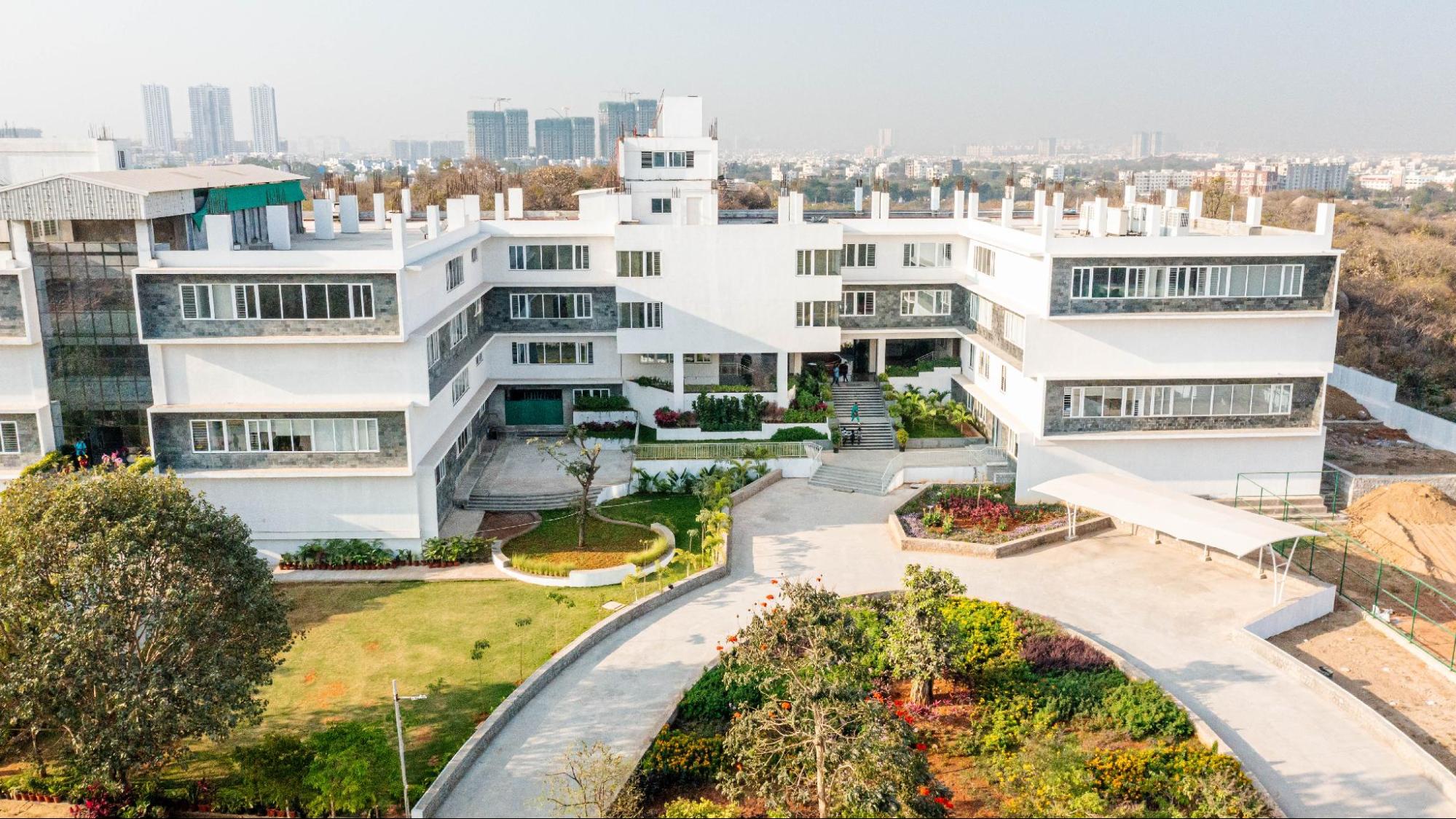
Ganges Valley School is a CBSE school on Nizampet–Bachupally Road in Hyderabad, caring for students from age 3 to 18 since 2012. It is a school where education begins with understanding the child, how they develop and how they learn.
Ganges Valley School at a Glance
What Parents Ask | What You'll Find |
|---|---|
| Where and what? | CBSE school from Nursery to Grade 12, on an 8-acre green campus, established in 2012 |
| Who teaches? | Qualified Early Years Educators with an ECCE qualification, a B.Ed. degree, and a minimum of three years of classroom teaching experience |
| How do children learn? | Enquiry, projects, experiments, field trips and Bagless Days |
| What if my child needs more support? | Varied activities, extra help, a special educator and the student counselling team |
| How will I know how my child is doing? | Formative assessments, constructive feedback, parent-teacher meetings and student-led conferences (Jharokha) |
| What about character? | A shared set of school values called the 5Gs (Generous, Grateful, Green, Grounded, Grit), community service (Yogdaan), and leadership roles from the early years |
A School That Began With One Uncomfortable Question
Most schools begin with a building. Ganges Valley School began with a question.
The management had spent nearly two decades in higher education, watching students at the end of their learning journey. One worry kept returning: by the time young people reached college, their attitude towards learning was already set. For many, education had shrunk to examinations and marks.
So they asked: what if we began earlier? Could children grow up understanding, exploring and enjoying what they learn, instead of simply memorising it?
That question led Dr. Gokaraju Gangaraju to establish Ganges Valley School in 2012. Today, the school is part of the Gokaraju Rangaraju Educational Society, with an educational legacy spanning more than 30 years across school and higher education. The same belief in access shaped the group's wider work, which includes support for schools and colleges in tribal areas. Education here was never meant to be only about individual success. It was also about extending educational opportunities to those who might otherwise have limited access to them.
Why does this matter to a parent? Because a school's origin tends to show up in its daily habits. The rest of this review keeps returning to one test: does the classroom match the question the school was built to answer?
Who Teaches Your Child?
A good curriculum is only as strong as the person delivering it. Teachers at Ganges Valley School hold a B.Ed and bring at least three years of teaching experience. Beyond qualifications, the school looks for professional values and strong communication.
Learning by Doing: How Lessons Come Alive
The school follows the CBSE curriculum from Nursery to Grade XII, and the way it is taught is what parents notice first. Learning is vertically aligned across grades and horizontally integrated across subjects within each grade, with a consistent student-centred approach.
In practice, children learn through:
- Enquiry-based learning, where questions come before answers
- Real-life problem solving and innovative projects
- STEM activities and hands-on experiments
- Sensorial and experiential learning in the early years
- Field trips that take lessons beyond the school gate
- Group work and flip teaching, where students teach and learn from each other
Then there are Bagless Days, dedicated to practical, real-world learning. Through Kaushal Bodh, the school's practical and vocational learning programme, children try their hand at cooking, carpentry, block printing and budgeting.
Every Child, Every Pace
Every parent quietly worries about this. What if my child is slower to read, or races ahead and gets bored? What if they simply learn differently?
Teachers plan for different learning styles and speeds, using varied activities and extra help where it is needed. A special educator and the student counselling team support children who need more.
Ganges Valley also partners with MyPeegu, a psychology-based social-emotional learning platform that works with students, teachers and parents to strengthen emotional wellbeing and create a supportive learning environment.
Wellbeing Comes First, Not Last
One of the school's four guiding beliefs is Wellbeing and Competence. The idea is simple: children learn best when they feel safe, secure and supported, and that security gives them the confidence to take on challenges.
So wellbeing is not squeezed into a single period. The school runs mindfulness and wellbeing programmes, circle time, reflection activities and Upeksha, a programme for social-emotional learning and self-regulation that builds long-term resilience. Children learn to recognise emotions, build empathy, manage conflict and grow in self-awareness. Physical activity is woven into both scholastic and co-scholastic learning, so movement becomes part of the day rather than a contest.
Changing schools can be hard, and new students are not rushed. In their first few weeks, they receive gap bridging, mentoring, peer learning and a buddy system, and the school deliberately avoids academic stress while they settle in.
How Will You Know If Your Child Is Really Doing Well?
A report card with a single number tells you very little. The school puts it well: progress deserves to be understood, not just measured.
Assessment combines formative assessments, term examinations and project work, so progress is tracked through the year and not only at exam time. Constructive feedback and an Individual Development Plan (IDP) guide each learner's growth, so parents see a running picture instead of waiting for one big exam.
Parents also stay closely involved through:
- Regular Parent-Teacher Meetings (PTMs)
- Parent Orientation sessions
- Annual events and parent engagement activities
- Jharokha, the student-led conference, where children present their own learning
Jharokha deserves special mention. It gives children an opportunity to share their learning journey in their own words, allowing parents to gain a first-hand understanding of their progress. It also fosters confidence, communication skills and a sense of ownership of their learning.
A Campus Built for Every Kind of Growth
The 8-acre green campus gives children room to learn, play and breathe. Classrooms are air-conditioned, spacious and well ventilated. Two age-specific libraries serve primary and secondary students, while six hands-on labs (Biology, Physics, Chemistry, Maths, Composite and Computer), an AI Lab with robotics and a campus FM radio station give children many ways to explore and express themselves.
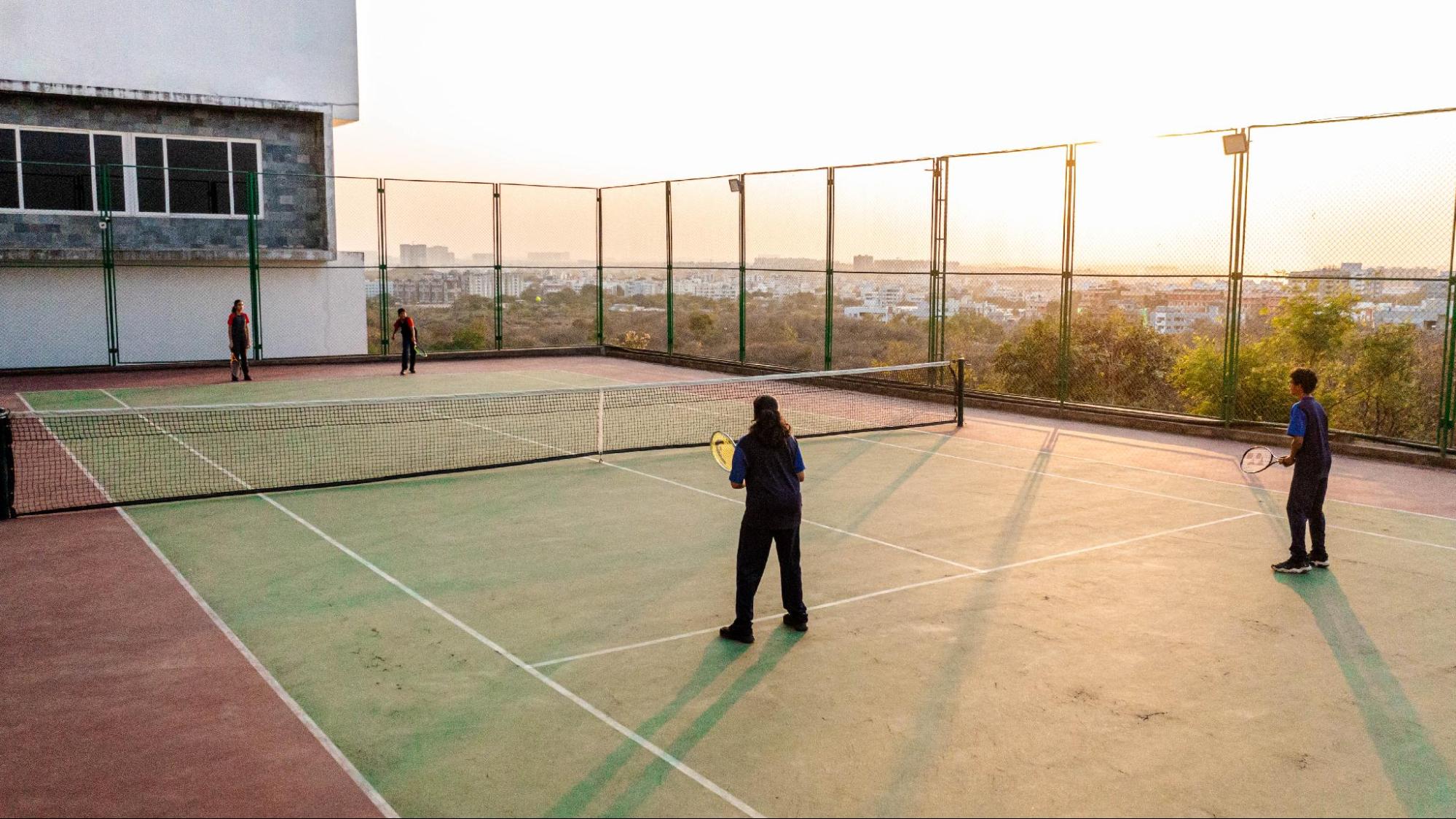
Sports is a genuine strength here. The campus includes four indoor badminton courts, along with facilities for football, basketball, cricket, lawn tennis, table tennis, hockey, volleyball and handball. Students can also take up taekwondo, athletics, kho-kho, chess and yoga.
Safety, Health and Everyday Care
- A CCTV-secured campus, with fire hoses and extinguishers, and regular inspections by building and safety departments
- Ramps for inclusive, barrier-free access
- Two age-specific infirmaries with full-time nurses, one for Pre-Primary to Primary and one for Secondary and Senior Secondary
- An in-house cafeteria with nutritionist-designed menus for students' overall health
- School buses with CCTV, a lady attendant, fire extinguishers and a first aid kit, with GPS tracking that parents can follow through the GVS app
Who Will Love Ganges Valley School
This school is likely to suit your family if you want:
- A CBSE education that values understanding over rote learning
- Teachers who plan for different learning styles and speeds
- A clear, practised values framework rather than slogans
- Real involvement in your child's progress, beyond marks on paper
- Plenty of hands-on, practical and life-skills learning
In short, it is built for families who want strong CBSE foundations and Board preparation without losing the joy of learning along the way. That combination is exactly why it earns a place among the best CBSE schools in Hyderabad.
The Bottom Line
Across this review, one theme keeps returning: Ganges Valley School's practices, from Bagless Days and Jharokha to the 5Gs, reflect its founding belief in making learning joyful and meaningful.
Parents can see this for themselves during a school visit by exploring student projects, understanding how individual learning needs are supported, and seeing how the 5Gs feature in everyday school life.
Every child learns differently, and every family has its own priorities. To compare ratings, parent reviews and key details in one place, visit the Ganges Valley School profile on Yellow Slate. When you're ready to take the next step, explore the Ganges Valley School admissions page to book a visit and begin the process.
Note: Blogs by Yellow Slate are written based on information, knowledge and perspective of the writer. While every caution has been taken to provide readers with accurate information, please use your discretion before taking any decisions based on the information in this blog. In case you find any information that is factually wrong or something that could be made better, please write to us at contact@yellowslate.com.
Curious about how we arrived at this list? We believe parents deserve full transparency on how schools are evaluated and selected. to understand our school selection methodology.


