How Aachi Global School Ayanambakkam Teaches: Inquiry, Experience, and the AGS Approach to Learning
Most parents, when they visit a school for the first time, focus on the obvious things — how clean the campus is, how friendly the staff seems, whether there's enough space for children to run around. These things matter. But there is a quieter, more important question that often goes unasked: How does this school actually teach?
Not what curriculum it follows. Not which boards it is affiliated to. But the moment-by-moment reality of how a teacher and a child interact inside a classroom. That is where the real difference between schools lives.
At Aachi Global School, Ayanambakkam, the answer to that question starts not with a syllabus document or a policy statement — but with the conviction that drove the school's founding in the first place. Mrs. Rebekah Abishek, Founder of AGS, was dissatisfied with the way conventional schooling reduced education to a transfer of textbook content. She wanted something different for children: learning that was rooted in real life, driven by curiosity, and guided by teachers who could think alongside their students rather than simply in front of them.
Eight years and 1,700+ students later, that founding conviction has become a working methodology — one that runs consistently across both the Cambridge and CBSE streams at the Ayanambakkam campus.
The Foundation: Inquiry Before Instruction
The teaching philosophy at Aachi Global School Ayanambakkam is built on a single core belief — that children learn more deeply when they ask questions than when they are given answers.
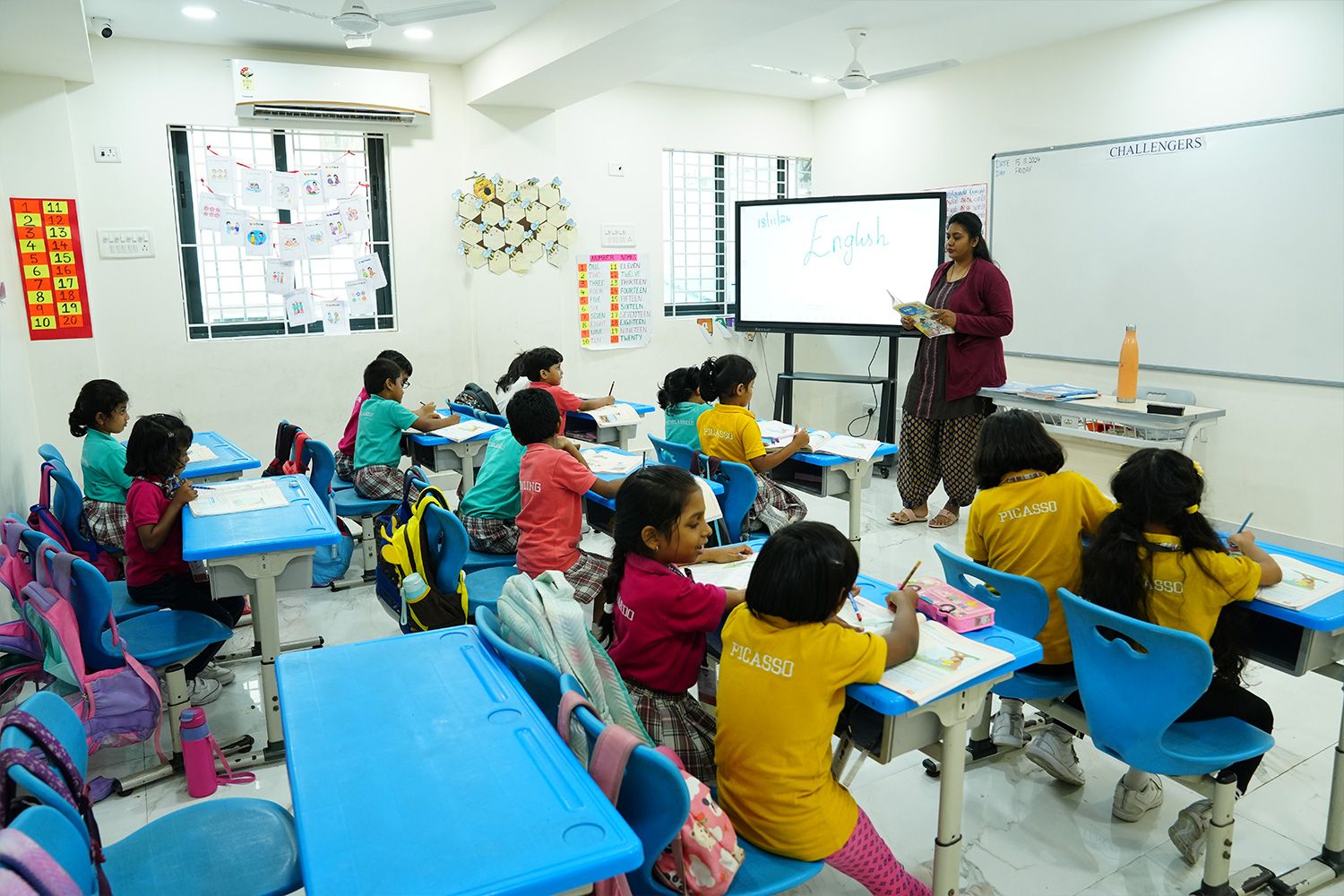
This is not a metaphor. It is a structural choice that shapes how lessons are designed, how teachers are trained, and how classrooms are arranged. At AGS, teachers function as facilitators who partner with students in the learning process rather than as lecturers delivering information from the front of the room. The school's stated approach involves careful observation of students, thoughtful questioning, and documentation of student thinking — a process that allows educators to extend each child's understanding rather than simply push them toward the next topic.
This inquiry-first approach is embedded across both of AGS's curriculum offerings. On the Cambridge track, inquiry is a foundational principle from the Early Years programme onwards, where young learners aged three and above are introduced to concepts through exploration and participation rather than passive reception. On the CBSE track, the same spirit applies — the school explicitly goes beyond the conventional CBSE framework by layering it with interactive methods, project-based engagement, and an emphasis on questioning over memorisation.
For parents comparing the best Cambridge schools in Ayanambakkam or the best CBSE schools in Chennai, this distinction is meaningful. A school that teaches children to question is building a fundamentally different kind of learner from one that teaches them to recall.
Learning by Doing: The Experiential Classroom
The second pillar of the Aachi Global School teaching methodology is experiential learning — the insistence that understanding is built through doing, not just hearing.
This shows up in practical ways across every grade level. Educational trips are a regular feature of the AGS academic calendar, used as genuine curriculum tools rather than rewards. When students visit external environments — whether scientific, cultural, or ecological — they are extending classroom inquiry into the real world and learning to observe, connect, and synthesise information outside a formal setting.
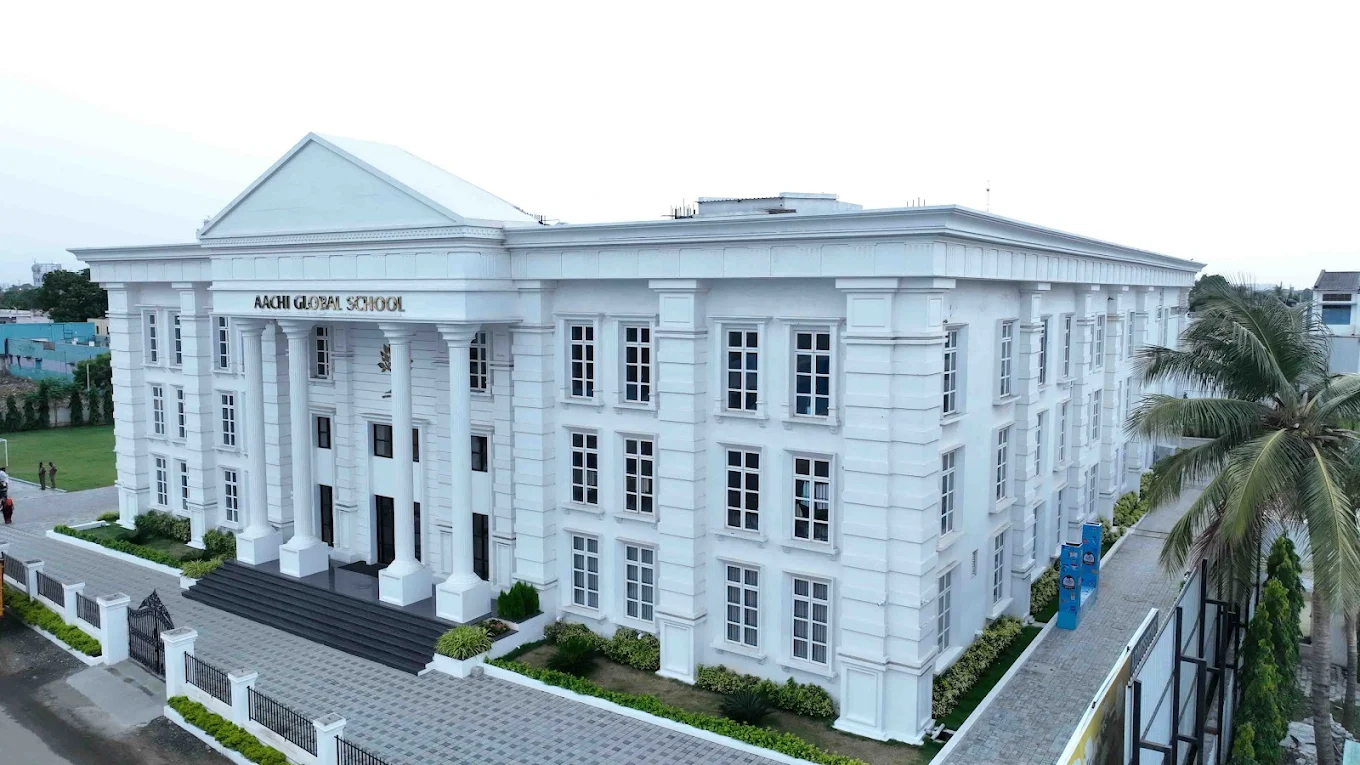
Inside the Ayanambakkam campus, the physical infrastructure has been deliberately built to support this approach. The Robotics Lab is operational from Grade 1 — an unusually early introduction that reflects AGS's belief that technological thinking should be part of every child's foundational education, not something reserved for older students. The STEM Lab enables integrated, hands-on science and technology exploration. Science and Computer Labs are equipped with facilities that allow students to run actual experiments, not just read about them. Even the library, stocked with over 10,000 books, is designed as an active research resource rather than a passive reading room.
The classrooms themselves reinforce this philosophy. Learning spaces at Aachi Global School Ayanambakkam are designed to maximise natural lighting and ventilation, creating an environment that is comfortable and energising rather than institutional. All classrooms are air-conditioned and equipped with modern interactive technology, supporting the kind of dynamic, discussion-led teaching that the AGS methodology demands.
This is not infrastructure for its own sake. It is infrastructure aligned to a pedagogy.
Student-Led Exhibitions and the Art of Deep Reflection
One of the more distinctive features of Aachi Global School's teaching approach is the student-led exhibition — a practice in which students research subjects they find genuinely engaging and then present their findings to their peers and teachers.
This is worth pausing on. Most assessments test what students have been taught. Student-led exhibitions test something different: whether a child can identify a question, pursue it independently, organise what they discover, and communicate it clearly to an audience. These are not skills that emerge from a textbook. They are skills that emerge from a school culture that takes independent thinking seriously.
The practice also places a premium on reading and listening — skills that AGS specifically identifies as central to its educational approach. When students research for exhibitions, they must synthesise information from multiple sources, discriminate between what is relevant and what is not, and develop a coherent line of argument. These are the same skills that Cambridge's IGCSE assessments eventually test — but at AGS, they are being cultivated from the earliest years, long before formal examinations come into the picture.
For parents looking at the best IGCSE schools in Chennai, this early foundation matters more than it might initially appear. Students who have been practising inquiry and presentation for years before their IGCSE examinations arrive have a very different relationship with assessment than students who encounter these demands for the first time in Grade 9.
The Role of Language in the AGS Classroom
Language acquisition is treated at Aachi Global School Ayanambakkam as both a learning tool and a pathway to open-mindedness. The school offers English as the primary medium of instruction, with Tamil, Hindi, and French as secondary language options — giving students the opportunity to develop multilingual competence in a genuinely useful range of languages.
But language at AGS is more than a subject on the timetable. The school's founder specifically identifies language learning as a way for children to become more principled and open-minded — to understand perspectives different from their own and to communicate across cultural boundaries. This framing of language as a character-building tool, rather than merely an academic requirement, reflects a broader aspect of the Aachi Global School teaching methodology: the belief that education should shape who a student is, not just what they know.
In practical terms, this means language skills at AGS are developed through varied and active means — not just grammar exercises, but storytelling, drama, vocal training (introduced in the Early Years), and collaborative discussion. These approaches build fluency and confidence in ways that conventional language instruction often does not.
Arts, Theatre, and the Creative Curriculum
One of the most intentional choices Aachi Global School has made in its teaching approach is the early and sustained integration of the arts.
Theatre, vocal training, and dance are introduced in the Early Years (EY) at AGS — well before most schools consider them relevant. This is not a scheduling accident. The school's approach recognises that the performing arts develop precisely the skills that academic learning requires: concentration, memory, empathy, the ability to inhabit another perspective, and the confidence to present oneself in front of others.
The Art Lab, Music Station, and Dance Studio at the Ayanambakkam campus give these subjects a permanent, dedicated home in the school day — signalling to students that creative expression is not a peripheral activity but a core dimension of education. This integration of arts into the mainstream curriculum is consistent with the Cambridge framework's emphasis on holistic development, and with AGS's broader conviction that wholesome development means recognising and nurturing every dimension of a child's potential.
For families searching for the best international school near Anna Nagar Chennai or the top Cambridge school near Mogappair, this creative dimension is one of the features that sets Aachi Global School apart from institutions that treat the arts as an afterthought to academics.
Personalised Attention and the Teacher's Role
At Aachi Global School Ayanambakkam, the student-teacher ratio is 1:25 across the campus — a ratio that gives educators a genuine ability to observe and respond to individual students rather than simply managing a crowd.
This matters for the teaching methodology in a specific way. An inquiry-based, child-centred approach only works if teachers actually know their students well enough to ask the right questions, notice when understanding is incomplete, and adjust their methods to suit different learning styles. At a ratio of 1:25, with 150 educators across the school's total student body, this kind of personalisation is achievable.
The CBSE programme at AGS makes this explicit as a guiding principle: dedicated educators customise their methods to accommodate diverse learning styles and paces, ensuring that no child is simply swept along by a one-size-fits-all lesson plan. On the Cambridge track, the same philosophy applies — each student's learning experience is shaped by thoughtful, responsive teaching rather than rigid adherence to a preset script.
Reinforcement classes are also available at the Ayanambakkam campus — an additional layer of academic support ensuring that students who need more time with a concept are not left behind while others move ahead.
Sustainable Thinking as a Teaching Tool
One of the less visible but genuinely distinctive aspects of Aachi Global School's teaching approach is its integration of environmental awareness into the school experience.
The Ayanambakkam campus itself reflects this commitment: the grounds feature indigenous plant species, herb gardens, and shade trees, creating a biodiversity-conscious environment that is unusual among urban schools in Chennai. This is not merely decorative. Students are taught to respect and engage with the natural environment through workshops, site visits, and community service — the understanding being that environmental responsibility is a life skill, not an elective subject.
This approach aligns with the school's founding principle that education should be connected to real life. Teaching sustainability through lived experience — not just through a textbook chapter about climate — is exactly the kind of real-world application that the AGS methodology prioritises.
For parents looking at the best schools near Mogappair or the top Cambridge CBSE schools near Ayanambakkam, this eco-conscious strand of the curriculum is a meaningful differentiator: a school that is actively shaping children's relationship with the world they will inherit.
What This Looks Like Across the Years
It is worth tracing the Aachi Global School teaching methodology through the full arc of a student's journey — because it is designed as a continuous, progressive experience, not a collection of isolated approaches.
In the Cambridge Early Years (EY1, EY2, EY3), children aged three and above begin with structured play, sensory exploration, and early language development through theatre and storytelling. Teachers observe, document, and extend children's natural curiosity rather than directing it toward predetermined outcomes.
Through Cambridge Primary (Grades 1–5), the inquiry approach deepens. Robotics is introduced from Grade 1. The 10-subject Cambridge Primary curriculum is delivered through active exploration, interactive assessment, and student-led exhibitions rather than passive note-taking. In the Cambridge Lower Secondary years (Grades 6–8), students develop stronger analytical and research skills, with independent thinking and peer collaboration becoming increasingly central to how lessons work.
By the time students reach the Cambridge IGCSE (Grades 9–10), they are not encountering rigorous, application-based assessment for the first time. They have been building toward it since Early Years — through eight or nine years of being asked to think, question, reflect, and present. That is the cumulative advantage of a school that takes methodology seriously from the very beginning.
For students in the CBSE track (Grades 1–7 at the Ayanambakkam campus), the same foundational principles apply: experiential learning, interactive classrooms, personalised attention, and a consistent message that asking good questions matters more than knowing right answers.
Why Methodology Matters When Choosing a School
It is easy for parents to compare schools on the basis of facilities and fees. It is harder — but more important — to compare them on the basis of how learning actually happens inside.
At Aachi Global School Ayanambakkam, the teaching methodology has been consistent since the school's founding in 2016: inquiry before instruction, experience before examination, and the whole child before the mark sheet. Eight years of operating on this basis, 1,700+ students currently enrolled, and recognition as one of Chennai's top international schools together suggest that the approach works.
For families in Ayanambakkam, Mogappair, Nolambur, Anna Nagar, Arumbakkam, Maduravoyal, Koyambedu, Ambattur, Vadapalani, or any of the many localities across Chennai that AGS's bus routes connect to, the question is not just whether this school is near you. It is whether this school's approach to learning is right for your child.
At AGS, the answer to that question begins the moment a child asks their first question — and is encouraged to keep asking.
Note: Blogs by Yellow Slate are written based on information, knowledge and perspective of the writer. While every caution has been taken to provide readers with accurate information, please use your discretion before taking any decisions based on the information in this blog. In case you find any information that is factually wrong or something that could be made better, please write to us at contact@yellowslate.com.
Curious about how we arrived at this list? We believe parents deserve full transparency on how schools are evaluated and selected. to understand our school selection methodology.


