How Does NCFE Mandur Teach? Inside the School's Teaching Methodology
When parents in Mandur and the surrounding areas of east Bengaluru start evaluating schools, the question that comes up most often isn't about infrastructure or fees — it's about how the school actually teaches. What happens inside the classroom? Is a child expected to sit quietly and absorb information, or is there something more dynamic going on? For families exploring options among the best CBSE schools in Bangalore, National Centre for Excellence Mandur offers answers that go well beyond the standard syllabus-and-board overview.
The teaching methodology at NCFE Mandur is built on a clear, stage-by-stage philosophy — one that changes not just what students learn, but fundamentally how they are expected to engage with knowledge at every age. Understanding this approach is key to deciding whether the school is the right fit for your child.
The 5C Framework: The Philosophy Behind Every Classroom
Before getting into what happens at each grade level, it helps to understand the lens through which NCFE Mandur views education. The school's entire academic approach is organized around what it calls the 5C's of 21st-century learning: Communication, Collaboration, Critical Thinking, Creativity, and Citizenship.
This isn't a motivational poster framework — it's actually the structural backbone of curriculum design at NCFE Mandur. When teachers plan lessons, these five competencies serve as the filter through which subject content is delivered. The aim, as the school describes it, is to move beyond subjects in isolation and instead link STEM with the humanities, language with the arts, and classroom lessons with real-world experience. Furthermore, the school places this philosophy firmly in the context of the National Education Policy 2020, which prioritizes moving away from rote memorization toward competency-based, active learning.
How NCFE Mandur's Teaching Methodology Builds the 5C's Stage by Stage
What makes the NCFE Mandur approach distinctive is that the methodology isn't uniform across all grades. Instead, the school has structured four progressive academic stages — each with its own name, age group, and pedagogical character. The progression moves from Fledgling through Watering, Blossoming, and finally Basking, and the teaching approach evolves meaningfully at each step.
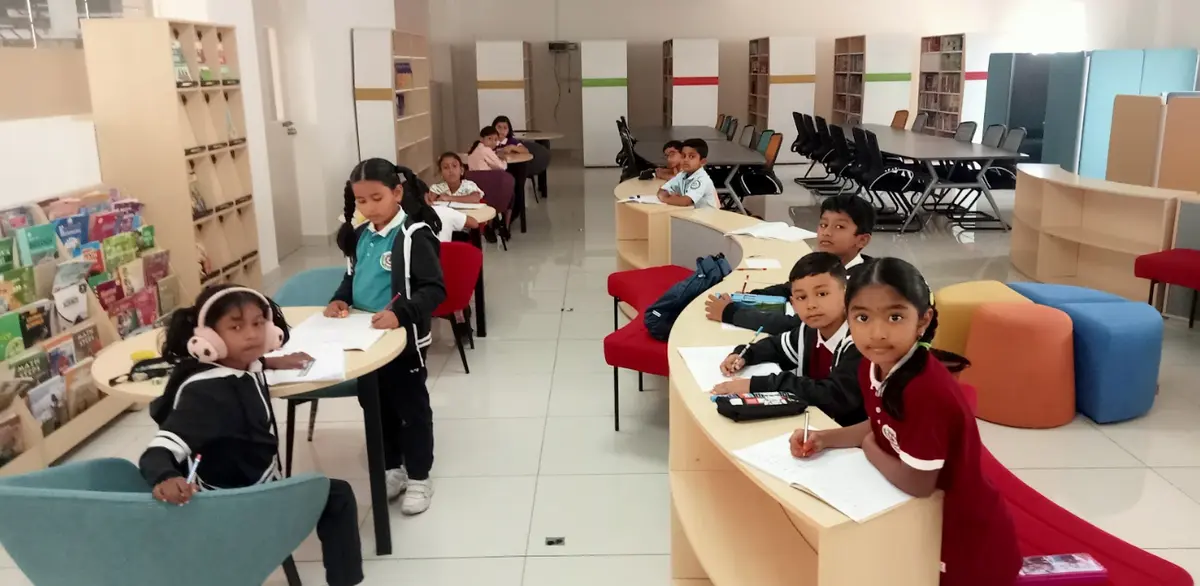
Stage One: Fledgling (Pre-Primary to Grade 2) — Learning Through Play and Exploration
For the youngest learners at NCFE Mandur, the Foundational Stage (Fledgling) is governed by a single core principle: learning must be joyful. The school follows the Early Years Learning Framework, a research-based pedagogy designed to support children's development across physical, social, emotional, and intellectual domains simultaneously.
In practical terms, this means the classroom at this stage looks quite different from a traditional setup. Activities like storytelling, nature play, music and dance, imaginative play, water play, and outdoor learning are not extracurricular additions — they are the curriculum. Children build problem-solving skills through blocks and shape sorters, develop early numeracy and language through play-based discovery, and grow social skills through collaborative group activities rather than isolated desk work.
Notably, the school follows a developmental language sequence of listen-speak-read-write at this stage, meaning listening and speaking are prioritized first to build a natural foundation before formal reading and writing are introduced. This approach is specifically aligned with how early childhood development research says children best acquire language skills, and it reflects a conscious choice by NCFE Mandur to teach in the sequence that matches cognitive readiness rather than simply front-loading literacy.
NCFE Mandur's Teaching Methodology for the Preparatory Years — Hybrid Learning Enters the Picture
As students move into Grades 3 to 5 (the Watering Stage), the teaching methodology at NCFE Mandur introduces a new layer: the Hybrid Learning Model. Technology is integrated into classroom delivery at this stage to support varied learning styles, and Indian arts, stories, and cultural references are woven into lessons to help students connect academic content to their own heritage and context.
The activities list at this stage expands significantly to include science and math lab work, transdisciplinary projects, mock trials and debates, role-playing of real-life events, community service opportunities, and inquiry-based scientific experiments. The philosophy here, as the school describes it, is to make history and civics memorable through reenactment, to build public speaking through structured debates, and to inspire curiosity through hands-on experiments rather than textbook descriptions.
Among the best CBSE schools in East Bangalore, this blending of technology-assisted learning with cultural grounding and experiential activity at the Grades 3–5 level is a considered pedagogical decision — one aimed at building both academic competence and a deeper sense of identity and critical inquiry simultaneously.
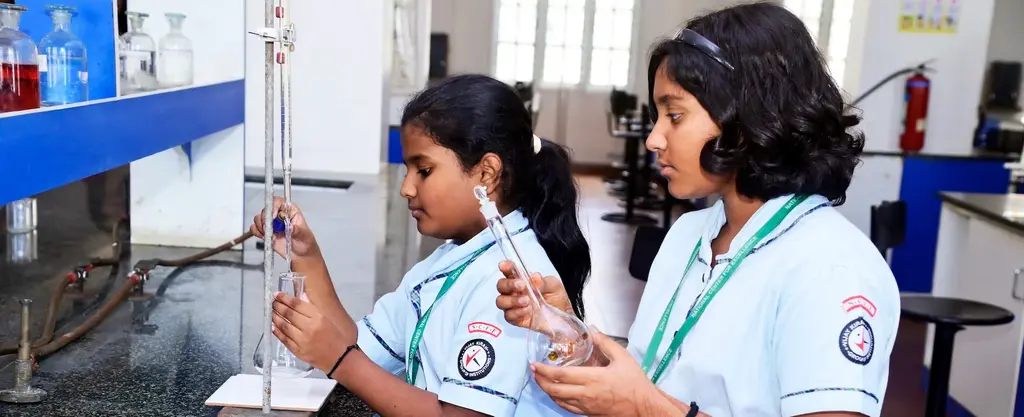
Stage Three: Blossoming (Grades 6–8) — From Activity to Inquiry
The Middle Stage (Blossoming) at NCFE Mandur marks a shift from guided activity-based learning to inquiry and discussion-based learning. Students at this stage are introduced to more complex, abstract concepts across subjects, but the emphasis remains on doing rather than passively receiving.
NCFE Mandur's Teaching Methodology in Middle School: Connecting Learning to Real Life
At this stage, the school places strong emphasis on connecting what is taught to real-life situations. Teachers are expected to blend subject matter across disciplines — for instance, exploring a historical event through multiple lenses, or examining a science concept by connecting it to an everyday experience. Multi-language learning is also incorporated here, with the belief that exposure to different languages deepens both communication skills and cultural empathy.
The school's middle school framework explicitly focuses on developing public speaking and confident communication, research skills and problem-solving, critical and logical thinking, emotional resilience and teamwork, and an understanding of rights, values, and civic responsibility. What this looks like practically is a classroom where students are asked high-level questions, encouraged to take intellectual risks, build student portfolios to reflect their own learning, and engage in inter-school activities to develop confidence beyond familiar surroundings.
Teachers at this stage, according to the school's philosophy, act as facilitators rather than lecturers — creating conditions for students to discover and construct understanding, rather than simply delivering content for students to memorize.
Stage Four: Basking (Grade 9 Onwards) — Learner-Centric and Future-Oriented
At the Secondary Stage (Basking), the teaching methodology at NCFE Mandur shifts again, this time toward a distinctly learner-centric model. Students at this stage are given flexibility in choosing subjects that align with their individual ambitions, and the focus moves toward deepening conceptual understanding and preparing for both competitive academic pathways and broader life readiness.
The school's principal, Ms. R. R. Lalitha Kumari, frames this vision clearly: a future-oriented student at NCFE Mandur should be strong in academic foundations, capable of critical thinking and clear communication, emotionally intelligent, self-disciplined, and prepared for competitive pathways and lifelong learning. This vision shapes how teaching happens at the secondary level — it's not simply about covering the CBSE syllabus, but about building the kind of independent thinker who can use that knowledge purposefully.
Among parents searching for the best schools in Mandur Bangalore, this stage-specific pedagogical design — where the methodology genuinely evolves from play-based exploration in early years to inquiry-led, future-oriented learning at the secondary level — is worth understanding carefully before making an admission decision.
What This Means for Your Child: The Practical Takeaway
The teaching methodology at NCFE Mandur is, at its core, an attempt to answer a fundamental parent question: will my child actually understand and enjoy what they learn, or will they simply pass exams? The school's answer, built into every stage of its academic design, is that understanding and enjoyment are preconditions for lasting academic performance — not luxuries added after the syllabus is done.
For parents considering the best CBSE schools in Bangalore's eastern neighborhoods, including Mandur, Kodigehalli, and nearby areas, NCFE Mandur's approach is particularly relevant if your child learns better by doing, asking, and connecting ideas across subjects rather than by passive instruction. The four-stage progression ensures that the teaching style at each grade matches developmental readiness, while the 5C's framework provides a consistent set of values running through the entire school journey.
To learn more about how this teaching approach is supported by the school's physical learning environment, visit the official NCFE Mandur website. Admissions for the upcoming academic year are currently open, and prospective families are encouraged to explore the school further through its official website.
Note: Blogs by Yellow Slate are written based on information, knowledge and perspective of the writer. While every caution has been taken to provide readers with accurate information, please use your discretion before taking any decisions based on the information in this blog. In case you find any information that is factually wrong or something that could be made better, please write to us at contact@yellowslate.com.
Curious about how we arrived at this list? We believe parents deserve full transparency on how schools are evaluated and selected. to understand our school selection methodology.


