How Does Vishwa Vidyapeeth Vikramashila School Yelahanka Approach Teaching? A Parent's Guide to Neural Education and Pedagogy
Most parents, when they begin shortlisting schools in Yelahanka, arrive at the same impasse. The brochures are glossy. The open days are choreographed. Facilities get photographed; boards get mentioned. And yet the single question that matters most — how does this school actually teach my child? — rarely receives a satisfying answer before the first term begins. Vishwa Vidyapeeth Vikramashila School Yelahanka is, in this respect, a meaningful exception.
What distinguishes VVP from other CBSE institutions in the region is not, primarily, its infrastructure or its examination results — though those carry their own weight. It is the deliberateness with which the school has constructed its pedagogical architecture. The framework integrates cognitive science, structured inquiry, peer-driven instruction, and embedded life-skills development into a single, coherent learning philosophy. That combination is rarer than it should be.
The Neural Education Foundation: Brain-Based Learning at VVP
Neural Science as the Structural Foundation
VVP positions itself — and this is worth examining seriously rather than dismissing as marketing language — as one of the earliest schools in India to formally incorporate neural science into its instructional design. The school's Neural Education approach, delivered through what it terms Neural Education with CMM, proceeds from a deceptively simple premise: emotional safety is not peripheral to learning. It is its precondition.
The methodology targets what neuroscientists call Long Term Potentiation — the biological mechanism by which the brain consolidates experience into durable memory, as distinct from the shallow encoding that characterises most examination-driven recall. In practical terms, this means teachers at VVP are trained to actively dismantle the conditions that inhibit learning: anxiety, performance pressure, passive reception of information. The classroom, in this model, becomes something closer to a cognitive workshop than an information delivery chamber.
For parents evaluating schools across North Bangalore, this framing matters. It signals a school that has engaged with the question of how children actually learn rather than merely what they should learn by when. The difference, compounded over twelve years of schooling, is considerable.
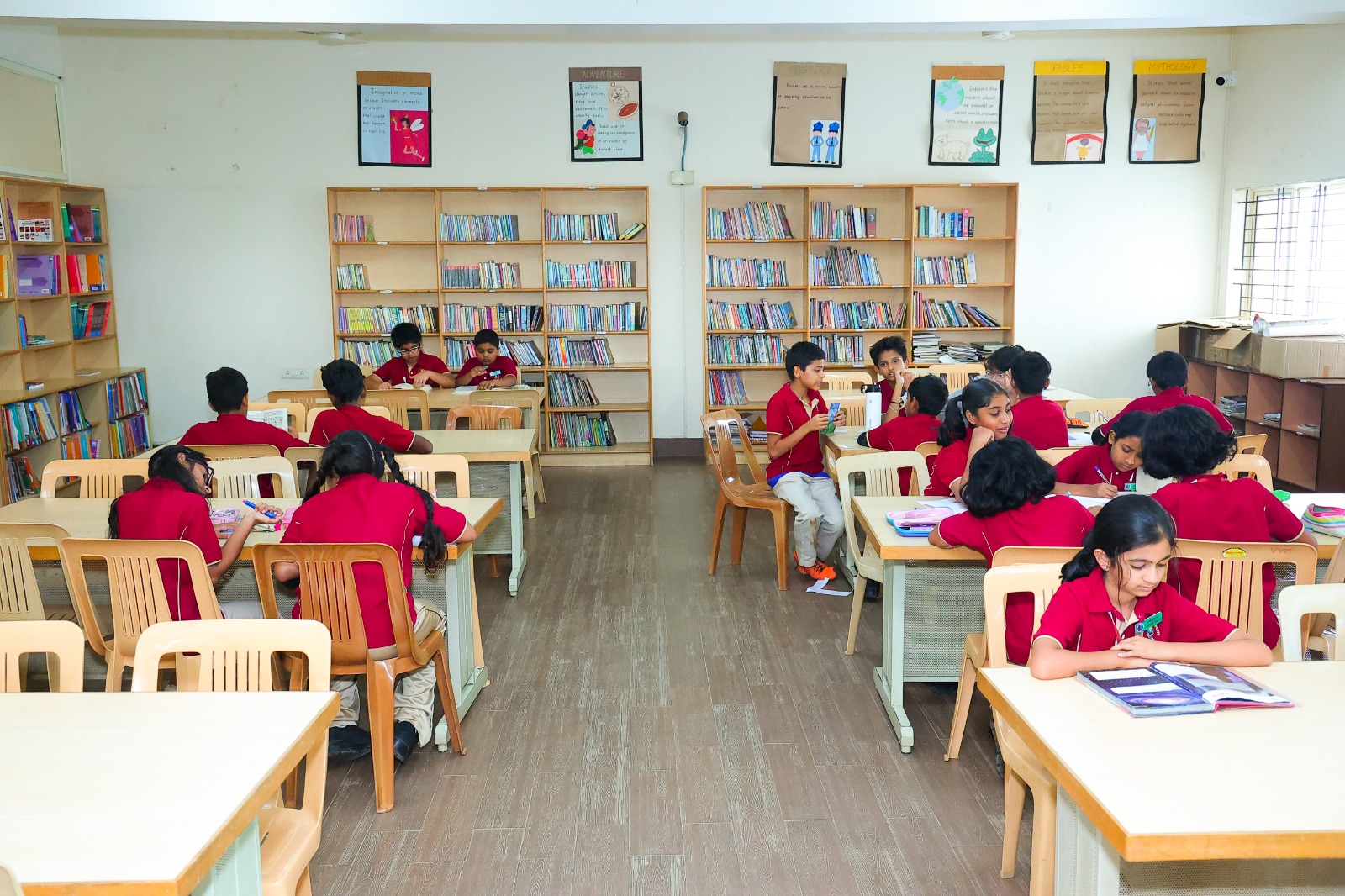
Five Pedagogy Approaches That Define the Classroom Experience
Experiential Learning: Where the Teaching Methodology at Vishwa Vidyapeeth Vikramashila School Yelahanka Gets Practical
Vishwa Vidyapeeth experiential learning programme rests on a conviction — supported by decades of educational research — that active, purposeful engagement produces both deeper understanding and longer retention than passive instruction. The school operationalises this across five structured channels: project-based learning, field and outdoor education, laboratory work, community service, and work-experience internships. What prevents this from becoming merely a list of pleasant activities is the intentionality behind each one. Every channel is designed to surface the real-world relevance of academic content, sharpen critical thinking under conditions of genuine uncertainty, and build problem-solving instincts that no textbook exercise can reliably develop.
Two of VVP's most pedagogically sophisticated approaches — peer learning and flipped learning — are, taken together, genuinely uncommon in Indian school education. Peer learning at VVP is not simply group work with a new label. It deliberately places students in the role of instructor. The cognitive demand of explaining a concept forces a qualitatively different level of engagement with the material — students who teach their peers must identify gaps in their own understanding that passive listening would never expose. Communication skill, leadership disposition, and intellectual confidence emerge as by-products of this process rather than as separately taught subjects.
Peer Learning and Flipped Learning: Students Teaching Students
Flipped learning inverts the classical homework model in a way that frees classroom time for exactly the cognitive work it should prioritise. Students arrive having already engaged with foundational material; the teacher's role then shifts from information delivery to facilitated application, debate, and challenge. The school's own articulation of this — "learning first, teaching second" — is compact but accurate. Students develop not merely academically through this model but across emotional, social, and ethical dimensions as well.
Discovery-Based and Project-Based Learning
Vishwa Vidyapeeth Vikramashila School also employs Discovery-Based Learning. It positions the student as an active investigator rather than a passive recipient. The teacher here functions as a guide — structuring the inquiry environment, activating prior knowledge, pointing toward productive questions, but deliberately withholding the answer to allow the student to construct it. This builds the intellectual habit of going looking for understanding rather than waiting to be given it — a habit that, once formed, transfers far beyond the school gates.
Project-Based Learning extends this further. Students at VVP complete substantial, multi-stage projects with genuine audiences and genuine stakes — producing, for instance, radio broadcasts for the school community, or composing formal correspondence to civic bodies. These are not classroom exercises in any diminished sense. They require research, collaborative decision-making, critical evaluation, and the kind of self-regulation that only real accountability can cultivate.
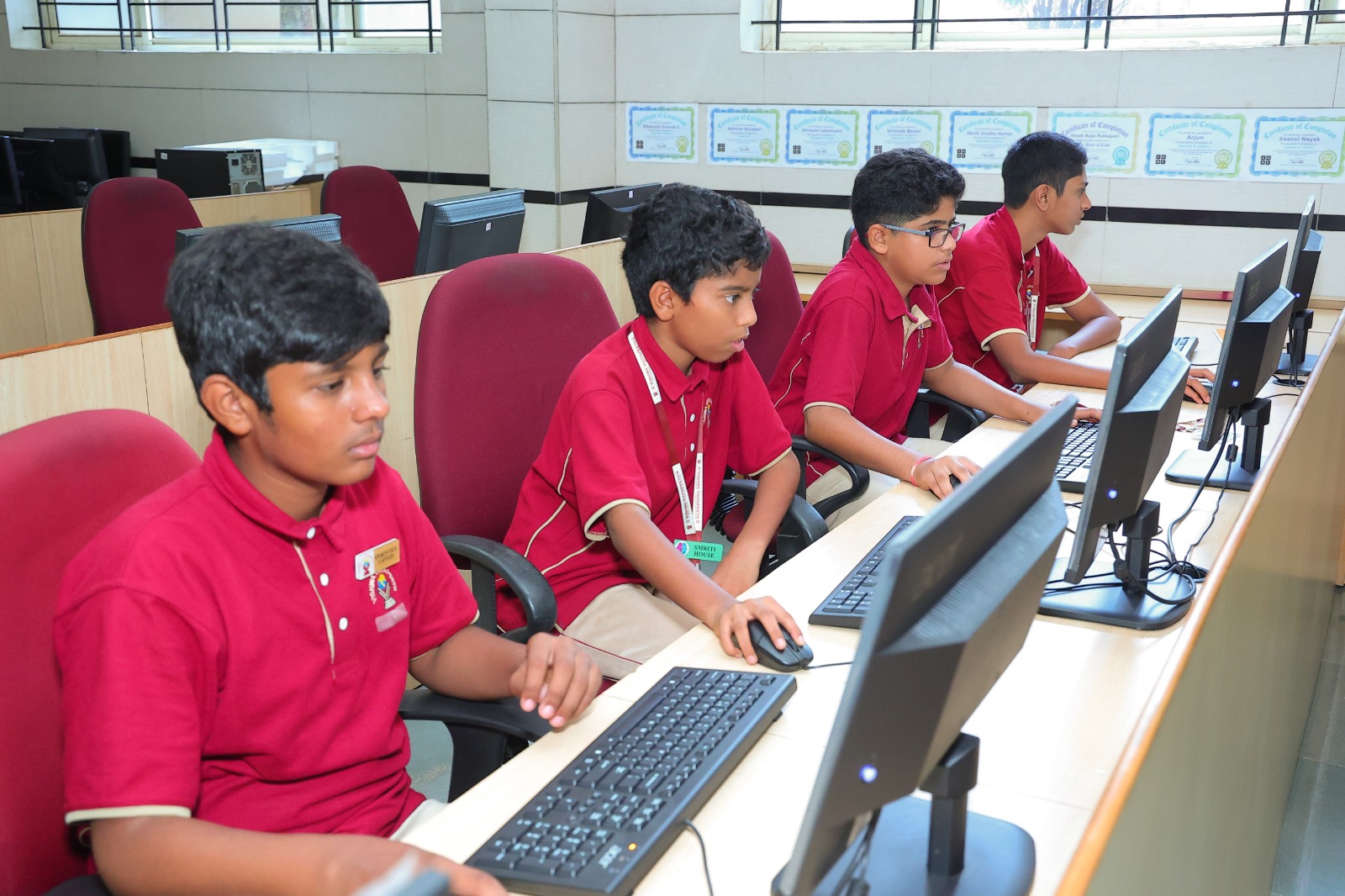
H-Cube Learning: The S2S Framework
VVP's partnership with the Seed to Sapling (S2S) team has produced one of the school's most structurally coherent programmes — H-Cube Learning — which organises the learning experience into three sequential stages. Hearts-ON draws students into a topic emotionally before engaging them conceptually; real-world observations and genuine curiosity are activated before any formal instruction begins. Heads-ON then presents students with open-ended questions and minimally facilitated activities designed to allow them to discover the concept themselves — not to be handed it. Hands-ON completes the sequence through exploratory group or individual activities that culminate in the student arriving at an actual solution to a defined problem.
This three-stage architecture is not arbitrary. It mirrors, with reasonable fidelity, the sequence in which the brain naturally processes and consolidates new information — making it a direct expression of the neural education principles that run through VVP's broader pedagogical philosophy. The S2S framework also explicitly addresses emotional stability and moral formation alongside intellectual development, reflecting a school-wide recognition that academic performance, however important, does not by itself define a well-formed young person.
Dasha Prabodha: When Life Skills Become Core Curriculum
Perhaps the most distinctive aspect of VVP's educational design — and the one most likely to surprise parents familiar with conventional CBSE schools — is its Dasha Prabodha programme. Life skills at most schools are extracurricular: optional, underfunded, and quietly marginalised by examination pressure. At VVP, they are embedded directly into the regular school day as ten formally defined skill domains.
These ten areas are: study of the Bhagavad Gita, Vedas, and Upanishads; Organic Farming; Clay Modelling; Woodwork; Taekwondo; Public Speaking; Art Education; Music; Cooking; and Theatre. Each carries a clear developmental rationale. Clay modelling develops fine motor control, spatial reasoning, and the iterative patience that problem-solving demands. Cooking teaches mathematical reasoning — proportionality, measurement, time management — alongside practical self-reliance and social competence that young adults consistently lack. Theatre, as a body of research has suggested, correlates meaningfully with improved reading comprehension, greater empathy, and enhanced academic engagement. Taekwondo builds disciplined self-awareness, not merely physical fitness.
The school's Director, Ms. Suseela Santhosh, has articulated the motivation for Dasha Prabodha with admirable directness: the gap between formal education and practical human capability is a skills deficit, and VVP has designed this programme explicitly to close it. Among schools in North Bangalore, this degree of curricular intentionality around life-skills education is, frankly, rare.
Extending the Philosophy: Signature Programmes
Vishwa Vidyapeeth Vikramashila School Yelahanka its pedagogical commitments through several institutional programmes that deserve mention in their own right. The Mother-on-Duty initiative invites mothers to spend a full school day on campus, observing the learning environment as it actually functions — a transparency that schools genuinely confident in their methods can afford. Home Visits by teachers allow educators to understand the domestic context in which each child operates, calibrating instruction accordingly and building the relational trust on which effective teaching depends.
A Parent Engagement Programme offers structured workshops designed to help families understand the pedagogical approaches in use — on the sound premise that what happens inside a school is most effective when it is intelligently continued at home, or at the very least not inadvertently undermined. Worth noting too: VVP conducts fortnightly Sanskrit classes for its own teaching staff, a practice that signals, with unusual clarity, a school that expects its educators to remain active learners themselves.
Language Policy and Practical Considerations
On the structural side, Vishwa Vidyapeeth follows a structured language policy reflects the same flexibility-within-framework that characterises the school more broadly. English is the first language from Class 1 through Class 10. Both Hindi and Kannada are offered as second languages up to Class 4, after which students may elect Kannada, Hindi, or Sanskrit from Class 5 onward. A third language is available in Classes 5 through 8. This structure ensures linguistic breadth while preserving meaningful student agency as children mature — entirely consistent with the school's broader commitment to self-directed learning.
Is VVP's Teaching Approach Right for Your Child?
Vishwa Vidyapeeth Vikramashila School Yelahanka is not the right school for every child or every family — no school is. But for children who flourish when given genuine space to discover, who develop confidence through collaboration, and who respond well to environments that are both structured and warm, Vishwa Vidyapeeth Vikramashila School Yelahanka presents a genuinely considered alternative to conventional CBSE schooling.
The school's guiding principle is drawn from Swami Vivekananda — that education is the manifestation of perfection already present in each child. Upon closer examination, every pedagogical choice at VVP, from flipped classrooms and woodwork studios to H-Cube sequencing and Dasha Prabodha, appears to have been made in deliberate service of that conviction. Whether or not one accepts the philosophical framing, the practical architecture it has produced is difficult to dismiss.
To learn more about how the teaching methodology at Vishwa Vidyapeeth Vikramashila School Yelahanka can benefit your child, visit the school's official website and consider requesting a campus tour to see these programmes in action for yourself.
Note: Blogs by Yellow Slate are written based on information, knowledge and perspective of the writer. While every caution has been taken to provide readers with accurate information, please use your discretion before taking any decisions based on the information in this blog. In case you find any information that is factually wrong or something that could be made better, please write to us at contact@yellowslate.com.
Curious about how we arrived at this list? We believe parents deserve full transparency on how schools are evaluated and selected. to understand our school selection methodology.


