How Epistemo Vikas Leadership School Shapes Young Leaders Through Its Teaching Approach
When parents in Nallagandla and across Hyderabad start shortlisting schools, most of them ask the same question — not just "what does this school teach?" but "how does it teach?" The curriculum is usually comparable across institutions, but the teaching approach? That's where schools genuinely differ. And that difference, over twelve years of schooling, is what ultimately shapes whether a child becomes a passive recipient of information or an active, curious thinker.
At Epistemo Vikas Leadership School, Nallagandla, the teaching approach isn't a set of classroom rules pinned to a notice board — it's a philosophy that runs through every subject, every activity, and every grade. The school's mission is clear: to provide a holistic learning experience grounded in multi-dimensional education that leads to excellence in academics, emotional health, physical development, and a leadership mindset. Understanding how that mission translates into actual classroom practice is what this blog sets out to explore.
The Teaching Methodology at Epistemo Vikas Leadership School: A Concept-First Approach
One of the most consistent observations from parents who have reviewed Epistemo is that teaching here is concept-based rather than content-driven. The distinction matters more than it might first appear. In a content-driven classroom, a student memorises that water boils at 100°C and moves on. In a concept-driven classroom, a student understands why that happens — and then applies that understanding to something new. As one parent put it plainly: "teaching is concept based, kids are able to learn fast because content can change but the concept remains the same."
This orientation towards understanding over memorisation shapes how teachers plan lessons, how assessments are designed, and how students are encouraged to approach problems. At Epistemo Vikas Leadership School, this isn't just an aspiration — it's built directly into the academic structures that govern daily learning.
How Differential Learning Personalises Teaching at Epistemo Vikas Leadership School
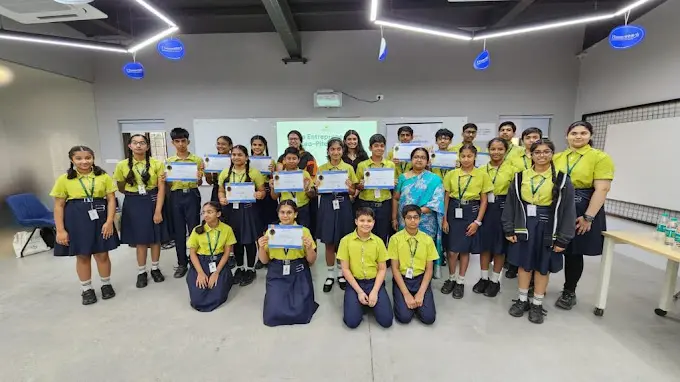
Perhaps the most distinctive dimension of Epistemo's teaching methodology is its formal commitment to differential learning. The goal, as articulated by the school, is to ensure all students are engaged in the learning process by providing tasks that match each individual's needs. This means the school recognises that a single lesson plan cannot work equally well for every child sitting in the same classroom.
In practice, teachers differentiate across four key variables: content (what is taught), process (how it is taught), product (how learning is demonstrated), and the learning environment itself. This differentiation is guided by each student's readiness, cognition levels, and learning profile. The result is that different students in the same lesson may be working on tasks calibrated to their current level, rather than a one-size-fits-all exercise that either bores the high achiever or overwhelms the student who needs more support.
Epistemo's differential learning framework includes three targeted programs: a remedial program for students who need additional scaffolding, a gifted program for high achievers who are ready for deeper intellectual challenges, and a special needs program for students with identified or unidentified learning disabilities. Among the best international schools in Hyderabad, this kind of formalised, tiered approach to teaching is relatively uncommon — and it reflects a serious institutional commitment to not leaving any learner behind.
This framework is also guided by general principles of differentiation that include quality curriculum design, ongoing assessment, flexible grouping, and community building within the classroom. Teachers are not expected to wing it — they're guided by a structure that has been deliberately designed to serve every type of learner.
Futuristic Education: Preparing Students for a World That Doesn't Exist Yet
A teaching approach rooted only in the past isn't enough anymore. The best CBSE schools in Hyderabad are beginning to recognise this, and Epistemo has built an entire strand of its curriculum around what the school calls Futuristic Education — a deliberate effort to equip students with the knowledge and skills needed to navigate an economy and society that is changing faster than any textbook can keep up with.
At Epistemo Vikas Leadership School, this takes several interconnected forms. STEAM Robotics — covering Science, Technology, Engineering, Art, and Mathematics — is integrated into the curriculum as a hands-on program for innovation and problem-solving. The school's philosophy here is direct: children learn through play, so the learning is designed to be engaging, creative, and experiential rather than instructional.
ICT (Information and Communication Technology) is embedded to build digital literacy from an early age. Moreover, for students in Grades 9 and 10, the ICT curriculum extends into emerging technologies including Artificial Intelligence, Internet of Things (IoT), Big Data, Blockchain, 3D Printing, and Cybersecurity — all taught as part of the formal school program through a dedicated Idea Lab that sits alongside the ICT lab. For parents evaluating the best Cambridge schools in Hyderabad, this kind of future-readiness in the curriculum is increasingly a deciding factor.
Futuristic Education at Epistemo also includes what the school describes as Skills of Innovation — a curriculum strand covering origami, culinary skills, photography, movie-making, gardening, entrepreneurship through an Investopedia module, and a range of other practical skills. The underlying belief is that learning to do things — really do them, not just read about them — builds the kind of self-directed confidence that no mark sheet can capture.
The TED-Ed Club: Teaching Methodology at Epistemo Vikas Leadership School in Action
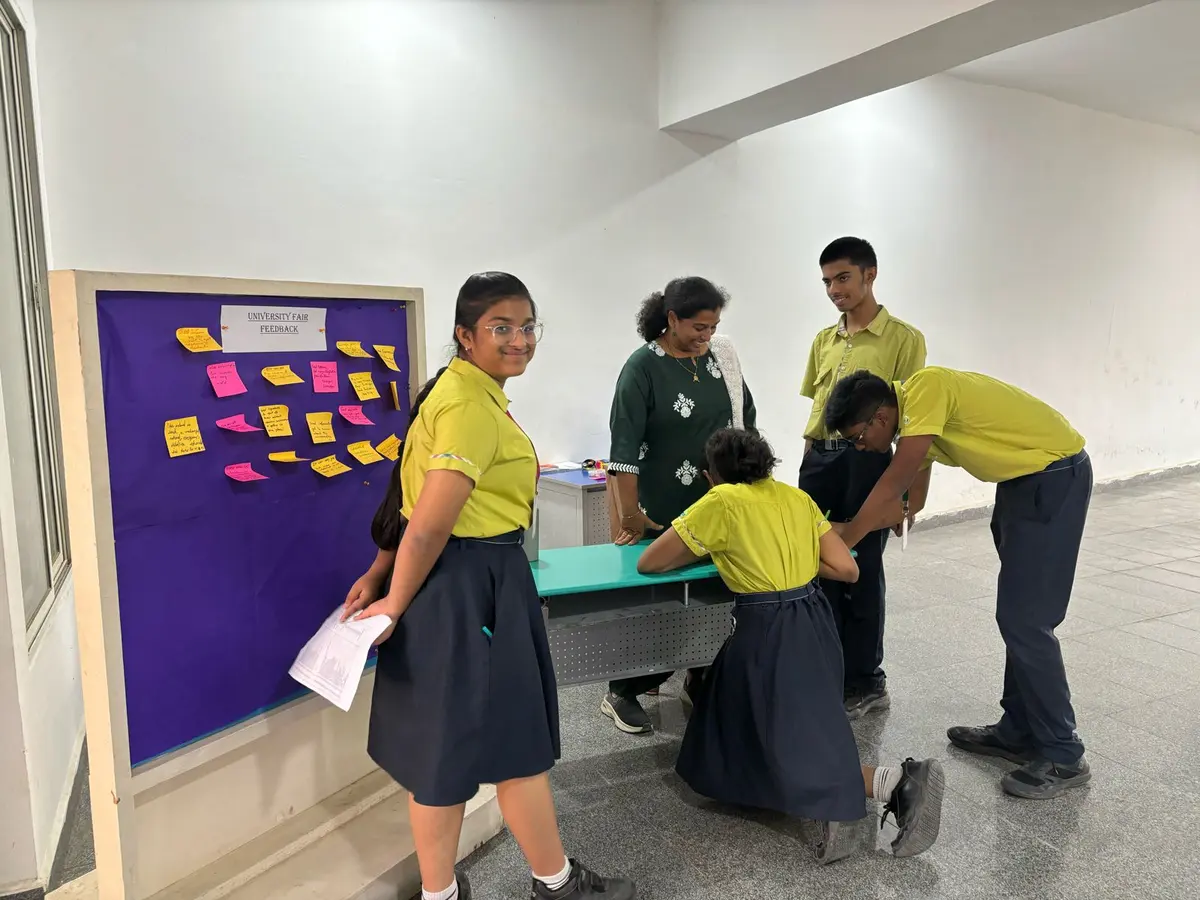
If differential learning tells you how Epistemo teaches to each student's needs, and futuristic education tells you what the school teaches beyond textbooks, then the TED-Ed Club at Epistemo tells you something about what the school ultimately wants students to become — confident thinkers who can articulate ideas, inspire others, and stand in front of an audience without flinching.
Aligned with the internationally recognised TED-Ed programme, the club meets weekly and takes students through a structured journey: idea mapping, storytelling development, and presentation refinement. The process culminates in a TED-Ed Club Showcase where students present their talks to an audience of peers, teachers, and family. Skills developed through this process include public speaking confidence, critical thinking and research, creative expression, and community building.
What makes this relevant to a discussion of teaching methodology is that the TED-Ed Club is not an optional enrichment for a handful of confident students. It is a structured program that deliberately builds the communication and analytical skills that formal classroom instruction often doesn't prioritise. At a school whose vision is to co-create inspired generations that drive global society with innovation and integrity, the TED-Ed Club is pedagogy with purpose. Among the best schools in Nallagandla and the wider Serilingampally area, this kind of platform for structured student voice is genuinely rare.
Special Education and Inclusion: An Integral Part of Teaching at Epistemo
Any honest look at teaching methodology must include how a school handles learning differences. At Epistemo Vikas Leadership School, special education is treated as an integral part of the academic structure rather than a peripheral service. The school's differential learning framework explicitly accounts for students with learning disabilities — both identified and unidentified — and the special needs program is designed to ensure these students are not simply placed in mainstream classrooms and left to manage.
This inclusion-focused approach connects directly to the school's broader teaching philosophy: every student is capable of learning and growing, but not every student learns in the same way at the same pace. The teachers' role, therefore, is not to deliver a fixed lesson but to find the right entry point for each child.
Parents considering the best international schools in Hyderabad who have children with specific learning needs will find this aspect of Epistemo's methodology worth exploring in depth by visiting the school directly.
What This Teaching Approach Means for Your Child
When you put all of this together — concept-based learning, differential instruction, futuristic skill-building, the TED-Ed platform, and a genuine inclusion framework — you get a school where the teaching methodology is designed to develop the whole person, not just the exam-ready student. The school's vision of co-creating inspired generations is not a tagline; it's the organising principle behind how teachers plan and deliver learning every single day.
For parents looking at the admission process at Epistemo Vikas Leadership School and trying to decide whether this is the right fit, the teaching approach described here is worth examining not in isolation but in the context of your child's specific learning style, strengths, and where they need the most support. A school's pedagogy is only meaningful when it matches what your child actually needs from their learning environment.
Parents interested in exploring Epistemo's teaching approach firsthand are encouraged to visit the school's official website and request a campus interaction. Seeing the learning environment directly — the Idea Lab, the TED-Ed Club sessions, the classroom structures — will give a much clearer picture than any written description can.
Note: Blogs by Yellow Slate are written based on information, knowledge and perspective of the writer. While every caution has been taken to provide readers with accurate information, please use your discretion before taking any decisions based on the information in this blog. In case you find any information that is factually wrong or something that could be made better, please write to us at contact@yellowslate.com.
Curious about how we arrived at this list? We believe parents deserve full transparency on how schools are evaluated and selected. to understand our school selection methodology.


