How K-IIT World School Sohna Road Teaches: The F.I.D.R. Framework and NEP 2020 Approach
Walk into most schools in Gurugram and you will find teachers standing at the front of a classroom, students sitting in rows, and a board covered in content that children are expected to memorise in time for exams. It is a model that has persisted for decades, and it produces a specific kind of outcome: students who perform well in assessments but often struggle to apply what they know when the test paper is not in front of them.
K-IIT World School on Badshahpur Sohna Road takes a deliberately different path. Aligned fully with the National Education Policy 2020 and grounded in its own proprietary F.I.D.R. Framework, the school has built a teaching and learning model that is not just about delivering content — it is about developing how children think, question, and make sense of the world. For parents in Sectors 65, 66, 67, Bhondsi, Badshahpur, and across the Sohna Road corridor of South Gurugram who want to understand what makes K-IIT World School Sohna Road teaching methodology genuinely different, this blog breaks it down in full.
What Is the F.I.D.R. Framework at K-IIT World School Sohna Road?
The F.I.D.R. Framework is K-IIT World School's own structured model for classroom learning. It is the organising principle behind how every lesson is designed, sequenced, and delivered — from Toddler through Grade 12. The four letters stand for a progressive, four-stage learning cycle: Focus, Introduce, Develop, and Review. Each stage has a specific purpose, and together they create a rhythm of learning that moves students from initial curiosity through structured instruction, deep practice, and reflective consolidation.
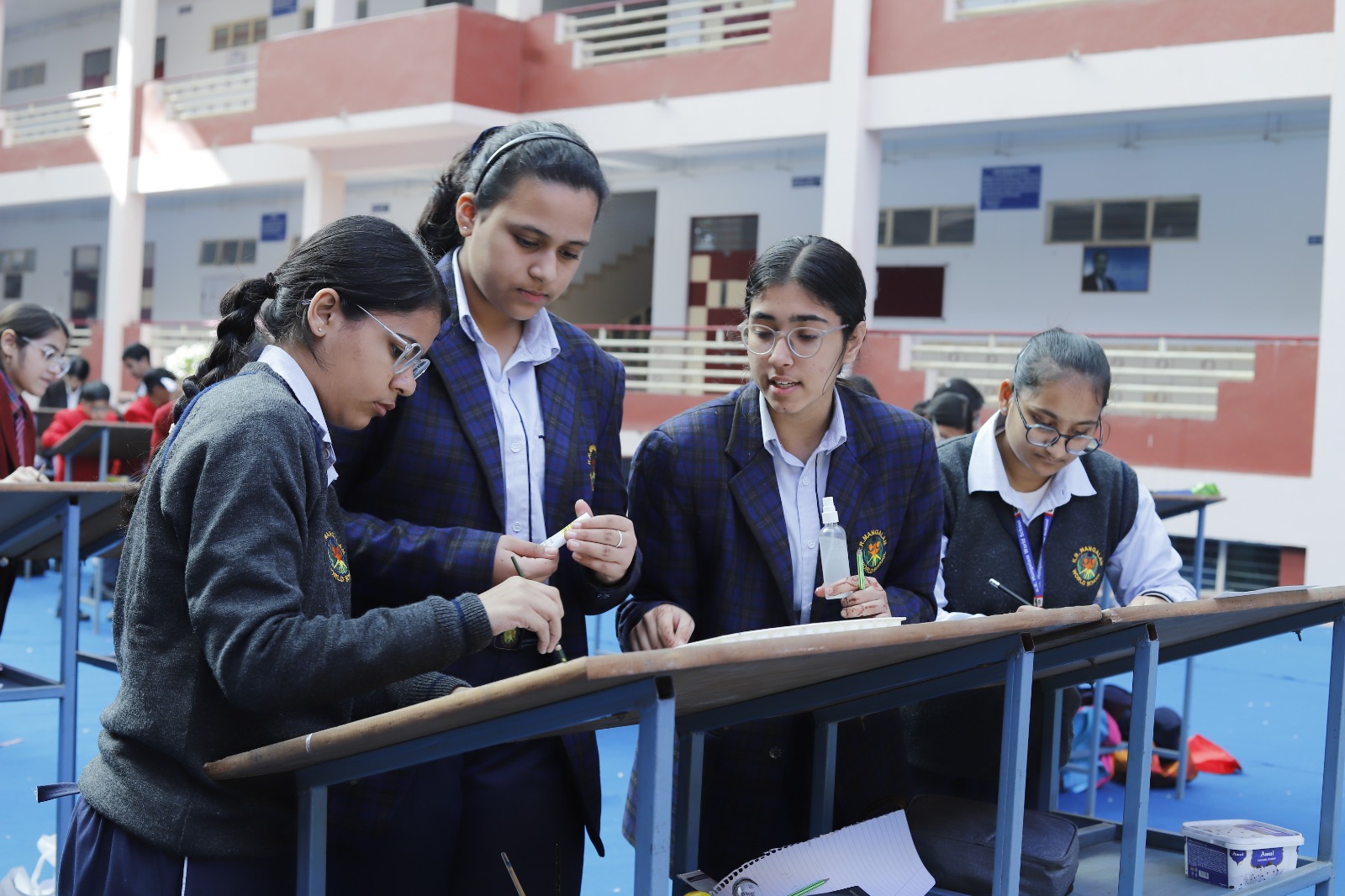
In the Focus stage, the lesson opens not with a lecture but with a provocation — a question, an image, a problem, or a real-world scenario designed to activate prior knowledge and generate genuine curiosity. Students begin thinking before they begin receiving. In the Introduce stage, the teacher brings in new information, concepts, or skills in a structured way, but always anchored to the curiosity and prior knowledge activated in the opening. In the Develop stage — arguably the most critical — students move from passive reception to active construction. This is where they work through problems, conduct investigations, collaborate with peers, and begin building their own understanding through doing. Finally, in the Review stage, students consolidate, reflect, and connect. This might involve discussion, peer teaching, written reflection, or a brief formative check — but the purpose is always the same: to make learning conscious and lasting.
The K-IIT World School Sohna Road teaching methodology built on the F.I.D.R. Framework ensures that every class, in every subject, across every year group, follows this same principled arc. It removes the randomness from teaching and replaces it with intentional design.
NEP 2020 Alignment: What It Means in the Classroom
The National Education Policy 2020 is widely discussed but inconsistently implemented. At K-IIT World School Sohna Road, NEP 2020 is not a decorative commitment displayed on the school website — it has direct consequences for what happens inside classrooms every day.
NEP 2020 calls for a shift from rote memorisation to competency-based learning, from subject silos to interdisciplinary connections, and from teacher-led instruction to student-centred exploration. The K-IIT World School Sohna Road teaching methodology responds to each of these imperatives concretely.
Competency-based learning at K-IIT means students are assessed not only on whether they can recall content, but on whether they can apply it. Project-based learning sits at the core of the academic programme — students regularly work on projects that cut across subject boundaries, requiring them to draw on knowledge from science, mathematics, social studies, and language simultaneously. This is NEP 2020's interdisciplinary principle made operational.
Art integration, a specific requirement of NEP 2020, is embedded across subjects at K-IIT. Visual and performing arts are not treated as separate activities for certain students with artistic inclinations — they are used as vehicles for understanding concepts across the entire curriculum. A science concept might be explored through a visual map; a historical event might be processed through drama. This approach caters deliberately to students with different learning styles — visual, kinaesthetic, auditory — ensuring that no single pedagogical mode dominates.
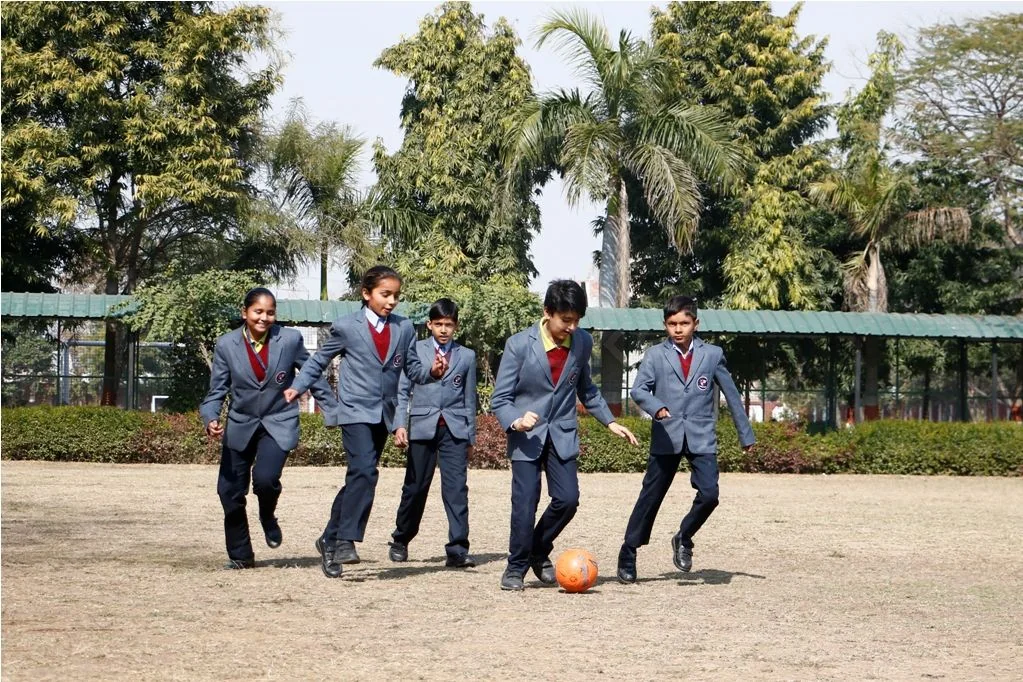
The school's Wednesday Activities and Friday Clubs structure extends the NEP 2020 principle that learning must happen beyond the confines of formal academic subjects. Students choose pursuits that match their interests and discover, through sustained engagement, what genuine motivation to learn actually feels like.
Harvard-Led Visible Thinking Routines
One of the most distinctive pillars of the K-IIT World School Sohna Road teaching methodology is the use of Visible Thinking routines developed through Harvard University's Project Zero initiative. Visible Thinking is a research-backed approach with over thirty structured routines — short, repeatable thinking sequences — designed to make the process of understanding explicit rather than invisible.
In a traditional classroom, thinking happens inside students' heads and is never examined. A student either knows the answer or does not. Visible Thinking changes this by giving students structured prompts — such as See, Think, Wonder or Think-Pair-Share — that make the steps of reasoning, questioning, and meaning-making visible and discussable. When thinking is visible, teachers can see where understanding is forming, where misconceptions are taking root, and where deeper questioning is needed. Students, in turn, develop metacognitive habits — the ability to think about their own thinking — which is one of the strongest predictors of long-term academic success.
At K-IIT World School, these routines are woven into daily lessons across subjects and year groups. They are not occasional strategies deployed when time allows — they are structural elements of the learning environment, shaping the culture of every classroom.
Project-Based Learning and the G.R.A.D.E. Curriculum
Project-Based Learning (PBL) at K-IIT World School is delivered through the school's proprietary G.R.A.D.E. curriculum framework — a further layer of the K-IIT World School Sohna Road teaching methodology that structures how students move from receiving knowledge to applying it in meaningful, real-world contexts.
Within G.R.A.D.E., students are regularly presented with authentic problems — not textbook exercises with known answers, but genuine challenges drawn from real-world contexts — and asked to work through them collaboratively. A project might involve designing a sustainable solution to a local environmental issue, building a working prototype in the NITI Aayog-certified Atal Tinkering Lab, or conducting original research and presenting findings to peers and teachers in a structured format.
The Atal Tinkering Lab at K-IIT World School gives students in Classes 6 through 12 access to 3D printers, robotics kits, IoT sensors, electronics prototyping tools, and coding environments — all in service of the school's belief that the most powerful learning happens when students are solving real problems with real tools. The Incubation Centre further extends this by providing a structured space where students can take nascent ideas and develop them into concrete proposals, models, or initiatives.
This connects directly to a core tenet of NEP 2020: that schools must produce not just knowledgeable graduates but innovators, problem-solvers, and lifelong learners capable of contributing to a rapidly changing world.
Technology Integration: Microsoft Showcase School Distinction
K-IIT World School Sohna Road holds the distinction of being a Microsoft Showcase School — a recognition awarded only to institutions that demonstrate exemplary, systemic integration of technology into teaching and learning. This is not simply a matter of having smart panels in classrooms, though the school has those as well. It reflects the way technology is embedded into the K-IIT World School Sohna Road teaching methodology at a structural level.
Microsoft tools are used to create collaborative learning environments in which students can work together on projects in real time, access differentiated resources based on their learning level, and receive feedback that is immediate, specific, and actionable. Hybrid learning capabilities ensure that learning continuity is maintained regardless of circumstance. Digital literacy is treated not as a separate subject but as a transversal skill woven throughout all academic work — a direct implementation of NEP 2020's vision for students who are genuinely equipped for a technology-shaped future.
Life Skills and the Happiness Curriculum
Perhaps the most philosophically grounded element of the K-IIT World School Sohna Road teaching methodology is the explicit integration of life skills and a Happiness Curriculum into the daily structure of school life.
The school's motto — I am a promise, I am a possibility — is not ornamental. It reflects a foundational belief that academic outcomes are inseparable from social-emotional development. The Happiness Curriculum, delivered through daily sessions, addresses emotional regulation, mindfulness, gratitude, and positive relationships. It acknowledges what research on child development has long confirmed: that students who feel emotionally safe, seen, and valued learn more deeply and retain more durably than those who do not.
The Life Skills Lab at K-IIT provides structured, practical opportunities for students to develop competencies that formal academic subjects rarely address — financial literacy, household management, interpersonal communication, civic responsibility, and vocational exposure. These are not enrichment activities for top performers; they are core components of what every student at K-IIT is expected to develop across their years at the school.
Conclusion
The K-IIT World School Sohna Road teaching methodology is not a collection of individual practices — it is a coherent, layered, principled system. The F.I.D.R. Framework gives every lesson a consistent, evidence-informed structure. NEP 2020 alignment ensures that what is taught, and how it is taught, prepares students for a world that will demand adaptability, critical thinking, and real-world problem-solving. Harvard's Visible Thinking routines make the process of understanding explicit and developmental. Project-based learning through the G.R.A.D.E. curriculum and the Atal Tinkering Lab turn knowledge into capability. Microsoft Showcase School-level technology integration and the Happiness Curriculum ensure that every child at K-IIT is supported as a whole learner — intellectually, emotionally, and practically.
For parents in Bhondsi, Badshahpur, Sector 65, 66, 67, and across the Sohna Road belt of Gurugram who want their child to be genuinely educated — not just schooled — the K-IIT World School Sohna Road teaching methodology offers a compelling and verifiable answer to the question of how learning should happen.
Note: Blogs by Yellow Slate are written based on information, knowledge and perspective of the writer. While every caution has been taken to provide readers with accurate information, please use your discretion before taking any decisions based on the information in this blog. In case you find any information that is factually wrong or something that could be made better, please write to us at contact@yellowslate.com.
Curious about how we arrived at this list? We believe parents deserve full transparency on how schools are evaluated and selected. to understand our school selection methodology.


