How NCFE Indiranagar Teaches — A Look at the Pedagogy Behind the Results
When parents in Bangalore start shortlisting schools, the questions are pretty predictable: Which board? What are the fees? How are the results? But there's a deeper question that doesn't get asked often enough — how does the school actually teach? Two schools can follow the same CBSE curriculum and produce very different kinds of students. The difference lies in the classroom — in the thinking behind the teaching.
At National Centre for Excellence, Indiranagar, the teaching methodology isn't an afterthought bolted on to an existing syllabus. It is, in many ways, the whole point. For parents evaluating the best CBSE schools in Bangalore, understanding how NCFE Indiranagar approaches pedagogy reveals why the school consistently produces not just grade-scorers, but genuinely capable young people.
The 5C Framework: What NCFE Indiranagar Actually Teaches For
Most schools talk about preparing children for the future. NCFE Indiranagar has put a specific framework to that idea. The school's entire academic approach is anchored in what it calls the 5Cs of the 21st century: Communication, Collaboration, Critical Thinking, Creativity, and Citizenship. These five competencies form the backbone of how lessons are designed, how students engage with material, and what teachers are ultimately trying to develop in every classroom interaction.
This isn't just a philosophy statement on a brochure. The 5C framework means that when a student works on a project, the goal isn't just a correct answer — it's also whether they communicated their thinking clearly, whether they collaborated well, and whether they applied creative problem-solving. Among the best CBSE schools in Indiranagar, this kind of skills-first orientation genuinely sets NCFE apart from more traditionally structured schools in the area.
Four Stages, One Coherent Journey
One of the more thoughtful aspects of NCFE Indiranagar's teaching methodology is how it structures learning across a child's school life. Rather than treating every grade as a flat continuation of the previous one, the school organises its academic journey into four named stages — each with a distinct pedagogical character.
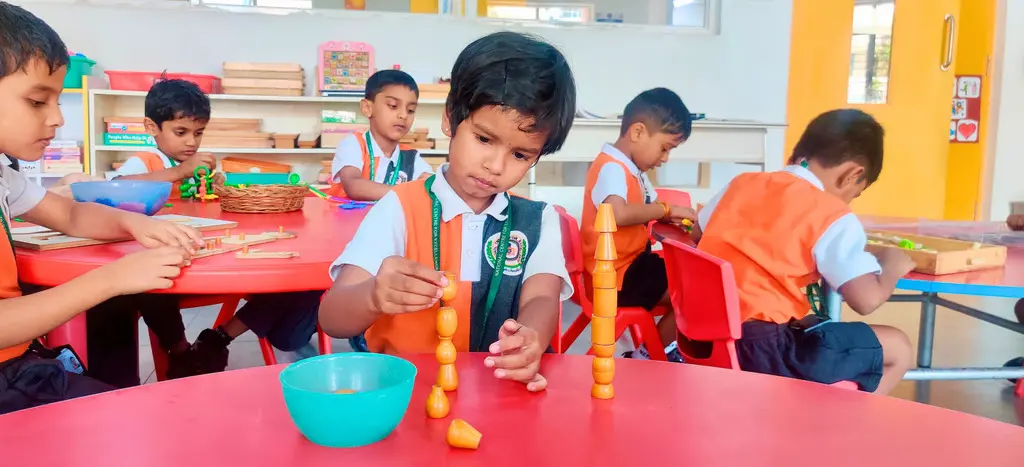
The first is the Fledgling Stage (Pre-Primary to Grade 2), built entirely around play-based learning. At this level, teaching at NCFE Indiranagar follows the Early Years Learning Framework, a research-grounded approach that supports children across physical, social, emotional, and intellectual domains simultaneously. The school is explicit that every child progresses at their own pace, and the curriculum is designed to meet individual developmental needs rather than push every child through the same timeline. Activities at this stage — storytelling, nature play, imaginative play, music and dance, outdoor learning — are not extras; they are the primary vehicles through which learning happens. The developmental sequence the school follows — listen, speak, read, write — mirrors how children actually acquire language, rather than forcing early writing before listening and speaking skills are properly established.
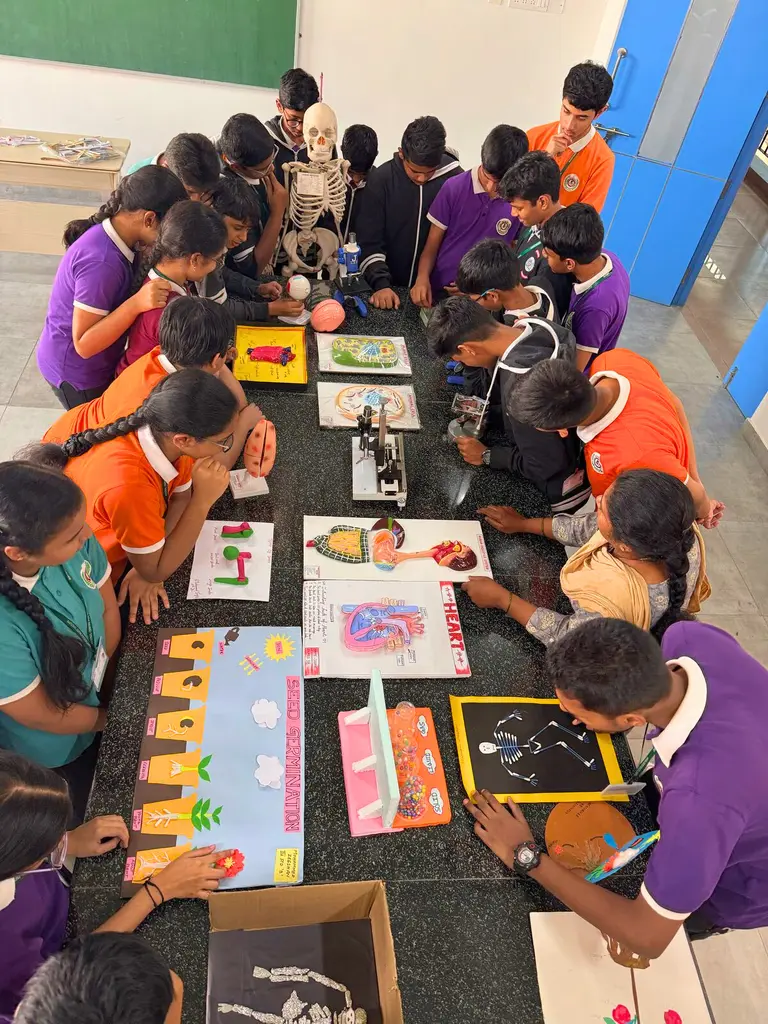
The Watering Stage (Grades 3–5) marks a shift toward hands-on experimentation and active exploration. Here, teaching methodology at NCFE Indiranagar emphasises integrating play with practical activities as students begin engaging with more complex ideas. Real-world scenarios become central to how subjects are introduced, and the ability to observe, experiment, and draw conclusions starts taking shape as a core classroom skill. For parents of children in this age group — roughly 8 to 11 years old — this is the stage where a school's pedagogy either builds genuine curiosity or begins to suppress it in favour of rote preparation. NCFE's choice to maintain active, discovery-led learning here reflects a deliberate commitment to the former.
By the Blossoming Stage (Grades 6–8), teaching evolves into what the school describes as transdisciplinary learning. Students are guided to identify patterns across subjects, connecting learning from one domain to another. This is where NCFE Indiranagar's methodology starts preparing students for the kind of multi-disciplinary thinking that higher education and professional life actually demand. The best schools in East Bangalore tend to have strong academic programmes at this stage, but the transdisciplinary angle at NCFE is a distinguishing factor worth paying attention to.
Finally, the Basking Stage (Grades 9–12) brings a learner-centric focus to the secondary years. Teaching methodology at NCFE Indiranagar at this level emphasises active participation and experiential learning, with students given flexibility in choosing subjects that align with their individual ambitions. Rather than a one-size approach to board preparation, the school aims to develop deep conceptual understanding alongside strong values and critical thinking — equipping students not just for exams but for the various paths that follow.
Differentiated Instruction: Meeting Every Learner Where They Are
A framework is only as good as how it gets implemented in an actual classroom. What's particularly notable about NCFE Indiranagar's teaching methodology is the emphasis on differentiated instruction and intentional scaffolding. This means teachers are trained to recognise that students in the same classroom are not at the same point in their learning journey — and to design instruction accordingly.
The school uses a combination of ongoing formative assessments and well-structured summative assessments to track individual student progress. Rather than using assessments purely as grading instruments, the purpose here is diagnostic: to understand where each learner is, and to guide them more effectively from that point. This system feeds back directly into teaching decisions, making it a genuinely responsive approach rather than a static one.
The school is also clear about its commitment to equity in the classroom. Teachers function as what NCFE calls a professional learning community — educators who continuously collaborate and develop together to improve outcomes for students. This internal professional culture has direct implications for the quality of classroom teaching that students experience. Among the best CBSE schools near Jeevan Bhima Nagar, this kind of structured teacher development is not always visible to parents but makes a tangible difference over time.
Teaching Higher-Order Thinking and Metacognition
One of the more intellectually ambitious aspects of NCFE Indiranagar's pedagogy is its explicit focus on Higher Order Thinking Skills. Rather than settling for comprehension and recall, teachers are expected to create learning environments where students question, analyse, reflect, and apply knowledge in meaningful ways. This is the difference between a student who can answer "what happened" and one who can engage with "why it happened" and "what might happen next."
Alongside this, the school incorporates metacognition — helping students understand and reflect on how they learn, not just what they learn. For parents thinking about the best schools in Bangalore for long-term development, this focus on self-aware learning is significant. Children who understand their own learning process become more independent, more adaptable, and more resilient as academic demands increase through the years.
Mindfulness and Well-Being as Part of the Teaching Methodology
What often gets overlooked in discussions about pedagogy is the emotional environment in which learning happens. NCFE Indiranagar integrates mindfulness and mental well-being directly into its curriculum — not as a wellness programme running parallel to academics, but as a component of how the school thinks about student development. The reasoning is straightforward: students who are emotionally grounded learn better. Teachers at NCFE are therefore not just content delivery mechanisms; they are part of a community that consciously supports students' overall health alongside their academic growth.
This philosophy extends to the school's SEN (Special Educational Needs) provision. Students with special needs receive Individualised Education Plans (IEPs) carefully designed around their specific requirements. Therapeutic co-curricular activities — yoga, art, physical education, and archery — serve a dual function here, supporting sensory integration and self-regulation while also building confidence. This approach reflects a school that has genuinely thought through what it means to teach all students, not just those who fit a standard mould.
Student Empowerment as a Teaching Outcome
One thread that runs through NCFE Indiranagar's entire teaching methodology is the idea of student voice. The school describes its goal as empowering children to take ownership of their learning — to develop voice and choice, and to build the confidence to navigate an education landscape that keeps changing. This is visible in how the school operates beyond the classroom too: the student-run radio station at the Indiranagar campus gives students real-world experience in communication and content creation, directly applying the 5C framework in a tangible, confidence-building context. The Student Council similarly functions as a structured leadership development platform, where responsibility, communication, and decision-making are practised rather than just discussed.
For families comparing the best CBSE schools in Bangalore, this is the kind of detail that reveals a school's true pedagogical philosophy. NCFE Indiranagar isn't simply teaching children to perform well on assessments — it is deliberately building the kind of learners who can think for themselves, work with others, and carry their education into the world with real competence.
Parents who want to see this teaching methodology in action are encouraged to visit the school's official website and explore campus tour options to experience the learning environment firsthand.
Note: Blogs by Yellow Slate are written based on information, knowledge and perspective of the writer. While every caution has been taken to provide readers with accurate information, please use your discretion before taking any decisions based on the information in this blog. In case you find any information that is factually wrong or something that could be made better, please write to us at contact@yellowslate.com.
Curious about how we arrived at this list? We believe parents deserve full transparency on how schools are evaluated and selected. to understand our school selection methodology.


