How Trio World School, Bangalore Sets the Standard for a Sustainable Green Campus
Choosing the right school for your child goes beyond academics; parents today are equally mindful about how schools prepare children to be responsible citizens of the future. At Yellow Slate, we understand this perspective and aim to help families discover institutions that emphasize both education and values. Among the many exemplary schools in Bangalore, Trio World School, Bangalore, Karnataka stands out for its unwavering dedication to sustainability.
This blog explores the school’s unique green campus initiatives, which not only make the campus eco-friendly but also instill lifelong habits of environmental mindfulness in students. If you are a parent searching for schools that combine quality learning with responsible living, this is a must-read.
About Trio World School
Trio World School is a child-centric institution that focuses on nurturing confident, growth-oriented, and enterprising individuals within a harmonious environment known as the TRIO way. Central to the school’s philosophy are strong, positive relationships between teachers and students, with student happiness held as the highest priority.
As an CISCE affiliated school in Bangalore, Trio World School offers exceptional subject diversity and infrastructure, making it one of the leading choices for parents seeking quality education in the city. The school stands on timeless values and has proudly been recognized as the “Best School Brand” by the Economic Times.
The curriculum encourages young learners to pursue disciplines aligned with their interests, promoting well-rounded development through a wide array of extracurricular programs. Trio adopts an interdisciplinary approach to education, aiming to equip students with the skills needed to thrive and contribute positively to society.
To explore detailed information straight from the source, visit the school’s official website at https://www.trioworldschool.com/
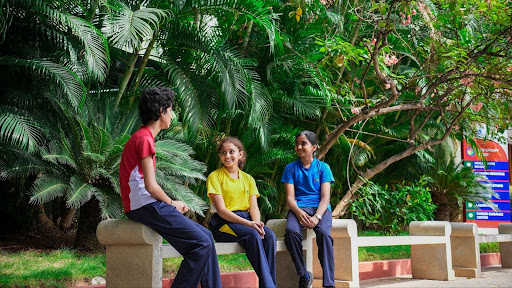
A Closer Look at Trio World School’s Green Campus Initiatives
Trio World School has embedded eco-consciousness into the very fabric of its campus. Every initiative is designed to achieve two goals: reducing the school’s ecological footprint and educating students through practical action. Let’s look at these initiatives in depth.
1. E-Waste Management for a Safer Future
In an age where electronic gadgets frequently get replaced, e-waste has become one of the fastest-growing environmental concerns. Recognizing this, the school organizes regular e-waste collection drives. Outdated and unused devices are gathered, segregated, and sent for safe recycling.
The real value in this practice lies in how it teaches children the need for responsible disposal of digital waste. Students not only contribute actively but also develop an understanding of how recycling helps reduce pollution and conserves resources.
2. Preserving Life Through a Seed Bank
To promote agricultural sustainability, Trio runs a seed bank initiative. Students collect, preserve, and exchange native seed varieties, helping conserve biodiversity at its roots.
This hands-on project allows learners to appreciate the importance of indigenous crops while spreading awareness about sustainable farming. It also fosters a sense of ownership in children, as they literally safeguard the seeds of the future.
3. Rainwater Harvesting: Every Drop Counts
Bangalore often faces water scarcity, making it essential to adopt water conservation methods. The school has installed rainwater harvesting units across the campus to collect and store rainwater.
This conserved water is effectively used, while the project itself serves as a working model for students to understand the significance of water security and groundwater recharge. By watching the process first-hand, children gain a practical education in conservation techniques.
4. Conserving Biodiversity On Campus
The campus doubles as a small-scale ecosystem, thanks to efforts made toward biodiversity conservation. Through butterfly gardens, native plantations, and eco-spaces, the school introduces students to the beauty of natural habitats.
This initiative transforms the school into a living outdoor classroom, where nature is not just studied from books but witnessed in its authentic form. Children grow up with a deep appreciation for living organisms and a responsibility to protect them.
5. Tracking Water Usage with Audits
Trio also conducts regular water audits to ensure that usage remains efficient. These audits identify leaks, wastage points, and opportunities to minimize consumption.
Such measures not only help conserve a vital resource but also demonstrate the importance of systematic monitoring. Students involved in the process learn the value of accountability and precision when it comes to sustainability.
6. Energy Audits: Reducing Power Consumption
Just as with water, energy usage is monitored through periodic energy audits. The school actively works toward lowering electricity consumption by identifying areas for improvement and incorporating energy-efficient systems wherever possible.
This instills the principle of using resources mindfully and shows students the tangible benefits of renewable and efficient energy sources.
7. A Campus Free of Single-Use Plastics
Plastic pollution is a global concern, and Trio World School has responded by creating a strict “no-plastic” zone. The use of single-use plastics is banned on campus, with students and staff adopting eco-friendly substitutes such as:
- Cloth and jute bags
- Stainless steel bottles
- Biodegradable packaging
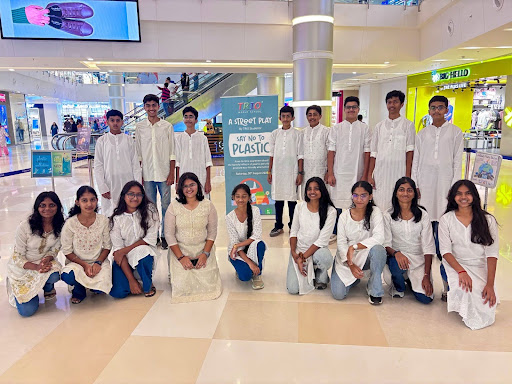
Daily exposure to these alternatives encourages students to adopt similar practices beyond the campus, extending the school’s green culture to their homes and communities. This effort is further reinforced by the "SAY NO TO PLASTIC" campaign carried out at RMZ Galleria Mall, Yelahanka.
8. Going Paperless with Technology
The school minimizes paper waste by relying on digital communication tools such as ERP systems, paperless elections, emails, apps, and electronic posters. By reducing dependency on printed documents, schedules, and notices, students learn that going paperless is not only possible but also highly efficient.
This initiative also reflects the school’s identity as a future-ready institution, where technology supports both learning and environmental goals.
9. Eco-Friendly Commuting Practices
Transportation often contributes significantly to environmental pollution. To counter this, Trio encourages students and staff to explore green commuting options, including:
- Carpooling with peers
- Walking and cycling for short distances
- Using school buses for reduced traffic and emissions
These practices are not only eco-friendly but also encourage community bonding and healthy lifestyles.
10. Tracking Air Quality and Pollution Awareness
Additionally, students lead awareness campaigns such as pollution check drives, educating others about healthier habits for cleaner air. These initiatives empower students to take proactive responsibility for community well-being.
11. Embedding Sustainability into Curriculum & Events
Unlike many institutions where sustainability is treated as an add-on, Trio integrates the United Nations Sustainable Development Goals (SDGs) into its core framework. Lessons, projects, assemblies, and even cultural events are aligned with SDG principles.
This ensures that children don’t simply memorize facts about the environment—they internalize values that make them globally conscious citizens.
12. Building a Responsible Consumption Community
To reduce wastage, the school actively promotes a philosophy of mindful consumption. Students lead initiatives to minimize food and material waste, repurpose items, and encourage reusability.
Such campaigns highlight that efficiency is not about limiting comfort but about making thoughtful choices. This mindset, when nurtured young, becomes a lifelong habit.
13. A Cafeteria That Supports Sustainability
The green cafeteria is perhaps one of the best examples of environmental responsibility in action. Meals are thoughtfully prepared using:
- Fresh, locally sourced produce
- Seasonal ingredients
- Packaging-free serving methods
The cafeteria also makes conscious efforts to reduce food wastage, aligning health with sustainability. This demonstrates to children that diet, health, and the environment are deeply interconnected.
To explore detailed information straight from the source, visit the school’s official website at https://www.trioworldschool.com/
Why Trio World School’s Green Campus Matters for Parents
For parents in Bangalore seeking the best schools for their children, sustainability often translates into values, discipline, and a progressive worldview. A campus like Trio’s sets the right foundation because:
- Children grow up with real-world environmental skills.
- Sustainability is practiced daily, ensuring it becomes second nature.
- The school provides a learning ecosystem that blends academics, social responsibility, and environmental care.
- Parents can be assured their children are being prepared not just for careers, but for life as responsible global citizens.
Conclusion
In today’s world, schools need to do more than deliver academic results—they must model the kind of future we envision for the next generation. Trio World School, Bangalore, Karnataka, has clearly embraced this role by building a green campus driven by students, for students. Its numerous sustainability initiatives—from e-waste drives and water audits to biodiversity gardens and pollution checks—not only create a healthier environment but also equip young learners with values that last a lifetime.
At Yellow Slate, we believe that informed choices lead to brighter futures. By bringing schools like Trio World School to the spotlight, we aim to help parents evaluate options that align academic excellence with ethical, sustainable living. If sustainability and holistic development matter to you, Trio World School could be the perfect fit for your child.
Note: Blogs by Yellow Slate are written based on information, knowledge and perspective of the writer. While every caution has been taken to provide readers with accurate information, please use your discretion before taking any decisions based on the information in this blog. In case you find any information that is factually wrong or something that could be made better, please write to us at contact@yellowslate.com.
Curious about how we arrived at this list? We believe parents deserve full transparency on how schools are evaluated and selected. to understand our school selection methodology.


