How Vishwa Vidyapeeth Vikramashila School Yelahanka Teaches: Neural Education, Gnanavatika, and a Classroom Philosophy Unlike Any Other
Walk into most CBSE schools in Yelahanka, Bangalore and the classroom will look broadly familiar. A teacher at the front, students in rows, a whiteboard covered in notes, and a lesson moving steadily toward the next examination. That model has served many students well. But it has also left many behind — not because those students lacked ability, but because no one took the time to ask how they actually learn.
That question — how does this particular child's brain process information? — sits at the heart of the teaching methodology at Vishwa Vidyapeeth Vikramashila School Yelahanka. And the answer VVP has arrived at, over years of deliberate design, is significantly different from what most schools in North Bangalore offer. This blog is an attempt to explain what that actually means inside a classroom — not in the language of school brochures, but in terms that parents can evaluate, question, and compare.
Neural Education: Why VVP Teaches the Way It Does
The starting point for understanding the teaching methodology at Vishwa Vidyapeeth Vikramashila School Yelahanka is a claim the school makes with some confidence: it was one of the first schools in India to incorporate Neural Science into its Teaching-Learning Process.
This is a specific and meaningful claim. Neural Education — implemented at VVP through what the school calls the CMM (Cognitive Mind Map) approach — begins from the premise that conventional classroom instruction is designed around what is convenient for the teacher to deliver, not around how individual children's brains actually form and retain knowledge. The shift VVP makes is to design instruction around a concept called Long Term Potentiation: the idea that learning which creates lasting neural connections requires active engagement, emotional resonance, and meaningful repetition — not passive listening followed by rote recall.
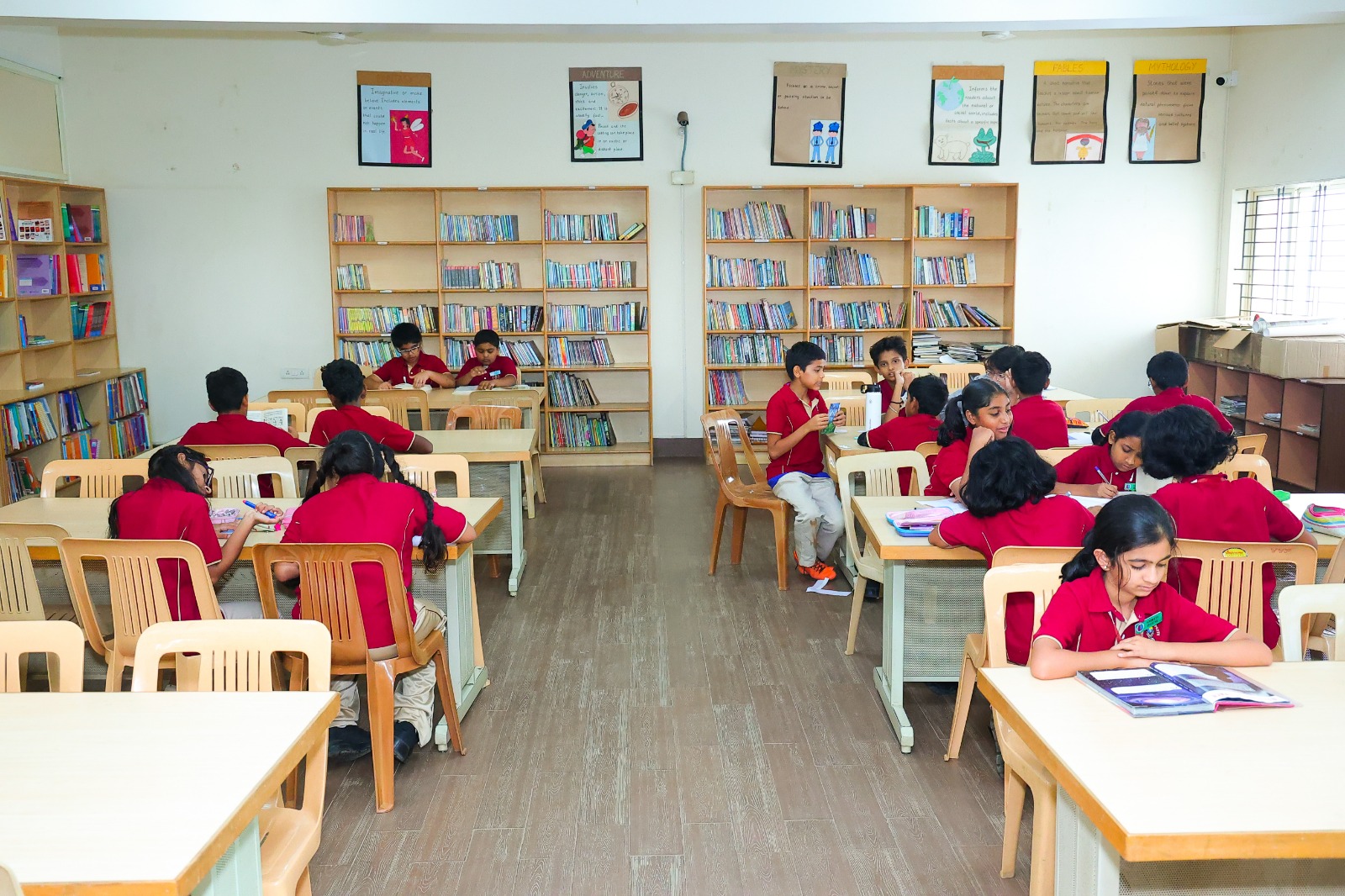
In practice, this means several things. The classroom environment at Vishwa Vidyapeeth Vikramashila School is deliberately designed to be psychologically safe — because Neural Education recognises that a stressed or anxious brain does not learn well. It means moving instruction away from a teacher-centric model toward what the school calls a Self-Directed approach, where students are active participants in constructing their own understanding rather than passive recipients of delivered content. And it means that every teacher at VVP is trained not just in their subject but in how to read their students — to notice when a child's learning style calls for a different approach, and to adapt accordingly.
For parents researching the best CBSE schools in Yelahanka Bangalore, this distinction is worth sitting with. Most schools train teachers in pedagogy. VVP trains its teachers in the science of how the brain learns — and then builds pedagogy from that foundation. The result, according to the school, is reduced pressure, a happier learning environment, and students who are more genuinely capable rather than more extensively drilled.
The Gnanavatika Programme: When Learning Leaves the Classroom
Neural Education provides the philosophical architecture. Gnanavatika is the programme through which VVP puts that philosophy into lived experience.
Gnanavatika — the school's signature Experiential Learning programme — is built on a conviction that students absorb and retain knowledge most effectively when they encounter it in ways that connect to real-world meaning. The programme encompasses a range of pedagogical formats: Project-Based Learning that requires students to address genuine, real-world problems; field trips and outdoor education that bring curriculum concepts into contact with the actual world; lab work and structured experiments that demand hypothesis, observation, and reflection; community service that develops empathy alongside academic skills; and internship and work experience opportunities that show students how classroom learning connects to real professional contexts.
This is not, in other words, a school that treats experiential learning as something that happens on the last Friday of term. Gnanavatika is a structured, ongoing programme — woven into the curriculum rather than added on top of it. When a student at Vishwa Vidyapeeth Vikramashila School Yelahanka studies a concept in science or mathematics, the expectation is that they will also engage with it through a hands-on activity, a project, or a real-world application — not simply encounter it as text on a page.
The result, as the school describes it, is improved retention, stronger critical thinking, and a fundamentally different relationship between students and their own learning. Students who learn through Gnanavatika are not waiting to be told what to understand. They are building understanding actively, which is precisely what Neural Education predicts will create lasting knowledge.
The Seed to Sapling Partnership: H-Cube Learning in Action
Vishwa Vidyapeeth Vikramashila School Yelahanka has a formal tie-up with the Seed to Sapling (S2S) team, an external STEM education partner, that brings a specific and well-defined learning framework into the classroom — what S2S calls H-Cube Learning.
H-Cube Learning operates on three levels, each beginning with the letter H. The first is Hearts-ON — students are drawn into a topic not through abstract instruction but through examples and challenges rooted in their daily life observations and real-world problems they already care about. The second is Heads-ON — students are then presented with open-ended questions and activities and are invited to work toward understanding the underlying concept themselves, with minimum facilitation rather than direct instruction. The third is Hands-ON — students engage in exploratory hands-on activities, individually or in groups, working toward a practical solution for a defined problem.
This framework is, in effect, a structured operationalisation of the same principles that underlie Neural Education and Gnanavatika — but applied specifically to STEM learning. And it represents something important for parents evaluating the best schools near Vidyaranyapura Bangalore or the top CBSE schools near Sahakar Nagar Bangalore: a school that has invested in a systematic, evidence-based approach to making STEM accessible and genuinely exciting, rather than simply delivering it through textbooks and expecting results.
The objective of the S2S collaboration is explicit: to create an enriched, joyful, and experiential learning environment where children become knowledge generators, not merely knowledge consumers. The emphasis on emotional stability and strong moral foundations within the STEM context also reflects the distinctively VVP character — technical rigour and human development are not treated as competing priorities.
Five Pedagogical Methods That Define the VVP Classroom
Beyond Neural Education and Gnanavatika, the teaching methodology at Vishwa Vidyapeeth Vikramashila School Yelahanka is built on five specific pedagogical approaches, each of which represents a deliberate choice to move beyond conventional instruction.
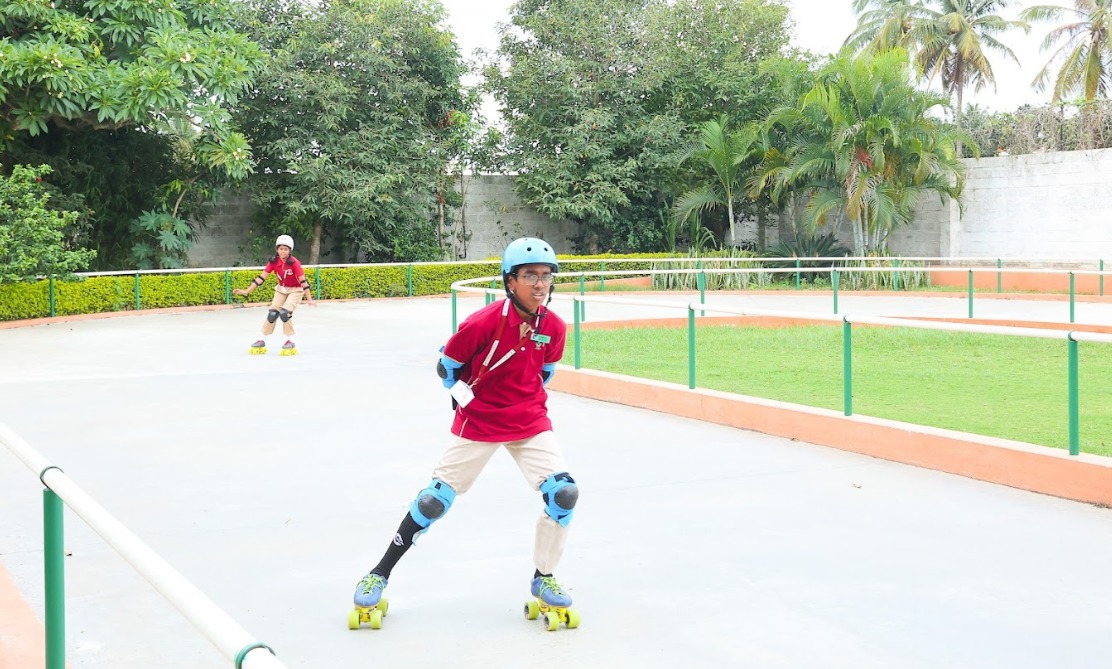
Peer Learning at VVP is structured and intentional — not simply the incidental collaboration that happens in group work. Students are placed in the role of teacher for their fellow students, a practice the school identifies as significantly improving performance for both parties. Teaching a concept to someone else is, as any educator knows, one of the most effective ways to consolidate your own understanding of it. Peer Learning at VVP also develops communication, leadership, and teamwork — skills that no examination tests but that every employer and university will eventually evaluate.
Flipped Learning inverts the conventional classroom sequence. Rather than students receiving new content during class and then consolidating it through homework, VVP students engage with material before class — freeing the class time itself for the activities that demand higher-order thinking: discussion, analysis, problem-solving, and the practical application of what has already been studied. The teacher's role in a Flipped Learning environment shifts from lecturer to guide — available to clarify, challenge, and deepen understanding at precisely the moment when students are applying it. This is a significant departure from how most CBSE schools in Yelahanka operate.
Discovery Based Learning takes the principle of active learning further still. Rather than presenting students with conclusions and asking them to remember them, Discovery Based Learning presents students with questions and asks them to find the answers — drawing on prior knowledge, intuition, imagination, and creativity. The teacher in this model is explicitly a facilitator rather than an authority. Students are actively seeking answers and making connections, not passively receiving them. This approach, the school notes, encourages students to establish new connections and uncover new understanding — a description of genuine intellectual development rather than examination preparation.
Project Based Learning connects classroom learning to real-world impact. At VVP, project-based work is not a contained classroom exercise — it involves students addressing real issues and producing outputs with tangible reach beyond their immediate classroom. The school's example is vivid: students might produce a radio show for the entire school community, or compose and deliver a letter to a local council and participate in a meeting to present their ideas. This is civic education and academic learning combined — the kind of experience that develops both competence and confidence.
Student-Led PTMs and Revision Sessions complete the picture. At Vishwa Vidyapeeth Vikramashila School, the Parent-Teacher Meeting is not a conversation between a teacher and a parent about an absent student. It is a session where students themselves present their own progress, articulate their learning, and take ownership of their academic journey. Revision sessions are similarly structured to be student-led rather than teacher-delivered. This single detail signals something meaningful about the school's overall pedagogical philosophy: students are expected to be agents in their own education, not recipients of it.
Dasha Prabodha: The Ten Skills Every Child Builds Before Age Ten
The teaching methodology at Vishwa Vidyapeeth Vikramashila School Yelahanka does not confine its understanding of learning to the academic curriculum. The Dasha Prabodha programme — a core institutional commitment to developing ten specific skills in every child before the age of ten — is perhaps the clearest expression of VVP's view that school is preparing whole human beings, not examination candidates.
The ten skills within Dasha Prabodha have Sanskrit names that signal their depth: Vedopaniksha Gita Adhyanam (Bhagavad Gita, Vedas, and Upanishads), Krishi Kaushalyam (Organic Farming), Mrit Kaushalyam (Clay Modelling), Kashtha Kaushalyam (Woodwork), Atmarakshana Kaushalyam (Taekwondo), Vak Kaushalyam (Public Speaking), Kala Kaushalyam (Art Education — with specific focus on Indian art forms like Warli and Madhubani), Sangeeta Kaushalyam (Music), Paka Kaushalyam (Cooking), and Nataka Kaushalyam (Theatre).
Each of these is designed with a developmental rationale. Clay modelling strengthens fine motor skills, develops planning and problem-solving, and provides natural relaxation through sensory engagement. Woodwork builds gross motor development alongside responsibility, safety awareness, and the deep satisfaction of making something real. Cooking teaches mathematical skills — measuring, weighing, tracking time — alongside self-reliance and the ability to contribute to one's own family. Theatre develops reading comprehension, confidence, and sustained engagement with academic work, with research consistently supporting positive links between drama participation and academic performance. Art education builds cultural connection — specifically to Indian traditions — alongside creativity and expressive capacity.
The programme also includes teaching from the Bhagavad Gita, Vedas, and Upanishads from the early years — not as religious instruction but as a structured introduction to India's intellectual and philosophical inheritance, offered with the belief that understanding these texts gives children a framework for leading a meaningful life. Yoga is taught across all grades from Pre-Primary to Grade 12. Together, these elements constitute something that most schools in North Bangalore call co-curricular but that VVP treats as genuinely core — built into the curriculum and resourced accordingly.
The Guru-Shishya Parampara: The Foundation Beneath the Methodology
All of the above — Neural Education, Gnanavatika, Dasha Prabodha, Flipped Learning, Peer Learning, Discovery Based Learning — rests on a cultural foundation that Vishwa Vidyapeeth Vikramashila School Yelahanka names explicitly as its most defining characteristic: the Guru-Shishya parampara.
The Guru-Shishya tradition is India's oldest pedagogical model — a relationship of deep mutual respect and genuine personal investment between teacher and student, in which the teacher's responsibility extends beyond content delivery to the holistic formation of the student's character, values, and capacity. At VVP, this tradition is not evoked nostalgically. It is implemented structurally — through the 1:10 student-teacher ratio that ensures each teacher genuinely knows their students; through Home Visits by teachers to students' families; through student-led PTMs where teachers and students navigate academic progress together; and through the school's explicit commitment to ensuring that not a single day of any child's learning is wasted due to a lack of teacher enthusiasm.
This last point — drawn from the school's own articulation of its mission — is a remarkably high bar. It requires teachers who are not just trained but genuinely committed. The school addresses this through its own Sanskrit language programme for teachers, its school-wide culture of continuous professional development, and its emphasis on teacher engagement as a non-negotiable institutional value. The result is a classroom environment that parents from Yelahanka Old Town, Yelahanka New Town, Attur Layout, Amruthahalli, Thanisandra, Jalahalli, and across North Bangalore consistently describe — in testimonials and reviews — as warm, attentive, and genuinely interested in individual children.
What This Means for Your Child
The teaching methodology at Vishwa Vidyapeeth Vikramashila School Yelahanka is not a single innovation. It is an integrated system — Neural Education as the scientific foundation, Gnanavatika as the experiential delivery mechanism, Dasha Prabodha as the whole-child development framework, and the Guru-Shishya tradition as the relational culture that makes all of it possible.
For a parent weighing the best CBSE schools in Yelahanka Bangalore, the most useful question is not which school has the most modern facilities or the highest board examination results. It is: what kind of learning experience will my child actually have? At VVP, the answer is an experience designed around how children actually learn — not how they are most easily assessed. That is a meaningful and unusual commitment.
For a child who learns well in conventional settings, this approach will deepen and enrich what they are already capable of. For a child who has struggled in conventional classrooms, it may be the difference between a school career spent managing difficulty and a school career spent discovering what they are genuinely capable of. That possibility is worth exploring in person.
Note: Blogs by Yellow Slate are written based on information, knowledge and perspective of the writer. While every caution has been taken to provide readers with accurate information, please use your discretion before taking any decisions based on the information in this blog. In case you find any information that is factually wrong or something that could be made better, please write to us at contact@yellowslate.com.
Curious about how we arrived at this list? We believe parents deserve full transparency on how schools are evaluated and selected. to understand our school selection methodology.


