ICSE Curriculum at The Peepal Grove School: Where Critical Thinking Meets Experiential Learning in Nature's Classroom
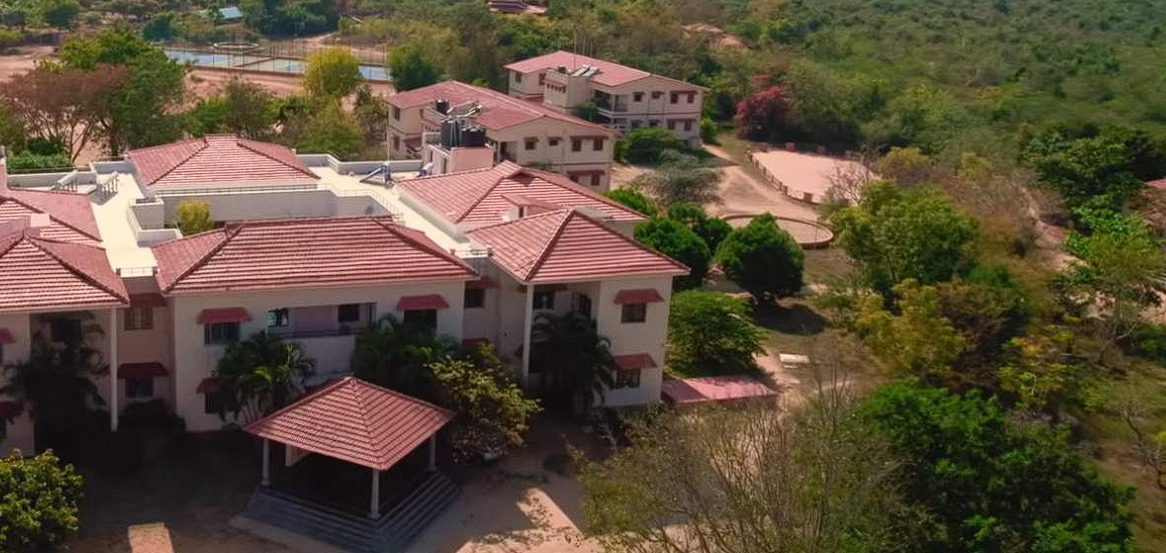
When parents across Bangalore, Hyderabad, and Chennai search for residential schools offering rigorous academics within nurturing environments, they often encounter institutions emphasizing either academic excellence or holistic development—rarely achieving genuine integration of both. However, at The Peepal Grove School, nestled in an enchanting valley in South India since 2006, this false dichotomy dissolves. The school offers the ICSE curriculum for Grades 4 through 12, implemented through an educational philosophy where "education is founded upon the acquisition of core skills and knowledge taught through integrated experiences." With an exceptional 1:5 student-teacher ratio serving just 125 students across a pristine 32-acre campus, this co-educational residential institution demonstrates how the structured ICSE framework can combine with experiential, nature-integrated learning to create educational experiences that develop independent learners and responsible citizens.
Understanding The Peepal Grove School's ICSE Framework
The Peepal Grove School follows the ICSE (Indian Certificate of Secondary Education) curriculum for Grades 4 through 12, providing students with nationally recognized credentials accepted by Indian universities and competitive examination authorities. The ICSE board's reputation for comprehensive syllabi, emphasis on English language proficiency, and balanced approach across sciences, humanities, and languages aligns with the school's commitment to depth of learning rather than superficial coverage.
“However, what distinguishes The Peepal Grove School isn't simply its adherence to ICSE guidelines, but how the curriculum is implemented. The school believes that "learning happens best in a friendly environment" where "teachers must lead by example and earn the respect of students." This philosophy transforms the ICSE curriculum from content to be delivered into knowledge to be explored collaboratively between teachers and students who engage as partners in intellectual discovery rather than as authorities and subordinates in hierarchical relationships.
The emphasis on integrated experiences means that subject boundaries blur productively. Rather than treating mathematics, science, language, and social studies as isolated compartments, the curriculum connects disciplines through real-world contexts, enabling students to understand how different knowledge domains intersect when addressing authentic challenges. This integration reflects how problems actually present themselves outside academic contexts—rarely confined neatly within single subject parameters.
The Foundation: Grades 4 to 8 - Building Core Competencies
The ICSE curriculum at The Peepal Grove School for Grades 4 through 8 establishes foundational competencies across languages, mathematics, sciences, and humanities while simultaneously developing critical thinking capabilities and independent learning habits that serve students throughout their educational journeys and beyond.
Critical Thinking as Educational Bedrock
The school's educational philosophy positions "questioning and critical thinking" as fundamental. Students learn to "think sensitively, creatively, and critically" through systematic emphasis on questioning and what the school terms "de-conditioning"—examining assumptions, challenging conventional wisdom, and constructing original understanding rather than accepting information passively. This approach contrasts sharply with educational models emphasizing memorization and reproduction of predetermined answers.
In practice, this means ICSE curriculum content is used as material for investigation rather than facts for memorization. When studying historical events, students don't simply learn dates and outcomes—they analyze causes, evaluate sources, consider alternative interpretations, and develop evidence-based arguments. In science classes, concepts emerge through experimentation and observation rather than textbook proclamation. Mathematical principles develop through problem-solving requiring creative application rather than formula memorization.
Samvaad: Dialogue as Pedagogical Method
Central to curriculum implementation is 'Samvaad'—the school's term for "moments of meaningful and respectful dialogue" between teachers and students. This dialogue-based approach recognizes that genuine learning occurs through conversation, questioning, explanation, and collaborative exploration rather than through one-way transmission of information from teacher to student.
Samvaad operates "during classroom instruction and in all spaces" as critical mechanism enabling students to "actualise their potential and become independent learners and responsible citizens." Teachers function as facilitators, guides and mentors rather than lecturers, creating classroom atmospheres where students feel safe asking questions, admitting confusion, proposing alternative interpretations, and engaging intellectually without fear of judgment or ridicule.
The 1:5 student-teacher ratio makes this dialogue-intensive approach practically feasible. With only five students per teacher on average, educators can engage each student individually, understand their unique learning styles and challenges, provide personalized support, and maintain the kind of sustained intellectual conversation that large classroom sizes prohibit.
Meeting Diverse Learning Needs
The ICSE curriculum at The Peepal Grove School accommodates students with different learning styles through "individual attention by teachers," supplemented by "extra classes" and "peer learning-teaching" approaches. The school maintains "no comparison/competition" atmosphere, recognizing that standardized pacing and competitive ranking often undermine genuine learning by creating anxiety and discouraging students who develop at different rates or through different pathways.
This inclusive atmosphere enables students to progress according to their readiness rather than arbitrary grade-level expectations. Advanced learners receive appropriate challenges through enriched content and independent projects, while students requiring additional support receive patient, individualized assistance without stigma. The multicultural environment—drawing students from over 12 states and 8 countries—further enriches learning as diverse perspectives and experiences contribute to classroom discussions and collaborative projects.
Secondary and Senior Secondary: Grades 9 to 12
As students progress to Grades 9 and 10 (ICSE) and Grades 11 and 12 (ISC - Indian School Certificate), the curriculum maintains its emphasis on critical thinking and integrated learning while introducing increased academic rigor preparing students for higher education. The ISC programme for senior secondary years provides pre-university education requiring depth of subject mastery alongside breadth of knowledge.
Specialized Academic Facilities
The curriculum receives support from specialized facilities enabling hands-on, experiential learning central to the school's philosophy. Physics, Chemistry, Biology, and Computer labs provide spaces where theoretical concepts transform into tangible experiments and investigations. Rather than merely reading about chemical reactions, students conduct experiments, observe phenomena, analyze results, and draw conclusions based on direct evidence.
The Art Block recognizes artistic expression as essential component of complete education rather than peripheral addition. Through structured art instruction and free creative exploration, students develop aesthetic sensibilities, visual communication capabilities, and creative problem-solving approaches that complement analytical skills developed through sciences and mathematics.
Beyond Traditional Academics
The school focuses on building strong conceptual understanding, independent thinking, and genuine learning through its teaching methodology. Students are encouraged to question, explore, solve problems, and understand concepts deeply rather than simply memorize information. This approach helps students develop confidence, critical thinking, and problem-solving skills that support them in taking on diverse academic challenges and future pathways.
Experiential Learning: Nature as Extended Classroom
What most dramatically distinguishes The Peepal Grove School's curriculum implementation is integration of experiential learning within the 32-acre natural campus. The school emphasizes "learning with nature" and "learning in a natural space with a lot of greenery around," recognizing that direct experience with natural environments provides educational opportunities impossible within traditional classroom walls.
Outdoor Classes and Nature-Based Learning

Learning extends beyond conventional classrooms into outdoor settings where students engage directly with natural phenomena. Trekking experiences teach geography, ecology, and physical endurance while building teamwork and problem-solving capabilities. Bird-watching develops observational skills, scientific classification understanding, and patience alongside appreciation for biodiversity. Students learn to identify species, understand habitats, recognize ecological relationships, and develop respect for natural systems through direct observation rather than textbook description.
Activities like painting outdoors integrate artistic expression with nature appreciation, enabling students to observe closely, notice details, understand light and shadow, and express their perceptions creatively. These outdoor learning experiences "expand their inherent potential organically," allowing natural curiosity and discovery to guide educational engagement rather than forcing predetermined learning outcomes.
The pristine locale surrounded by nature, provides constant opportunities for environmental education and sustainable living practices. Students don't simply learn about ecology theoretically—they live within functioning ecosystems, observing seasonal changes, understanding interdependencies, and developing environmental consciousness through daily immersion rather than occasional field trips.
Languages: English and Telugu
The curriculum includes English as the primary language of instruction and Telugu as a secondary language option alongside Hindi and other choices. English proficiency ensures students can access global knowledge resources, pursue higher education internationally if desired, and communicate effectively in professional contexts where English dominates.
Telugu maintains connection to local linguistic and cultural heritage, particularly important given the school's South Indian location. Language learning inherently develops cognitive flexibility, cultural awareness, and communication capabilities extending beyond specific vocabulary and grammar.
Wellbeing, Nutrition, and Holistic Support
The curriculum's effectiveness receives crucial support from attention to students' physical, mental, and emotional wellbeing. The school provides nutritious vegetarian meals, recognizing that proper nutrition supports cognitive function, physical development, and overall health. On-campus medical and psychological support, weekly visit from paediatrician from the Swaasthya hospital at Madanapalle ensures that health concerns or emotional challenges receive prompt attention rather than impeding academic progress.
The safe, natural campus setting creates environment conducive to learning by reducing stress, providing beauty and tranquility, and offering constant connection to natural rhythms and cycles. This pristine environment enables the focus on "harmony with nature and sustainable practices" that distinguishes the school's overall approach.
Conclusion: ICSE Curriculum Reimagined Through Experience and Nature
At The Peepal Grove School, the ICSE curriculum transforms from standardized framework into personalized educational journey where each of 125 students receives individualized attention from 30 dedicated teachers across a 32-acre natural campus. The integration of core academic skills with experiential learning, nature immersion, physical education, arts, practical life skills, and community engagement creates holistic education developing capable, thoughtful, and responsible individuals.
The emphasis on critical thinking, questioning, dialogue, and de-conditioning ensures students don't simply memorize ICSE content but genuinely understand concepts, develop independent thinking capabilities, and learn to construct knowledge actively. The supportive, non-competitive atmosphere enables students to learn at appropriate paces, discover their strengths, address their challenges, and develop confidence in their abilities.
Note: Blogs by Yellow Slate are written based on information, knowledge and perspective of the writer. While every caution has been taken to provide readers with accurate information, please use your discretion before taking any decisions based on the information in this blog. In case you find any information that is factually wrong or something that could be made better, please write to us at contact@yellowslate.com.
Curious about how we arrived at this list? We believe parents deserve full transparency on how schools are evaluated and selected. to understand our school selection methodology.


