Innovative Teaching Methodologies at Knowledgeum Academy Jayanagar: From Traditional to Transformational Learning
When parents in Jayanagar and across Bangalore evaluate IB schools for their children, they naturally focus on curriculum quality, university placements, and facilities. However, an equally critical factor often receives less attention: how teachers actually teach and how students genuinely learn. The teaching methodologies employed at a school fundamentally determine whether education becomes a transformative experience or merely a transfer of information. At Knowledgeum Academy Jayanagar, innovative teaching approaches draw from the 21st century's most effective educational models, combining high academic standards with methods that actively engage learners and develop skills essential for future success. Understanding these teaching methodologies and how they differ from traditional instruction can help parents determine whether Knowledgeum Academy Jayanagar provides the educational experience their children need to thrive in a rapidly evolving world.

The Foundation: Experiential Learning at Knowledgeum Academy Jayanagar
Before exploring specific teaching methodologies, it's essential to understand the foundational philosophy that shapes all instruction at Knowledgeum Academy Jayanagar. The school was established with a clear vision from founders Dr. Chenraj Roychand and Ms. Aparna Prasad: making experiential learning a reality wherein learners gain practical knowledge and proficiency. This commitment to experiential education represents a deliberate departure from traditional models where students primarily receive information through lectures and textbooks, with practical application relegated to occasional supplements.
At Knowledgeum Academy Jayanagar, experiential learning means students actively construct understanding through direct experiences, reflection, experimentation, and application. Rather than passively receiving pre-digested information, learners engage with concepts, manipulate variables, test hypotheses, and draw conclusions based on evidence they generate. This active involvement transforms education from something done to students into something students do themselves, fundamentally changing the learning dynamic and producing deeper, more durable understanding.
The emphasis on practical knowledge and proficiency at Knowledgeum Academy Jayanagar ensures that students don't just know about concepts—they can actually use them. This distinction matters tremendously because universities and employers increasingly value demonstrated capabilities over theoretical knowledge. When students graduate from Knowledgeum Academy, they possess not just impressive transcripts but genuine competencies developed through years of hands-on, experiential learning.
Inquiry-Based Learning: Harnessing Natural Curiosity
Among the most distinctive teaching methodologies at Knowledgeum Academy Jayanagar is inquiry-based learning, which deliberately harnesses students' natural curiosity as the engine for education. The curriculum is designed to transform students from passive recipients of information into active constructors of their own knowledge. This transformation occurs by structuring learning around genuine questions that students themselves find compelling rather than answers that teachers transmit.
How Inquiry-Based Learning Works at Knowledgeum Academy Jayanagar
In inquiry-based classrooms at Knowledgeum Academy Jayanagar, lessons often begin with provocations—situations, phenomena, or problems that spark curiosity and generate questions. Teachers facilitate the process of students formulating these questions, investigating possible answers through research and experimentation, analyzing findings, and constructing explanations. Throughout this process, students develop not just content knowledge but crucial inquiry skills including question formulation, research design, evidence evaluation, and argument construction.
For instance, rather than lecturing about ecosystems, a teacher at Knowledgeum Academy Jayanagar might present students with data about changing animal populations in a region and ask them to investigate why these changes occurred. Students would generate hypotheses, research relevant factors, analyze relationships between variables, and construct evidence-based explanations. This inquiry process teaches ecological concepts far more effectively than passive reception because students actively wrestle with authentic problems, making the knowledge personally meaningful and deeply understood.
The inquiry-based approach at Knowledgeum Academy develops intellectual independence that proves invaluable throughout life. Students learn to question rather than merely accept, to investigate rather than simply consume, and to construct understanding rather than just memorize information. These capabilities distinguish lifelong learners who continue growing intellectually throughout their lives from those whose learning largely ends when formal schooling concludes.
Project-Based Learning: Real-World Application and Integration
Complementing inquiry-based instruction, project-based learning represents another core teaching methodology at Knowledgeum Academy Jayanagar. This approach engages students in extended investigations of complex, authentic problems that integrate knowledge and skills across multiple disciplines. Rather than studying subjects in isolation, students tackle projects that require synthesizing learning from various domains to produce tangible outcomes.
The Power of Projects at Knowledgeum Academy Jayanagar
Project-based learning at Knowledgeum Academy Jayanagar typically involves students working collaboratively over extended periods to address genuine challenges or create meaningful products. These projects might involve designing solutions to community problems, conducting original research on topics of personal interest, creating multimedia presentations on complex issues, or developing prototypes of innovative ideas. Throughout the project lifecycle, students apply knowledge from multiple subjects, develop time management and collaboration skills, and produce work that matters beyond merely earning grades.
The interdisciplinary nature of project-based learning mirrors how knowledge is actually used in professional and civic contexts. In real life, solving problems or creating innovations requires drawing on diverse knowledge domains simultaneously—scientists must communicate findings effectively, engineers must consider economic constraints, entrepreneurs must understand human psychology. By engaging students in projects that naturally integrate multiple disciplines, Knowledgeum Academy Jayanagar prepares them for the complex, multifaceted thinking that characterizes successful professionals and informed citizens.
Moreover, project-based learning develops crucial 21st-century skills including collaboration, communication, critical thinking, and creativity. Students must negotiate roles within teams, articulate ideas clearly to various audiences, analyze information critically to make informed decisions, and develop creative solutions to challenging problems. These competencies, cultivated systematically through years of project work at Knowledgeum Academy Jayanagar, provide students with advantages that extend far beyond any specific subject-matter knowledge.
Simulation-Based Learning: Safe Experimentation with Complex Systems
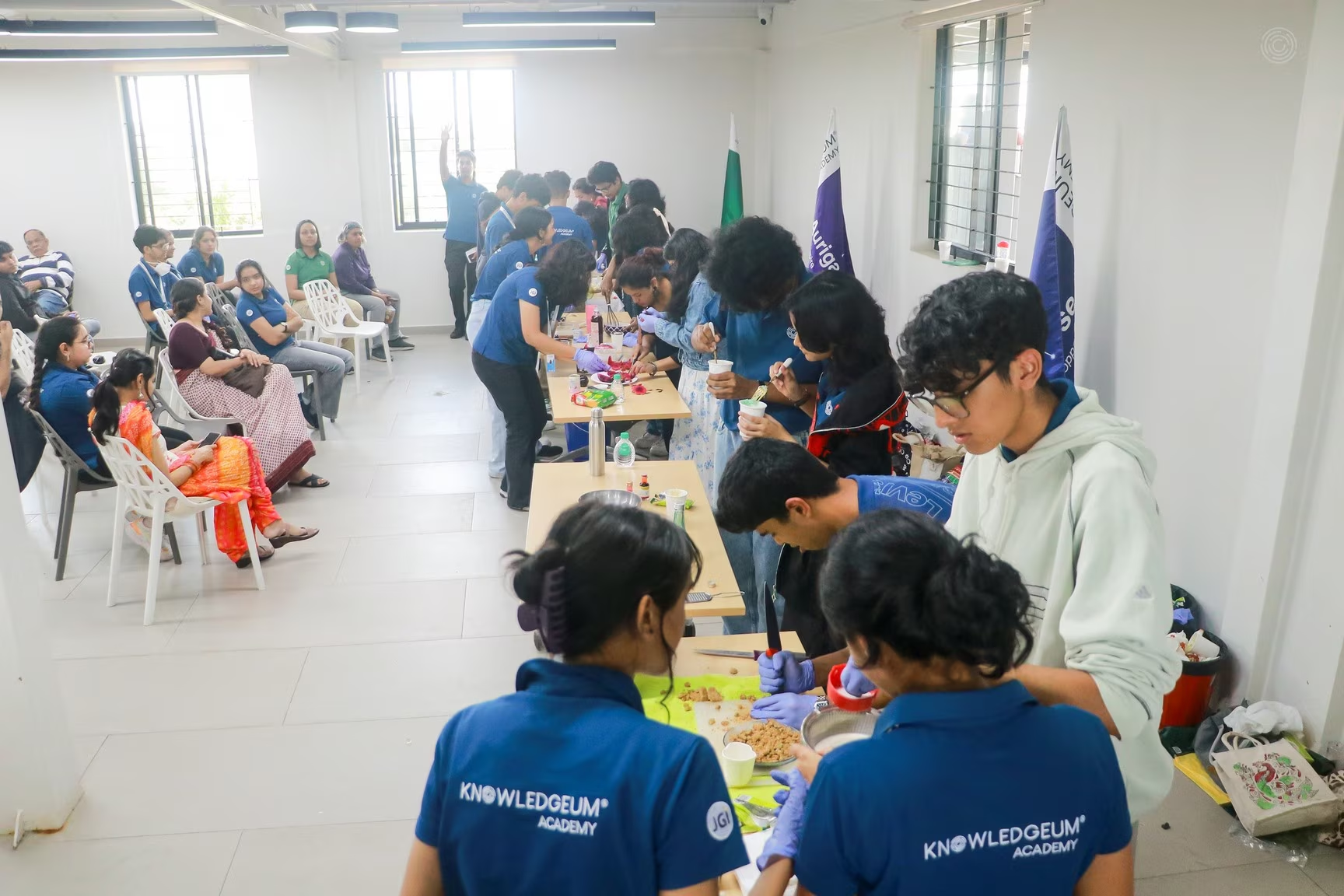
Another innovative teaching methodology employed at Knowledgeum Academy Jayanagar is simulation-based learning, which allows students to experiment with complex systems, processes, or scenarios in controlled environments. Simulations provide opportunities to explore situations that would be impossible, impractical, or dangerous to experience directly—from running businesses to conducting diplomatic negotiations to modeling climate systems.
Learning Through Simulated Experiences
At Knowledgeum Academy Jayanagar, simulation-based learning might involve students participating in Model United Nations simulations where they represent countries, negotiate treaties, and address global challenges. In business courses, students might run simulated companies, making decisions about production, marketing, and finance while observing consequences of their choices. In science classes, students might use computer simulations to model ecosystem dynamics, chemical reactions, or physical phenomena that would be difficult to observe directly.
The power of simulation-based learning lies in how it allows repeated experimentation with complex systems. Students can test hypotheses, observe outcomes, adjust variables, and try again—learning through iteration in ways that would be impossible with one-time experiences. Furthermore, simulations compress time, allowing students to observe long-term consequences of decisions or slow-motion details of rapid processes. This manipulation of time provides insights that direct experience often cannot.
The methodology also develops systems thinking—the ability to understand how components interact within larger wholes and how interventions produce both intended and unintended consequences. This sophisticated thinking proves essential for addressing the complex, interconnected challenges that characterize contemporary global issues. Students at Knowledgeum Academy who develop systems thinking through simulation-based learning gain cognitive tools that serve them across all domains of life.
The Communication Programme: Developing Essential Expression Skills
Recognizing that even brilliant ideas achieve little impact without effective communication, Knowledgeum Academy Jayanagar implements a dedicated Communication Programme as part of its teaching methodology. This structured approach systematically develops students' abilities to express ideas clearly, persuasively, and appropriately across various contexts and media.
Multi-Modal Communication Development
The Communication Programme at Knowledgeum Academy Jayanagar encompasses multiple dimensions of communication development. Students learn written communication through extensive practice in various genres—analytical essays, creative writing, research reports, argumentative pieces, and reflective journals. They develop oral communication through presentations, debates, discussions, and public speaking opportunities. They explore visual communication through creating infographics, posters, videos, and multimedia presentations. They even develop digital communication through appropriate use of technology platforms and social media.
This comprehensive approach ensures students become versatile communicators who can adapt their expression to different purposes, audiences, and contexts. In an interconnected world where communication occurs across diverse platforms and reaches global audiences, this flexibility proves invaluable. Students from Knowledgeum Academy Jayanagar arrive at universities and workplaces already comfortable communicating effectively in multiple modes—a skill that many peers struggle to develop.
Moreover, the Communication Programme integrates with content learning rather than existing as isolated skill instruction. Students develop communication competencies while expressing understanding of science, mathematics, humanities, and arts. This integration ensures communication skills feel purposeful rather than arbitrary and allows students to see how effective expression enhances understanding and impact across all domains.
The Leadership Programme: Cultivating Future Change-Makers
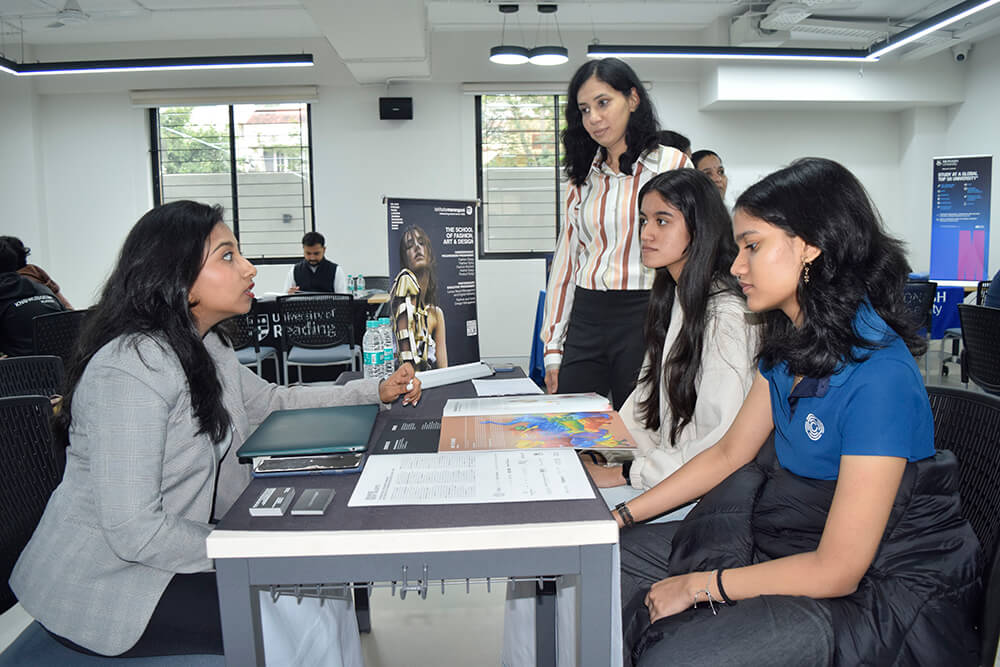
Beyond academic learning, Knowledgeum Academy Jayanagar employs teaching methodologies specifically designed to develop leadership capabilities. The Leadership Programme provides structured opportunities for students to develop and practice leadership skills, preparing them to become change-makers who positively influence their communities and organizations.
Leadership Through Action at Knowledgeum Academy Jayanagar
The Leadership Programme at Knowledgeum Academy Jayanagar doesn't simply teach about leadership theoretically; it creates contexts where students actually lead. This might involve leading student council initiatives, organizing school events, mentoring younger students, spearheading community service projects, or managing clubs and activities. Through these authentic leadership experiences, students develop practical capabilities including vision-setting, team-building, conflict resolution, decision-making under uncertainty, and inspiring others toward shared goals.
Furthermore, the programme helps students understand that leadership takes multiple forms. Not all leadership involves being the most visible person in the room. Students learn about facilitative leadership that empowers others, servant leadership that prioritizes team needs, and distributed leadership that recognizes everyone's contributions. This nuanced understanding prepares students to lead effectively in diverse contexts throughout their lives rather than limiting leadership to narrow stereotypes.
The Leadership Programme at Knowledgeum Academy Jayanagar also emphasizes ethical leadership—using influence responsibly, making decisions that consider broader impacts, and leading with integrity. In an era when leadership failures often stem from ethical lapses rather than technical incompetence, this emphasis on principled leadership development proves particularly valuable.
Innovative Smart Learning Classrooms: Technology-Enhanced Instruction
The teaching methodologies at Knowledgeum Academy Jayanagar are supported by innovative smart learning classrooms that integrate new-age digital education solutions with rich media and communication technologies. These technology-enhanced environments don't simply add digital bells and whistles to traditional instruction; they fundamentally enable teaching approaches that would be impossible without technological support.
Learner-Centric Environments at Knowledgeum Academy Jayanagar
The smart learning classrooms at Knowledgeum Academy Jayanagar are designed as well-ventilated, safe, and collaborative learning spaces where learners engage, explore, and learn actively. The comprehensive equipment aims to provide an engaging learner-centric teaching-learning environment where technology serves pedagogy rather than driving it. Teachers use digital tools to present complex concepts visually, provide immediate feedback through interactive assessments, facilitate collaborative work across distance, and personalize learning pathways for individual students.
For instance, teachers might use interactive simulations to help students visualize abstract scientific concepts, employ digital polling to assess understanding in real-time and adjust instruction accordingly, facilitate online collaboration platforms where students work together on projects asynchronously, or provide differentiated digital resources that allow students to learn at appropriate challenge levels. These technology-enabled approaches create learning experiences that simply couldn't exist in traditional classrooms, expanding what's possible pedagogically.
However, the technology at Knowledgeum Academy Jayanagar remains in service of learning rather than becoming an end in itself. Teachers thoughtfully integrate digital tools when they genuinely enhance understanding, engagement, or skill development, but they don't use technology just for the sake of appearing modern. This purposeful integration ensures students benefit from technology's affordances without becoming dependent on digital mediation for all learning.
The IB Framework: Structured Support for Innovative Teaching
All these innovative teaching methodologies at Knowledgeum Academy Jayanagar operate within the International Baccalaureate framework, which provides coherent structure supporting experiential, inquiry-based, and student-centered approaches. The IB programmes emphasize developing thinking skills, communication skills, social skills, self-management skills, and research skills—all of which align perfectly with the teaching methodologies employed at the school.
The student-friendly learning environment of the IB Diploma Programme and IB Career-related Programme incorporates these skill developments as interrelated rather than distinct categories. Students work to become inquirers, knowledgeable, thinkers, communicators, principled, open-minded, caring, risk-takers, balanced, and reflective—attributes that emerge naturally from the teaching methodologies that emphasize inquiry, project-based learning, communication, and leadership development.
What This Means for Your Child's Learning Experience
For parents evaluating whether Knowledgeum Academy Jayanagar provides appropriate education for their children, understanding these teaching methodologies reveals how learning actually occurs day-to-day. If you choose this school, your child won't spend most of their time passively listening to lectures and completing worksheets. Instead, they'll actively investigate questions that intrigue them, work collaboratively on meaningful projects, experiment with simulations, develop communication capabilities across multiple modes, practice leadership in authentic contexts, and learn in technology-enhanced environments designed for engagement.
These teaching methodologies prepare students differently than traditional instruction. Rather than primarily developing knowledge recall and procedural skill execution, students develop deeper capabilities: critical thinking, creative problem-solving, effective communication, collaboration, self-direction, and leadership. While they certainly master academic content—the rigorous IB curriculum ensures that—they also develop the broader competencies that universities and employers increasingly value and that prove essential for navigating complexity throughout life.
Looking Ahead: Teaching That Prepares for Uncertain Futures
The innovative teaching methodologies at Knowledgeum Academy Jayanagar reflect recognition that education must prepare students for futures we cannot fully predict. The specific knowledge students master today may become outdated quickly as fields evolve and new discoveries emerge. However, the capabilities developed through inquiry-based learning, project-based learning, simulation experiences, communication development, and leadership practice remain valuable regardless of how careers and society change.
If your educational priorities include developing your child as an active learner rather than a passive recipient, as a creative problem-solver rather than merely a dutiful task-completer, and as someone who can continue learning independently throughout life, then the teaching methodologies at Knowledgeum Academy Jayanagar align with those values. Consider visiting to observe these methodologies in action, speak with teachers about their approaches, and envision how your child might thrive in learning environments that prioritize engagement, application, and meaningful skill development.
Note: Blogs by Yellow Slate are written based on information, knowledge and perspective of the writer. While every caution has been taken to provide readers with accurate information, please use your discretion before taking any decisions based on the information in this blog. In case you find any information that is factually wrong or something that could be made better, please write to us at contact@yellowslate.com.
Curious about how we arrived at this list? We believe parents deserve full transparency on how schools are evaluated and selected. to understand our school selection methodology.


