NCFE Mandur Teaching Methodology: Stage by Stage — How Teaching Evolves as Children Grow
When parents in East Bangalore evaluate schools for their children, the two most common questions they ask are: "What is the curriculum?" and "How do the teachers actually teach?" The first question is usually answered on a school's homepage. The second — the more important one — is often buried in brochure language about "holistic development" and "child-centric approaches." At NCFE Mandur, the answer to that second question is specific, structured, and genuinely worth understanding in detail.
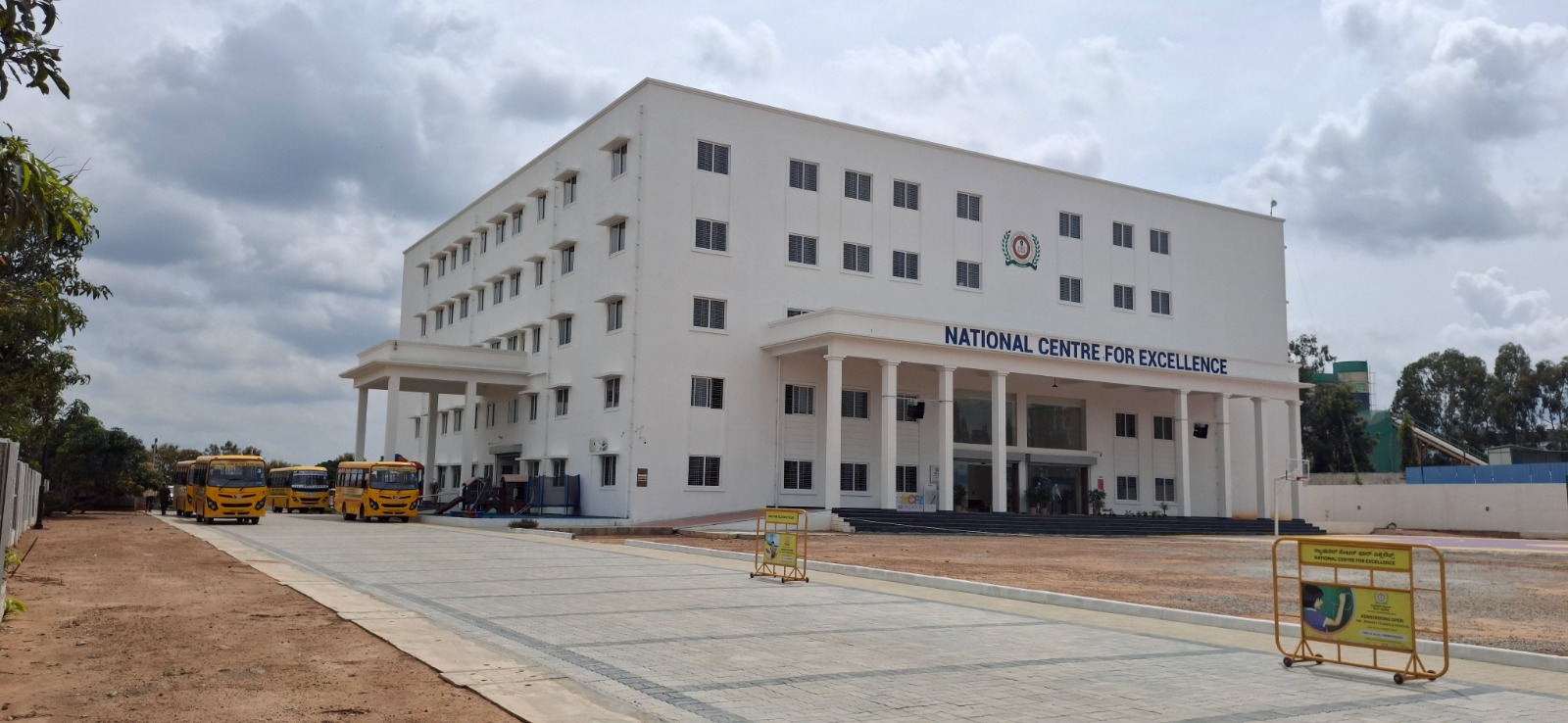
The National Centre for Excellence Mandur campus, located at Hancharahalli Main Road in Mandur, Bengaluru, is the newest addition to the NCFE family — part of the Vijay Kiran Educational Trust that has operated the flagship CV Raman Nagar campus since 2006. When it was established in April 2024, the Mandur campus didn't build its teaching approach from scratch. It inherited nearly two decades of pedagogical refinement from the parent trust and then adapted it to a new campus designed from the ground up as what the school describes as "an innovation and creativity hub within a progressive educational community." The CBSE affiliation, officially granted on 4 December 2025, confirmed that this teaching approach meets national standards at every level.
So what does the NCFE Mandur teaching methodology actually look like — and how does it change as a child moves from Prep 1 through to Grade 9?
NCFE Mandur Teaching Methodology: The Foundation — The 5C Framework and Why It Matters
NCFE Mandur Teaching Methodology: The Foundation — The 5C Framework and Why It Matters
Before diving into the stage-by-stage structure, it's worth understanding the philosophical core that runs through every grade level at NCFE Mandur. The school's educational approach is deliberately organised around the 5C's of 21st-century learning: Communication, Collaboration, Critical Thinking, Creativity, and Citizenship. These are not simply aspirational values displayed on a wall — they are the stated cornerstone of curriculum design, teacher training, and classroom practice at the school.
What this means practically is that a lesson on fractions isn't purely a lesson on fractions. It's also an opportunity to practise communication (explaining a method to a partner), collaboration (working through a problem in pairs), critical thinking (asking why the rule works, not just memorising it), creativity (finding alternative approaches), and citizenship (understanding that mathematics matters in real-world community contexts). Every subject becomes a vehicle for developing these cross-cutting capabilities.
This is the specific implementation of NEP 2020 that NCFE Mandur has committed to. The school explicitly states that its approach goes beyond subjects by linking STEM with the humanities, language with the arts, and classroom lessons with real-world experience. For parents evaluating the best schools in Mandur, this integration is the single most important feature to understand — it's what separates schools that claim NEP alignment from schools that have genuinely restructured their teaching around it.
The 5C framework is then delivered through eight specific pedagogical pillars that teachers at NCFE Mandur are trained to maintain across all grade levels: Collaborative Learning, Varied Teaching Techniques, Active Engagement, Fostering Responsibility, Critical Thinking, Promoting Inquiry and Growth, Teachers as Facilitators (rather than lecturers), and Real-World Applications. Each of these shapes what students experience in the classroom every day.
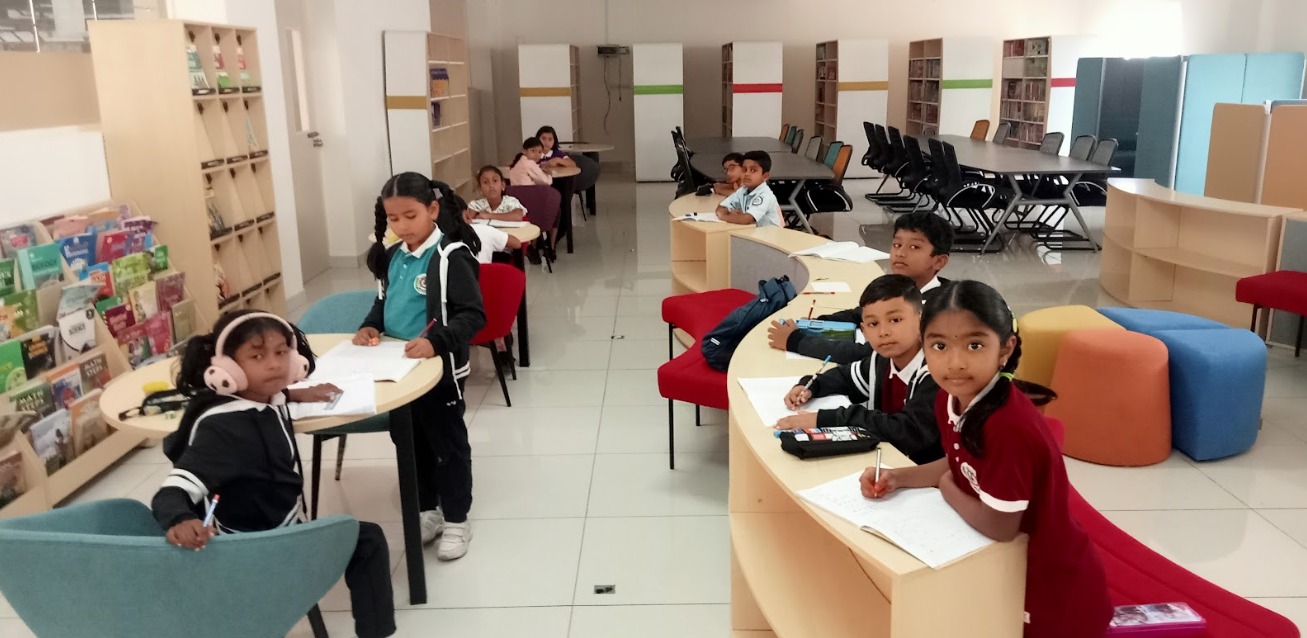
NCFE Mandur Teaching Methodology: Stage 1 — Fledgling (Prep 1 to Grade 2)
The name "Fledgling" is deliberately evocative — it refers to a young bird not yet ready to leave the nest but actively developing the capacity for flight. At this stage, covering students from pre-primary through Grade 2 (ages approximately three to seven), the NCFE Mandur teaching approach is rooted in joyful, inclusive, experiential learning. The school website describes this phase as focused on "overall development through experiential learning and play," and this framing aligns directly with what research on early childhood education consistently recommends.
In practice, Fledgling-stage classrooms at NCFE Mandur are structured around activity-based learning rather than passive instruction. Young children at this age learn best through physical manipulation of materials, storytelling, role play, sensory exploration, and interaction with peers and teachers. Formal academic instruction does happen — early literacy and numeracy are foundational goals — but it happens through movement, games, group activities, and structured play rather than through worksheets and lecturing.
The teachers in this stage are attuned to both the emotional and developmental dimensions of early childhood. NCFE Mandur's stated belief is that its teachers are "mentors, facilitators, and architects of a nurturing learning environment" — a framing that is particularly apt at this stage, where a child's primary relationship is with their teacher as a safe, trusted adult. The school's 15:1 student-teacher ratio means each teacher can genuinely track each child's progress, notice early developmental signals, and adapt their approach accordingly.
Parents who have moved children from more rigidly academic pre-primary environments sometimes express surprise at how learning-through-play feels less structured than they expected. The NCFE Mandur approach is deliberate here: pushing formal academic instruction too early is well-documented to undermine intrinsic motivation and love of learning. The Fledgling stage is designed to build confidence, curiosity, and the foundational social skills — listening, sharing, turn-taking, asking questions — that make all later academic learning possible.
NCFE Mandur Teaching Methodology: Stage 2 — Watering (Grades 3 to 5)
As children move into the Preparatory Stage — Grades 3, 4, and 5, roughly ages eight to eleven — the NCFE Mandur teaching methodology begins to introduce more structured academic content while retaining the hands-on, inquiry-driven character of the Fledgling years. The name "Watering" captures the idea of tending to something already planted: the curiosity and confidence developed in the early years now needs careful, consistent nourishment to grow in specific directions.
At this stage, the school's approach centres on what it calls "inclusive learning with a focus on fundamental skills and nurturing the ability to inquire about the world." The shift from pure play to more directed inquiry is significant. Students at this stage are capable of asking "why" and "how" in more sophisticated ways, and the teaching methodology responds to this by moving toward observation-based activities, structured experiments, real-world scenarios, and guided exploration.
The interdisciplinary approach that characterises NCFE Mandur's teaching methodology across all stages is particularly visible in the Watering years. A unit on plants, for example, might simultaneously cover biology (how plants grow), mathematics (measuring growth rates), language arts (writing observations), art (illustrating the plant's stages), and citizenship (understanding ecosystems and human responsibility). This is what the school means when it says its approach "links STEM with the humanities, language with the arts."
Assessment at this stage — and across all NCFE Mandur stages — is deliberately a mix of graded and non-graded evaluation. This matters more than it might initially seem: non-graded assessments give teachers a realistic picture of a child's understanding without the test-anxiety that formal evaluation can create in younger students. Children can demonstrate mastery through projects, observations, oral presentations, and portfolios — formats that reward genuine understanding rather than rote recall.
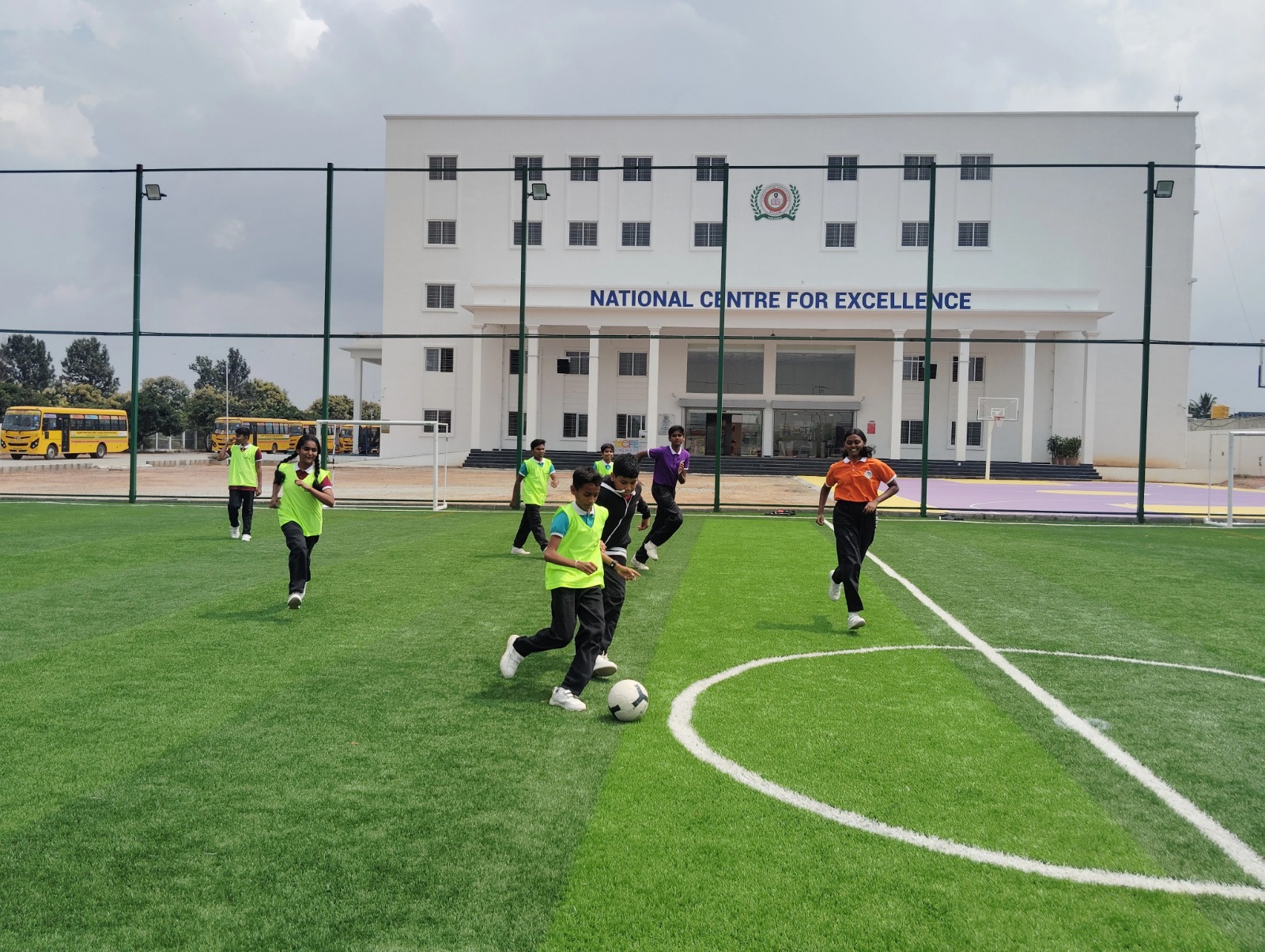
NCFE Mandur Teaching Methodology: Stage 3 — Blossoming (Grades 6 to 8)
The Middle Stage — called "Blossoming" at NCFE Mandur — covers Grades 6 through 8, roughly ages eleven to fourteen, and represents the most significant shift in teaching methodology across the school's four stages. Where the earlier stages focused on building curiosity and foundational skills, the Blossoming stage focuses on transdisciplinary learning and the ability to identify patterns, connections, and structures across different domains of knowledge.
The school describes this stage as facilitating "transdisciplinary learning, guiding students to identify patterns around them, fostering a holistic educational experience." The distinction between interdisciplinary (drawing on multiple subjects to explore a topic) and transdisciplinary (transcending subject boundaries entirely to address real-world questions) is meaningful. At this stage, students don't just study mathematics and then separately study social studies — they are asked to apply mathematical reasoning to understand social patterns, use scientific thinking to evaluate environmental claims, and use literary analysis to explore historical narratives.
Teachers in this stage take on a distinctly different role from their colleagues in the earlier stages. The school's framing of teachers as facilitators — rather than authorities dispensing knowledge — becomes particularly important in the Blossoming years. Students at this age are beginning to develop their own opinions, push back on received ideas, and ask questions that challenge easy answers. A teaching environment that responds to this with facilitation and guided inquiry produces confident, independent thinkers. One that responds with rote instruction and examination drilling produces disengaged students.
The critical thinking pillar of the 5C framework becomes central at this stage. Students are encouraged to "approach complex topics with critical thinking, promoting a deeper understanding of subjects that goes beyond rote memorisation," as the school explicitly states. The difference in classroom practice is visible: instead of asking "What is the answer?", teachers at NCFE Mandur ask "How did you get there?", "What would happen if this changed?", and "What evidence supports that conclusion?"
For parents exploring the best CBSE schools in Bangalore East, this stage-specific methodology is worth particular attention. The Grades 6–8 years are the period when many students lose their engagement with learning — not because the material is too hard, but because the teaching fails to evolve from the transmission model of primary school into something that respects adolescent intellect and curiosity. The Blossoming methodology is specifically designed to prevent this disengagement.
NCFE Mandur Teaching Methodology: Stage 4 — Basking (Grade 9)
The Secondary Stage at NCFE Mandur — called "Basking" — currently covers Grade 9, the highest grade offered at the campus as it continues its phased growth. The name "Basking" evokes a plant or creature that has reached its full growth and is now drawing full benefit from its environment: a student at this stage is ready to absorb deep, complex, specialised knowledge and to apply the skills built across the previous three stages to demanding academic material.
The school describes the Basking stage's emphasis as being on "cultivating in-depth concept understanding, ensuring academic excellence and future success." The teaching methodology at this stage becomes more rigorous and academically focused, reflecting the reality that CBSE Boards are on the horizon and students need to demonstrate mastery of specific content areas. However — and this is important — the inquiry habits, collaborative skills, and critical thinking developed in the Fledgling, Watering, and Blossoming stages are not abandoned. They are now applied to more sophisticated academic content.
The Principal of NCFE Mandur, Ms. R. R. Lalitha Kumari (B.E, MBA, MA, B.Ed), who brings over a decade of school leadership experience to the campus, has articulated the vision for this stage clearly on the school website. Her stated goals for students include strong academic foundations aligned to national and global benchmarks, the development of critical thinking and analytical skills, clear communication confidence, emotional intelligence and resilience, self-discipline and independence in learning, and readiness for competitive pathways. This is not a list that privileges exam scores above all else — it is a vision of a student who can perform academically because they have genuine capability, not just strategic rote learning.
Assessment in the Basking stage reflects this dual focus. The school's assessment philosophy — a balanced mix of graded and non-graded evaluation — continues here, with formal examination practice alongside project-based and portfolio assessments that test the deeper competencies the curriculum has spent years building.
What Makes the NCFE Mandur Teaching Methodology Coherent Across All Stages
One of the most practical things parents can evaluate when comparing schools is whether a school's teaching approach is genuinely consistent across the years, or whether it changes character so dramatically between primary and secondary that a child effectively experiences two different schools under one roof. At NCFE Mandur, the coherence is structural.
The 5C framework runs through all four stages. The eight pedagogical pillars — collaborative learning, varied techniques, active engagement, responsibility, critical thinking, inquiry, facilitation, real-world application — are present at every grade level, though their expression naturally matures with the age of the student. The balanced assessment philosophy applies from Prep 1 to Grade 9. The teacher's role as mentor and facilitator, rather than authority figure and examiner, is a consistent expectation across the school.
This coherence matters because children develop most effectively when learning approaches are predictable and progressive, not episodic and inconsistent. A child who learns to ask good questions in the Fledgling stage should find that same habit valued and developed in the Blossoming stage. A student who discovers that collaboration is rewarded in Watering should find those skills essential in Basking. NCFE Mandur's stage-by-stage methodology is designed precisely to deliver this continuity of educational experience.
For families with children at any age — from the first days of pre-primary through to the senior school years — the question of how teaching evolves at NCFE Mandur now has a clear answer: it deepens, gains complexity, and increases academic rigour, while always staying rooted in the same commitment to curiosity, collaboration, and real-world relevance. For parents exploring the best schools near Kodigehalli, Bommanahalli, and across Mandur, that combination is precisely what a good school should offer. Visit the NCFE Mandur campus to see this methodology in action and speak directly with the admissions team about enrolment.
Note: Blogs by Yellow Slate are written based on information, knowledge and perspective of the writer. While every caution has been taken to provide readers with accurate information, please use your discretion before taking any decisions based on the information in this blog. In case you find any information that is factually wrong or something that could be made better, please write to us at contact@yellowslate.com.
Curious about how we arrived at this list? We believe parents deserve full transparency on how schools are evaluated and selected. to understand our school selection methodology.


