Playful Personalized Pedagogy: How Prarthana.in World School Bangalore's Six Learning Pillars Prepare Children for the Future
Most schools describe their teaching approach in one or two sentences. Prarthana.in World School, Banashankari has built an entire pedagogical framework — six distinct, named pillars that together form what the school calls its learning paradigm. These aren't marketing phrases assembled for a brochure. They are operating principles that shape how classrooms are designed, how teachers are trained, how parents are engaged, and how the community around the school is involved in each child's education. This blog unpacks all six — what each means, how it shows up in practice, and why the combination produces a meaningfully different school experience from most of the best schools in Banashankari and south Bangalore.
Pillar 1: Playful Personalized Pedagogy
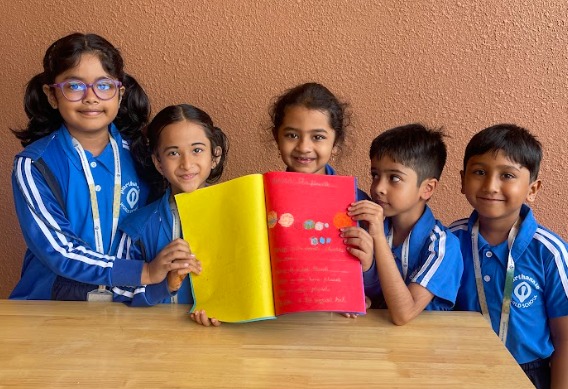
The first pillar is also the school's most visible brand statement — and the one that most directly challenges how conventional schools in Bangalore approach learning. Prarthana.in World School describes its pedagogical paradigm as a playful, personalized approach reflecting a commitment to tailored, engaging learning experiences. Both words carry equal weight here.
Playful does not mean unstructured. It means that the mode of engagement — how children encounter and work with ideas — is designed to feel like exploration rather than instruction. The school's founding principal described this in her welcome message as classrooms buzzing with excitement, science experiments that might just end up with a few 'oops' moments, and a curriculum that sparks imagination. The intent is that curiosity is the engine of learning rather than compliance.
Personalized means the school does not treat its students as a uniform cohort to be moved through content at the same pace. Each child's learning journey is tailored — not just in theory but structurally, through how the school tracks individual growth rather than comparative performance. In assessments and feedback, PWS fosters a growth mindset by comparing students to their own individual growth charts, not to other students. The school's secretary Mr. Adityodaya Karna Belagere — who holds a postgraduate degree in Education from the University of Birmingham — has articulated this directly: competition and comparison should be focused on self-improvement rather than comparing oneself to others. For parents in Banashankari and south Bangalore evaluating international schools where this kind of individualised tracking is standard, it is worth knowing that PWS has built the same principle into an IGCSE school at a fraction of the cost.
Pillar 2: Age Responsive Practices
The second pillar addresses something that conventional school structures often ignore: the fact that a 6-year-old and a 12-year-old are not simply different sizes of the same learner. They have fundamentally different cognitive, emotional, social, and physical developmental needs — and a school that teaches them with the same methods, the same assessment formats, and the same environmental design is ignoring what developmental psychology has established for decades.
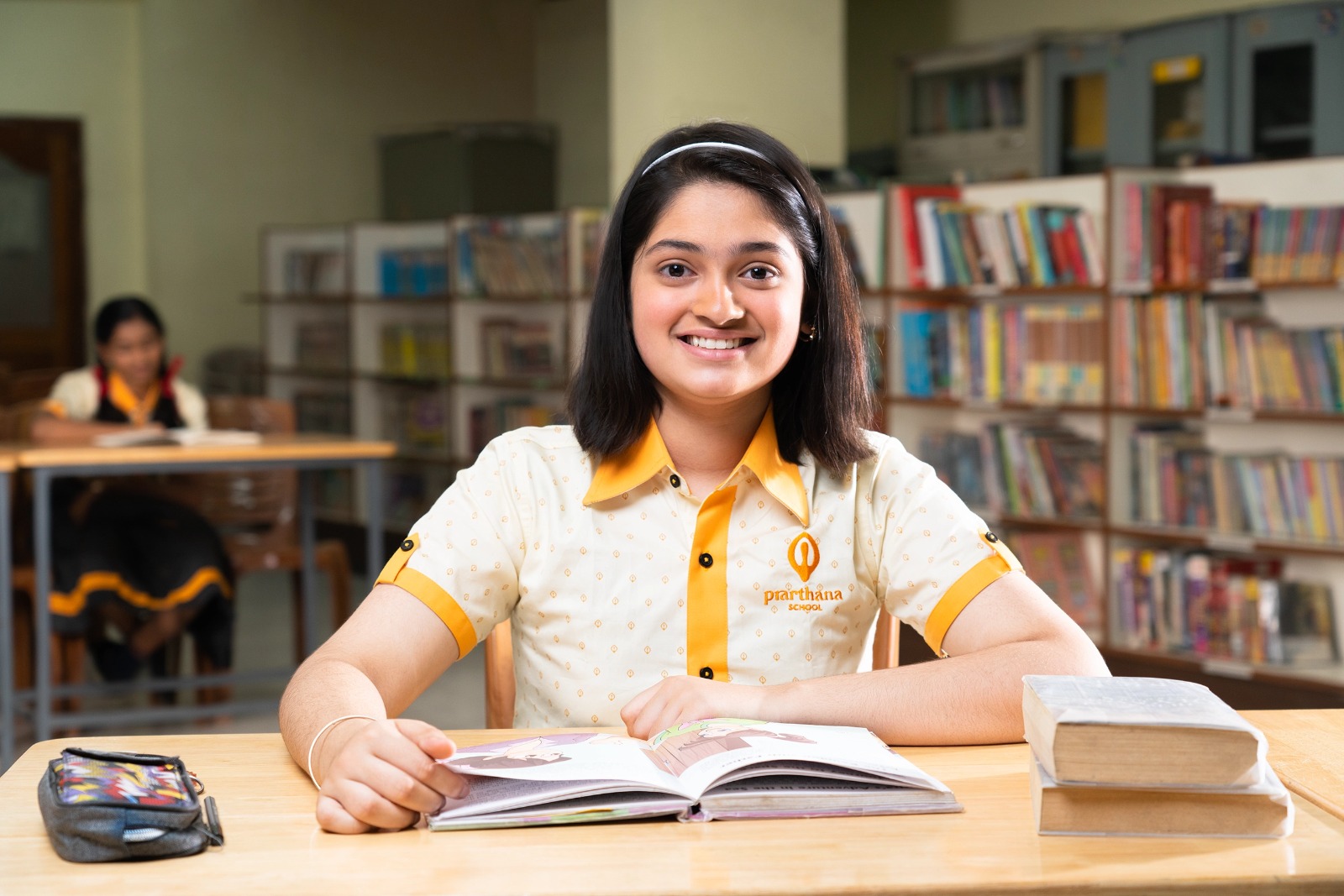
Prarthana.in World School acknowledges the unique developmental stages of students at various ages and customises teaching, assessment, and environments to provide an engaging and relevant learning experience for each student's individual journey. This shows up structurally in the school's campus — the Budding Years, Primary Years, and Middle/High School programmes each have distinct academic approaches, environments, and assessment methods appropriate to the developmental stage of the children they serve.
The #within philosophy that runs through the school's culture — mindful pauses built into class transitions, reflective journaling, growth mindset framing in feedback, purposeful yoga sessions — is calibrated differently for younger and older children, but the underlying
intent is consistent: to build self-awareness, self-regulation, and inner strength as a developmental priority alongside academic knowledge. This is age-responsive education not just in curriculum sequencing but in the social-emotional design of the school day itself.
Pillar 3: Parent Pedagogues Alliance
The third pillar is one of the most practically distinctive features of Prarthana.in World School — and one that separates it clearly from schools that treat parent engagement as a PTM calendar item. The Parent Pedagogues Alliance is a formal partnership model between parents and educators, designed to extend learning beyond school hours and create a consistent, supportive environment for holistic student growth.
The school's position is that parents are not passive recipients of school communication — they are active partners in the pedagogical process. The Alliance means that what happens in the classroom and what happens at home are designed to be coherent and mutually reinforcing rather than operating in separate silos. This requires teachers to communicate not just results but learning processes to parents, and it requires parents to engage with the school's pedagogical philosophy as participants rather than customers.
For families in south Bangalore who have experienced the frustration of schools where parent involvement is reduced to attending annual days and signing report cards, the Parent Pedagogues Alliance represents a fundamentally different relationship between home and school — one that the school has formalised as a named, structural pillar of its educational approach rather than an aspiration mentioned on a website.
Pillar 4: Progressive Curriculum
The fourth pillar is the academic architecture on which the other pillars rest. Prarthana.in World School prioritises a progressive curriculum that emphasises critical thinking, interdisciplinary learning, and real-world skills — ensuring students are well-prepared for the fast-paced, evolving landscape of the future.
The school offers the Cambridge (IGCSE) curriculum throughout, with younger students following a foundational programme designed around Cambridge's progressive, inquiry-based, interdisciplinary teaching philosophy before formally entering the IGCSE track in the higher years. This structure gives families continuity from the earliest years, since the same educational approach that defines the Cambridge framework is already woven into the foundational stage — meaning the progression feels less like a transition and more like a natural deepening of the same philosophy.
The curriculum's progressive character is expressed in specific classroom practices: Thinking Classrooms built around active problem-solving rather than passive instruction, reflective journals that document the learning journey rather than just the outcome, and project reflections that ask students to evaluate their own process after completing a task. The PRARTHANA.IN principles — 12 core values encoded in the school's own name, covering Personal Wellbeing, Rooted in Culture, Autonomy, Reflective Practices, Thinking Classroom, Habits, Aesthetic Experience, Nature, Altruism, Pause, Inquiry Mindset, and Nutrition — provide the value framework within which the progressive curriculum operates. For parents researching the best international schools in Bangalore's south corridor, this integration of curriculum design and values framework is one of the more coherent educational philosophies available in the segment.
Pillar 5: Pedagogical Professionals
The fifth pillar addresses the most fundamental variable in any school's quality: the teachers. Prarthana.in World School values educators as key influencers of student learning and invests in continuous professional development, empowering teaching staff to employ innovative methods, provide engaging learning experiences, and mentor students effectively.
The school's own founding principal's message speaks to this directly — describing education not as textbooks but as exploring, discovering, imagining, and learning with joy. That orientation in a teacher requires both disposition and training. The Pedagogical Professionals pillar formalises the school's commitment to maintaining both: hiring for disposition and investing continuously in the technical skills and innovative capacity of the teaching team.
This matters particularly for a school that has built its pedagogy around playful, personalized, age-responsive, and inquiry-based approaches — because these methods are significantly harder to implement well than conventional instruction. A teacher who can hold a Thinking Classroom, facilitate reflective journaling meaningfully, design age-responsive assessments, and communicate with parents as pedagogical partners requires ongoing professional investment. The school's explicit naming of this as one of its six foundational pillars signals that it understands this and has committed to it structurally.
Pillar 6: Community Partnering
The sixth and final pillar extends the school's educational vision beyond the campus boundary. Prarthana.in World School integrates education with the community, leveraging local resources, expertise, and partnerships to enrich students' learning with real-world relevance.
This reflects the school's foundational belief — articulated by its founder, the late Shri Ravi Belagere, who established Prarthana in 2002 — that inclusion and equal opportunity should be the pillars of an education system that breaks the mould of elitist quality education. Community partnering is the outward expression of this founding principle: a school that sees itself not as a self-contained academic institution but as an institution embedded in and responsible to its neighbourhood, its city, and its wider community.
In practice, this means students encounter the real world not just in textbooks but through community service, local expertise brought into the classroom, and the Altruism principle embedded in the PRARTHANA.IN framework — cultivating compassionate, socially responsible global citizens through kindness initiatives and global awareness. For families in Banashankari, Uttarahalli Hobli, and the south Bangalore corridor who want their children to grow up with both strong academic foundations and genuine social awareness, this outward-facing orientation is a meaningful dimension of what distinguishes PWS from more inward-looking school environments.

Why the Six Pillars Together Matter
Six pillars that each address a different dimension of the school experience — pedagogy, development, parents, curriculum, teachers, and community — combine to describe a school that has thought carefully about what education is actually for. At Prarthana.in World School, the answer is expressed in the school's own words: to discover, nurture, and uncover what is unique within each child, for them to grow and flourish as successful individuals. The six pillars are the how behind that what.
For parents in Banashankari, Uttarahalli, JP Nagar, and the south Bangalore area considering schools for 2026-27 — admissions are currently open from Nursery to Grade 8 — the school is located at No. 128, Near DS MAX Apartments, Banashankari 6th Stage, Uttarahalli Hobli, Bangalore – 560061. Families who want to experience the learning environment in person can visit the campus or explore the virtual tour on the school's website.
Note: Blogs by Yellow Slate are written based on information, knowledge and perspective of the writer. While every caution has been taken to provide readers with accurate information, please use your discretion before taking any decisions based on the information in this blog. In case you find any information that is factually wrong or something that could be made better, please write to us at contact@yellowslate.com.
Curious about how we arrived at this list? We believe parents deserve full transparency on how schools are evaluated and selected. to understand our school selection methodology.


