The Academic City's Zero Screen Time Policy: Revolutionary Digital Wellness for Optimal Learning and Growth in Nelamangala
When parents in Nelamangala and across Bangalore search for the best boarding schools, they typically evaluate academic programs, sports facilities, and safety measures. However, one critical question increasingly troubles discerning parents: "In an age of smartphone addiction and social media obsession, how will my child develop focus, discipline, and genuine human connections?" At The Academic City School, this modern parenting dilemma finds a bold, counter-cultural answer through their revolutionary zero screen time policy—a comprehensive digital wellness approach that enhances optimal learning and growth by creating a focused, distraction-free environment where students develop real-world skills, deep relationships, and mental clarity.
In a world where the average teenager spends over seven hours daily on screens, where social media platforms engineer addictive features targeting adolescent brains, and where digital distractions fragment attention spans into seconds rather than minutes, The Academic City School has courageously implemented a policy that most schools fear to consider: eliminating recreational screen time entirely from the boarding experience. This isn't technological Luddism or fear of innovation—The Academic City's campus utilizes digital tools strategically for education. Rather, it's a science-backed, wellness-focused intervention that addresses the documented harms of excessive screen exposure while creating space for the deep work, authentic connections, and personal development that define successful adolescence.
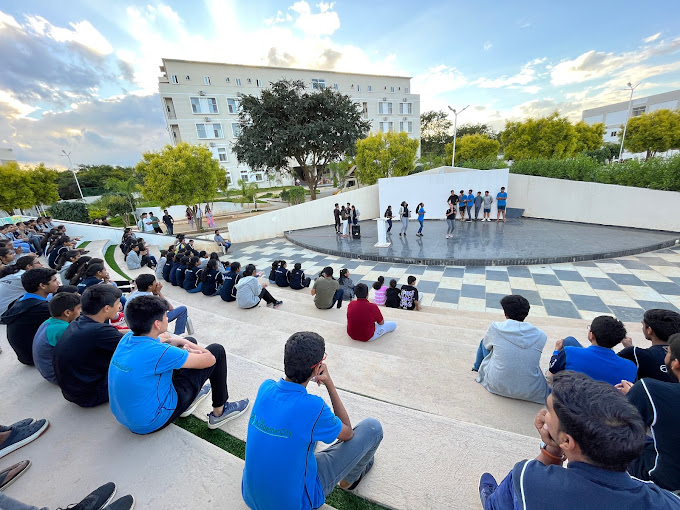
Understanding the Zero Screen Time Philosophy
The zero screen time policy at The Academic City School represents a fundamental philosophical stance about adolescent development and optimal learning environments. The policy recognizes that screens—particularly smartphones, tablets, gaming devices, and recreational social media—create powerful distractions that undermine the very qualities boarding schools aim to cultivate: focus, self-discipline, interpersonal skills, emotional regulation, and intrinsic motivation.
Research from neuroscience, psychology, and education consistently demonstrates that excessive screen time during adolescence correlates with decreased academic performance, compromised sleep quality, increased anxiety and depression, reduced physical activity, impaired social skills, and addictive behavioral patterns. The dopamine hits engineered by social media platforms, video games, and streaming services create reward cycles that make sustained attention to challenging academic work feel unbearably boring by comparison.
The Academic City School understands that adolescence represents a critical neurological development window. The prefrontal cortex—responsible for executive functions including impulse control, planning, and decision-making—continues developing until the mid-twenties. Excessive screen time during this formative period can literally reshape neural pathways, making sustained focus progressively more difficult while strengthening circuits associated with distraction-seeking and instant gratification.
The zero screen time policy creates a protective developmental environment. By removing devices that hijack attention and engineer compulsive checking behaviors, The Academic City School allows students' natural cognitive abilities to flourish. Attention spans lengthen. The capacity for deep work develops. Boredom—that uncomfortable yet creativity-sparking state that digital devices eliminate—returns as a catalyst for genuine interest exploration.
The Science Behind Screen-Free Learning Environments
Parents considering The Academic City School's zero screen time policy deserve to understand the robust scientific evidence supporting this approach. Decades of research across multiple disciplines validate concerns about excessive adolescent screen exposure and demonstrate benefits of screen-limited environments.
Academic Performance and Cognitive Development
Multiple longitudinal studies demonstrate inverse correlations between recreational screen time and academic achievement. Students who spend more hours on recreational screens—gaming, social media, streaming video—consistently show lower grades, reduced homework completion, and decreased reading comprehension compared to peers with limited screen exposure. This isn't simply correlation; controlled studies demonstrate causation. When students reduce screen time, academic performance improves measurably.
The mechanisms are clear. Screens fragment attention into ever-shorter intervals. Social media users check their feeds every few minutes. Gamers receive constant stimulation through achievements, level-ups, and rewards. This constant stimulation makes the sustained concentration required for mathematical problem-solving, literary analysis, or scientific experimentation feel impossibly difficult. Students develop what researchers call "continuous partial attention"—the inability to focus fully on any single task.
At The Academic City School, students relearn deep focus. Without phones buzzing with notifications, without games calling them away from homework, without social media creating FOMO (fear of missing out), students rediscover the satisfaction of wrestling with challenging problems until breakthrough moments occur. This capacity for sustained cognitive effort—what psychologists call "grit"—predicts long-term success far more accurately than standardized test scores alone.
Sleep Quality and Circadian Rhythm Protection
Perhaps the most immediate benefit of zero screen time manifests in dramatically improved sleep quality. Blue light emitted by screens suppresses melatonin production, the hormone regulating sleep-wake cycles. Adolescents using screens in the evening—scrolling social media, watching videos, playing games—experience delayed sleep onset, reduced total sleep time, and decreased sleep quality even when they eventually fall asleep.
Poor sleep cascades into multiple problems. Academic performance suffers as tired students struggle with concentration, memory consolidation, and emotional regulation. Physical health declines as inadequate sleep disrupts growth hormone secretion, immune function, and metabolic regulation. Mental health deteriorates as sleep deprivation increases anxiety, depression, and emotional volatility.
At The Academic City School, students follow structured evening routines free from screen stimulation. Without devices keeping them artificially alert through late evening hours, natural sleepiness emerges at appropriate times. Students fall asleep faster, achieve deeper sleep stages crucial for memory consolidation and physical restoration, and wake naturally refreshed rather than groggily responding to alarms after inadequate rest.
Mental Health and Emotional Wellbeing
The relationship between excessive screen time—particularly social media use—and adolescent mental health has become increasingly clear and increasingly alarming. Multiple large-scale studies demonstrate strong correlations between heavy social media use and increased rates of anxiety, depression, loneliness, poor body image, and even suicidal ideation among teenagers.
Social media creates comparison traps. Adolescents scroll through carefully curated highlight reels of peers' lives—vacation photos, achievement celebrations, attractive selfies—and inevitably feel their own lives pale in comparison. They don't see the mundane reality, the struggles, the insecurities everyone experiences. This constant upward social comparison erodes self-esteem and life satisfaction.
Gaming addiction represents another mental health concern. Video games engineer compelling reward schedules that can become genuinely addictive, with withdrawal symptoms, tolerance effects, and life disruption paralleling substance dependencies. Students who game excessively show elevated rates of academic failure, social isolation, and depression.
The Academic City School's zero screen time policy eliminates these mental health hazards. Without social media fueling comparison and FOMO, without gaming creating addictive reward cycles, students' emotional baselines stabilize. They develop authentic self-worth based on real accomplishments, genuine relationships, and intrinsic values rather than external validation through likes, follows, and online popularity metrics.
Physical Health and Activity Levels
Screen time displaces physical activity. Every hour spent scrolling, gaming, or binge-watching represents an hour not spent running, playing sports, exploring outdoors, or engaging in active play. This displacement contributes directly to rising childhood obesity rates, declining cardiovascular fitness, and increased sedentary disease risk.
At The Academic City School, students spend 90 minutes daily in structured sports during weekdays, extending beyond 120 minutes on weekends. Without screens competing for attention during free time, students naturally gravitate toward active recreation—playing football, swimming, practicing badminton, exploring the campus. This physical activity supports not just physical health but also cognitive function, as exercise enhances neuroplasticity, memory formation, and executive function.
Social Skills and Relationship Quality
Perhaps the most underappreciated casualty of excessive screen time is social skill development. Face-to-face conversation requires reading subtle facial expressions, interpreting tone of voice, managing turn-taking, handling awkward silences, and navigating disagreements constructively. These skills develop through thousands of hours of in-person interaction during childhood and adolescence.
Screen-mediated communication strips away much of this complexity. Text messages lack tone. Emojis provide crude emotional shorthand. Social media interactions become performative rather than authentic. Students who spend more time on screens and less time in face-to-face interaction show measurably weaker social skills, reduced empathy, and greater difficulty with conflict resolution.
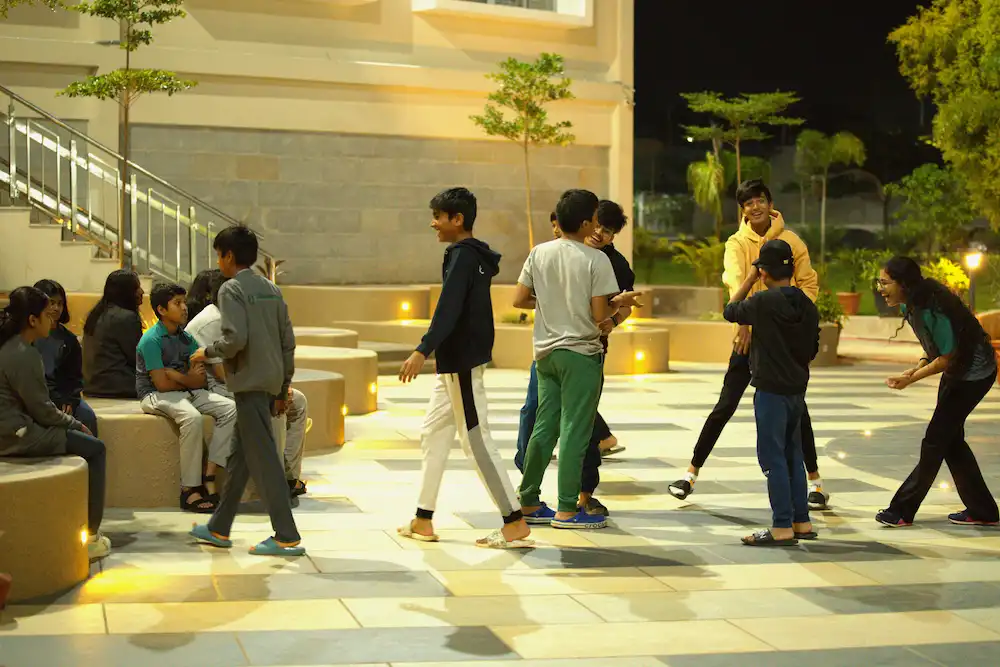
The Academic City School creates an environment where students must interact face-to-face constantly—during meals, in dormitories, during activities, throughout the structured day. Without phones providing escape from uncomfortable social situations, students develop resilience, learn to initiate conversations, practice active listening, and build genuine friendships based on shared experiences rather than online interactions.
Alternative Activities That Fill Screen-Free Time
Skeptical parents often wonder: "What will my child do without screens?" The question reveals how thoroughly screens have colonized leisure time in contemporary life. The Academic City School demonstrates that when screens disappear, a rich world of alternatives emerges.
Sports and Physical Activity
With 90 minutes of structured sports daily on weekdays and over 120 minutes on weekends, physical activity becomes central to student life at The Academic City School. Students choose from swimming, football, badminton, table tennis, basketball, cricket, skating rink activities, pickleball, kho-kho, and volleyball. Dedicated coaches support each sport, preparing talented students for competitions from district to national levels.
Without screens competing for attention during free time, students naturally gravitate toward informal games—pickup football matches, badminton rallies, swimming sessions. Physical exhaustion from active play creates healthy tiredness that promotes quality sleep, replacing the artificial stimulation from screens that delays sleep onset.
Creative and Performing Arts
The Academic City School offers structured sessions for students to explore artistic interests. Art classes provide focused exploration over 45-minute sessions. Music programs develop vocal and instrumental skills through weekly hour-long classes. Dance sessions build physical strength, coordination, and flexibility through four weekly sessions across all grade levels.
These creative pursuits develop patience, discipline, and the satisfaction of gradual skill improvement—qualities antithetical to the instant gratification screens provide. Students who stick with an instrument, an art form, or a dance style long enough to achieve competence discover intrinsic motivation and flow states that screen entertainment can never replicate.
Hands-On Learning Through Farming and Animal Care
Perhaps most uniquely, The Academic City School teaches students farming, where they engage in every agricultural step from sowing seeds to harvesting crops. This hands-on approach teaches hard work value and sustainability importance. Harvested produce enters the school kitchen, giving students accomplishment as their efforts nourish the community.
The poly-house nurtures exotic plants, sparking curiosity and wonder about botanical diversity. The Goshala, home to Indian breed cows, provides opportunities to learn animal care. These traditional practices ground students in fundamental life processes that urbanized, screen-dominated childhoods typically never encounter.
Reading and Intellectual Exploration
Without screens providing endless entertainment, students rediscover reading's pleasures. Books—actual physical books requiring sustained attention across pages and chapters—become companions again. Students who initially resist reading gradually discover that well-written stories, fascinating nonfiction, and thought-provoking essays provide deeper satisfaction than the shallow stimulation screens offer.
Libraries at The Academic City School become gathering places where students browse, recommend books to peers, and discuss what they're reading. Reading clubs form organically. Students develop vocabulary, knowledge breadth, empathy through fiction, and critical thinking through exposure to diverse ideas—all benefits screens actively undermine.
Social Interaction and Community Building
Perhaps most importantly, screen-free time creates space for genuine social connection. Students talk—actual face-to-face conversations about interests, concerns, dreams, and daily experiences. They play board games and card games that require turn-taking, strategy, and social engagement. They organize informal activities—talent shows, quiz competitions, storytelling circles.
The house system at The Academic City School fosters camaraderie and healthy competition through assigned student houses. These house communities create belonging, teamwork opportunities, and leadership development that screen-based interactions cannot replicate. Students learn to navigate group dynamics, resolve conflicts constructively, and build authentic friendships based on shared experiences rather than online personas.
Structured Daily Routine Supporting Screen-Free Living
The Academic City School's boarding facility operates with structured daily routines that foster discipline and establish consistent patterns. Each day provides a balanced mix of academics, sports, and personal development, ensuring students excel academically while cultivating essential life skills.
During weekdays, the focus remains primarily on academics, with structured class schedules and dedicated study sessions designed to maximize learning outcomes. Without screens fragmenting attention or creating procrastination temptations, study periods become genuinely productive. Students develop the capacity for sustained concentration that defines academic success.
Weekends provide breathing room while maintaining structure. Extended sports time, co-curricular activities, and personal development opportunities fill the schedule. House competitions, cultural activities, and special programs ensure weekends feel rewarding rather than boring without screen entertainment.
This structured environment eliminates the decision fatigue that overwhelms adolescents with unlimited choices. Rather than constantly choosing between homework and YouTube, between studying and gaming, between sleep and social media scrolling, students follow established routines that remove these decision points. Paradoxically, this structure creates freedom—freedom from addictive technology, freedom to develop genuine interests, freedom to become their best selves.
Parent Communication Without Student Device Access
A practical concern parents raise about zero screen time policies involves communication. "How will I stay in touch with my child without them having a phone?" This legitimate question has practical answers at The Academic City School.
The school maintains parent portals providing regular updates on student progress, attendance, and activities. Scheduled communication times allow students to call parents from school phones under appropriate supervision. House parents and pastoral care staff remain accessible for parent inquiries about student wellbeing, and emergency communication channels ensure parents can reach students immediately if urgent situations arise.
Importantly, reduced communication frequency often strengthens rather than weakens family bonds. The constant texting and brief daily calls that characterize parent-teen relationships in the smartphone era create an illusion of closeness while actually preventing the deeper conversations that build understanding. Weekly substantive conversations where students share meaningful experiences, challenges, and growth often prove more valuable than daily superficial check-ins.
Transitioning to the Screen-Free Environment
Parents considering The Academic City School naturally wonder how their screen-accustomed child will adapt to the zero screen time environment. The transition presents challenges, but the school's structured approach and supportive community facilitate adjustment.
Initially, most students experience mild withdrawal symptoms—boredom, restlessness, persistent thoughts about devices, anxiety about missing social media updates. These symptoms typically peak within the first week and gradually diminish as students discover alternative activities, develop new routines, and experience the benefits of screen-free living.
The peer environment accelerates adaptation. When every student faces the same screen-free reality, social pressure to conform dissolves. Students can't sneak devices because no one has them. FOMO disappears because everyone's missing the same online content. Instead, a new normal emerges where face-to-face interaction, physical activity, and engaged learning feel natural rather than forced.
House parents and pastoral care staff at The Academic City School provide crucial support during adjustment periods. They recognize signs of technology withdrawal, offer empathy and encouragement, help students discover alternative activities that provide genuine satisfaction, and create supportive community atmospheres where struggling students feel understood rather than judged.
Within weeks, most students report feeling liberated rather than deprived. Sleep improves. Concentration strengthens. Authentic friendships deepen. The constant low-level anxiety created by social media comparison and notification anticipation evaporates. Students rediscover interests they'd abandoned, develop skills they'd never explored, and experience the deep satisfaction of genuine accomplishment.
Conclusion: A Bold Educational Choice for a Screen-Saturated World
In an era when screen addiction among adolescents has reached epidemic proportions, when social media companies face lawsuits for knowingly harming teenagers' mental health, when parents watch helplessly as devices consume their children's attention and erode family relationships, The Academic City School's zero screen time policy represents bold educational leadership rooted in scientific evidence and genuine concern for student wellbeing.
The policy recognizes that adolescence represents a critical developmental window when neural pathways form, identity crystallizes, and life trajectories establish. Allowing this precious period to be colonized by addictive technologies engineered explicitly to capture attention, harvest data, and maximize engagement time represents an unconscionable waste of potential.
By creating a protected screen-free environment, The Academic City School allows students to develop capacities that screen-saturated peers increasingly lack: sustained attention, deep focus, genuine social skills, intrinsic motivation, physical fitness, creative expression, and mental clarity. These qualities predict long-term success far more accurately than any academic metric alone.
For parents in Nelamangala and across Bangalore seeking boarding schools that prioritize student wellbeing over convenience, that make hard choices based on evidence rather than trends, and that prepare students for genuine success rather than merely academic credentials, The Academic City School's zero screen time policy deserves serious consideration.
The policy won't appeal to every family. Some parents prioritize constant connectivity over developmental benefits. Some students prove unwilling to embrace screen-free living despite its advantages. The policy requires conviction, sacrifice, and trust—from schools, parents, and students alike.
However, for families recognizing that the smartphone-dominated status quo isn't serving adolescents well, for parents who've watched screens erode their child's focus and hijack their attention, and for students ready to discover what life feels like when freed from digital addiction, The Academic City School offers a proven alternative.
The zero screen time policy isn't about rejecting technology or creating artificial separation from the digital world. It's about reclaiming adolescence for its proper purposes: learning, growing, building skills, forming relationships, exploring interests, and developing the self-knowledge and capabilities that enable thriving throughout life. In this fundamental sense, the policy represents not restriction but liberation—liberation from addictive technologies that steal time, fragment attention, and undermine the deep work that genuine education requires
Note: Blogs by Yellow Slate are written based on information, knowledge and perspective of the writer. While every caution has been taken to provide readers with accurate information, please use your discretion before taking any decisions based on the information in this blog. In case you find any information that is factually wrong or something that could be made better, please write to us at contact@yellowslate.com.
Curious about how we arrived at this list? We believe parents deserve full transparency on how schools are evaluated and selected. to understand our school selection methodology.


