The IB Diploma Programme at Johnson Grammar School IBDP, Mallapur — A Complete Guide to the Curriculum for Grade 11 & 12
Every year, thousands of families across Hyderabad face the same crossroads at the end of Grade 10: which board should their child pursue for Grades 11 and 12? State board, CBSE, ISC, or something altogether different? For families who are thinking about international universities, or who want a curriculum that develops independent thinking over rote memorisation, the International Baccalaureate Diploma Programme has increasingly become the answer worth seriously considering.
Johnson Grammar School IBDP, Mallapur has been one of Hyderabad's foremost IBDP institutions since 2008 — making it one of the earliest authorised IB schools in the city, and one of the most experienced. Located at the Junior Wing campus on Mallapur Road, Nacharam, this institution dedicates itself entirely to the IB Diploma Programme for Grade 11 and Grade 12 students. There is no divided attention here between different boards or age groups. Everything — the faculty, the infrastructure, the mentoring systems, the extracurricular design — is built for the specific demands of the IBDP and the specific needs of a 16-to-19-year-old learner navigating this rigorous two-year programme. For parents in Hyderabad researching the best IB schools in Hyderabad for their child's senior secondary years, understanding how the IB curriculum actually works at Johnson is the logical first step.
What Is the IB Diploma Programme?
The Global Framework Behind Johnson Grammar School IBDP Mallapur's Curriculum
Before understanding how Johnson Grammar School IBDP delivers the curriculum, it helps to understand what the IBDP is at its core. The International Baccalaureate is offered in 160 countries across 5,500 schools globally, serving approximately 19,50,000 students. In India specifically, 206 schools are currently IB-authorised — a relatively small number that underscores just how selective the IBDP ecosystem is compared to CBSE or state boards.
The IBDP is a two-year programme designed for students aged 16 to 19 — meaning it maps precisely to Grades 11 and 12. It is globally recognised and respected by leading universities for producing graduates who are prepared for 21st-century demands: independent research, intercultural understanding, critical analysis, and self-directed learning. IB graduates consistently show higher university acceptance rates and often receive advanced standing, course credit, and scholarship consideration at leading institutions worldwide. The IB itself was founded in 1968; India first adopted it in 1976; and the Association of Indian Universities (AIU) formally recognised IB qualifications in 1983. Johnson Grammar School IBDP has been an authorised part of this global network since 2008.
The Six Subject Groups — What Students Study
How Johnson Grammar School IBDP Mallapur Structures the Academic Programme
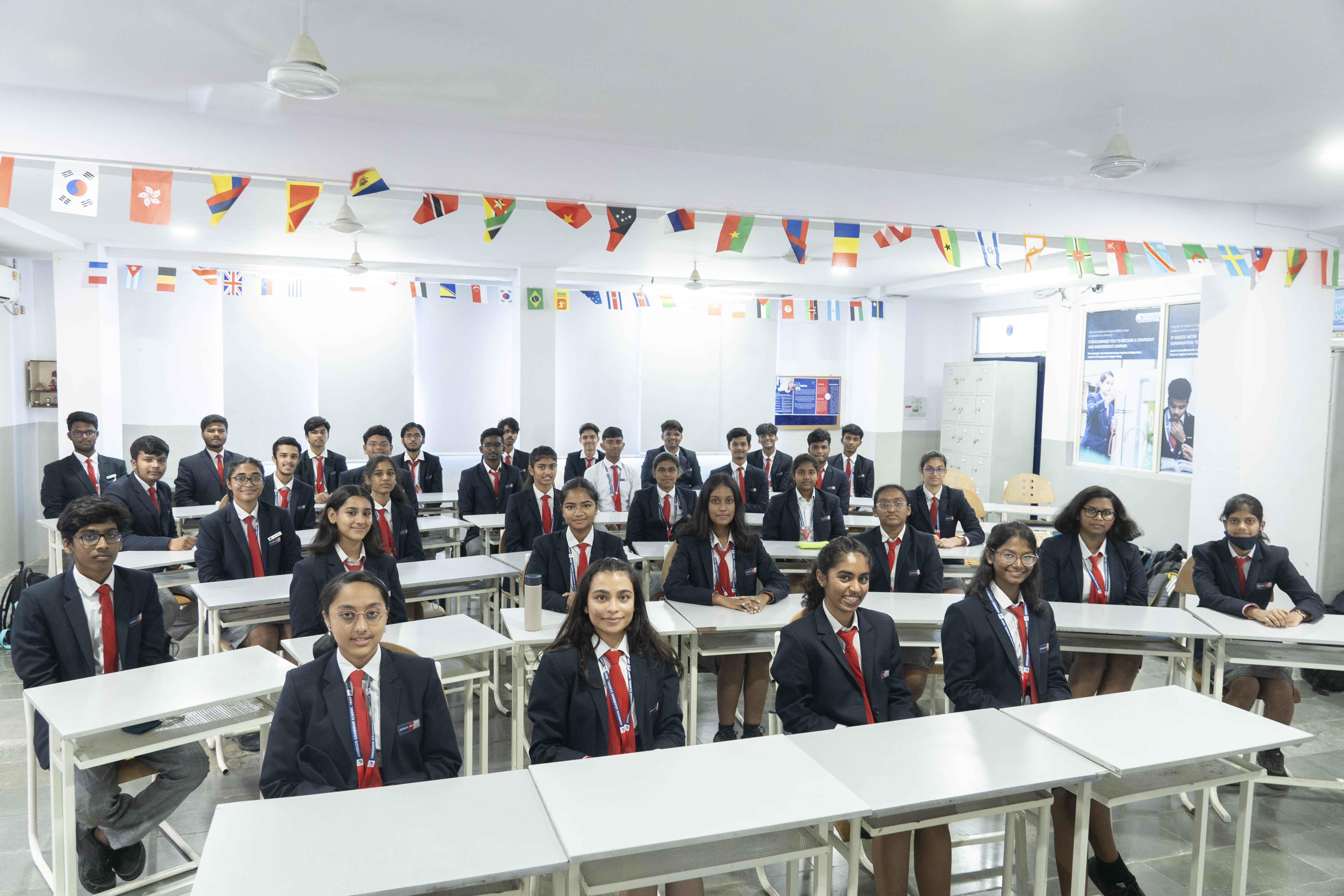
The heart of the IBDP curriculum is its six-subject framework. Every student at Johnson Grammar School IBDP selects one subject from each of six groups, studying three at Higher Level (HL) and three at Standard Level (SL). This structure ensures genuine breadth — a science-oriented student still engages with language, humanities, and the arts, and vice versa. It is a deliberate design choice that resists the narrowing that typically happens in Indian board curricula at the Grade 11 stage.
The six groups offered at Johnson Grammar School IBDP Mallapur are as follows:
Group 1 — Studies in Language and Literature: English Language and Literature at both Higher Level and Standard Level. This forms the linguistic and analytical foundation of the programme.
Group 2 — Language Acquisition: Students can choose French ab initio (for beginners), French B, or Hindi at Higher Level and Standard Level. The inclusion of a second language is a structural commitment to multilingual competency — not optional enrichment, but a core academic requirement.
Group 3 — Individuals and Societies: Business Management, Economics, and Psychology — each offered at both Higher and Standard Level. This group develops a student's understanding of human behaviour, economic systems, and organisational thinking.
Group 4 — Sciences: Biology, Chemistry, Physics, Computer Science, and Environmental Systems and Societies — all available at Higher Level and Standard Level. The breadth of science offerings at Johnson Grammar School IBDP Mallapur means students targeting medicine, engineering, environmental policy, or computer science all have appropriate pathways within the same institution.
Group 5 — Mathematics: Mathematics Analysis and Approaches (AA) and Mathematics Applications and Interpretation (AI), both at Higher and Standard Level. The distinction between AA and AI matters: AA is more theoretical and abstract, suited for students heading into pure mathematics, engineering, or physics. AI is more applied, suited for economics, business, or social sciences. Offering both ensures students choose based on their actual goals rather than settling for a one-size-fits-all approach.
Group 6 — The Arts: Visual Arts at both Higher Level and Standard Level. The arts are not an afterthought in the IB curriculum — they are a subject group equivalent in status to sciences and mathematics.
Beyond Subjects — The Three Core Requirements
What Makes the Johnson Grammar School IBDP Curriculum More Than Just Exams
What genuinely distinguishes the IBDP from conventional board curricula is not just the subjects — it is the three mandatory core components that run alongside all six subject groups throughout the two years.
The first is Theory of Knowledge (TOK) — a unique interdisciplinary course that asks students to reflect critically on how we know what we claim to know. It connects all academic disciplines by exploring the nature of knowledge itself. Students at Johnson Grammar School IBDP develop the intellectual habits that universities value most: questioning assumptions, evaluating evidence, and tolerating ambiguity.
The second is the Extended Essay (EE) — a 4,000-word independent research paper on a topic of the student's own choosing, supervised by a faculty mentor. For most students, this is their first genuine experience of academic research — framing a question, reviewing sources, building an argument, and presenting findings in a scholarly format. It is excellent preparation for university-level academic work.
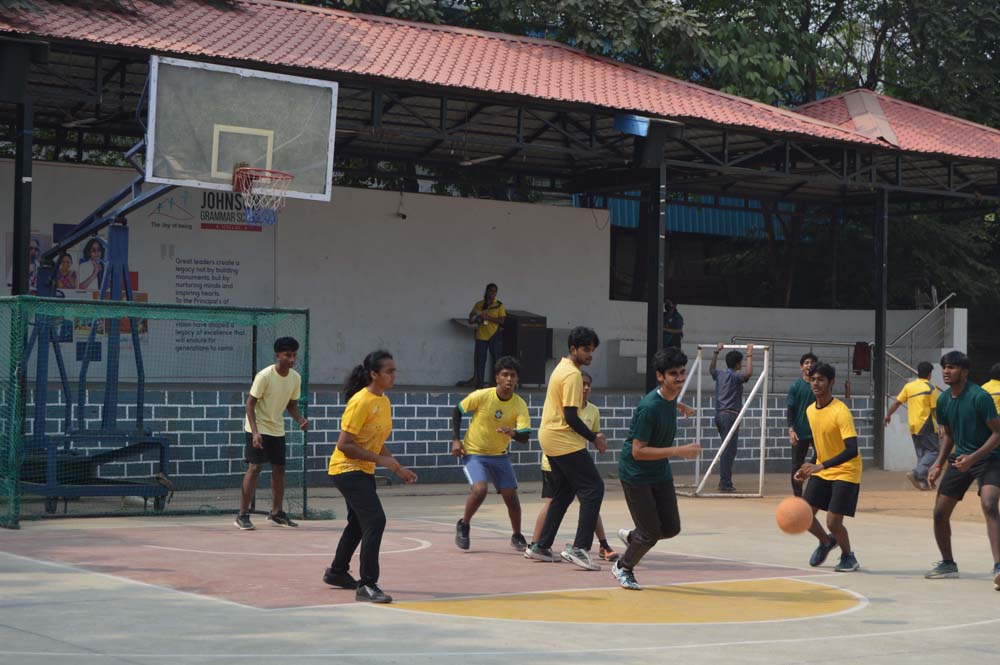
The third is CAS — Creativity, Activity, Service — and this is where Johnson Grammar School IBDP Mallapur has built a particularly rich programme. CAS requires students to engage in creative pursuits, physical activities, and community service throughout their two years. At Johnson, CAS projects have included running health-awareness walks in local residential communities, conducting educational service visits to schools in nearby villages like Mathepally, organising fundraising workshops for institutions supporting children with special needs, and participating in cultural immersion trips. These are not tick-box activities — they are structured learning experiences that develop empathy, leadership, collaboration, and social responsibility alongside academic rigour.
How the Learning Happens — Pedagogy and Support at Johnson
The IBDP is academically demanding, and Johnson Grammar School IBDP Mallapur has designed its support systems with that reality in mind. The Wi-Fi-enabled campus has a dedicated floor housing three spacious ICT labs equipped with modern digital sensors for practicals and research. All classrooms feature digital boards for interactive learning. The semi-digital library is stocked specifically with IB resources and references — not a generic school library, but one curated for the precise demands of DP subject guides.
Two mentoring structures operate in parallel. Subject Mentoring means that teachers sit individually with each student to map out personalised academic strategies — not just general guidance, but subject-specific goal setting for gradual academic improvement. Individual Mentoring goes deeper still: one-to-one personal sessions conducted periodically allow students to work through challenges in a confidential setting, adapt to the rigours of the curriculum, and develop the personal resilience that a demanding two-year international programme requires.
Technology is woven into administration as well. Johnson Grammar School IBDP uses ManageBac — a platform hosted on the school's own server — for planning, assessment, reporting, and parent-student communication. It is purpose-built for IB programme management and eliminates the paperwork friction that typically impedes communication between teachers, students, and parents.
Career Counselling is another active dimension of the student experience. Notifications on university applications and scholarship schemes for national and international undergraduate programmes are shared regularly with students and parents. University fairs and information sessions on popular and future-oriented courses are organised to ensure that students make informed, well-supported decisions about their next steps.
Where Johnson IBDP Students Go — University Placements
The proof of any curriculum ultimately lies in where it takes students. Johnson Grammar School IBDP Mallapur reports a 100% university admission record — meaning every graduating student has been admitted to a university. Of these, 64% have been placed in Indian universities and 36% in international universities across the United States, United Kingdom, Australia, Canada, Ireland, Europe, and the UAE.
The range of institutions reflects the IBDP's versatility. On the Indian side, alumni have been admitted to IIT Hyderabad, IIT Bombay, IIT Varanasi, NALSAR, London School of Economics, Ashoka University, Flame University, BITS, and more. Internationally, placements span the University of Manchester, King's College London, London School of Economics, University of Toronto, University of Sydney, Boston University, Warwick University, and others across multiple continents. Alumni have pursued degrees in Business, Engineering, Medicine, Law, Economics, Finance, Fine Arts, Literature, and more — a range that reflects just how genuinely multidisciplinary the curriculum is designed to be.
Practical Details — Admissions and Fee
Johnson Grammar School IBDP currently has admissions in process for Grade 11. The annual tuition fee is ₹4,20,000. The fee does not include the IBDP Board Exam Fee, uniforms, transport, laptop, field trips and tours, or any medical expenses.
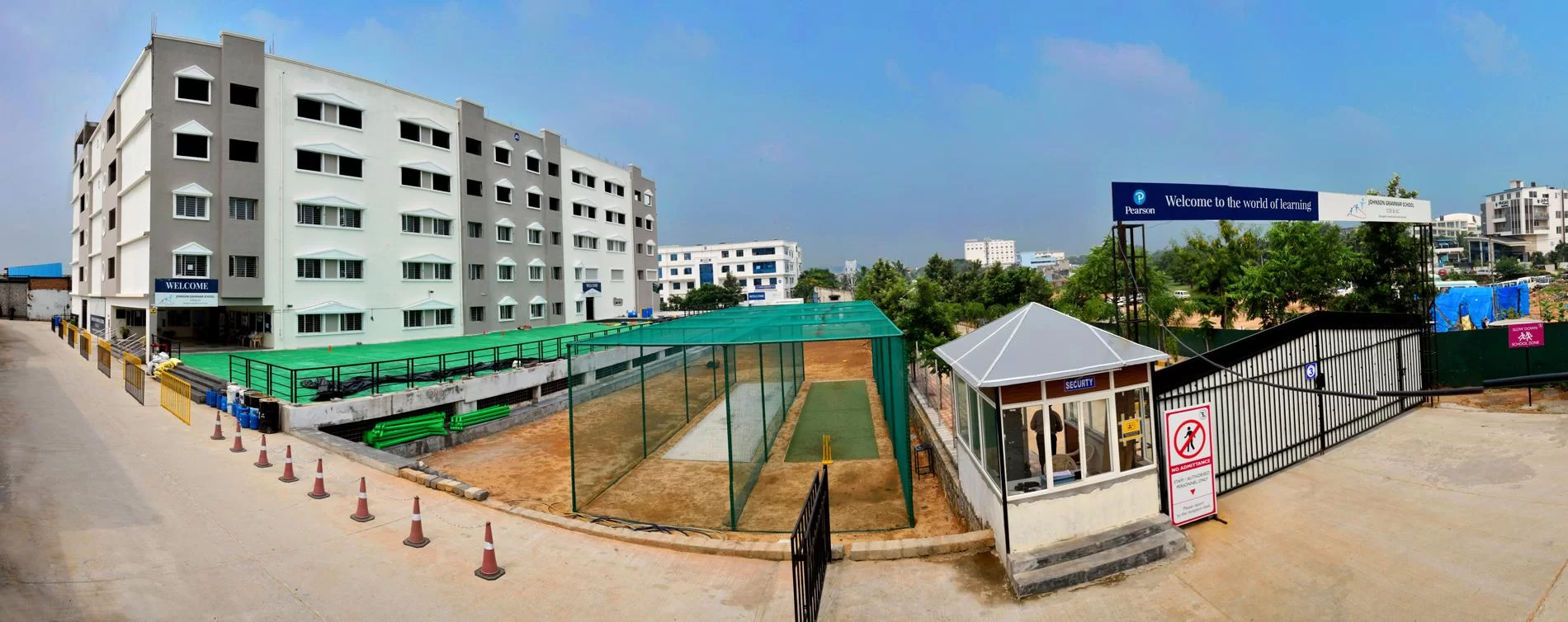
The admission process begins with a campus visit, for which families are invited to bring their child's Grade 8 and 9 academic records to experience the campus and understand the process first-hand. The next step is registration, requiring ongoing Grade 10 academic records, a passport-sized photograph, and a registration fee of ₹2,000. Shortlisted students then appear for an entrance examination covering English and Mathematics, designed to evaluate logical and writing skills. Final admission requires the Grade 10 mark sheet (memorandum), transfer and bonafide certificate (school leaving certificate), Aadhaar copy, birth certificate copy, and a passport-sized photograph. The school is located at Junior Wing, Plot No. A/16, Mallapur Road, Nacharam, Hyderabad – 500 076.
Conclusion
The IB Diploma Programme at Johnson Grammar School IBDP, Mallapur is not a shortcut to a better marksheet. It is a deliberate, two-year academic commitment that develops inquiring, independent, and internationally aware learners through six subject groups, three core requirements, structured mentoring, and an active CAS programme. With 17 batches of graduates behind it, a 100% university admission record, and placements spanning IITs to King's College London, Johnson Grammar School IBDP Mallapur has demonstrated consistently that the curriculum works — and that it works across a genuinely wide range of academic and career aspirations.
For families in Hyderabad weighing the best IB schools in Hyderabad for Grade 11, understanding the curriculum in this depth is the only honest starting point. Visit the official website at www.jgsibdp.org to explore further and take the next step toward your child's IBDP journey.
Note: Blogs by Yellow Slate are written based on information, knowledge and perspective of the writer. While every caution has been taken to provide readers with accurate information, please use your discretion before taking any decisions based on the information in this blog. In case you find any information that is factually wrong or something that could be made better, please write to us at contact@yellowslate.com.
Curious about how we arrived at this list? We believe parents deserve full transparency on how schools are evaluated and selected. to understand our school selection methodology.


