The PRARTHANA.IN Principles Decoded: How 12 Core Values Shape Every Child's Journey at PWS Bangalore
When parents start looking at schools in South Bangalore, the conversation usually begins the same way — boards, fees, infrastructure, results. What rarely gets asked, but matters more than almost anything else, is this: what does this school actually believe about children? At Prarthana.in World School, that question has a very specific, very deliberate answer — and it's spelled out right in the school's name.
The PRARTHANA.IN acronym isn't a clever branding exercise. It's a 12-principle philosophical framework that the school has built its entire pedagogy, environment, and culture around. Each letter stands for a value that shapes how teachers teach, how students learn, and how the school community grows together. For parents trying to look beyond the glossy brochure and understand what a school day actually feels like for a child, unpacking these principles is the best place to start.
Located at Banashankari VI Stage, Prarthana.in World School Bangalore was born from a vision established in 2002 by the late Shri Ravi Belagere — to make quality education inclusive, personal, and powerful for every child regardless of background. The 12 principles carry forward that vision in a way that's both practical and profound.
What the PRARTHANA.IN Framework Actually Stands For
P — Personal Wellbeing: The Foundation Before Everything Else
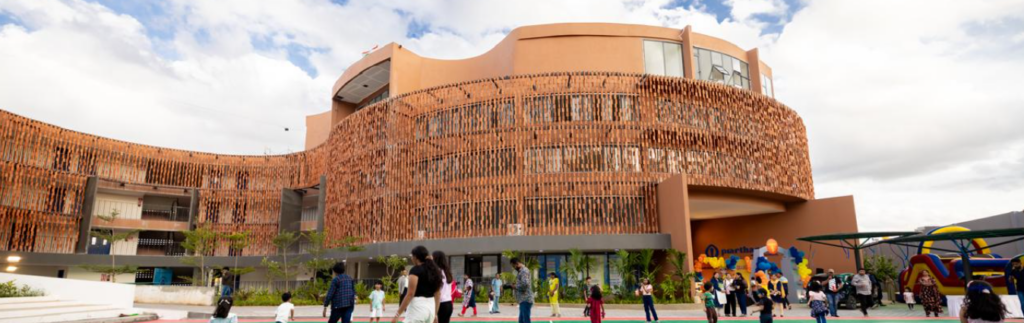
You can't teach a child who doesn't feel safe, seen, or settled. Prarthana.in World School puts personal wellbeing first — and it's worth pausing on what that actually means here. The school promotes mental and physical health through stress management, balanced lifestyles, and peer support. There are also comprehensive anti-bullying initiatives in place, with the explicit goal of ensuring students thrive in an environment free from bullying.
This isn't a poster on a wall. It's the lens through which classroom management, teacher training, and student interaction policies are designed. For parents worried about how their child will adjust emotionally to school, this commitment to wellbeing as the first priority says a great deal.
R — Rooted in Culture: Proud of Where We Come From
In a world where international schools sometimes feel disconnected from Indian identity, PWS makes a deliberate choice to ground students in their heritage. The school fosters a deep connection to Indian culture through a rich curriculum, cultural celebrations, and language programmes. The approach isn't nostalgic — it's about helping children build a strong sense of self that connects their present to a living, meaningful past.
Among the best schools in Bangalore that balance a global outlook with cultural rootedness, Prarthana.in World School stands out for treating culture not as an add-on event in the school calendar, but as a thread woven through everyday learning.
A — Autonomy: Children Who Own Their Learning
Why Prarthana.in World School's Approach to Autonomy Matters
This is where PWS genuinely diverges from conventional schooling. The school creates a student-centred approach that allows for exploration, self-expression, and the development of lateral thinking skills. In the primary years specifically, students are given choices in their learning — selecting books, deciding on project topics, and engaging in hands-on activities of their choosing.
It sounds simple. But the implication is significant: children at Prarthana.in World School Bangalore are not passive recipients of information. They're active participants in their own education. That shift in ownership has a direct impact on motivation, confidence, and long-term learning habits.
R — Reflective Practices: The Habit of Looking Inward
Most schools measure learning through tests. PWS also measures it through reflection. Students regularly engage in journaling, group discussions, and project reflections — practices that foster a deeper understanding of both the world around them and themselves. The school explicitly frames reflection as a tool for continuous improvement, not just a feel-good exercise.
This principle applies to educators too. Teachers at PWS are expected to reflect on their own practice — assessing lessons, nurturing connections, and enriching the curriculum based on what they observe. It's a culture of honest self-evaluation that runs top to bottom in the school.
T — Thinking Classroom: Where Learning Goes Deeper
Prarthana.in World School's Thinking Classrooms and What They Mean for Your Child
The Thinking Classroom principle is about refusing to let education stop at memorisation. Prarthana.in World School designs its classrooms as dynamic spaces that cultivate critical thinking, creativity, and problem-solving skills. Students are actively engaged in the learning process, not just sitting and listening.
This is particularly evident in how the school describes its classroom environments — spaces where "a child's environment is a significant teacher" and where "listening is the heart of the educational relationship." That's a very different kind of classroom from the one most of us grew up in. For parents seeking the best international schools in Bangalore, this quality of intellectual engagement is one of the most meaningful differentiators to look for.
H — Habits: Building Character, One Day at a Time
PWS takes seriously the idea that who a child becomes is shaped by what they do consistently — not by what they know. The school nurtures positive habits for academic success, personal growth, and lifelong learning. Discipline, time management, character development, critical thinking, and ethical responsibility are all woven into daily life at school.
What makes this principle practical is how it manifests in the school day. Affirmations and habit development are integrated into the curriculum itself — not treated as a separate pastoral programme, but as part of the fabric of how each day begins and unfolds.
A — Aesthetic Experience: Creativity as a Way of Seeing
How Prarthana.in World School Builds Aesthetic Sensibility in Young Learners
This principle often surprises parents who haven't thought much about aesthetics in a school context. At Prarthana.in World School Bangalore, the arts aren't extracurricular — they're central. The school integrates arts, cultural exploration, creative expression, and experiential learning into everyday schooling, fostering students' appreciation for beauty and creativity as genuine capacities to develop.
The Budding Years spaces — including the Musical Garden and dedicated arts areas — make this tangible for younger children. For older students, aesthetic experience becomes a lens for engaging with literature, history, science, and more. It's an approach that consistently produces children who notice things, appreciate nuance, and express themselves with confidence.
N — Nature: Learning That Grows Outdoors
The Nature principle reflects something increasingly rare in urban schooling — a genuine commitment to connecting children with the natural world. PWS integrates outdoor classrooms, environmental education, sustainability initiatives, and hands-on experiences into its programme. The stated goal is to nurture students as "responsible stewards of the environment."
In practice, this shows up in the Nature Room for younger children, in gardening programmes tied to nutrition education, and in an educational philosophy that sees outdoor spaces as legitimate learning environments. Parents looking for the best schools in Banashankari that prioritise environmental consciousness will find this principle genuinely distinctive.
A — Altruism: Teaching Children to Give Back
Prarthana.in World School and the Role of Altruism in Everyday School Life
Compassion isn't something you can teach from a textbook. PWS understands this, which is why altruism is built into the school's extracurricular and community life. The school integrates community service, global awareness, character education, and kindness initiatives — with the goal of inspiring students to become compassionate, socially responsible global citizens.
In the middle and high school years, this extends to clubs, events, and activities specifically designed to provide opportunities for acts of service. At Prarthana.in World School, the vision of a graduate is someone who doesn't just succeed individually but contributes meaningfully to the world around them.
. (Pause) — The Dot That Holds Everything Together
Why Prarthana.in World School Built 'Pause' into Its Core Principles
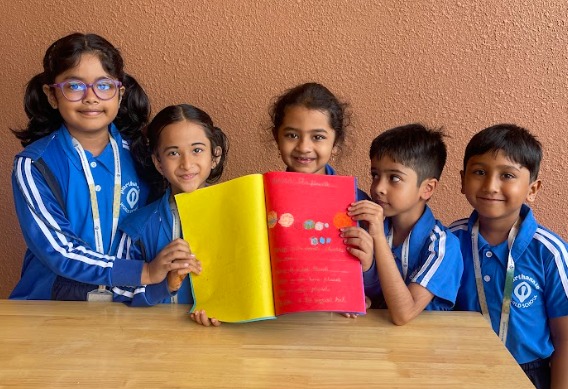
The full name of the framework includes a dot — PRARTHANA**.IN** — and that dot represents Pause. It's an unusual thing to make a core institutional value, and yet it might be one of the most thoughtful. PWS fosters a culture of mindfulness, quiet spaces, and balanced schedules, explicitly recognising that children need moments of reflection, rest, and self-care throughout their day.
Mindful pauses are incorporated into transitions between activities, allowing students to centre themselves. Yoga sessions are also an essential part of the curriculum — combining physical movement with mindfulness to help students harmonise body and mind. In an education landscape where children are chronically over-scheduled, this deliberate deceleration is genuinely countercultural and genuinely valuable.
I — Inquiry Mindset: Questions That Drive Learning
The Inquiry Mindset principle shapes how teachers present content and how students are expected to engage with it. At Prarthana.in World School Bangalore, the school creates an inclusive environment that encourages curiosity, celebrates questions, and offers hands-on experiences and collaborative learning. The aim is to help students become lifelong, critical thinkers — not just good test-takers.
This principle is closely linked to the Thinking Classroom and Learner Centricity values. Together, they create an environment where asking "why" is not just permitted — it's the point. Among the best IGCSE schools in South Bangalore, this emphasis on genuine inquiry is what separates schools that produce curious learners from those that produce compliant ones.
N — Nutrition: Fuelling the Whole Child
The final principle is perhaps the most tangible — and the most often overlooked in school philosophy discussions. PWS is explicit that nutrition is a core educational value, not just a cafeteria policy. The school provides nutritious meals, nutrition education, and gardening programmes, with a holistic approach to nutrition that empowers students to make informed choices about what they eat and why.
The connection to the Nature principle is clear here: children who grow something in a garden understand food differently than those who simply receive it. This is the kind of integrated thinking across principles that distinguishes a real educational philosophy from a list of aspirational statements.
What These 12 Principles Look Like Together
Read individually, each principle makes sense. But what makes the PRARTHANA.IN framework genuinely compelling is how the values reinforce one another. Personal Wellbeing and Pause create the psychological safety for Inquiry to flourish. Autonomy and Reflective Practices combine to build genuine self-awareness. Nature and Nutrition together form a coherent commitment to holistic health. Altruism and Rooted in Culture produce a child who is both grounded and outward-looking.
This is not a school that picked twelve nice words and printed them on a wall. These principles actively shape how PWS designs its spaces, trains its educators, structures its school day, and defines what success looks like for each child. As the school's own vision states, the goal is to build inner strength in every child, irrespective of socio-economic background, by harnessing the power of positive affirmation.
Is PWS the Right Fit for Your Family?
The PRARTHANA.IN framework is genuinely distinctive, but it won't be the right fit for every family. Parents who prioritise rote performance, highly structured competitive environments, or a purely traditional approach to schooling may find PWS's philosophy unfamiliar. But for families who believe that how a child learns matters as much as what they learn — that self-awareness, curiosity, compassion, and wellbeing are not nice-to-haves but essential outcomes of good education — Prarthana.in World School Bangalore makes a compelling case.
Note: Blogs by Yellow Slate are written based on information, knowledge and perspective of the writer. While every caution has been taken to provide readers with accurate information, please use your discretion before taking any decisions based on the information in this blog. In case you find any information that is factually wrong or something that could be made better, please write to us at contact@yellowslate.com.
Curious about how we arrived at this list? We believe parents deserve full transparency on how schools are evaluated and selected. to understand our school selection methodology.


