USPs and Teaching Methodologies at The Lexicon Schools: A Parent’s Guide for 2027–28 Admissions
A School That Changes Shape as Your Child Grows
A four-year-old learning letter sounds and a sixteen-year-old writing Python code need very different things from school. Yet many parents compare schools as if one teaching method fits every age.
That's where The Lexicon Schools stand out. Their USPs aren't a single big idea. Instead, they're a set of practices that shift as a child moves from Nursery to Class XII. Phonics and storytelling come first. Research projects and coding follow. Leadership platforms arrive in the senior years.
So rather than listing The Lexicon Schools' teaching methodologies one by one, this guide follows a child's journey through them. If you're shortlisting the best schools in Pune for 2027-28 admissions, it shows you what your child will actually be doing at each stage.
Stage One: The Early Years (Nursery to Class V)
Sounds Before Sentences: Jolly Phonics and RSQM at The Lexicon Schools
Reading starts with sounds. In pre-primary and Classes I and II, children learn through Jolly Phonics. They hear letter sounds, blend them into words and practise forming letters, often using touch, movement and sight together.
This sits inside a wider routine called RSQM: Reading, Spelling and Quick Math. Reading practice covers fluency, comprehension, vocabulary and spelling, and it runs across three languages, English, Hindi and Marathi. Meanwhile, short Quick Math sessions keep addition, subtraction, multiplication and division sharp through age-appropriate drills.
None of this is flashy. However, parents of primary-school children know that a shaky foundation in reading or arithmetic shows up years later. Regular, structured practice is what prevents that.
From Caterpillar to Butterfly: Giving Young Children a Stage
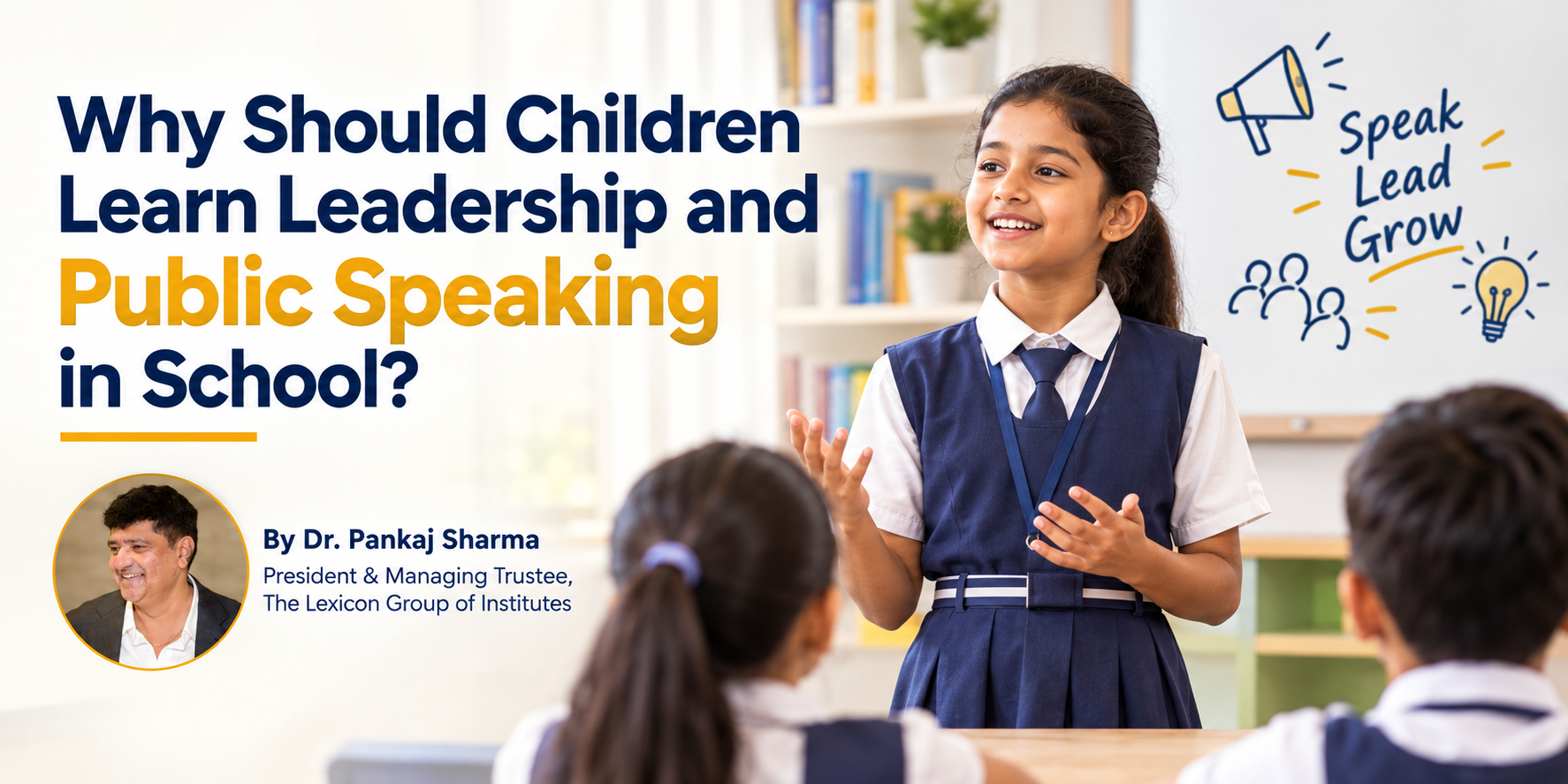
The most distinctive early-years practice is Caterpillar to Butterfly, or C2B, which runs from Nursery to Class V. The idea is simple. Children take a topic from their curriculum and present it to an audience, through a story, a role play, a poem, a song, a quiz or a presentation.
Here's the clever part: the students plan and present it themselves, while teachers only guide. Consequently, a child who learnt about plants that week doesn't just answer a worksheet. They explain it, in their own words, to a room full of people.
That builds the skills parents often wish they'd had earlier, such as public speaking, teamwork and the confidence to speak up.
First Steps in Coding
Technology also enters early. Children in Classes I to V are introduced to coding through Code.org and "unplugged" activities that teach sequencing and logic without a screen. In short, they learn how to think like a programmer before they write a line of code.
Stage Two: The Middle and Senior Years (Classes VI to XII)
Every Child Is Smart in a Different Way
By now, a child's strengths are becoming clearer. One loves numbers; another comes alive in music, sport or a group debate. The Lexicon Schools plan lessons around the Theory of Multiple Intelligences, which recognises nine kinds: linguistic, logical-mathematical, visual-spatial, bodily-kinaesthetic, musical, interpersonal, intrapersonal, naturalistic and existential.
In practice, the same lesson might use a story, a diagram, a hands-on task and a group discussion. That way, more children find a way in. The school's MI Fest then gives students a stage to show off whatever their strength happens to be.
Learning by Doing, Not Just Reading
Alongside this, experiential learning at The Lexicon Schools brings concepts off the page. Science becomes experiments and models. Mathematics becomes practical calculation. Language becomes storytelling and debate. Furthermore, STEAM activities, role plays and educational visits add variety, while project work asks students to research, collaborate and present what they found.
Research and Development: Asking Real Questions
From Class VI, students join the school's Research and Development (R&D) programme. This is where learning starts to look like real inquiry. Students design questionnaires, run surveys, record results and present research papers.
The topics aren't abstract, either. R&D draws on case studies, the Sustainable Development Goals and SEWA (community service) activities. As a result, a student might end up investigating an issue in their own community and defending their findings with evidence, which is a skill no rote exam can teach.
The Coding Ladder at The Lexicon Schools
Coding grows with the child, one step at a time:
Classes | What students work with | What they do |
|---|---|---|
| I–V | Code.org and unplugged activities | Learn sequencing and logic |
| VI–VIII | Scratch | Build stories, games and animations |
| IX–XII | Java, Python and MySQL | Write programs and work with databases |
The shift is worth noticing. Students move from using technology to understanding how it works, and finally to building with it. For parents searching for coding-focused schools in Pune, that progression is the detail to ask about.
What Stays the Same at Every Stage
Bloom's Taxonomy: The Thinking Ladder Behind Every Lesson
Across classrooms, one framework shapes how teachers question and assess: Bloom's Taxonomy. It moves a student up six levels of thinking, from remembering and understanding, to applying and analysing, and finally to evaluating and creating.
Here's a quick test you can use on any school visit. Ask whether children only recall answers, or whether they're also asked to explain, judge and invent. At The Lexicon Schools, classroom activities, questions and assessments are built to push students towards the upper rungs.
Habits, Values and a Bigger Stage
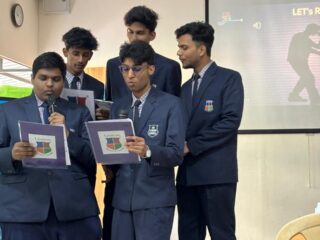
Character is built on purpose, too. The school's Eight Habits framework comes alive through stories, role plays, assemblies and class activities. It covers taking initiative, setting goals, prioritising, cooperating, listening, looking after one's well-being and recognising one's strengths.
Bigger platforms build on this. Lexicon Model United Nations, STEAM Fest, Tech-Carnival, the Lexicon Entrepreneurship Conclave and TED-Ed exposure push them to research, argue, create and pitch. In addition, SEWA activities and sign language sessions teach community responsibility, environmental awareness and inclusive communication.
Parents Stay in the Loop Every Week
Finally, parents aren't left guessing, which matters to any family weighing top schools in Pune. Every week, the school's ERP system shares a report on subjects covered and the week's highlights. Beyond that, PTMs, feedback channels and regular interactions keep the conversation going.
There's also a safety net built in. Teacher mentorship, bridge courses, step-up classes, support for high achievers, health and wellness initiatives and regular academic audits help catch children who need a push, whichever direction that push needs to go.
The Takeaway for 2027-28 Admissions
The real strength of The Lexicon Schools isn't any single programme. It's how the pieces connect. Phonics and RSQM lay the base. C2B and the MI approach build confidence. R&D and the coding ladder build independent thinkers. Bloom's Taxonomy, the Eight Habits and weekly parent updates hold it all together.
If you're comparing the best schools in Pune, or specifically looking for schools in Pune with coding and experiential learning built into every stage, this is a framework worth seeing in person.
Admissions for 2027-28 are a good moment to start. Visit the official website of The Lexicon Schools to explore its programmes and plan a campus visit.
Note: Blogs by Yellow Slate are written based on information, knowledge and perspective of the writer. While every caution has been taken to provide readers with accurate information, please use your discretion before taking any decisions based on the information in this blog. In case you find any information that is factually wrong or something that could be made better, please write to us at contact@yellowslate.com.
Curious about how we arrived at this list? We believe parents deserve full transparency on how schools are evaluated and selected. to understand our school selection methodology.


