Vision, Mission, and Leadership at The Academic City School: Building Tomorrow's Leaders Today
When parents search for the right boarding school in Bangalore, they inevitably ask fundamental questions: what does this school stand for? What drives its educational philosophy? Who leads the institution, and what qualifies them to shape young minds? These aren't mere curiosities—they represent critical considerations that determine whether a school truly aligns with family values and aspirations. For families exploring The Academic City School in Nelamangala, understanding the school's vision, mission, and leadership provides crucial insight into an institution that positions itself as India's first career-oriented boarding school. This comprehensive exploration reveals how the school's founding principles, operational mission, and experienced leadership converge to create an educational environment where students don't merely prepare for examinations but genuinely prepare for life.
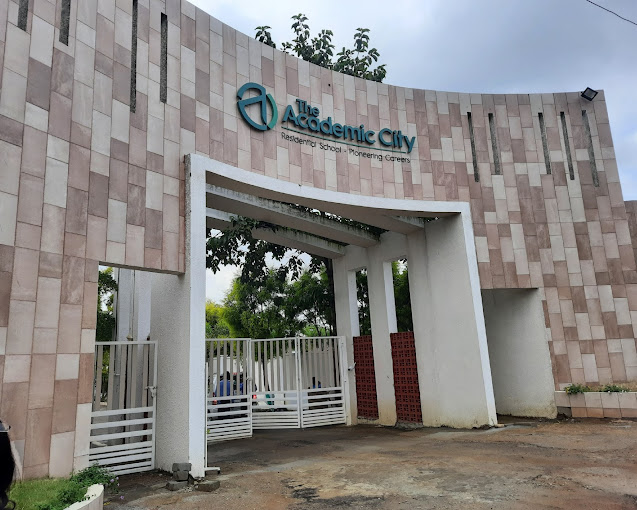
Located on a scenic 9-acre campus in Nelamangala, The Academic City School Bangalore represents more than physical infrastructure and academic programs. At its core, the institution embodies a specific educational philosophy—one that challenges traditional schooling paradigms by placing career readiness at the center of curriculum design while simultaneously nurturing holistic development across personal, professional, emotional, physical, and social dimensions. Understanding how this philosophy manifests through leadership and operational practice helps parents evaluate whether the school offers the transformative education they seek for their children.
The Foundational Vision: Transforming Young People into Well-Developed Individuals
The vision of The Academic City School articulates an ambitious yet clear aspiration: "preparing young minds for better futures, through all-inclusive learning opportunities and a combination of modernity, technology and tradition." This statement, while concise, reveals multiple layers of intentionality that distinguish the school's approach from conventional educational institutions.
Firstly, the emphasis on "preparing young minds for better futures" signals future-orientation rather than present-focused credential collection. Many schools implicitly prepare students for yesterday's world, emphasizing skills and knowledge structures that served previous generations but may prove inadequate for tomorrow's challenges. In contrast, The Academic City School explicitly acknowledges that education must anticipate future needs, developing capabilities that remain relevant despite technological disruption, economic transformation, and societal evolution.
Furthermore, the commitment to "all-inclusive learning opportunities" reflects recognition that different students possess different strengths, interests, and developmental trajectories. This inclusive philosophy rejects the narrow academic hierarchy that privileges certain intelligences while marginalizing others. Whether students excel in academics, arts, athletics, entrepreneurship, or other domains, The Academic City School Bangalore creates pathways for success that honor diverse talents and aspirations.
The vision's emphasis on combining "modernity, technology and tradition" addresses a central tension in contemporary Indian education: how to prepare globally competitive, technologically fluent students while maintaining cultural rootedness and value-based development. Many schools swing toward one extreme—either embracing modernity while abandoning tradition, or clinging to tradition while resisting necessary modernization. The Academic City School's vision articulates integration rather than choice, recognizing that effective education must bridge rather than choose between these seemingly opposing forces.
Moreover, the broader vision statement that the school aims to "transform young people into well-developed individuals in all manners, personally, professionally, emotionally, physically, and socially" explicitly commits to holistic development. This comprehensive approach acknowledges that human flourishing requires attention to multiple dimensions simultaneously—academic excellence alone proves insufficient if students lack emotional intelligence, physical health, social competence, or personal integrity. By explicitly naming these dimensions, the vision establishes accountability for delivering genuinely holistic education rather than paying lip service to the concept.
The Operational Mission: Placing Learners at the Centre of Everything
While vision articulates aspirational direction, mission defines operational focus—the concrete commitments that guide daily decision-making and resource allocation. The Academic City School's mission statement declares: "We place learners at the centre of everything. We strive to ensure that every student is equipped with social prowess whilst enabling them to choose the right path to success."
The phrase "learners at the centre of everything" represents more than rhetorical flourish—it signals fundamental philosophical commitment to student-centric rather than system-centric education. Traditional schools often structure themselves around administrative convenience, curricular requirements, or teacher preferences, expecting students to adapt to institutional systems. Student-centric education inverts this relationship, designing systems that adapt to learner needs, recognize individual differences, and prioritize developmental outcomes over operational efficiency.
At The Academic City School Bangalore, this student-centricity manifests through multiple operational features. The Individual Progression Plan (IPP) with color-coded bands—Yellow, Orange, Green, and Pink—provides personalized learning pathways that meet students at their current developmental level and guide progression at appropriate paces. Rather than expecting all students to master content simultaneously, the system acknowledges that learning happens at different rates and provides scaffolding accordingly.
The mission's emphasis on equipping students with "social prowess" recognizes that academic competence alone proves insufficient for life success. Social intelligence—the ability to navigate relationships, communicate effectively, collaborate productively, resolve conflicts constructively, and build networks—often predicts professional success more reliably than academic credentials. By explicitly prioritizing social development alongside academic achievement, The Academic City School acknowledges that education must develop the complete person rather than merely the intellect.
Furthermore, the mission commitment to "enabling students to choose the right path to success" reflects the school's distinctive career-orientation philosophy. The phrase "enabling to choose" rather than "directing toward" or "preparing for" signifies respect for student agency and recognition that there exist multiple valid paths to success. Rather than funneling all students toward conventional professional careers, The Academic City School Bangalore exposes students to 600+ career options, conducts psychometric testing to identify interests and aptitudes, and provides guidance that helps students make informed choices aligned with their unique potential and passions.
The school's motto—"You don't chance upon a great career, you make them happen"—captures this proactive, intentional approach to career preparation. It rejects passive hope that good things will somehow materialize, instead cultivating agency, planning, and purposeful action that transform aspirations into realities.
Visionary Leadership: The Founder's Journey and Philosophy
Understanding The Academic City School requires understanding its founder, Sripal Jain, whose personal journey and professional background fundamentally shaped the institution's character and direction. As a Chartered Accountant by qualification, Jain brings financial acumen and analytical rigor to educational leadership—skills often lacking in institutions founded by educators without business understanding. This dual competence enables sustainable institutional development while maintaining educational integrity.
However, Jain's significance extends far beyond professional credentials to encompass passionate commitment to educational transformation. Described as "a passionate Educationist and Academician in the true sense of the term," he represents the rare combination of professional competence and genuine calling—someone who could have pursued lucrative corporate careers but chose instead to dedicate himself to educational innovation and student empowerment.
Career Uttsav: The Genesis of Career-Oriented Education
The founding vision of The Academic City School Bangalore emerged directly from Jain's landmark event "Career Uttsav," initiated in 2012. Over more than a decade, this program has helped over 3 lakh (300,000) students navigate career decisions, exposing them to diverse professional possibilities and helping them identify paths aligned with their interests and capabilities.
This extensive experience—engaging with hundreds of thousands of students and observing their struggles, confusions, aspirations, and eventual career journeys—provided Jain profound insight into systemic gaps within Indian education. He witnessed firsthand how traditional schooling leaves students academically accomplished yet professionally unprepared, equipped with knowledge but lacking practical skills, capable of passing examinations but uncertain about meaningful career directions.
These observations crystallized a conviction: education must integrate career orientation from the beginning, not append it awkwardly in senior years when choices narrow dramatically. Students benefit enormously from early exposure to diverse career possibilities, ongoing guidance that helps them identify interests and develop relevant capabilities, and continuous preparation that builds both academic credentials and practical competencies.
The Academic City School represents Jain's attempt to operationalize these insights—creating an institution where career orientation isn't an add-on but rather the foundational organizing principle around which all other educational elements arrange themselves.
Authorship and Thought Leadership
Beyond institutional building, Sripal Jain's authorship of 9+ books (most published by Pearson, a leading global education publisher) demonstrates his commitment to sharing educational insights broadly and contributing to pedagogical discourse beyond his immediate institutional context. This thought leadership positions him not merely as a school administrator but as a genuine educational innovator whose ideas possess validity and applicability beyond single institutions.
His writing represents testimony to his "love for teaching and genuine intent to help students in multiple ways." Rather than hoarding knowledge within his institution, he disseminates it widely, contributing to broader educational transformation while simultaneously establishing The Academic City School Bangalore as a hub for educational innovation and best practice.
The Institutional Aim: Excellence, Competition, and Holistic Growth
With The Academic City School, Jain aims to "prepare every student to excel in their academics, crack competitive exams and grow holistically—all under one roof." This three-dimensional goal captures the integration he seeks: academic rigor (excelling in academics), practical outcomes (cracking competitive exams), and comprehensive development (growing holistically), all delivered within unified institutional context rather than requiring students to cobble together these elements from disparate sources.
This integration matters enormously because traditional approaches fragment student experience—schools handle academics, coaching centers handle competitive exam preparation, extracurricular programs handle holistic development, and students navigate exhausting schedules attempting to access all three simultaneously. The Academic City School's unified approach eliminates this fragmentation, creating coherent educational experience where different elements reinforce rather than compete with each other.
Operational Leadership: Prof. Pallavi's Commitment to Holistic Development
While founders provide vision and direction, day-to-day institutional culture and student experience depend heavily on operational leadership—particularly the Principal who directly shapes educational delivery, faculty culture, and student relationships. At The Academic City School Bangalore, Prof. Pallavi serves in this crucial role, bringing her own commitment and philosophy to the institution.
Her stated dedication—"As the head of school, I'm dedicated to nurturing every child holistically"—aligns perfectly with the school's broader vision while adding personal commitment and accountability. The phrase "every child" signals inclusive commitment rather than focus on high-performers or easily served students. This universalist approach reflects belief that all students deserve and can benefit from excellent education, regardless of starting points or inherent advantages.
The emphasis on "nurturing" rather than merely "teaching" or "training" suggests a developmental, supportive approach that recognizes students as whole persons requiring care, encouragement, and relationship alongside instruction. This nurturing philosophy creates school culture characterized by support rather than harsh competition, collaboration rather than cutthroat rivalry, and growth rather than fixed judgments.
Her commitment to children's development across multiple dimensions demonstrates alignment with the school's holistic philosophy. Rather than narrowly focusing on academic metrics, she takes responsibility for comprehensive growth—recognizing that the Principal's role extends beyond curriculum management to encompass shaping complete educational environment and culture.
The Academic City Foundation: Institutional Structure and Governance
The Academic City School operates under the auspices of The Academic City Foundation, a registered entity providing institutional structure, governance framework, and long-term stability. This foundation structure offers several advantages over alternative organizational models.
Firstly, foundation governance typically emphasizes mission preservation over profit maximization, ensuring that educational objectives remain primary even as the institution scales and faces financial pressures. While sustainable operations require financial health, the foundation structure subordinates financial considerations to educational mission rather than vice versa.
Furthermore, foundation governance typically incorporates broader stakeholder representation beyond single proprietors or investors, potentially including educators, parents, alumni, and community members alongside founders. This broader governance base ensures diverse perspectives shape institutional direction while preventing concentration of power that might lead to arbitrary decision-making.
The foundation structure also signals long-term institutional commitment rather than short-term entrepreneurial ventures. Founders willing to establish governance structures that outlast their direct control demonstrate genuine commitment to educational transformation beyond personal benefit or glory.
Faculty Team: 40 Dedicated Educators Implementing the Vision
While leadership provides vision and direction, educational quality ultimately depends on faculty who interact daily with students, design learning experiences, provide feedback, and model intellectual curiosity and ethical behavior. The Academic City School Bangalore employs 40 teachers serving students from grades 4 through 12.
This faculty size enables manageable student-teacher ratios that support the personalized attention central to the school's student-centric mission. With a boarding school population spread across nine grade levels, 40 teachers can provide the individual mentorship, customized feedback, and relationship development that larger class sizes prevent.
Moreover, the faculty team implements the school's distinctive pedagogical approaches including the Individual Progression Plan, career counseling programs, externship coordination, and integration of life skills alongside academic content. This implementation requires significant faculty skill, commitment, and flexibility beyond traditional teaching—educators must function as mentors, counselors, and facilitators alongside content experts.
The school's ability to attract and retain faculty committed to its innovative vision and willing to implement nontraditional approaches reflects leadership's success in articulating compelling educational philosophy, creating positive working conditions, and building institutional culture that educators want to participate in and contribute to.
Career-Oriented Philosophy: Redefining Educational Success
The defining characteristic differentiating The Academic City School from conventional institutions—its claim as "India's first career-oriented boarding school"—flows directly from leadership vision and operational commitment. This career orientation manifests through multiple concrete features rather than remaining abstract aspiration.
The exposure to 600+ career options systematically expands student awareness beyond conventional professional paths (engineering, medicine, law) that dominate Indian educational consciousness. Many students and parents possess limited awareness of career diversity, understanding perhaps 20-30 professions while hundreds more remain invisible. This limited awareness constrains choices dramatically—students cannot pursue careers they don't know exist.
By exposing students to this vast professional diversity, The Academic City School Bangalore prevents premature foreclosure and enables genuine choice based on comprehensive awareness rather than limited options.
The psychometric testing provides scientific assessment of student interests, aptitudes, and personality characteristics, generating data-driven insights that complement subjective self-assessment and parental intuitions. While these tools possess limitations and shouldn't deterministically dictate career choices, they provide valuable starting points for self-discovery and focused exploration.
The Externship programs (A through G, from Architects to Government/Defense) provide experiential exposure to professional environments, enabling students to observe careers firsthand rather than relying on abstract descriptions or romanticized portrayals. This experiential learning helps students understand actual workplace realities, daily responsibilities, required competencies, and lifestyle implications—information crucial for informed decision-making.
The university counseling process guides students through the complex landscape of higher education options, helping them identify institutions aligned with their career aspirations, navigate admission requirements, and make strategic choices about programs, locations, and credential pathways.
Holistic Development: Beyond Career Preparation
While career orientation distinguishes The Academic City School, the leadership recognizes that human flourishing requires comprehensive development beyond professional success. The school's emphasis on transforming students "personally, professionally, emotionally, physically, and socially" reflects integration rather than trade-off between career preparation and holistic growth.
The Life Readiness Program (160 hours of preparation including effective communication, problem-solving, critical thinking, innovation, creativity, teamwork, and leadership) develops general capabilities that transfer across contexts rather than narrow technical skills specific to particular careers. These meta-competencies—sometimes called "21st-century skills"—enable adaptation, learning, and thriving regardless of specific career paths.
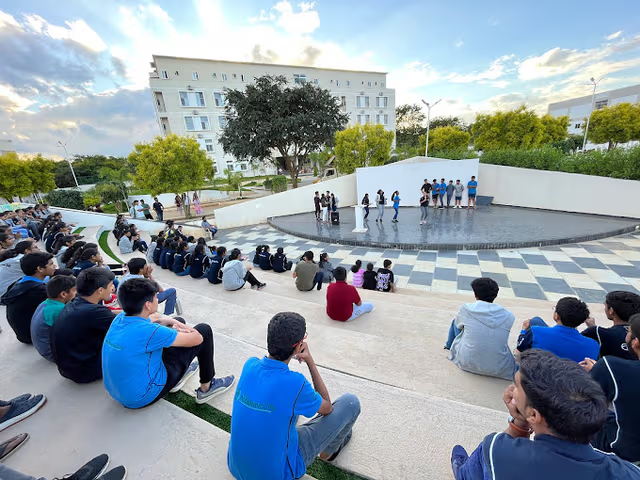
The mandatory 90 minutes of daily sports (120+ minutes on weekends) ensures physical development and fitness alongside academic work, preventing the sedentary lifestyle and health neglect that intensive academic focus sometimes produces. Moreover, sports participation develops teamwork, resilience, competitive spirit, and stress management—capabilities valuable far beyond athletics.
The 20+ co-curricular activities spanning diverse domains (diplomacy, wealth creation, robotics, art, survival skills, entrepreneurship, biotechnology, fashion design, culinary arts, performing arts) provide outlets for varied interests while developing diverse competencies. This variety ensures that The Academic City School Bangalore students develop well-rounded capabilities rather than narrow specialization.
Values-Based Education: Maintaining Moral Compass
In an era where educational discourse sometimes emphasizes skills and competencies while neglecting character and values, The Academic City School's commitment to "value-based education" reflects recognition that how people use capabilities matters as much as which capabilities they possess. Technical competence without ethical grounding creates potential harm rather than guaranteed benefit.
The integration of traditional values with modern education prevents the value vacuum that sometimes accompanies rapid modernization. While adopting contemporary pedagogies, technological tools, and global perspectives, the school maintains cultural rootedness and moral foundations that provide students ethical frameworks for navigating complex choices and competing interests.
This values emphasis manifests through multiple mechanisms: explicit character education addressing integrity, responsibility, compassion, and respect; modeling by faculty and leadership who demonstrate ethical behavior; community norms that reward prosocial behavior while discouraging selfishness or dishonesty; and service learning that cultivates social consciousness and commitment to contribution beyond self-interest.
Meeting 21st Century Needs: Educational Relevance and Responsiveness
The Academic City School Bangalore's explicit commitment to meeting "21st century needs" acknowledges that education must remain responsive to contemporary realities rather than preparing students for worlds that no longer exist. The leadership recognizes that "as the 21st century unfolds a plethora of career avenues, many parents and students find themselves at crossroads, uncertain and overwhelmed."
This acknowledgment validates the confusion and anxiety many families experience when confronting educational choices in rapidly changing contexts. Rather than blaming parents for uncertainty or students for indecision, the school positions itself as "a beacon, illuminating paths, and empowering choices, ensuring every student is equipped for the world of tomorrow."
This supportive positioning reflects the school's student-centric and family-centric philosophy. Rather than adopting superior attitudes that judge families for confusion, the leadership demonstrates empathy and offers genuine support, partnership, and guidance through complex navigation.
Transparency and Parent Partnership: Building Trust Through Communication
The leadership's commitment to transparency and regular parent communication reflects recognition that families constitute crucial educational partners whose engagement significantly impacts student success. The Academic City School establishes multiple communication channels including regular visitation days, progress updates, and accessible leadership ensuring parents remain informed about their children's development, institutional decisions, and educational approaches.
This transparency builds trust that enables productive partnership. When parents understand what's happening, why decisions are made, and how their children are progressing, they can support the educational program effectively rather than working at cross-purposes or undermining institutional approaches due to misunderstanding or incomplete information.
Moreover, transparent communication demonstrates institutional confidence and accountability. Organizations that operate transparently signal nothing to hide and willingness to face scrutiny, creating credibility that opaque institutions cannot match.
Innovation and Continuous Improvement: Evolving Educational Practice
The leadership's commitment to educational innovation—evidenced by the school's founding as India's first career-oriented boarding school, the development of distinctive programs like IPP and Career Uttsav, and the integration of multiple pedagogical approaches—signals institutional willingness to challenge conventional practice and experiment with improvements.
This innovative orientation matters because education inevitably requires adaptation as student needs evolve, societal contexts shift, and new insights emerge about effective pedagogy. Schools that rigidly maintain traditional approaches regardless of changing circumstances ultimately become irrelevant, serving historical contexts rather than contemporary students.
The Academic City School Bangalore's leadership demonstrates willingness to question assumptions, experiment with alternatives, and adapt based on outcomes rather than defending practices simply because they're familiar or established.
Why Vision, Mission, and Leadership Matter: The Foundation of Educational Quality
Understanding why The Academic City School Bangalore emphasizes vision, mission, and leadership helps parents appreciate these elements' foundational importance rather than viewing them as mere marketing language or abstract concepts disconnected from practical educational delivery.
Vision provides directional clarity—ensuring that all institutional decisions, resource allocations, program developments, and daily practices align toward common goals rather than fragmenting into unrelated activities. Without clear vision, schools drift toward whatever seems urgent or appealing without strategic coherence.
Mission translates vision into operational commitments—defining what the school actually does, how it allocates attention and resources, and which outcomes it prioritizes. Mission statements provide accountability frameworks enabling assessment of whether institutions deliver on proclaimed commitments.
Leadership embodies vision and mission through personal example, decision-making, culture creation, and institutional stewardship. Even brilliant vision and compelling mission remain abstract aspirations without leadership capable of inspiring faculty, partnering with families, guiding students, and navigating inevitable challenges and obstacles.
Together, these three elements create coherent institutional identity and provide the foundation on which all other educational elements rest. Excellent facilities, advanced technology, diverse programs, and experienced faculty all matter enormously—but they deliver maximum benefit only when aligned within clear vision, operationalized through focused mission, and guided by capable leadership.
Conclusion: Choosing Education Aligned with Your Values and Aspirations
As families navigate the complex landscape of educational choices in Bangalore, understanding institutions' foundational vision, mission, and leadership provides crucial insight extending far beyond surface-level features like facilities, rankings, or brand recognition. The Academic City School's explicit commitment to career-oriented education, holistic development, student-centric pedagogy, and values-based learning—coupled with experienced, passionate leadership—creates distinctive educational environment worthy of serious consideration.
For parents seeking schools that don't merely prepare students for examinations but genuinely prepare them for life, that recognize the primacy of career readiness alongside character development, and that provide comprehensive support through the critical developmental years, The Academic City School Bangalore offers a compelling alternative to conventional approaches.
The school's vision of transforming young people into well-developed individuals across all dimensions, its mission of placing learners at the center while equipping them with both social prowess and career clarity, and its leadership combining entrepreneurial vision with educational passion create the foundation for educational excellence that extends beyond academic metrics to encompass complete human flourishing.
If you're considering boarding school options in Bangalore and want your child to experience education guided by clear vision, purposeful mission, and experienced leadership committed to their comprehensive success, connecting with The Academic City School represents an excellent starting point. Schedule a campus visit, engage with the admissions team, meet the leadership, and discover whether this vision-driven approach aligns with your family's aspirations for your child's educational journey and future success.
Note: Blogs by Yellow Slate are written based on information, knowledge and perspective of the writer. While every caution has been taken to provide readers with accurate information, please use your discretion before taking any decisions based on the information in this blog. In case you find any information that is factually wrong or something that could be made better, please write to us at contact@yellowslate.com.
Curious about how we arrived at this list? We believe parents deserve full transparency on how schools are evaluated and selected. to understand our school selection methodology.


