What a 16:1 Student-Teacher Ratio Actually Means for Your Child at Crestwood High Varthur
When parents research schools in the Varthur-Gunjur corridor of Bangalore, they look at location, fees, board affiliation, and facilities. What often gets less attention — but arguably matters more in the day-to-day reality of a child's schooling — is the student-teacher ratio. It is a number that sounds statistical and dry, but it touches almost everything: how quickly a teacher notices a struggling student, how often a child gets to speak in class, how personalised the feedback on an assignment is, and whether a child who is having a hard week emotionally is actually seen by an adult.
At Crestwood High Varthur, this number is 16:1. The school specifically names it as a defining feature of its "Inclusive and Diverse Environment," describing it as an "optimal" ratio designed for "individualised mentoring and guidance." This blog is an attempt to unpack what that actually means in practice — not the marketing version, but the functional, day-to-day version that parents should care about when making a school decision for their child.
Crestwood High follows the CBSE curriculum, mapped to NEP 2020, and currently serves students from Pre-Primary to Grade X, with an expansion to Grade XII planned. Admissions are open for 2025-26. The school is located on State Highway 35, near Gunjur, Devasthanagalu, Varthur, Bengaluru — Karnataka 560087.
Section A: The Number in Context — Why 16:1 Is Worth Paying Attention To
What Crestwood High Varthur's 16:1 Ratio Looks Like Compared to the Norm
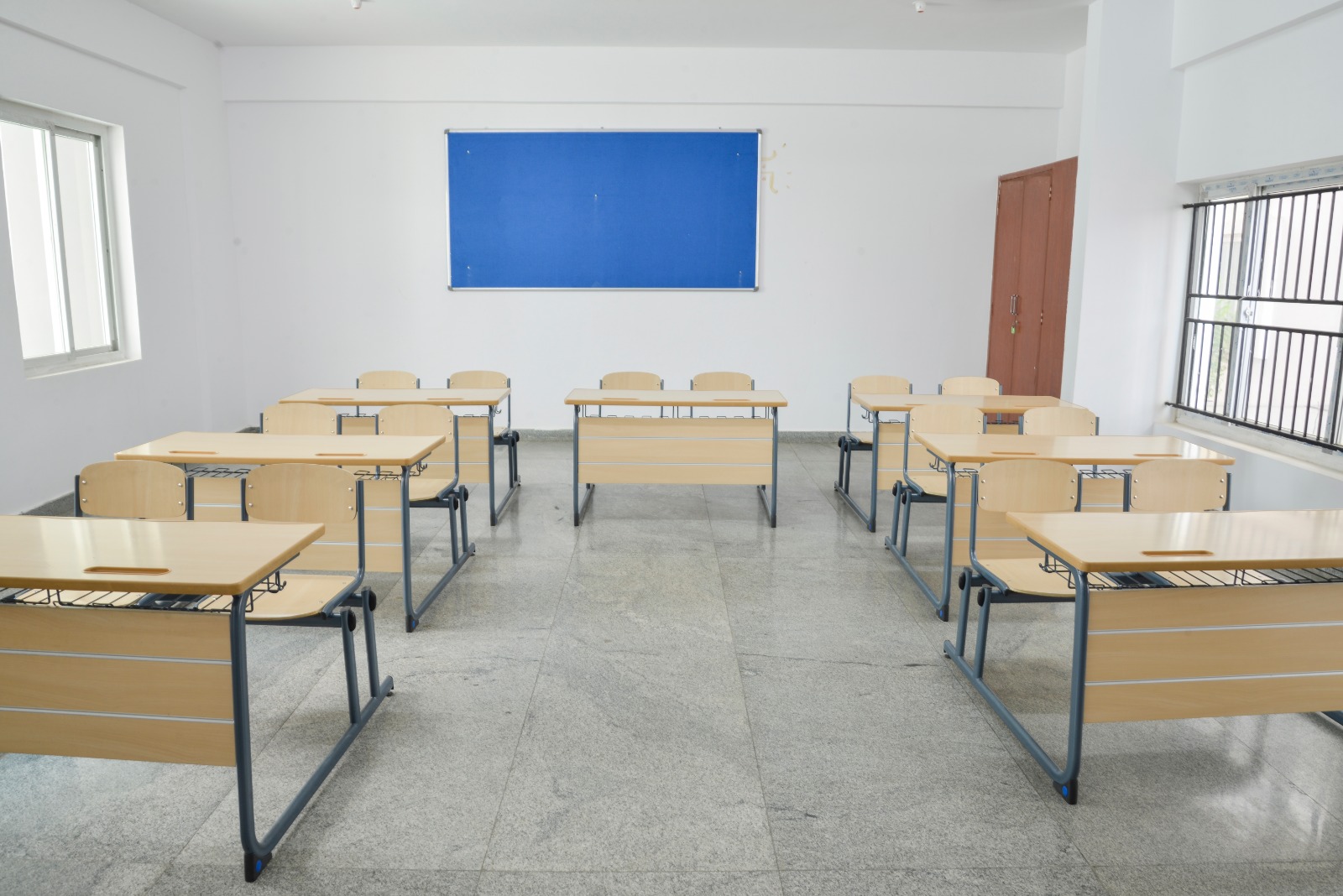
Before getting into what the 16:1 ratio means at Crestwood, it helps to understand what most classrooms look like across India. In government schools, student-teacher ratios routinely exceed 30:1, and in many popular private schools across Bangalore, classes of 35 to 40 students per teacher are standard. At 16 students per teacher, Crestwood High Varthur is operating at roughly half the density of those larger classrooms. That is not a marginal difference — it is a structural one, and it has downstream effects on almost every aspect of how learning happens.
Consider what a teacher can realistically accomplish with a class of 35 children versus a class of 16. With 35, each student gets roughly 90 seconds of the teacher's direct, individual attention in a 45-minute class period — if the teacher distributes that attention perfectly, which in practice never happens. With 16 students, that number more than doubles, and more importantly, the teacher actually has time to notice things: which child is distracted today, which student understood the concept immediately and needs a more challenging question, which child answered confidently but got the underlying reasoning wrong. These are the observations that separate good teaching from great teaching, and they require time and cognitive space that overcrowded classrooms simply do not allow.
Crestwood High frames this ratio explicitly in the context of individualised mentoring and guidance — not just academic instruction. That distinction matters. Mentoring implies an ongoing relationship between teacher and student that builds over time. It implies that a teacher knows their students well enough to recognise when something is off, to have a conversation beyond the syllabus, and to connect a student's academic performance to their broader wellbeing and personal development. You cannot build that kind of relationship across 35 or 40 different children. You can across 16.
Section B: What It Means Academically — Feedback, Attention, and Pace
How the Student-Teacher Ratio at Crestwood High Varthur Shapes Academic Outcomes
The most immediate academic benefit of a smaller class is the quality and speed of feedback. When a teacher has fewer assignments to mark, they mark them more thoroughly. When there are fewer children in a discussion, each child participates more. When a concept is being explained and only 16 children need to follow it, a teacher can check understanding in real time — pausing, questioning, adjusting — rather than pushing forward because there simply is not enough time to verify whether 35 different children have grasped the point before moving on.
Crestwood High Varthur follows a student-centric pedagogy that integrates academic excellence with holistic development, fostering skills, values, and global perspectives. This kind of pedagogy — which emphasises critical thinking, problem-solving, and personalised learning pathways — is genuinely difficult to execute in large classes. In a room of 35 students, the pace of the lesson is inevitably set by the average child. Students who grasp concepts quickly become bored and disengaged. Students who need more time fall behind and are reluctant to raise their hand because the lesson has already moved on. Neither group gets what they need.
With 16 students, a skilled teacher can actually differentiate instruction — giving advanced students a harder problem to explore while spending extra time consolidating understanding with those who need it. This is not a theoretical aspiration. It is a practical outcome of having fewer children in the room. The school's emphasis on "rigorous academic standards and innovative teaching methodologies" alongside "focus on critical thinking, problem-solving, and analytical skills" reflects a pedagogical ambition that requires exactly the kind of teacher attention that a 16:1 ratio makes possible.
Section C: Beyond Academics — Emotional Wellbeing and the Student Who Gets Noticed
Why Smaller Classes Matter for Wellbeing at Crestwood High Varthur
Academics are only part of the picture. One of the quieter benefits of a low student-teacher ratio — and arguably the most important one for young children — is that it makes emotional distress visible. In a classroom of 35 children, a child who is having a difficult time can easily go unnoticed. They are not disruptive, not performing poorly enough to trigger alarm, just quietly struggling. In a class of 16, that same child is far more likely to be seen — because the teacher actually has the capacity to observe body language, changes in participation, and shifts in mood that would simply be lost in the noise of a much larger group.
Crestwood High takes this seriously at an institutional level. The school maintains CCTV surveillance, trained counsellors, and a dedicated infirmary for physical and mental wellbeing. Importantly, the school also employs a dedicated special educator and a psycho-social counsellor — and runs performance enhancement classes for students who need additional academic support. This means the support system extends well beyond the classroom. A child who needs extra help is not simply left to manage independently; there are specific adults whose professional role is to catch those students and provide structured support.
This ecosystem of care works best when classroom teachers are close enough to their students to make early referrals. A teacher who knows 16 children well is in a fundamentally better position to say "this child is struggling emotionally and needs to speak with the counsellor" than a teacher managing 35. The 16:1 ratio is, in this sense, not just an academic advantage. It is the first layer of the school's wellbeing infrastructure — the layer that makes everything else function properly because it ensures that no child goes unnoticed long enough for a small problem to become a large one.
The school's Chairman, K.C. Vijaya Kumar, articulates this philosophy directly: "I strongly believe that the future of our society rests in the hands of our children, and it is our responsibility to equip them with the skills, values, and confidence needed to navigate the complexities of the world." Equipping a child with confidence is not something that happens in a lecture. It happens in small moments of genuine recognition — a teacher who calls on a shy student by name, who remembers what they said last week, who notices when their energy changes. These moments require proximity. The 16:1 ratio creates that proximity.
Section D: What It Means for Diverse Learners — Inclusion in Practice, Not Just Policy
How Crestwood High Varthur's Ratio Supports Students of All Learning Profiles
Inclusive education is a commitment that many schools make on paper and struggle to deliver in practice. The reason the gap between intention and delivery is so wide in most schools is fundamentally a resource problem: when a teacher is managing 35 children with different learning styles, different speeds, different needs, and different home backgrounds, genuinely differentiating for every child is an impossible ask. The math simply does not work.
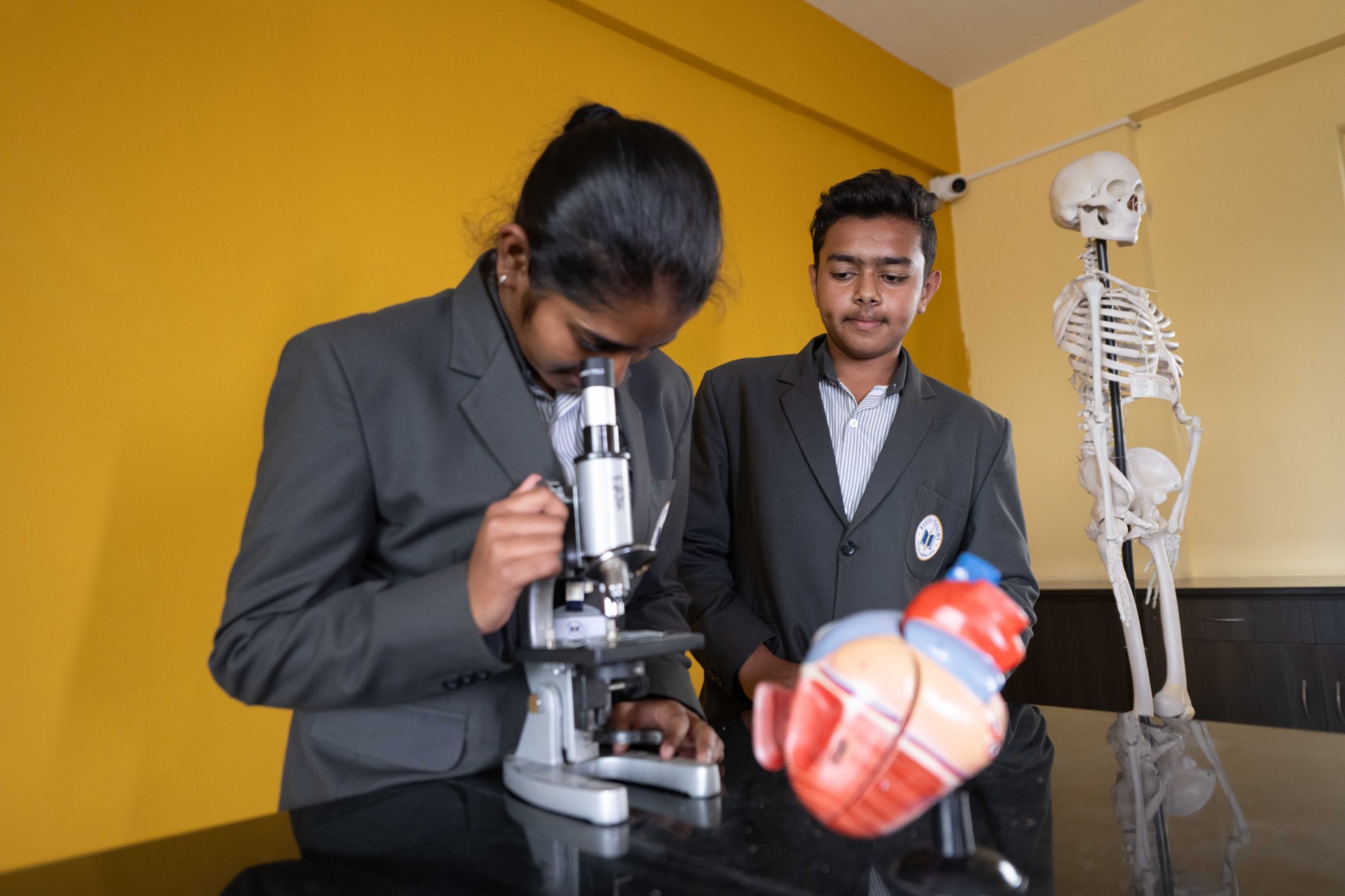
Crestwood High Varthur explicitly welcomes students from diverse backgrounds and describes a welcoming space built on cross-cultural interactions that foster mutual respect and understanding. The school is genuinely inclusive — it accepts students with learning disabilities and provides support through a dedicated special educator and psycho-social counsellor. This kind of provision is meaningful only if the classroom environment can actually accommodate those students without them feeling lost or overlooked. A 16:1 ratio makes that accommodation realistic.
For parents of children who learn differently — whether that means a child who needs a slower pace, a child who needs enrichment and challenge beyond the standard syllabus, or a child who has sensory or attention-related needs — the student-teacher ratio is one of the most important numbers to check when evaluating a school. It determines whether inclusion is a real structural commitment or a policy statement. At Crestwood High, the combination of the 16:1 ratio, the dedicated special educator, and the psycho-social counsellor represents a genuine infrastructure for diverse learners — not just a willingness to enrol them.
Section E: Future-Ready Education Requires Teacher Proximity
Robotics, Entrepreneurship, and Why the 16:1 Ratio Amplifies Crestwood High Varthur's Programmes
Crestwood High Varthur explicitly integrates robotics, social skills, and entrepreneurial skills into its curriculum — a commitment to preparing students for challenges that do not yet fully exist. The school offers advanced STEM labs, robotics centres, and dedicated spaces for arts, music, and drama. These are not supplementary extras. They sit at the heart of the school's "Future-Ready Education" offering, which emphasises adaptability, creativity, and leadership alongside academic rigour.
It is worth noting what kinds of learning these facilities support — and why they specifically require the conditions that a low student-teacher ratio creates. A robotics project involves iteration: trying something, failing, diagnosing the problem, adjusting, trying again. This process requires a teacher who can observe what individual teams are doing, ask the right questions to prompt thinking, and guide without simply providing the answer. That kind of coaching relationship is impossible when one teacher is overseeing 35 children simultaneously working on different projects. It is very much possible when a teacher is working with 16.
Similarly, building entrepreneurial skills requires a culture of safe risk-taking — the confidence to propose an idea, defend it, hear criticism, and refine it. That culture does not emerge in environments where children feel anonymous or where only a handful get to speak in any given class. It emerges when students feel genuinely known by their teacher, when their contributions are consistently heard, and when the classroom is small enough that participation is the norm rather than the exception. Dr. Sharmila Mallick Choudhuri, Principal of Crestwood High, brings over 20 years of experience in education to this vision — and her recognition as a four-time award recipient, including the Abdul Kalam Memorial Award (2018), Principal of the Year Award (2022), Best District Principal Award (2023), and Avantika Award (2021), reflects a leadership philosophy that is centred precisely on this kind of individualised, character-building education.
Conclusion
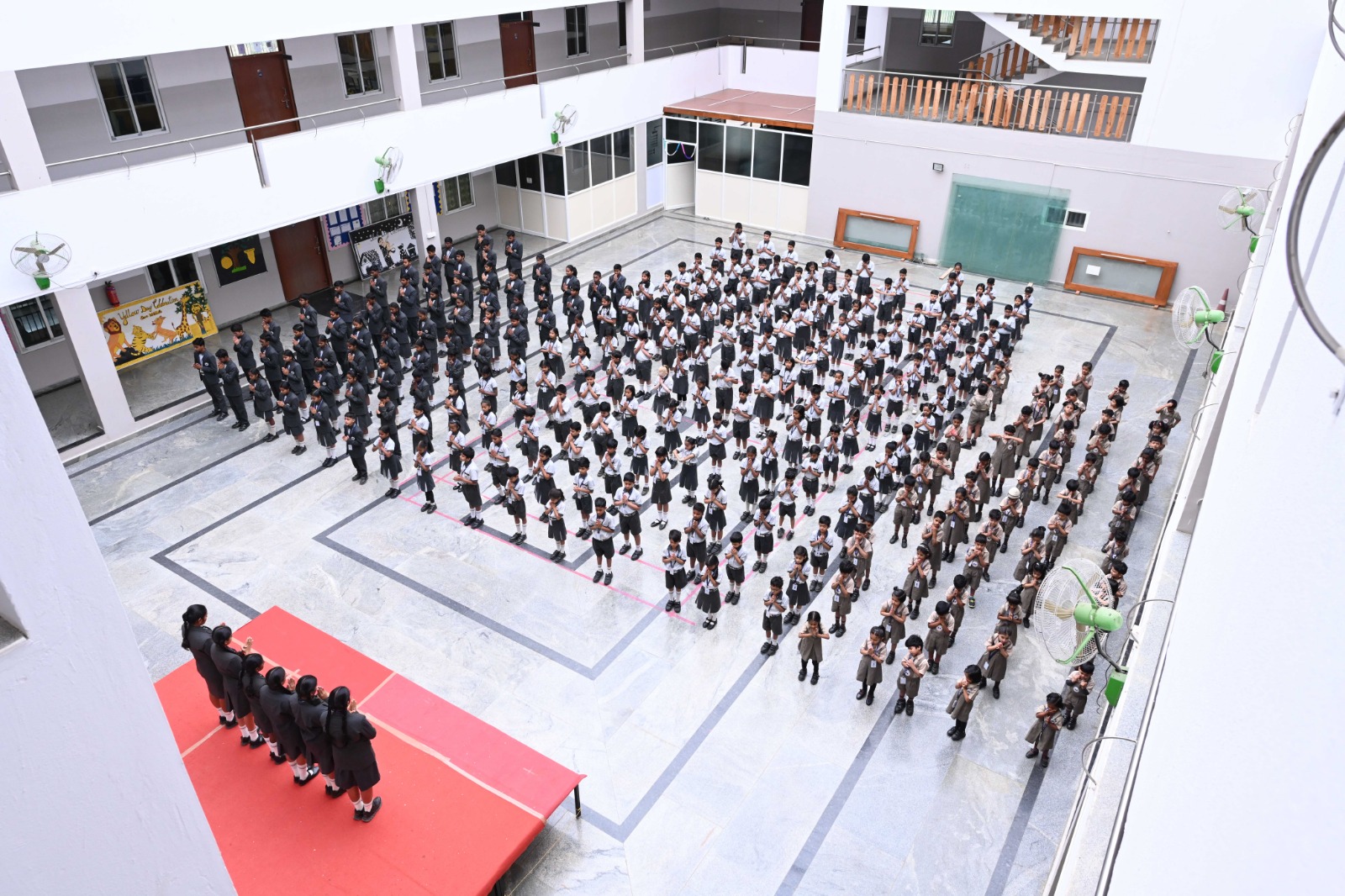
A student-teacher ratio is not just a number to put in a brochure. It is the foundational condition that determines whether everything else a school promises — the personalised attention, the holistic development, the wellbeing support, the future-ready curriculum — is actually deliverable. At Crestwood High Varthur, the 16:1 ratio sits at the centre of a coherent educational philosophy: a student-centric pedagogy backed by a principal with two decades of experience, a dedicated wellbeing infrastructure including trained counsellors and a special educator, advanced robotics and STEM labs, and a genuine commitment to ensuring that every child — regardless of learning profile or pace — is seen, supported, and challenged.
For parents in Varthur, Gunjur, Whitefield, and the broader east Bangalore corridor who are evaluating the best CBSE schools in Varthur Bangalore or the best schools near Gunjur Bangalore for the 2025-26 academic year, this ratio and the infrastructure behind it is precisely the kind of detail that distinguishes a school that is serious about individual outcomes from one that simply manages numbers. Crestwood High is worth a visit to see how these commitments play out on the ground.
To enquire about admissions or schedule a campus visit, contact the school at +91 90351 83909 or write to admissions@crestwoodhigh.com. Crestwood High is located on State Highway 35, Bus Stop, Via, near Gunjur, Devasthanagalu, Varthur, Bengaluru, Karnataka 560087.
Note: Blogs by Yellow Slate are written based on information, knowledge and perspective of the writer. While every caution has been taken to provide readers with accurate information, please use your discretion before taking any decisions based on the information in this blog. In case you find any information that is factually wrong or something that could be made better, please write to us at contact@yellowslate.com.
Curious about how we arrived at this list? We believe parents deserve full transparency on how schools are evaluated and selected. to understand our school selection methodology.


