What the Curriculum at CGR Academy Actually Looks Like: CBSE and Cambridge Blended Learning Explained
Most schools in the Kollur–Velimela corridor offer one board. CGR Academy, Patighanpur offers two — CBSE and Cambridge — and goes further by blending elements of both into a single cohesive learning framework. For parents in Hyderabad's western corridor who are trying to understand what that actually means in practice, this blog breaks down both curriculum tracks stage by stage: how each is structured, what students experience at each level, where CBSE and Cambridge overlap, and how parents can think about choosing between them.
The Foundational Idea: Why Blended Rather Than Single-Board
CGR Academy builds on 15 years of operational experience at CGR International School, and the curriculum model reflects that institutional learning. The school's core proposition is a blended framework that combines the best elements of Cambridge teaching methodology with the comprehensive structure of the CBSE framework. In practical terms, this means students at CGR Academy — whichever stream they are enrolled in — benefit from both the national credibility and structured rigour of CBSE and the inquiry-driven, critical thinking emphasis of Cambridge.
The school's own articulation of this is clear: the blended framework ensures that students develop a strong foundation in core subjects while also enhancing critical thinking, creativity, and global awareness. Rather than choosing between international methodology and national credibility, CGR Academy tries to give students both. Parents who want to choose one pathway exclusively can — CBSE and Cambridge are available as distinct streams — but the school's teaching philosophy infuses both with Cambridge's inquiry-led approach even where CBSE forms the assessment structure.
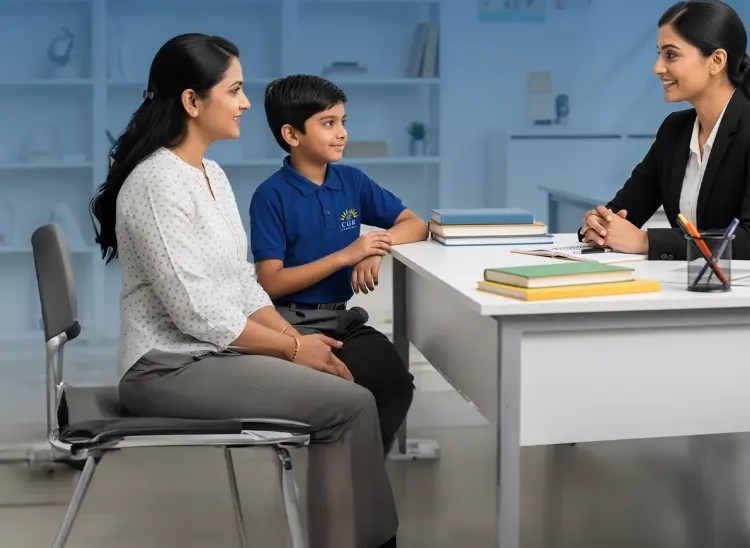
CBSE at CGR Academy: Stage by Stage
Early Years (Ages 3–6): The CBSE Early Years programme at CGR Academy is activity-based and designed to build curiosity, confidence, and independence from the start. Every activity is designed to develop physical, cognitive, social, and emotional skills simultaneously — what the school calls holistic development — rather than treating these as separate domains. Early communication, problem-solving, and learning habits are built through engagement rather than instruction, giving young children a strong readiness foundation before formal academic learning begins.
Primary Programme (Grades I–V): The primary years at CGR Academy build strong foundations in literacy, numeracy, and creative thinking through hands-on, activity-based learning. The approach combines CBSE methodology with practical projects and collaborative tasks — and this is where AI-powered learning tools are introduced, allowing students to explore concepts in age-appropriate ways through technology. The emphasis across English, Mathematics, and Science is on understanding and application, not rote reproduction.
Middle School (Grades VI–VIII): The middle school curriculum deepens analytical thinking and emphasises inquiry, collaboration, and creativity in connecting learning with real-world contexts. This is also where CGR Academy's integration of emerging technologies becomes more explicit: Artificial Intelligence, Robotics, 5G, IoT, and AIoT are woven into the learning experience as subjects and tools rather than peripheral activities. The school describes itself as an AI-powered institution, and the middle school is where that identity becomes most visible in the curriculum.
Secondary School (Grades IX–X): The secondary programme combines academic rigour with practical skill-building. Students engage in STEM education, design thinking, and applied learning to strengthen analytical and decision-making abilities. AI-powered learning tools continue to play a role here, supporting the development of resilience, creativity, and real-world problem-solving as students prepare for board examinations and the transition beyond school.
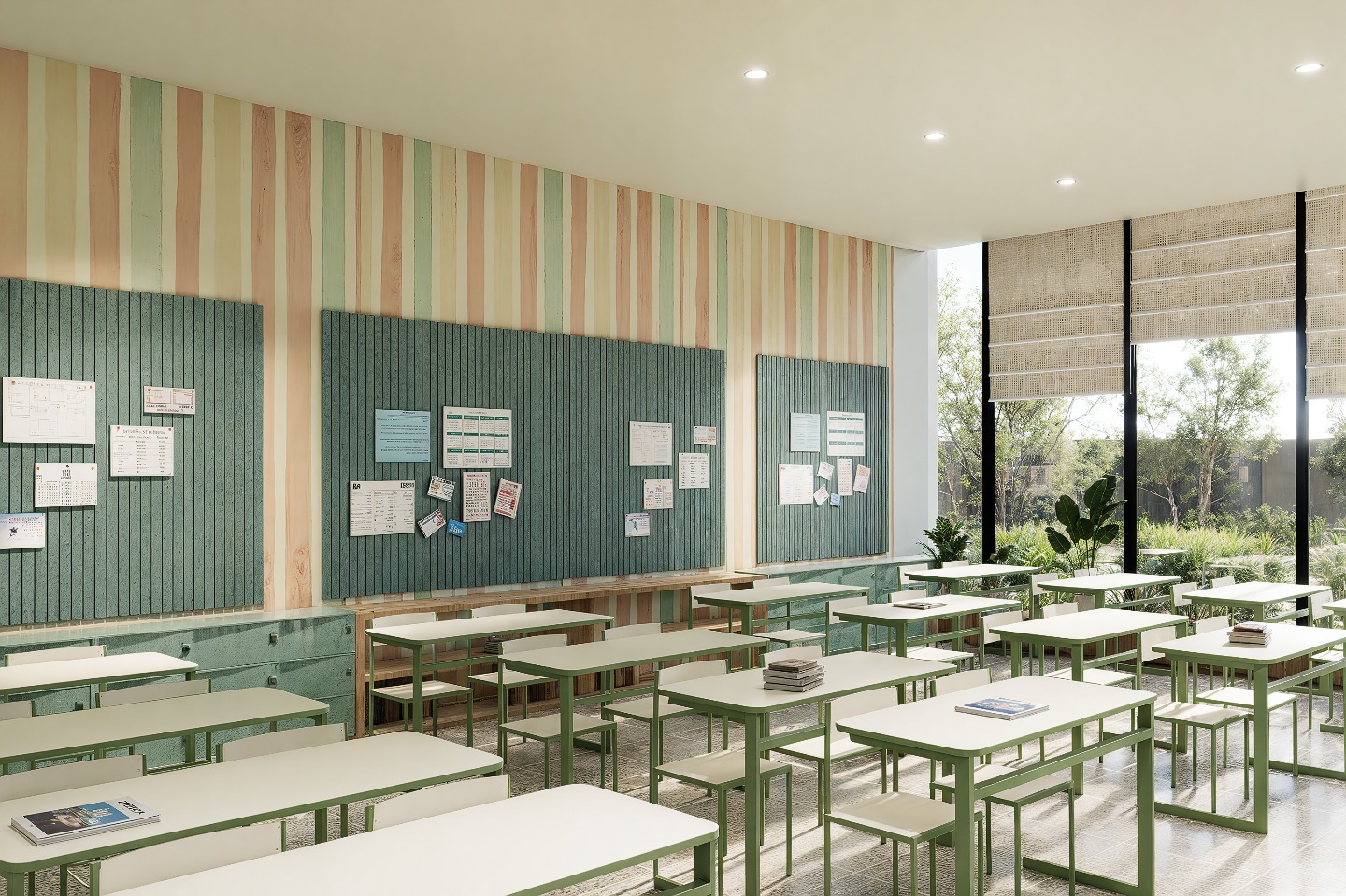
Cambridge at CGR Academy: Stage by Stage
Early Years (Ages 3–6): The Cambridge Early Years programme at CGR Academy takes a play-based, inquiry-led approach, nurturing curiosity, independence, and a love of discovery. Within a caring, inclusive, and stimulating environment, children build early conceptual understanding and communication skills aligned with Cambridge International standards. For parents considering the best Cambridge schools in Hyderabad's western corridor, this early foundation — joyful rather than pressured, discovery-driven rather than instruction-heavy — is one of the most distinctive features of the Cambridge pathway at this school.
Primary Programme (Grades I–V): In the Cambridge primary years, the school blends Cambridge's international methodology with CBSE's structured practices — a deliberate integration that produces a balanced, engaging experience. Students explore ideas through AI-powered learning tools, projects, discussions, and real-life applications, developing a broader outlook alongside essential skills in English, Mathematics, and Science. The emphasis here is on concept-based, inquiry-driven learning — students are taught to ask why and how, not just what.
Lower Secondary (Grades VI–VIII): The lower secondary programme deepens conceptual understanding and builds higher-order thinking. The emphasis on inquiry, collaboration, and creativity continues, with students now making active connections between their learning and real-world contexts. The integration of AI, Robotics, 5G, IoT, and AIoT technologies at this stage — the same suite as in the CBSE stream — builds analytical capability and technological confidence in parallel with academic development.
Upper Secondary (Grades IX–X): The upper secondary Cambridge programme leads to the globally recognised Cambridge IGCSE qualification. Students at this level refine critical reasoning, independent thinking, and practical application skills to meet international benchmark standards. This stage also lays the foundation for Cambridge Advanced Levels and higher academic pathways — giving students who choose the Cambridge stream a clear international trajectory from Nursery through to post-secondary options.
How to Choose Between CBSE and Cambridge at CGR Academy
This is the practical question most parents come to. Both streams at CGR Academy are taught with the same inquiry-led philosophy and share the same campus infrastructure — the Design Thinking Lab, Science Lab, Music Studio, Art Room, Little Explorers Room, Auditorium, and 4-acre sports complex are available to students regardless of which board they are enrolled in. The difference lies primarily in assessment and terminal qualification.
CBSE leads to the CBSE board examinations at Grade X and XII — nationally recognised, required for most Indian engineering and medical entrance examinations, and familiar to the vast majority of Indian higher education institutions. Cambridge leads to the IGCSE at Grade X — internationally recognised, well-regarded for students considering universities outside India or in international programmes within India, and designed to reward research, independent thinking, and extended writing over rote examination performance.
For families whose children are likely to pursue higher education in India through competitive examinations, CBSE is typically the more straightforward path. For families who are internationally mobile, considering global universities, or whose children have learning profiles that respond better to inquiry-based assessment over high-stakes board examinations, Cambridge offers a compelling alternative. CGR Academy's own counsellors are available to help parents navigate this decision based on their child's specific strengths and goals — a practical support that is built into the school's enrolment process.
The Academic Leadership Behind the Curriculum
The curriculum across both streams at CGR Academy is overseen by a dedicated academic leadership team. Ms. Neha Narang is Principal of CGR Academy. Ms. D Jyotsna serves as Dean Academics and Principal of CGR International School. Subject leadership includes Ms. Anusmita Das as English HOD, Ms. Sumana Bhattacharya as Math HOD, and Ms. B. Rajeshwari as Science HOD, alongside academic coordinators for Foundation Years and the International School. This depth of academic leadership — spanning both the Academy and its parent institution CGR International School — reflects the institutional experience that the school brings to curriculum delivery. For parents in Kollur, Velimela, and the broader Hyderabad western corridor looking for the best CBSE and Cambridge schools, that combination of a blended curriculum model, strong academic leadership, and 15 years of prior institutional experience makes CGR Academy a school worth examining closely.
Note: Blogs by Yellow Slate are written based on information, knowledge and perspective of the writer. While every caution has been taken to provide readers with accurate information, please use your discretion before taking any decisions based on the information in this blog. In case you find any information that is factually wrong or something that could be made better, please write to us at contact@yellowslate.com.
Curious about how we arrived at this list? We believe parents deserve full transparency on how schools are evaluated and selected. to understand our school selection methodology.


