Block Building at Sagebrook International School: From Wooden Blocks to Working Cities
Ask any parent of a four-year-old what happens when a box of blocks comes out. There's building, knocking down, arguing over who gets the long piece, and building again. Most schools treat that as playtime. At Sagebrook International School, it's the backbone of the early years curriculum.
Block building at Sagebrook International School runs from Reception to Grade 1, and it changes noticeably every year. Children in Reception start with full-body play using wooden blocks. By Grade 1, children are wiring light bulbs into their buildings, rigging pulleys for lifts, and presenting functioning model cities to their parents.
If you're shortlisting the best IB schools in Hyderabad for a young child, this guide shows what block building at Sagebrook International School actually looks like. We'll cover the daily routine, what changes at each stage, and the skills the school says each stage builds.
A Daily Practice, Not a Weekly Activity
Block building isn't saved for Friday afternoons. The school describes it as being at the heart of early learning, and it happens every day.
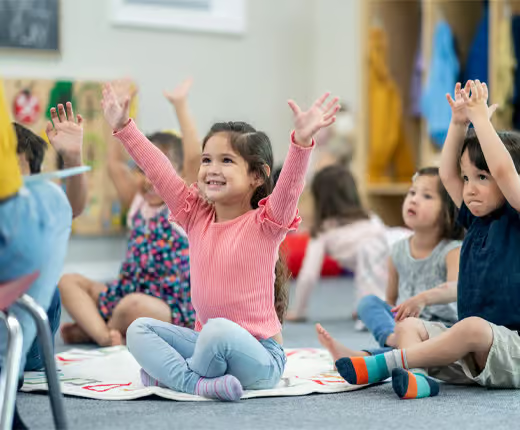
How Block Building at Sagebrook International School Works Day to Day
A few rules shape every session, and they're what make it different from ordinary free play:
- The whole class builds together. It's a shared project, not children working alone in separate corners.
- It's entirely child-directed. Teachers don't give instructions on what to build or how.
- Children research before they build. Classes visit real places such as banks, shops and hospitals to see how they work.
- Children clean up. Packing away every building is organised by the children themselves.
That third point is the one parents tend to underestimate. A class that wants to build a bank first has to work out what happens inside a bank. Consequently, the building becomes a record of what the children noticed, not just a pile of blocks.
Meanwhile, the clean-up rule quietly teaches responsibility. Furthermore, the school says the whole practice promotes collaboration, inquiry and responsibility, which links it directly to the IB PYP approach at Sagebrook that frames the rest of the day.
How the Blocks Change Each Year
The blocks themselves get more sophisticated as children grow, and so do the skills the school expects them to build.
Block Building at Sagebrook International School, Stage by Stage
Stage | What children build with | Skills and dispositions built |
|---|---|---|
| Reception | Wooden blocks used by everyone every day; large-scale, full-body play; solo building gradually turns collaborative | Physical balance and strength; an early sense of cause and effect; joyful curiosity |
| Early Years 1 | Safe cardboard blocks for large-scale play; wooden blocks introduced gradually; walking trips and books for research | Strong grip and shape awareness; language growth through dramatic play; more cooperation and compromise |
| Early Years 2 | A bigger block inventory, plus wooden people and animals sized to a brick unit; used for individual and group work | Spatial reasoning and pattern spotting; richer vocabulary from acting out scenes inside buildings; team problem-solving |
| Grade 1 | Handmade accessories such as paper money, clothing, books and tickets; pulleys for lifts; batteries, wires and bulbs for lighting | Measurement, fractions and multiplication in practice; understanding how things connect; design thinking and engineering skills |
Reading the Progression
In Reception, the focus is largely physical. Play is designed for full-body exploration, so children use their whole bodies to lift, stack and balance. However, the shift from solo building to group building already starts here.
Early Years 1 introduces something new: research. Walking trips and books give children ideas before they build. Moreover, the dramatic play that happens around the structures is where language grows.
By Early Years 2, the wooden people and animals are scaled to the blocks. That small detail matters: according to the school, building to scale supports both imagination and logic. Consequently, the vocabulary builds too, as children act out scenes inside the buildings they've made.
Grade 1: When the Buildings Start to Work
Grade 1 is where block building at Sagebrook International School stops looking like play and starts looking like engineering. The buildings don't just stand there anymore. They light up, they move, and they have an economy.
Grade 1 Projects in Block Building at Sagebrook International School
According to the school, Grade 1 children add three kinds of extras to their structures:
- Accessories they make themselves, such as paper money, clothing, books and tickets
- Pulleys, so buildings can have working lifts
- Batteries, wires and light bulbs, so buildings can be lit from inside
Think about what a child needs to know to price tickets for a model cinema, or get a bulb to light at the top of a tower. That's why the school lists measurement, fractions and multiplication "in practice" as Grade 1 skills. The maths has a reason to exist.
In addition, the school highlights an understanding of interrelationships. A city only works when the bank, the shop and the hospital fit together. As a result, children practise design thinking on a problem they actually care about.
The highlight is something parents won't forget: detailed, functioning cities, presented to them by the children who built them.
Where Parents Come In
Parents aren't kept at arm's length from the blocks. The school builds family involvement into block building at Sagebrook International School in two ways:
- Children present their buildings and community models to their families. The school says this builds confidence, ownership and communication.
- Parents explore the block materials themselves and learn how each one supports their child's development.
The second point is quietly useful. Once you've handled the blocks and seen what they're for, it's much easier to understand why your child came home talking about lifts and light bulbs. It also fits the wider family-partnership model that Sagebrook International School has built across the school.
How Blocks Fit the Bigger Picture
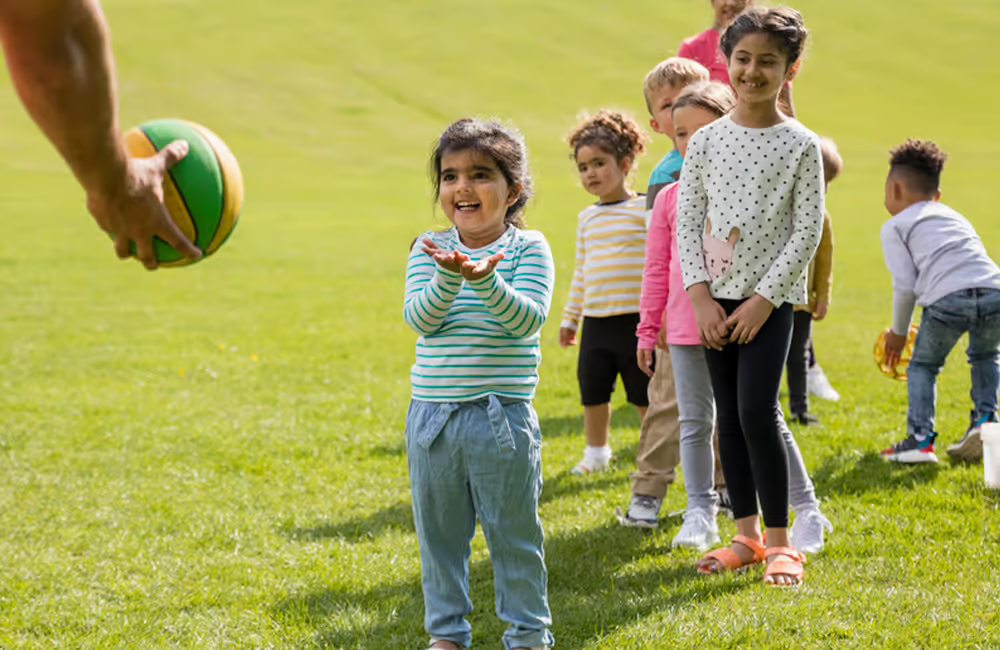
Block building isn't a standalone programme. Instead, it's the clearest everyday example of the school's "learning by doing" principle, rooted in constructivism, where thinking happens with the hands as much as the mind. Children aren't told what a bank is; they visit one, then build it.
It also mirrors the idea of children owning their learning. Since sessions are entirely child-directed, the children decide what to build. That's the same culture of voice, choice and ownership that Sagebrook International School describes as central to its classrooms, applied to a single, very concrete activity.
For families comparing the best play-based schools in Hyderabad, that's the real distinction. Ultimately, block building at Sagebrook International School is a daily, structured practice with a clear progression, not a toy corner.
Should Block Building Shape Your School Choice?
If you want your child's first school years to be hands-on, collaborative and curious, block building at Sagebrook International School is worth seeing in person. It builds year on year: from balance and cause-and-effect in Reception, to language and cooperation in the Early Years, to working circuits, pulleys and real maths in Grade 1.
It suits children who learn by touching, testing and talking, and parents who want to see that learning, not just hear about it. For families weighing the best early years schools in Hyderabad, especially around Nanakramguda and the Financial District, it's one of the clearest reasons to book a visit.
Before you go, the admissions guide for Sagebrook International School explains how visits work. For context on the spaces children build in, see this look inside Sagebrook International School's campus. You can also read why parents are choosing Sagebrook International School and the story behind Sagebrook International School.
If you're comparing the best schools in Hyderabad for the early years, ask to see block building at Sagebrook International School in action. Watching a pile of blocks become a working city says more than any brochure.
Note: Blogs by Yellow Slate are written based on information, knowledge and perspective of the writer. While every caution has been taken to provide readers with accurate information, please use your discretion before taking any decisions based on the information in this blog. In case you find any information that is factually wrong or something that could be made better, please write to us at contact@yellowslate.com.
Curious about how we arrived at this list? We believe parents deserve full transparency on how schools are evaluated and selected. to understand our school selection methodology.


