How JAIN International Residential School Teaches: Pedagogy, Classroom Experience and Learning Philosophy at JIRS
Most parents researching schools eventually ask the same question — and it's usually not the one printed on the brochure. They don't just want to know what a school teaches. They want to know how. What does a Tuesday morning actually look like for a child in Grade 8 at JAIN International Residential School? How does a teacher in a CBSE classroom handle the student who already grasped the concept and the one who hasn't yet? What's the relationship between the three curricula on offer — and how does a school actually deliver on the promise of "holistic development" without it becoming a buzzword?
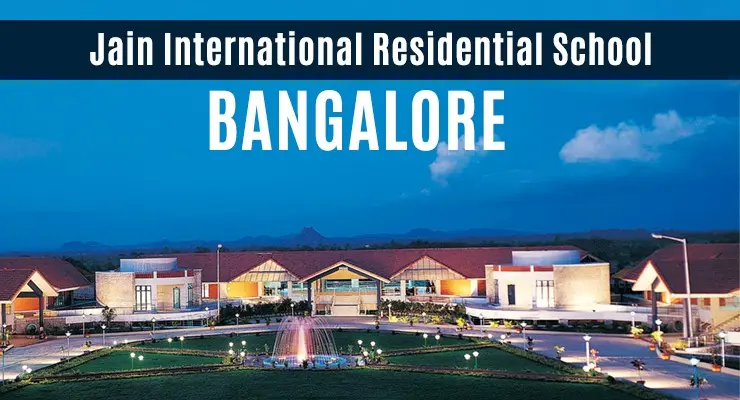
These are the questions this blog sets out to answer. JAIN International Residential School, known widely as JIRS, has been one of the best residential schools in Bangalore since 1999. With a 350-acre campus on the Bangalore-Kanakapura road, over 750 students from more than 25 countries, and three internationally recognized curricula — CBSE, Cambridge IGCSE, and IB Diploma — the school has built a substantial reputation. But reputation is really just the sum of a thousand small decisions about how learning happens every day. So let's get into it.
The Six Pillars: The Philosophy Behind Everything at JIRS
Before looking at individual classroom practices, it helps to understand the framework that underpins all of it. Life and learning at JAIN International Residential School are organized around six distinct pillars: Attitude, Academics, Personality Development, Emotional Quotient and Mental Health, Internationalism, and Physical Health and Sports. These aren't decorative values listed on a wall — they represent JIRS's actual framework for what a fully-educated student looks like.
The key word here is blending. The school's approach is to merge these pillars with each other, so that a sports session develops emotional resilience, an academic debate builds personality, and a science exhibition sharpens attitude. This is the foundational difference between a school that teaches subjects and a school that shapes students. Among the best international schools in Bangalore, very few articulate this philosophy with such structural specificity. At JIRS, the six pillars aren't aspirational — they're operational.
Inside the Classroom: Smart Technology Meets Personalized Attention
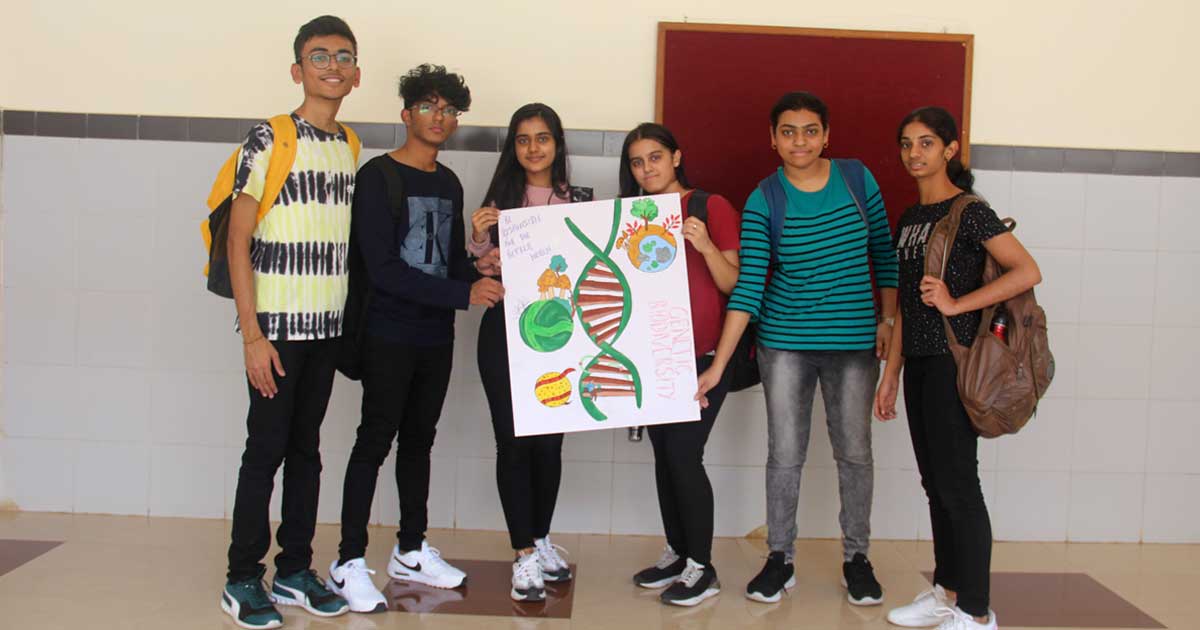
Walk into any classroom at JAIN International Residential School and the first thing you notice is scale — or rather, the deliberate lack of it. Each class accommodates approximately 25 students in aesthetically designed, fully ventilated spaces. Digital Smart Classroom technology is integrated in every room, meaning projectors and digital tools are part of the standard teaching environment, not occasional add-ons.
But technology is only as good as what a teacher does with it. What makes the JIRS classroom experience distinctive is the teacher-student ratio: 1:4, which is exceptional even among the best boarding schools in Karnataka. With over 100 faculty members serving approximately 700 students, teachers have the bandwidth to notice individual learning gaps, adapt their delivery in real time, and provide the kind of personalized attention that simply cannot happen in a class of 40. Parents who have observed JIRS describe the curriculum as "meticulously crafted to challenge students intellectually, yet child-friendly," with teaching "supported by research and hands-on activities." That balance — intellectually demanding but accessible — is something most schools aspire to. At JIRS, the physical infrastructure and staffing model are actually built to support it.
How JAIN International Residential School Teaching Methodology Shifts Across Curricula
One of the more interesting aspects of the JIRS teaching methodology is that it isn't uniform across all programmes — and that's intentional. The school offers CBSE from Grades V to XII, Cambridge IGCSE from Grades VI to X, and the IB Diploma Programme for Grades XI and XII. Each of these frameworks has a distinct pedagogical DNA, and JIRS teachers are expected to be fluent in all three.
For CBSE students, the teaching approach integrates online and offline learning, with computers, digital tools, and library resources forming core pillars of delivery. JIRS has taken the CBSE framework and layered it with what it calls "Liberal Studies" — blending sciences with humanities in a way that prepares students for broader university programmes. The approach here is structured but not rigid; it accounts for social and cultural mobility alongside academic progression.
The Cambridge IGCSE is where the JAIN International Residential School teaching methodology shifts meaningfully toward student-centricity. IGCSE pedagogy at JIRS is built around a critical thinking approach, where students are encouraged to interrogate information rather than absorb it passively. The curriculum includes subjects like Global Perspectives, which by its very design demands inquiry, debate, and cross-disciplinary thinking. JIRS earned this accreditation by meeting 206 assessment criteria set by the United Kingdom Accreditation Service — a benchmark that speaks to the rigour with which the school implements international teaching standards.
Then there's the IB Diploma Programme, which JIRS has offered since 2011 and which represents perhaps the most philosophy-heavy approach to teaching on offer. The IBDP requires students to study six subjects spanning different disciplines, complete an extended essay, engage in Creativity-Activity-Service projects, and take a Theory of Knowledge course. This isn't just an academic programme — it's a training ground for intellectual independence, and the teaching that supports it must be genuinely inquiry-driven. For parents considering the best IB schools in Bangalore, JIRS stands out as the only fully residential option in this bracket, meaning the IB Diploma experience extends beyond the classroom and into every hour of a student's day.
The Life Skills Programme: Teaching What Exams Don't Test
Here's something that distinguishes JAIN International Residential School from many best schools in Ramanagara district and the broader Bangalore region: a dedicated Life Skills Programme woven into the academic calendar. The programme covers topics including product launches, business expos, awareness campaigns, core skills development, quizzes, and skits on current issues. These aren't soft extras — they're structured learning experiences designed to develop the competencies that traditional exams simply don't capture.
This matters a great deal in the context of JIRS's teaching philosophy. The school's stated mission has never been narrowly focused on preparing students for college examinations. According to the school's own position, the goal is to provide an experience that goes far beyond college requirements, addressing important personal aspects of growth and maturity. The Life Skills Programme is how that aspiration becomes tangible. A student who has run a mock product launch or participated in a business expo has developed presentation skills, collaborative decision-making, and real-world business literacy — none of which appears on a CBSE answer sheet, but all of which shows up in university interviews and professional life.
JAIN International Residential School Teaching Methodology Through Participatory Learning
Another dimension of how JIRS teaches worth highlighting is what the school describes as a participatory and leadership approach. Rather than treating knowledge transmission as the sole objective of education, JIRS uses various structured activities to help students understand their role within a larger community. This includes the Science Club, where students don't just learn science — they present their own research and ideas to visiting scientists from around the world. It includes Harvard Model Congress and Model United Nations programmes, where students take on the roles of global decision-makers and engage with real-world issues using diplomacy, public speaking, and conflict-resolution skills.
These experiences are pedagogically significant because they shift the student from passive recipient to active agent. Among the best international schools in Bangalore, this kind of immersive, responsibility-based learning is relatively rare — and in a residential setting, where students live with the consequences of their choices 24 hours a day, the lessons take hold at a deeper level.
Faculty Expertise: The Human Engine Behind JIRS Teaching
None of this happens without teachers who are genuinely capable of delivering across multiple frameworks and age groups. Principal Mr. Sanjeeva Kumar Sinha brings over 20 years of teaching and educational administration experience, with specific expertise in curriculum creation, CCE assessment methodologies used by national and international boards, and teacher education. This leadership orientation toward pedagogy — not just management — shapes the culture of the faculty.
The school's teaching staff is described by parents as highly qualified and committed, with a faculty that works closely on the holistic development of students around the clock. That last phrase is worth sitting with: around the clock. In a residential school, the teacher-student relationship doesn't end at 3:30 PM. Teachers and residential staff at JAIN International Residential School are engaged in the learning process at mealtimes, during evening study hours, and through the pastoral care structures that support students academically and emotionally. This is a different level of teaching commitment than a day school can offer, and it's one of the defining features of the JIRS classroom experience.
The school also provides Integrated Coaching up to Grade XII for students preparing for IIT-JEE and SAT, running alongside the regular curriculum. Furthermore, the Learning Resource Center houses over 20,000 books — ranging from comics to research-based publications, alongside magazines, newspapers, and e-journals — fostering independent intellectual exploration well beyond what classroom hours allow.
Learning Infrastructure: Where JIRS Teaching Methodology Comes to Life
A teaching philosophy needs the right physical environment to breathe. At JAIN International Residential School, the infrastructure is built specifically to support the kind of teaching the school believes in. Laboratories are fully equipped with self-explanatory models and learning aids, and they are technologically updated regularly — meaning the hands-on learning experience keeps pace with current scientific practice. The hi-tech computer labs support the digital integration that is central to CBSE and IGCSE delivery. The bilingual language programme — emphasizing Spanish and French alongside English — is delivered through dedicated language instruction, reflecting the school's belief that language proficiency is fundamental to international career readiness.
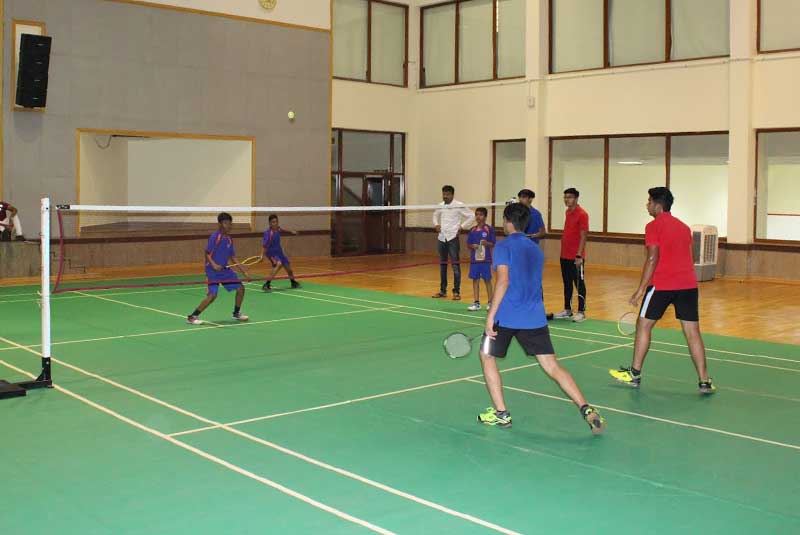
Outside the formal classroom, the 350-acre campus functions as an extended learning environment. Sports training with professional coaches across 15 disciplines, performing arts instruction in everything from Carnatic classical music to western drums, adventure activities including trekking and mountaineering through the Adventure Club — these are not peripheral experiences. They're how the six-pillar philosophy translates into daily practice. Physical health and sports, personality development, and emotional quotient all have real, structured programming behind them. Among the best boarding schools in Bangalore, this breadth of extra-classroom learning experiences is genuinely exceptional.
A Teaching Philosophy Built for the Long Game
What ultimately defines JAIN International Residential School's teaching approach is its time horizon. The skills developed here — leadership, cross-cultural communication, independent research, time management, emotional resilience — are not designed to help a student ace the next exam. They're designed to help that student thrive in whatever comes after. Whether a JIRS graduate ends up at a university in the UK, a business programme in Singapore, or a professional role anywhere in the world, the teaching philosophy at JIRS has been preparing them for precisely that kind of adaptability since their first year on campus.
For parents evaluating the best schools in Bangalore, the best international residential schools in India, or the best CBSE boarding schools in Karnataka, the question of how a school teaches is ultimately more telling than the list of facilities or affiliations. At JAIN International Residential School, the answer is a teaching methodology grounded in six clear pillars, delivered through three internationally respected curricula, supported by an exceptional teacher-student ratio, and animated by a belief that education should equip students not just for college, but for life.
Note: Blogs by Yellow Slate are written based on information, knowledge and perspective of the writer. While every caution has been taken to provide readers with accurate information, please use your discretion before taking any decisions based on the information in this blog. In case you find any information that is factually wrong or something that could be made better, please write to us at contact@yellowslate.com.
Curious about how we arrived at this list? We believe parents deserve full transparency on how schools are evaluated and selected. to understand our school selection methodology.


