Teaching Methodologies at New Horizon Gurukul, Bangalore: A Holistic Approach to Learning
When it comes to selecting the right school for a child, parents often look beyond infrastructure and academics—they seek an environment that supports overall personality development and fosters lifelong skills. At the heart of this lies the teaching methodology a school adopts. An effective teaching approach does not just impart knowledge; it nurtures curiosity, creativity, confidence, and compassion in students.
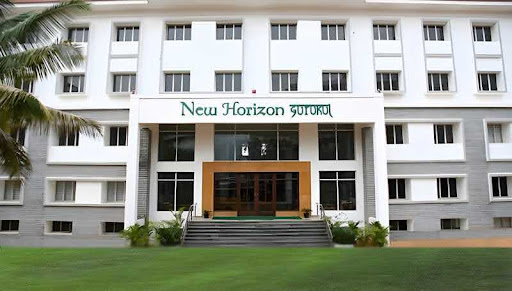
One such institution that embodies these values is New Horizon Gurukul, Bangalore. Rooted in the ethos of ancient Indian wisdom and combined with modern educational practices, the school has developed a unique methodology that blends academic rigor with experiential, inquiry-based, and value-driven learning. In this blog, we’ll take a closer look at how New Horizon Gurukul designs its teaching framework and why it stands out among the best schools in Bangalore.
At its core,New Horizon Gurukul’s approach is value-based, experiential, and student-centric. The school views education not only as a means to academic achievement but also as a pathway to personal growth and ethical living. Inspired by the principles of the Bhagavad Gita, it integrates moral values into everyday learning, ensuring that students imbibe kindness, fairness, and responsibility alongside subject knowledge.
What sets Gurukul apart is its balance between tradition and innovation. Students benefit from both modern pedagogy and ancient wisdom, creating an enriching and holistic educational journey.
Distinctive programs such as the Hydroponics Lab, Atal Tinkering Lab (ATL), Terrace Garden initiatives, and vibrant student-led events like Commerce Fest-Overdrive and Cosmic Science Fest give students opportunities to experiment, innovate, and showcase their talents beyond classrooms.
This multidimensional ecosystem ensures children are not only excelling in academics, but also becoming confident problem-solvers, empathetic leaders, and responsible citizens.
Got Questions About New Horizon Gurukul ?
1. Overview of Teaching Methodology at New Horizon Gurukul
One of the strongest pillars of New Horizon Gurukul’s teaching methodology is learning by doing. Instead of limiting lessons to theoretical explanations, the school ensures that students gain knowledge through real-world applications and hands-on experiences.
For example:
- The Hydroponics Lab allows students to grow plants without soil, exploring sustainability and life sciences practically.
- ATL projects encourage experiments in robotics, coding, and electronics, challenging learners to design real-world solutions.
- Terrace Gardening brings environmental science alive, connecting children with nature and sustainable practices.
- Events like Commerce Fest (Overdrive) simulate entrepreneurial environments where students manage stalls, finances, and marketing campaigns.
- The Interact Club empowers learners to plan and implement community service projects, bridging academics with social responsibility.
At the same time, the school pays close attention to personalized learning. Teachers employ smart classrooms, differentiated instruction, and continuous assessment systems to accommodate varied learning styles—whether visual, auditory, or kinesthetic. For students with learning challenges, special educators, remedial classes, counseling services, and customized learning plans ensure inclusivity and equal opportunity.
2. Experiential Learning and Personalization
Collaboration forms an essential part of Gurukul’s pedagogy. Instead of working in isolation, students engage in group projects, competitions, and leadership activities that sharpen communication and teamwork skills.
Some key examples include:
- Team-based assignments in ATL and science laboratories that require joint problem-solving.
- Committees formed during GMUN (Gurukul Model United Nations) and Commerce Fest to manage large-scale student-led events collaboratively.
- Inter-house cultural and sports competitions that encourage team spirit.
- Social-impact projects through the Interact Club, enabling students to work together for community welfare.
Additionally, the school’s House system and student council leadership roles—including school captains and house captains—give every child opportunities to take responsibility, make decisions, and lead peers both inside and outside the classroom.
Got Questions About New Horizon Gurukul ?
3. Collaborative Learning: Building Teamwork and Leadership
At New Horizon Gurukul, teachers believe that curiosity forms the foundation of all deep learning. Instead of pre-defined answers, learning begins with essential questions and real-world challenges.
Students also take ownership of their learning journey by leading clubs, maintaining self-reflection journals, participating in innovation challenges, and representing the school in MUN delegations. This approach transforms learners from passive receivers of information into active explorers and knowledge creators.
4. Inquiry-Based Learning: Encouraging Questions and Curiosity
Recognizing the importance of mental and emotional well-being, New Horizon Gurukul integrates mindfulness practices into its daily routines. Students begin their mornings with yoga, meditation, and prayers, which establish focus and calmness. Scheduled mindfulness breaks, counseling sessions, and value education classes help nurture empathy, emotional balance, and self-awareness.
To ensure balance, academic rigor is always paired with activities in arts, music, sports, excursions, and cultural celebrations. By prioritizing student happiness and mental health, the school creates an environment where children feel safe, motivated, and eager to learn.
Got Questions About New Horizon Gurukul ?
5. Mindfulness and Student Well-being
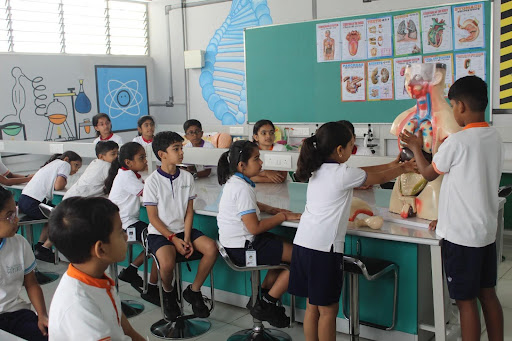
In the primary years, NHG blends structured academics with interactive, play-based methods to foster curiosity. Children are introduced to experiential learning through:
- Simple science experiments and seed planting in the Terrace Garden.
- Skits, storytelling, and thematic weeks that connect concepts with real-life.
- Story-based mathematics and environmental games that make abstract concepts relatable.
Social-emotional development is equally prioritized. Methods such as circle time discussions, buddy systems, role play, and gratitude activities instill empathy, confidence, and social awareness at an early age.
Additionally, creativity finds a natural place in the curriculum through art, dance, drama, and music, which are given as much importance as academics. By ensuring that lessons are not just rigorous but also developmentally appropriate, Gurukul provides its youngest learners a joyful and age-sensitive education.
6. Primary School Curriculum: Learning Through Play and Exploration
As students move into higher grades, the curriculum evolves to strengthen critical thinking, career readiness, and future competencies.
Some distinctive features include:
- Project-based learning such as sustainable living models combining hydroponics and eco-friendly solutions, business planning at Commerce Fest, or interdisciplinary research at the science fair.
- Development of analytical and problem-solving abilities through debates, case studies, lab experiments, and data interpretation tasks in economics and commerce.
- Career guidance programs, aptitude testing, and mock interviews that prepare students for higher education.
- Exposure to entrepreneurship modules and mentorship through partnerships with universities and industry professionals.
- Robust use of technology with smart boards, Google Classroom, digital laboratories, coding modules, and cybersecurity workshops, equipping students with essential 21st-century digital literacy.
Student progress is evaluated through a combination of formative assessments, project-based evaluations, portfolio reviews, peer-feedback, and summative exams, ensuring that learning outcomes are measured holistically rather than mechanically.
7. Secondary School Curriculum: Preparing for the Future
The school’s teaching methodology is strengthened by its strong commitment to continuous teacher training. Educators at New Horizon Gurukul participate in:
- CBSE workshops and skill-building programs aligned with NEP 2020.
- ATL mentoring programs where teachers learn to guide innovation projects.
- Classroom management sessions, AI-integration workshops, and student engagement training.
Moreover, teaching is treated as a collaborative practice. Teachers engage in peer observations, subject-wise collaborative planning, cross-grade initiatives, and team-building workshops, fostering a culture of shared knowledge and innovation.
Got Questions About New Horizon Gurukul ?
8. Teacher Development: Empowering Educators
Conclusion
The foundation of New Horizon Gurukul’s teaching methodology lies in its seamless integration of traditional wisdom, modern pedagogy, and experiential learning. From the primary years to senior secondary, the school ensures that students are not only academically proficient but also emotionally balanced, socially responsible, and future-ready.
By combining personalized instruction, inquiry-driven exploration, collaborative learning, and mindfulness, Gurukul has created an educational ecosystem that prepares children for both life and livelihood.
For parents seeking a school in Bangalore that values both intellectual and personal growth, New Horizon Gurukul stands as an institution where education is a journey of self-discovery, innovation, and holistic development.<
Note: Blogs by Yellow Slate are written based on information, knowledge and perspective of the writer. While every caution has been taken to provide readers with accurate information, please use your discretion before taking any decisions based on the information in this blog. In case you find any information that is factually wrong or something that could be made better, please write to us at contact@yellowslate.com.
Curious about how we arrived at this list? We believe parents deserve full transparency on how schools are evaluated and selected. to understand our school selection methodology.


