Teaching Methodology at Vishwa Vidyapeeth Magadha School, Varthur — How Learning Actually Happens
Most parents, when they visit a school, look at the buildings, the labs, the sports fields. All of that matters. But the question that deserves just as much attention — sometimes more — is the one that's harder to observe on a single tour: how does a teacher actually teach here? What happens inside the classroom every single day?
At Vishwa Vidyapeeth Magadha School, Varthur, the answer to that question is layered, deliberate, and unlike most conventional CBSE schools in the city. The teaching methodology here isn't a single approach — it's an interconnected ecosystem of pedagogical frameworks, signature programmes, and human-centred practices that work together to shape how children think, retain, and grow. For parents exploring the best CBSE schools in Varthur, understanding this ecosystem is key to evaluating whether VVP is the right fit.
Neural Education — The Science Behind the Teaching Methodology at Vishwa Vidyapeeth Magadha School, Varthur
Here's something worth pausing on: Vishwa Vidyapeeth Magadha School is among the first schools in India to formally integrate neuroscience into its teaching and learning process. That's not a marketing claim — it's a structural decision that shapes how every teacher plans and delivers a lesson.
The approach is called Neural Education, implemented through what the school calls the Challenge Mosaic Model (CMM). At its core, it draws on neurological insights — including the role of the amygdala in emotional regulation, Broca's area in language production, and Wernicke's area in comprehension — to inform how teachers design learning experiences. The goal is to create classrooms where children don't just receive information but are neurologically primed to engage with it meaningfully.
In practice, the CMM incorporates experiential learning, reflective activities, creative assignments, and co-learning opportunities. The ultimate aim is what the school describes as UBD — Understanding Big Ideas — ensuring students genuinely grasp core concepts rather than simply memorising them for a test. For parents who've watched their children score well on exams only to forget everything within weeks, this focus on deeper retention will resonate immediately.
Parents considering the best schools in Whitefield and the Varthur region will find that this neuroscience-informed approach is a genuine differentiator, not something easily replicated by schools that have not structurally embedded it across all grades.
A Multi-Layered Classroom — The Different Methods That Work in Tandem
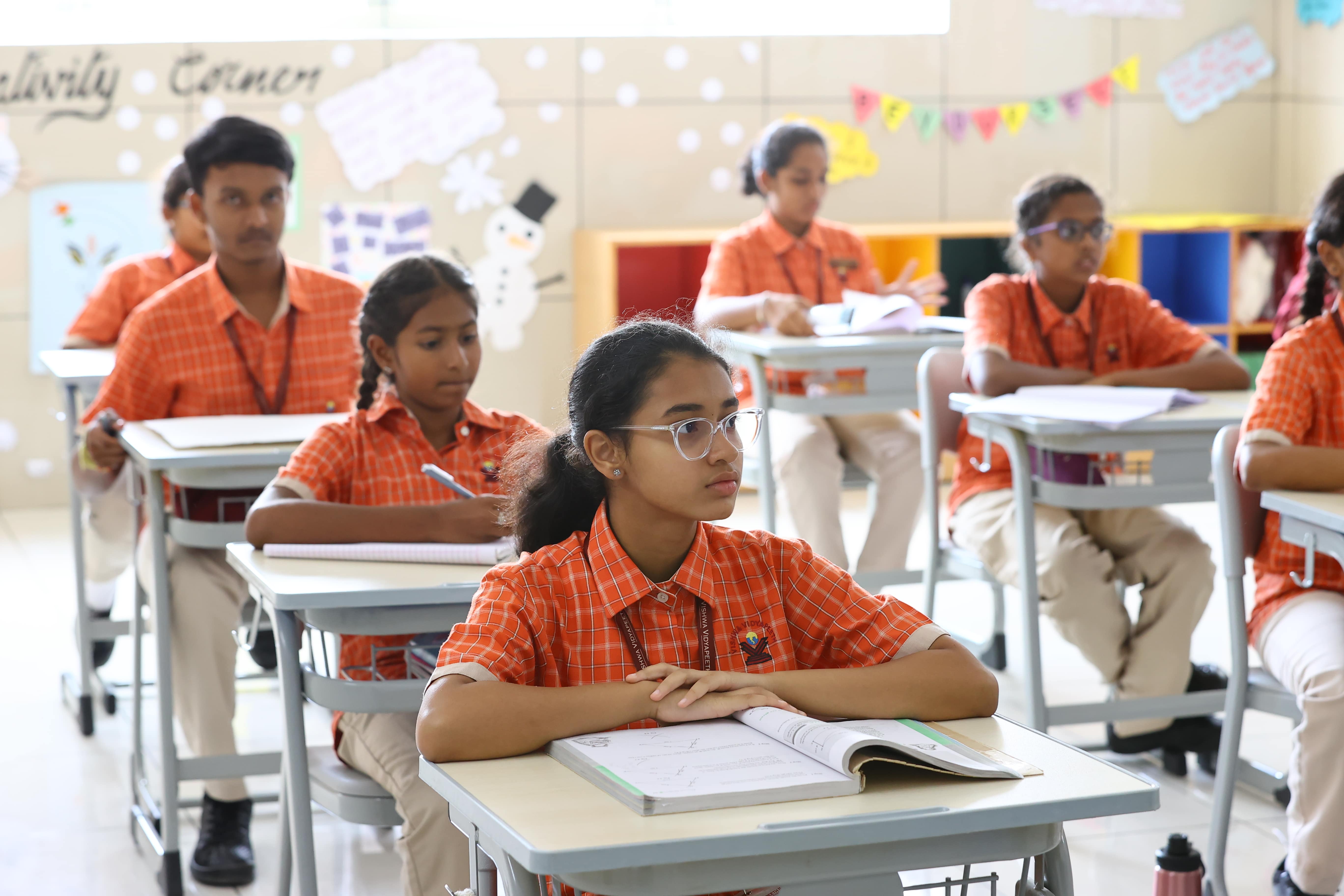
What makes the teaching methodology at Vishwa Vidyapeeth Magadha School, Varthur genuinely interesting is that it doesn't rely on a single classroom style. Instead, several approaches run alongside one another, each serving a different purpose.
Flipped Learning is one of the more progressive frameworks in use. The principle is simple but powerful: students acquire foundational knowledge before class, which then frees up classroom time for higher-order thinking. Rather than a teacher spending 40 minutes explaining a concept, that time is redirected toward discussions, debates, role-plays, group presentations, and problem-solving. Storytelling, quizzes, and collaborative tasks further deepen comprehension. The result is a classroom where students arrive prepared and leave having applied what they know — which is a fundamentally different experience from traditional lecture-based learning.
Discovery-Based Learning runs on a complementary track. This approach follows an Inquiry-Based Instruction model — the underlying belief being that children learn best through active exploration rather than passive receipt of information. Students are encouraged to draw on prior knowledge, use their imagination, and seek out answers themselves, while teachers act as guides and facilitators rather than the sole source of knowledge. It builds the habit of intellectual curiosity, which is one of the harder things to teach and one of the more valuable things to have.
Peer Learning adds yet another dimension. Students are trained to teach one another across subjects — Mathematics, Science, Languages, Social Studies — with regular sessions built into the school schedule and continuous feedback collected to improve the process. It's worth noting what this does beyond subject reinforcement: it develops communication skills, leadership, and confidence. A child who can explain a concept to a peer genuinely understands it; there's no faking comprehension when someone else is depending on you.
How the Teaching Methodology at Vishwa Vidyapeeth Magadha School, Varthur Uses Arts, Sports, and Stories
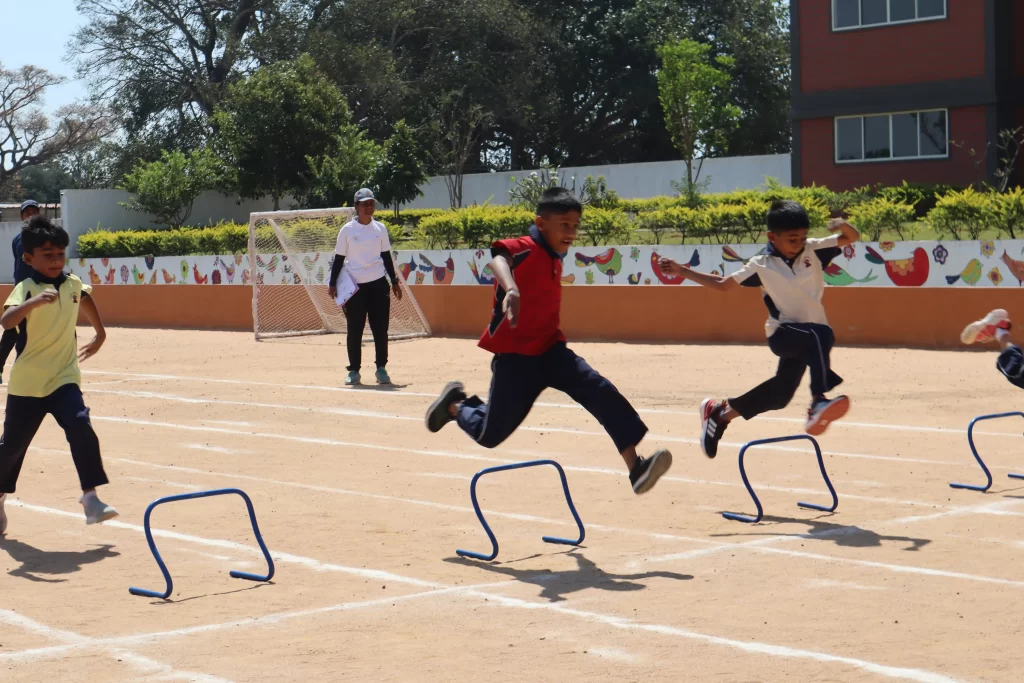
VVP's pedagogy extends into subjects that many schools treat as peripheral. Arts Integration means that music, dance, drama, and visual arts are actively used as tools to teach academic concepts — not as add-ons to the timetable, but as pedagogical instruments that simplify complex topics and support diverse learning styles. Similarly, Sports Integration connects subjects like Physics and Mathematics to physical activities, giving abstract concepts a tangible, embodied context.
Storytelling as pedagogy is treated with the same seriousness. The school recognises that stories create emotional connections to content, making lessons easier to recall. When a concept is wrapped in narrative, it isn't just filed in short-term memory — it gets anchored to imagery, emotion, and sequence. That's a neurologically sound approach, and it fits seamlessly within VVP's broader Neural Education framework.
Meanwhile, the Trans-disciplinary Approach ensures that no subject exists in isolation. Rather than teaching History, Science, and Language as separate silos, learning is centered around unifying themes and real-world problems, encouraging students to draw connections across disciplines and apply knowledge in a holistic way. Among the best CBSE schools in Bangalore, this kind of integration is far less common than most parents assume.
Dasha Prabodha — Where the Teaching Methodology at Vishwa Vidyapeeth Magadha School, Varthur Meets Life Skills
One of the most distinctive elements of VVP's approach is Dasha Prabodha — a structured programme that integrates ten essential life skills into the regular curriculum. The school's starting point is a clear-eyed observation: there's often a significant gap between what children learn in the classroom and what they actually need to thrive in the real world.
The ten skills woven into Dasha Prabodha span a remarkable breadth. Students engage with the teachings of the Bhagavad Gita, Vedas, and Upanishads — approached not as religious ritual but as frameworks for living a purposeful, grounded life. Organic farming gives children hands-on experience of biology, ecology, and nutrition while building respect for the food chain and those who sustain it. Clay modeling and woodwork develop fine motor skills, problem-solving, and a sense of personal agency through making things with one's hands. Taekwondo builds physical confidence and discipline. Public speaking develops the ability to articulate ideas persuasively. Cooking, approached through the concept of shata ruchis (six tastes), simultaneously teaches Math skills — measuring, weighing, tracking time — and social skills through collaborative kitchen work. Art education introduces students to traditional Indian art forms like Warli and Madhubani. Music education supports motor skills, language acquisition, and emotional expression. Theatre rounds it all out, developing creativity, collaboration, and the ability to inhabit different perspectives.
Across all of this, the intent is consistent: children become creators of knowledge and experience, not passive recipients. This is, in essence, what good pedagogy looks like — and it's built into the school's daily rhythm from the earliest grades.
The Role of Transparency in the Teaching Methodology at Vishwa Vidyapeeth Magadha School, Varthur
One aspect of VVP's teaching philosophy that parents appreciate, and that rarely shows up in any school brochure, is the degree to which the school actively involves parents in the learning process. The Mother on Duty programme invites mothers to spend a day on campus observing the school environment and daily routine first-hand. It's built on the belief that true education is a partnership — that what happens at home and what happens in school need to be aligned.
Parent Engagement Workshops take this further, offering parents practical strategies for supporting their child's development at home without creating undue pressure. Teachers also conduct Home Visits, gaining insight into each child's home environment and adjusting their instruction accordingly. These aren't peripheral add-ons — they reflect a fundamental belief that the teacher-parent relationship is itself part of the teaching methodology.
Furthermore, the Seed 2 Sapling (S2S) programme, implemented in collaboration with an external team, creates an experiential learning environment where children are inspired to become creators of knowledge. It emphasises not just intellectual growth but emotional well-being and the development of a strong moral foundation — placing VVP among the best CBSE schools in the Varthur area that take a genuinely holistic view of child development.
Conclusion
The question most parents really want answered isn't just what a school teaches — it's whether a school has genuinely thought about how children learn best, and whether it has built systems to honour that. At Vishwa Vidyapeeth Magadha School, Varthur, the teaching methodology is evidence of exactly that kind of institutional intention. From Neural Education and flipped classrooms to Dasha Prabodha and the Mother on Duty programme, every layer of the pedagogy is rooted in the belief that children learn best when they are actively engaged, emotionally supported, culturally grounded, and trusted to be makers of their own knowledge.
For families in Varthur, Whitefield, Sarjapur Road, and surrounding areas searching for a CBSE school that takes pedagogy seriously — not just on paper but in daily practice — Vishwa Vidyapeeth Magadha School is worth visiting in person. Explore the school's curriculum and programmes in detail on their official website, and take a campus tour to see the teaching methodology in action for yourself.
Note: Blogs by Yellow Slate are written based on information, knowledge and perspective of the writer. While every caution has been taken to provide readers with accurate information, please use your discretion before taking any decisions based on the information in this blog. In case you find any information that is factually wrong or something that could be made better, please write to us at contact@yellowslate.com.
Curious about how we arrived at this list? We believe parents deserve full transparency on how schools are evaluated and selected. to understand our school selection methodology.


