Teaching Methodology at Vishwa Vidyapeeth Magadha School Varthur: How Learning Really Happens
When parents begin shortlisting schools in Whitefield and Varthur, the initial visit typically addresses questions of infrastructure, safety, and environment. Those considerations matter, and most schools are reasonably well prepared to answer them. What proves more difficult to assess during a campus tour — and what ultimately carries far greater consequence for a child's development — is the question of pedagogy. Specifically, what teaching looks like once children are actually sitting in front of their teachers.
The reality is that two CBSE schools can work through the same chapters, follow the same board calendar, and present themselves in broadly similar terms — yet the students they produce can be strikingly different in how they think and engage with ideas. That gap has very little to do with the campus or the affiliation. It traces back to what teachers do inside the room, how they make decisions about instruction, and what educational philosophy those decisions reflect. For families evaluating Vishwa Vidyapeeth Magadha School, Varthur, understanding that philosophy is the more important inquiry.
The Neuroscience Foundation: Neural Education with CMM
Vishwa Vidyapeeth Magadha School approaches curriculum delivery from a position that distinguishes it from most schools in the region. Rather than beginning with the syllabus and determining how to cover it, the school begins with a foundational question: how does the human brain actually receive, process, and retain information? The teaching methodology is built outward from the answers to that question.
The school identifies itself as among the first institutions in India to formally integrate neuroscience into everyday classroom practice. This integration is structured through a framework called Neural Education, implemented via the Challenge Mosaic Model, referred to internally as CMM. The model draws from documented neurological research — the amygdala's established role in connecting emotional experience to long term memory formation, Broca's area in language production, and Wernicke's area in language comprehension — and applies these findings directly to how lessons are designed and delivered.
The learning objective that this framework serves is described by the school as UBD: Understanding Big Ideas. The distinction this carries is significant. The aim is not syllabus coverage for examination performance. It is the development of understanding substantive enough that students can apply it in unfamiliar contexts, transfer it across subjects, and build upon it progressively through their academic years. That represents a considerably more demanding standard than producing correct answers on a question paper.
In day to day classroom practice, this translates into instruction that engages students through multiple channels at once — visual, auditory, and kinesthetic — rather than relying on a single mode of delivery. Lessons are constructed with emotional engagement as a design consideration, not an afterthought, because the neurological case for this is well established: when learning carries emotional meaning, it is retained more deeply and for longer. Context drawn from the real world enters the lesson from the beginning, not as supplementary material offered to students who have already finished the primary task.
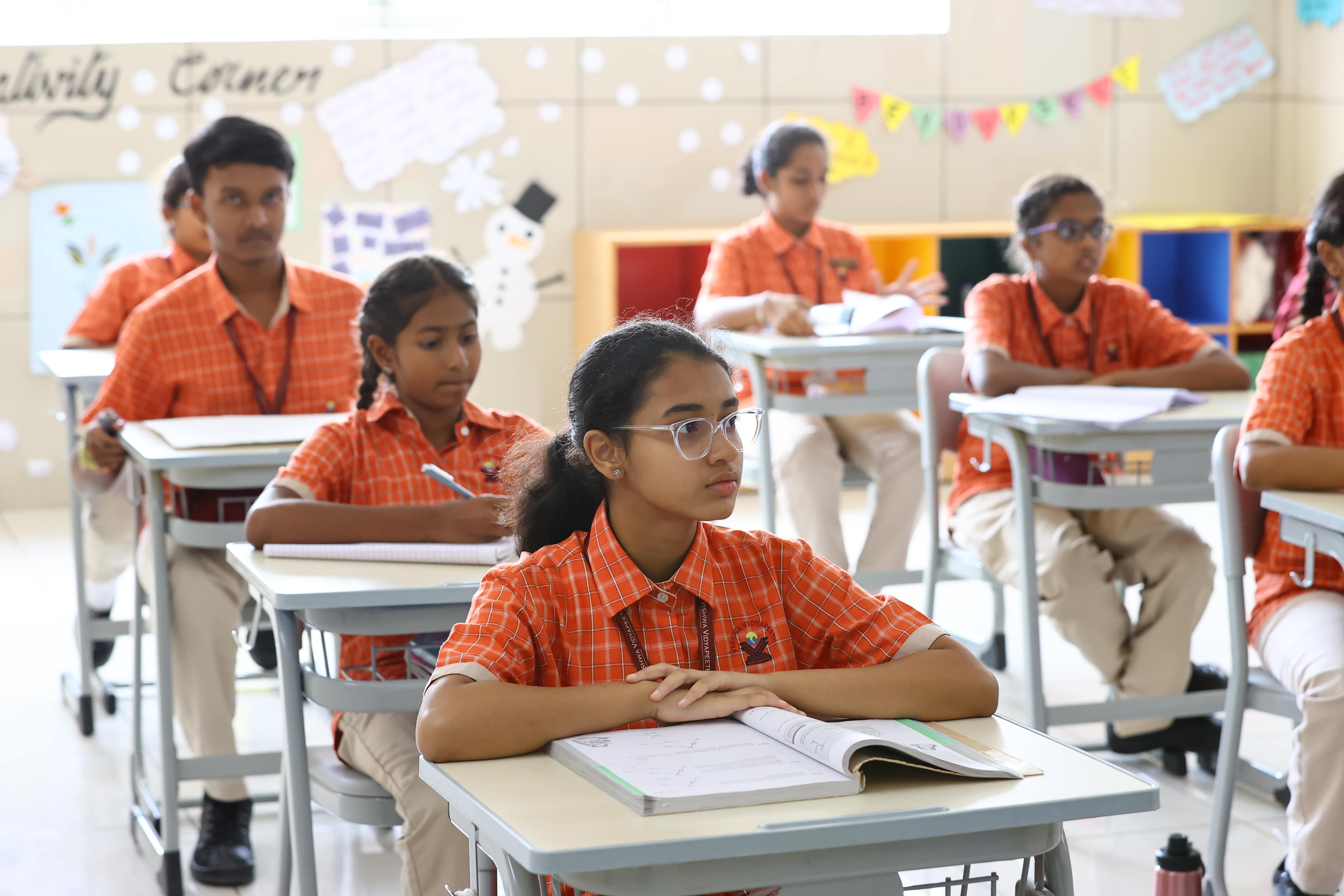
Six Pedagogical Approaches That Define Daily Learning
How the Teaching Methodology at Vishwa Vidyapeeth Magadha School Varthur Uses Flipped Learning
Flipped learning is one of the more deliberate structural choices the school has made in how it organises the teaching day. The model works on a straightforward premise — students come to class having already encountered the foundational content, whether through assigned readings, recorded instruction, or other preparatory material. This changes what the classroom is actually used for. Time that would otherwise go toward introductory explanation is instead directed at doing something with the knowledge: debating it, applying it collaboratively, presenting it, interrogating it through role play and discussion. The teacher's position in the room changes accordingly, moving away from delivering content and toward guiding the thinking of students who already hold some of it.
Beyond the academic value of this structure, the school notes an outcome that formal assessments rarely capture: students who spend regular time articulating ideas before peers, constructing arguments, and participating in structured academic discussion develop a kind of communicative confidence that carries well beyond the examination hall and into the broader demands of adult life.
Project-Based and Discovery Learning
Across grade levels, students at, Vishwa Vidyapeeth Magadha School work on projects rooted in real world situations — challenges that call for the genuine use of subject knowledge rather than its mechanical reproduction. Field trips and outdoor learning sessions run alongside this work and serve a purpose the classroom cannot fully serve on its own: direct exposure to ecological realities, cultural environments, and the physical world as it exists beyond the school boundary.
Discovery learning is a related but separately considered approach. Here, the intention is that students arrive at understanding rather than being handed it — working through prior knowledge, genuine inquiry, and the kind of reasoning that curiosity produces. The role of the teacher in this context is to hold the conditions for that process without directing its outcome. The school's curriculum documentation states the underlying conviction plainly: active exploration produces more durable and transferable learning than passive reception. This position is well supported by educational research across several decades.
Peer Learning as a Teaching Tool
Not many CBSE schools in Bangalore actively build peer teaching into their academic structure, but Vishwa Vidyapeeth Magadha School Varthur does. It is a structured programme in which students formally take on teaching responsibilities across Mathematics, Science, Languages, and Social Studies. Those students are prepared for this role; the sessions are not left to sort themselves out. Feedback is gathered consistently and used to develop the programme over time.
Academic outcomes have included stronger performance overall and a reduction in the proficiency gap between higher and lower achieving students. There is something else worth stating here. Teaching a concept to another person requires understanding it at a level that answering a test question simply does not demand. The confidence a student builds by genuinely explaining something and being understood is not the same as the confidence that comes from being told they have done well.
Arts Integration and Storytelling as Pedagogy
Visual arts, music, dance, and drama function within Vishwa Vidyapeeth Magadha School not as activities confined to dedicated co curricular periods, but as instructional tools embedded within core academic subjects. Complex concepts in the sciences become more accessible when approached through movement or visual representation. Events and periods studied in History acquire greater memorability when explored through dramatic form. The school holds that arts integration makes difficult material more approachable, accommodates learners whose strengths lie outside conventional academic formats, and generates engagement that traditional instructional methods frequently do not produce.
Storytelling serves a related pedagogical purpose. Narrative gives abstract ideas an emotional and sequential structure — two dimensions of experience that human cognition processes with particular efficiency. Concepts introduced through well constructed story tend toward lasting retention rather than surface level familiarity. The integration of sports extends this principle further, connecting Physics and Mathematics to physical activity and giving abstract principles an embodied, concrete dimension that aids comprehension.
The Trans-Disciplinary Approach
The trans disciplinary approach at Vishwa Vidyapeeth Magadha School Varthur departs from the conventional model in which subjects are taught in discrete, bounded periods with little occasion for one to inform another. Within this framework, a theme or real world question sits at the centre of learning, and several subject areas contribute to exploring it at the same time. The habit of drawing connections across disciplines develops in students because their learning is designed that way, not because a teacher has paused to point out a coincidental overlap.
NEP 2020 and the National Curriculum Framework both push explicitly in this direction, calling for multidisciplinary integration to become an ordinary feature of schooling rather than a periodic experiment. The school's translation of this into practice includes bagless days, assessment through portfolios rather than examinations alone, and the introduction from Grade 6 of vocational subjects that include artificial intelligence, financial literacy, and coding.
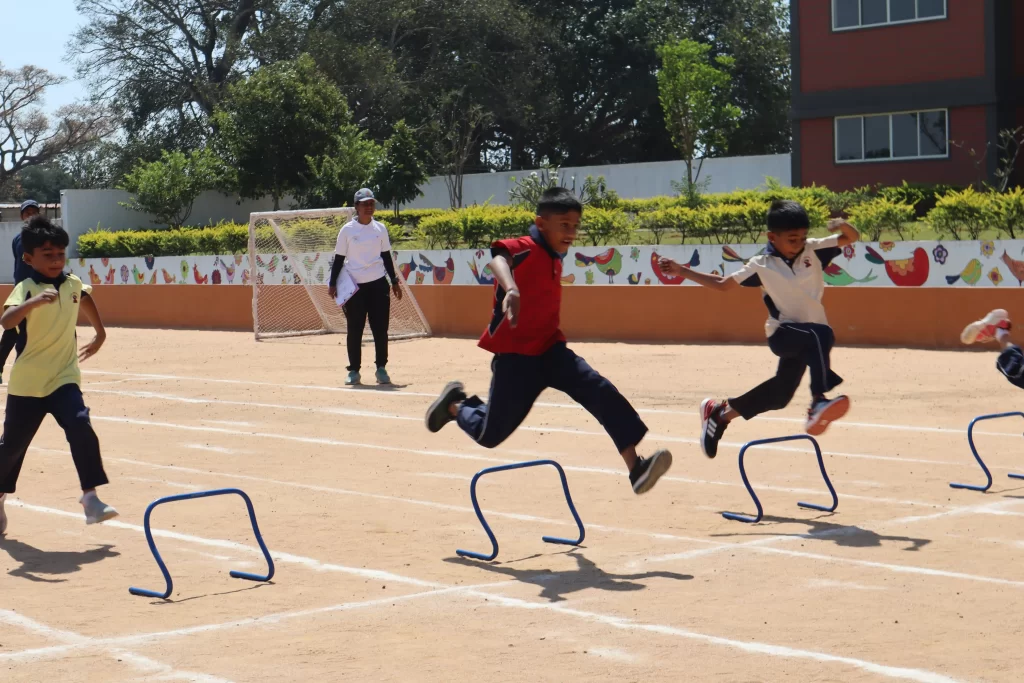
Signature Programmes That Extend Pedagogy Beyond the Classroom
Community Service, Internships, and Home Visits
Community service is embedded within the academic programme at Vishwa Vidyapeeth Magadha School as a component of experiential learning, not listed as an optional extracurricular pursuit. Internship opportunities provide students with structured exposure to professional environments at a stage of their education when most have had no meaningful contact with working life. Both are treated as integral to the school's broader learning philosophy.
The Home Visits initiative is worth examining on its own terms. Teachers go to students' homes not as a monitoring exercise but as a genuine attempt to understand the life a child returns to each afternoon, and to build a level of trust that a classroom encounter, however consistent, does not always make possible. The school points to research associating these visits with tangible improvements in reading outcomes, Mathematics performance, and the ease with which students settle into the classroom environment. A child who has been seen at home, whose family a teacher has met, occupies a different relationship to school than one who exists within it only as a student.
Mother on Duty and Parent Engagement
Through the Mother on Duty programme, mothers spend a full day moving through the school's actual routine rather than observing a version of it prepared for visitors. The reasoning behind this is practical. A parent who has watched a lesson unfold, who has seen how their child behaves in a group, who has some direct sense of what the school day involves, is in a genuinely stronger position to continue and reinforce that learning at home. Workshops offered alongside this programme cover communication, how resilience develops in children, and how parental involvement in academics and extracurricular life can support rather than work against the development it is intended to encourage.
The Space Exploration Programme and Seed 2 Sapling
In partnership with Genex Space, Vishwa Vidyapeeth Magadha School Varthur runs a Space Lab that takes students through content covering the solar system, the mechanics of rocketry, life aboard the International Space Station, and the emerging field of space agriculture. Telescope sessions for stargazing and solar observation give this a practical dimension that extends beyond the curriculum. For a student who is genuinely drawn to science, there is a considerable difference between studying these subjects from a textbook and engaging with them directly — and that difference has a real bearing on how scientific interest develops and whether it lasts.
The Seed 2 Sapling programme occupies a different but equally considered domain. Grounded in natural environments and guided by the S2S team, the programme develops emotional well being and moral reasoning alongside academic growth. The school's stated aim is the formation of students who generate and create knowledge as active participants in their learning, rather than receive it as passive recipients. That distinction, understated as it may appear, reflects a fundamentally different understanding of what the purpose of schooling is.
A 1:10 Student-Teacher Ratio That Makes It All Possible
Each of the approaches described throughout this article carries a common requirement: teachers present enough, and in sufficient number, to observe and respond to students individually. Flipped learning left without adequate teacher presence loses its purpose. Discovery based approaches without close facilitation risk producing confusion rather than insight. Peer learning left without adequate teacher oversight loses the educational value that justifies the approach in the first place.
Vishwa Vidyapeeth Magadha School, Varthur operates with a 1:10 student teacher ratio, with 350 educators across a campus of 3,500 students. This is a considered institutional commitment that directly enables the methodology to function day to day, not a figure cited for promotional purposes.
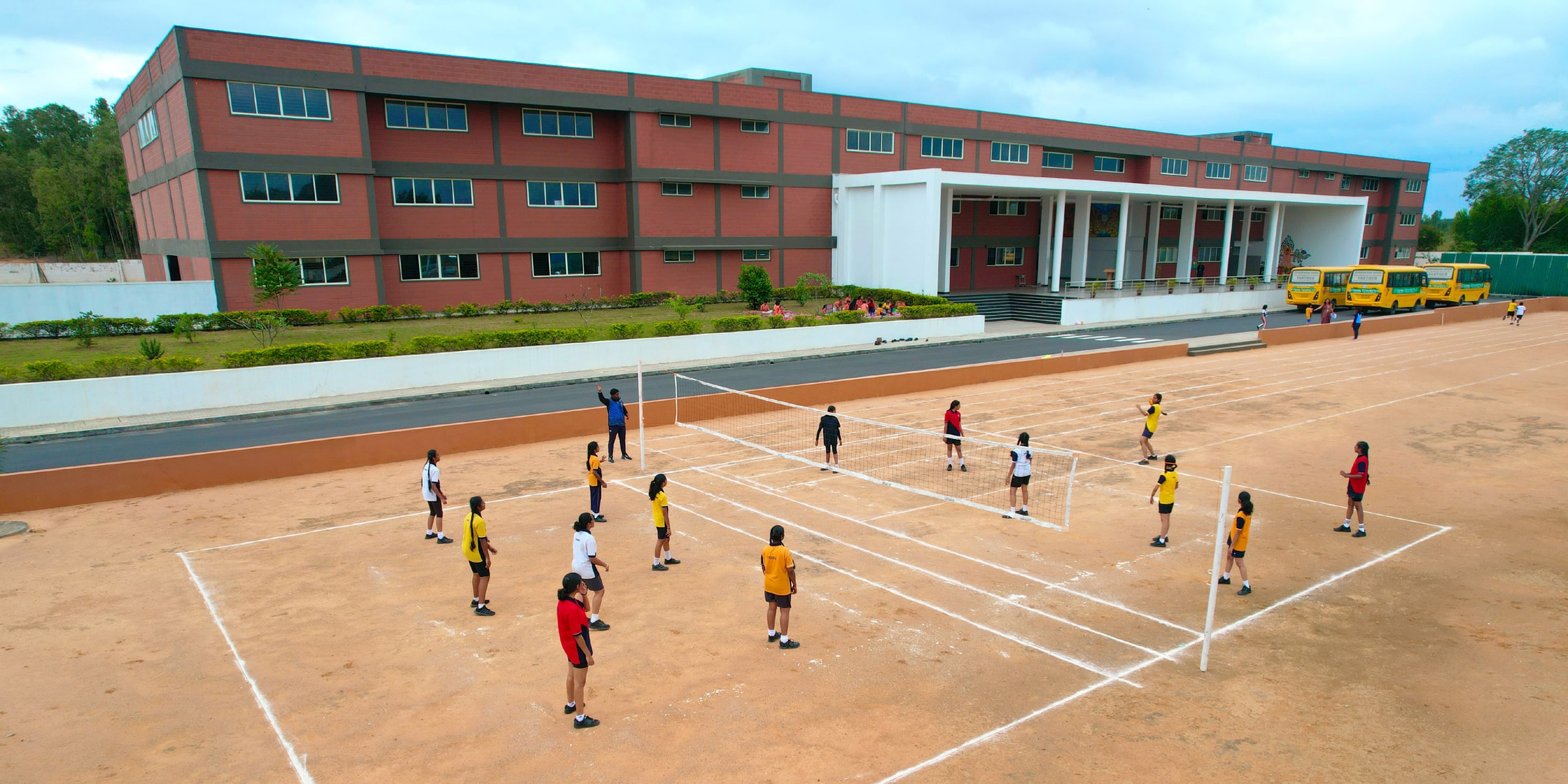
What This Means for Your Child
Families exploring school options in the Varthur, Whitefield, and Sarjapura Road corridors — areas that fall within the zone of several good CBSE schools in Bangalore — often find that Vishwa Vidyapeeth Magadha School stands apart precisely because of the depth and intentionality of its pedagogical approach. Teaching methodology is not an isolated department here — it is woven into how the school thinks about everything from classroom design to parent involvement.
Whether this school suits a particular child is something each family will need to judge for themselves, and it is a question that depends on knowing how that child learns. For students who engage more readily through doing, questioning, and connecting ideas across subject boundaries than through conventional instruction, and for parents who want to be genuinely involved in their child's education rather than updated on it, the school's structures are worth examining in person.
Note: Blogs by Yellow Slate are written based on information, knowledge and perspective of the writer. While every caution has been taken to provide readers with accurate information, please use your discretion before taking any decisions based on the information in this blog. In case you find any information that is factually wrong or something that could be made better, please write to us at contact@yellowslate.com.
Curious about how we arrived at this list? We believe parents deserve full transparency on how schools are evaluated and selected. to understand our school selection methodology.


