The Story Behind Vishwa Vidyapeeth Vikramashila School Yelahanka: Vision, Values, and the People Who Built It
When parents in Yelahanka ask about Vishwa Vidyapeeth Vikramashila School, the conversation rarely stops at curriculum or fees. Sooner or later, it gets to the deeper question: who built this school, and what were they trying to create? That question matters more than most parents realise. The values a school was founded on tend to show up in how teachers treat students, how programmes are designed, and what kind of person a child becomes over twelve years of schooling. This blog traces the founding story, the philosophy, and the people behind Vishwa Vidyapeeth Vikramashila School Yelahanka — so you have a clear picture of the roots before you consider the branches.
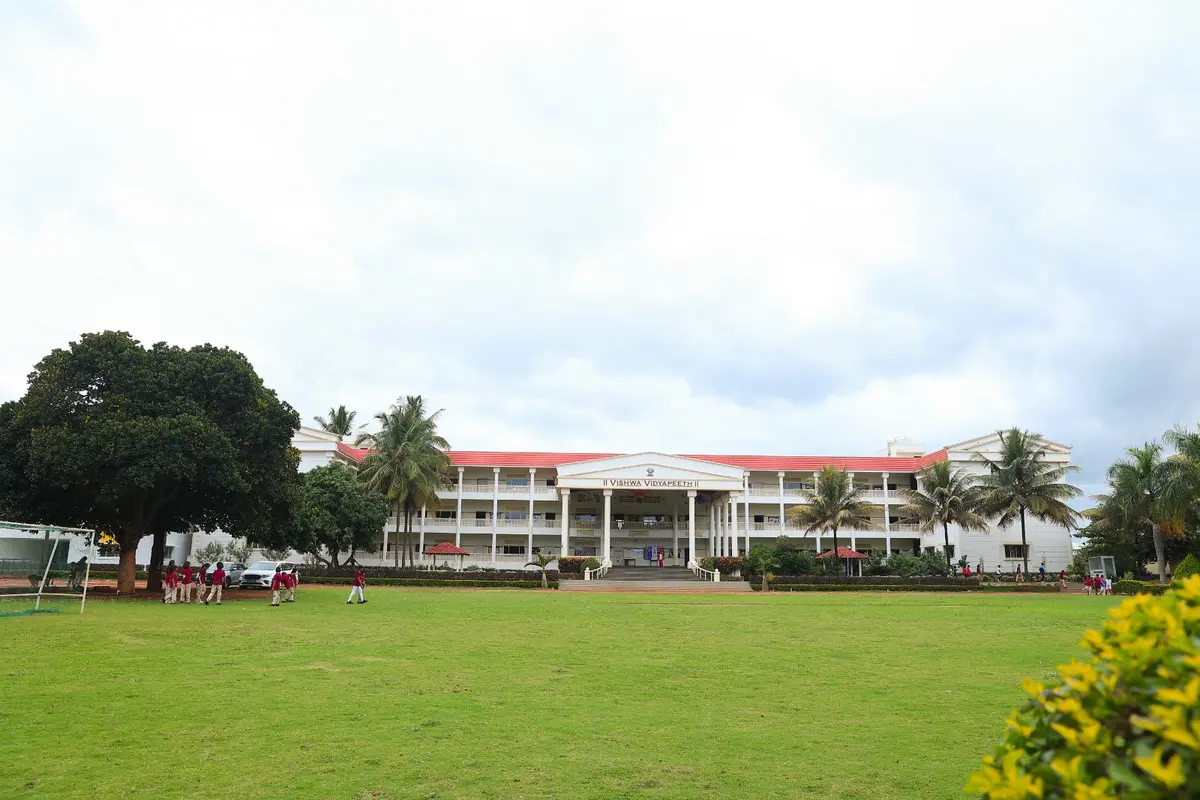
Vishwa Vidyapeeth Vikramashila School Yelahanka is a ICSE/ISC, IGCSE, and CBSE school located at Sy No. 65, Singanayakanahalli, Doddaballapur Main Road, Yelahanka, Bengaluru. The school is managed by C S Education Trust — a not-for-profit charitable trust — and has been in operation for over thirteen years since its formal launch in June 2012. The school's founding philosophy rests on six core pillars: discipline, Indian culture, Indian values, patriotism, Sanskrit, and yoga.
The Founding Story: A Trust, a Vision, and a Beginning
How Vishwa Vidyapeeth Vikramashila School Yelahanka Was Born
[btn_admissions id=10935]
The story begins not with a school, but with two people. Vishwa Vidyapeeth Group of Schools was founded on 29th October 2011, in loving memory of Late Smt. Chandramma and Late Sri Y. Subba Raju — described on the school's website as "two noble souls" whose memory became the moral foundation on which C S Education Trust was built. The Trust was formed by a group of professionals from diverse backgrounds, all united by one shared belief: education in India needed to do more than prepare children for exams. It needed to shape human beings.
C S Education Trust set itself a clear mandate from the beginning — to impart education to students from all walks of life, while building a genuine bond of commitment among both academic and non-academic staff. The ethos the Trust chose was one of indigenous enterprise: rooted in Indian culture, driven by a spirit of community. As the school grew, this founding intent would shape every programme, every policy, and every hire made along the way.
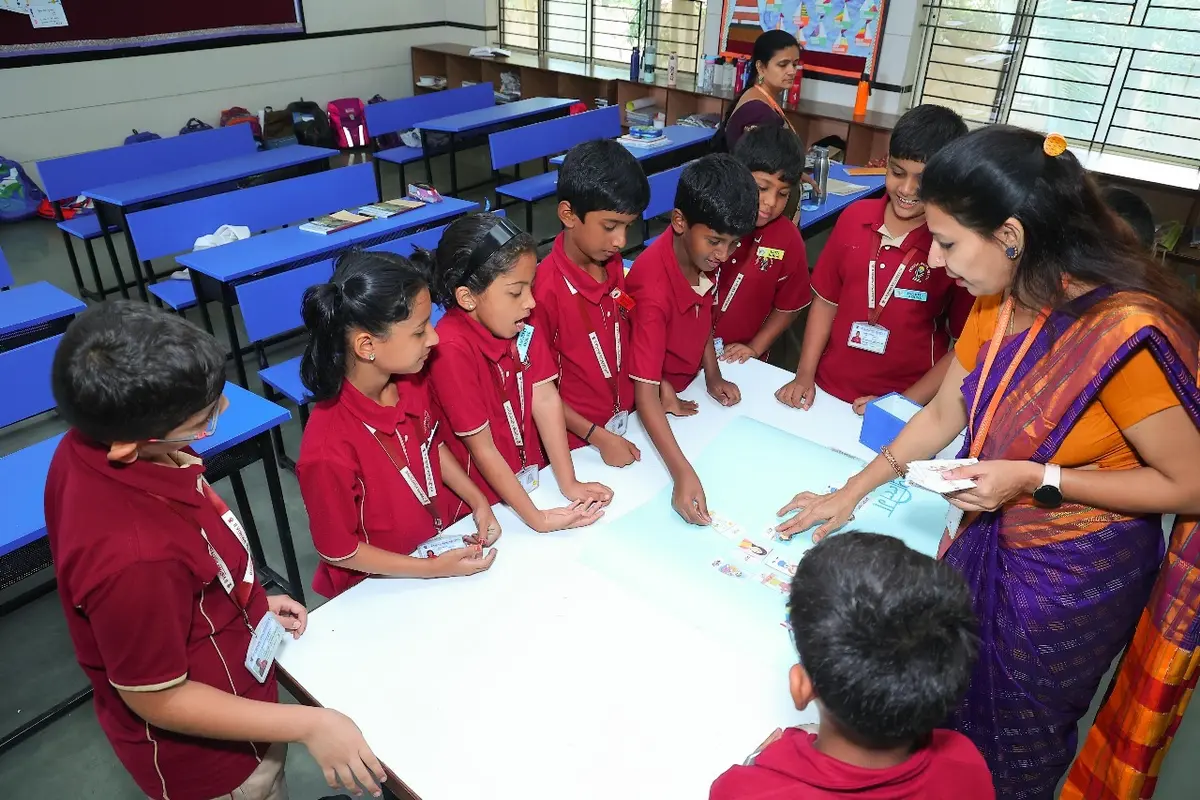
The first campus opened on 1st June 2012, starting with the ICSE curriculum and welcoming classes from Playgroup through to Class 5. Guru Shishya Parampara — the ancient tradition of a deep, respectful bond between teacher and student — was not a later addition. It was there from day one. So was the in-house kitchen, providing hot vegetarian meals grown partly from the school's own kitchen garden. These weren't marketing decisions. They were expressions of a philosophy already fully formed.
Among the best schools in North Bangalore, Vishwa Vidyapeeth Vikramashila School Yelahanka occupies a distinct position precisely because it was built around a set of values first, and an institution second.
What the Name and Symbol Actually Mean
Vishwa Vidyapeeth Vikramashila School Yelahanka's Identity in Every Detail
[btn_admissions id=10935]
Names in the Indian educational tradition carry weight, and this one was chosen carefully. "Vishwa" means Universe. "Vidya" means Education. "Peeth" means sacred place. Together, the name translates to the sacred place for attaining education — a phrase that echoes the ancient Gurukul ideal of a school as a sanctified space for transformation, not just instruction.
The school's colour code is Terracotta — associated with the colour of Mother Earth, with clay, and with healing. Red-brown, as the school describes it, also symbolises sacrifice and bravery. Even the logo carries meaning: three ascending steps representing the journey toward the "Peeth," the final destination of knowledge and wisdom. The parallel lines framing the name are an intentional echo of Sanskrit shlokas, grounding the visual identity in classical tradition.
The school's guiding verse, displayed prominently on its homepage, is drawn from Sanskrit wisdom:
"Vidyā dadāti vinayaṁ, vinayād yāti pātratām | Pātratvaḍ dhanam āpnoti, dhanāt dharmaṁ tataḥ sukham ||"
Translated: Education gives humility; humility gives character; from character one gets wealth; from wealth one gets righteousness; in righteousness, there is joy.
This isn't decorative. Among the best ICSE schools in Yelahanka, Vishwa Vidyapeeth Vikramashila has made this sequence — from education to humility to character to purpose — the actual operating model of the school. It explains why discipline, Sanskrit, yoga, and Bhagavad Gita classes are not optional enrichment activities but core parts of every student's journey from pre-primary through Class 12.
The Visionary Behind the Growth
Ms. Suseela Santhosh: Director, Vishwa Vidyapeeth Vikramashila School Yelahanka
No account of VVP is complete without understanding the person who shaped it from the inside. Ms. Suseela Santhosh's journey to becoming the Director of one of the best schools in Bangalore is, in many ways, as unusual as the school itself.
Born in 1978, she grew up in a joint family where her parents were both teachers. Watching them grade papers, prepare lessons, and invest themselves in their students planted something early. She went on to pursue a B.Sc. in Nursing at Oxford College of Nursing — and it was there that her understanding of care deepened in an important way. Nursing, she realised, was not just about treating illness. It was about rehabilitation, mental support, and helping people return to full lives. She spent eleven years in the health sector before making the pivot that would define her career.
The shift to education came in 2010, driven by a conviction she had developed working with patients: that the most critical window for change in a person's life is childhood. If you want to genuinely help humanity, she reasoned, you begin at the beginning. She joined hands with C S Education Trust in 2011 and took over formally as Director in 2014.
What followed is documented in VVP's year-by-year journey. Under her leadership, Vishwa Vidyapeeth School Vikramashila Yelahanka was awarded No. 1 ICSE School in India for Individual Attention and Innovative Teaching at the 4th National Conference on K-12 Leadership. The school was later recognised again for Individual Attention and Value for Money at the same forum. It was also invited by the Government of China to participate in Indo-Chinese Educational Exchange — one of only four schools in India selected for that collaboration.
Her approach to leadership is captured simply on the school's website: "At the very core of our humanity is our care for one another." Parents who have been associated with VVP for several years tend to reflect this in their feedback — pointing not to specific facilities or board results, but to a sense that the school genuinely notices their child as an individual. Among the best CBSE and ICSE schools in Bangalore, that quality of individual attention is rarer than it sounds. It doesn't happen by accident; it requires a leader who considers it non-negotiable.
Furthermore, Ms. Santhosh conceptualised and implemented the Guru Shishya Parampara model at VVP — an approach where teachers are seen as second mothers rather than instructors, and where children are taught how to think rather than what to think. This philosophy, established in 2012, remains the backbone of the school's teaching identity today.
Thirteen Years of Deliberate Building
The Milestone Journey of Vishwa Vidyapeeth Vikramashila School Yelahanka
[btn_admissions id=10935]
What makes VVP's history particularly interesting for parents is how intentional each phase of growth has been. The school didn't simply expand; it evolved according to a clear and consistent set of values.
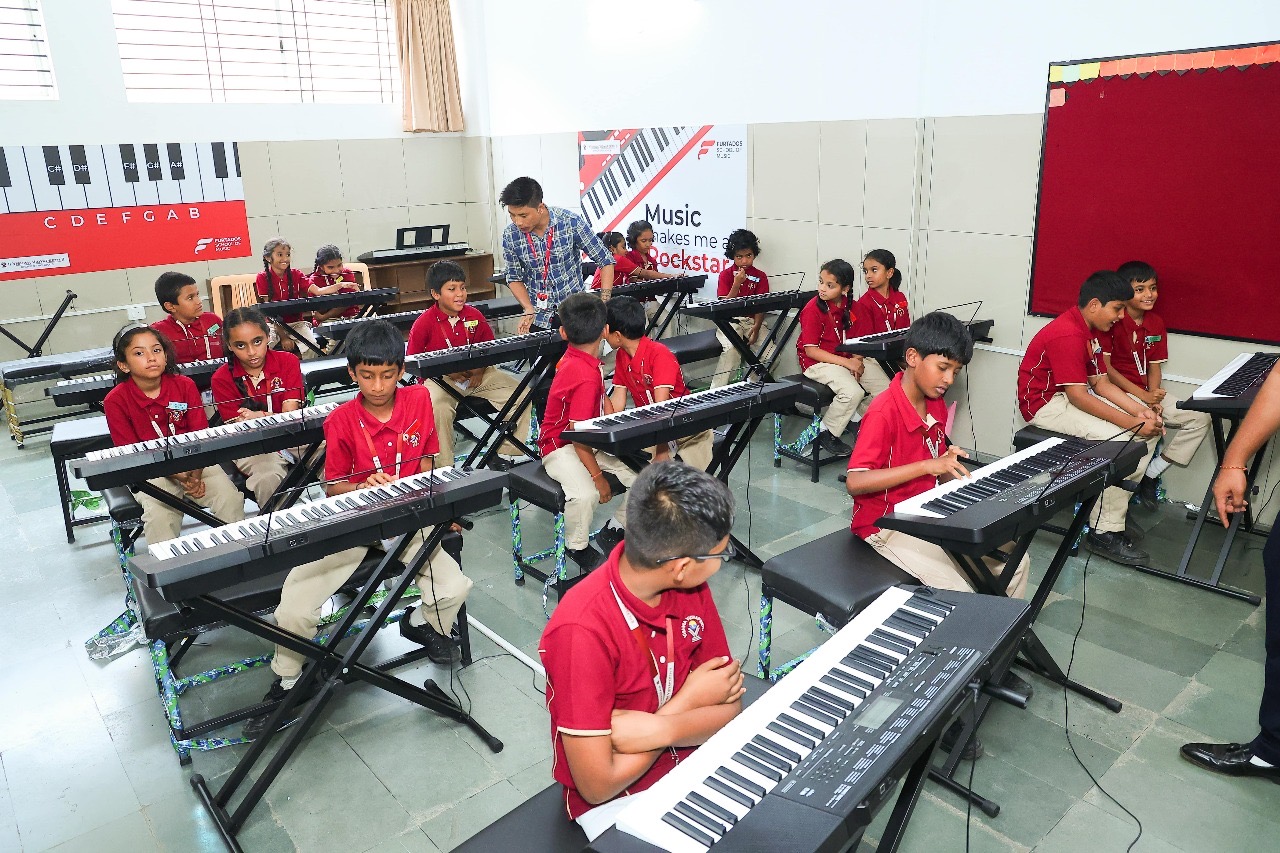
The early years (2012–2015) established the foundations: ICSE launch, in-house kitchen, Yoga, Taekwondo, Skating, inaugural Annual Day, EVS and Art exhibitions. By 2016, the Cambridge International IGCSE curriculum was launched, followed immediately by the school's first international student tour — to NASA and other sites in the United States. The Mother on Duty programme and Save Water, Live Better initiative were introduced the same year, signalling that community responsibility was already being built into the school calendar. By 2017, permanent affiliation for Cambridge International and a landmark tie-up with Sandipani Gurukula for Bhagavad Gita classes across all four streams were in place.
The 2018–19 year brought the CBSE curriculum and permanent ICSE/ISC and IGCSE/A Levels affiliations — completing VVP's evolution into a multi-board institution. New campuses at Honnenahalli and Whitefield followed, alongside the launch of the Come and Play Sports Academy. By 2021, VVP launched its sustainability-focused eco-friendly campus model, incorporating organic farming, zero-waste management, rainwater harvesting, and terrace gardening. It was the first school in the region to install an organic disinfection tunnel and sanitise its campus using drones during the pandemic.
More recently, in 2023–24, the school inaugurated Madhava Ganitha Kalakshetra — a dedicated mathematics lab — and launched Gnanavatika, a signature experiential learning programme inspired by Gurukul values. In 2024–25, the Nambi Antariksha Kalakshetra (a space lab in collaboration with Genex) was inaugurated by celebrated ISRO scientist Dr. Nambi Narayanan. The 2025–26 academic year saw the launch of the NCC 40 KAR Battalion at VVP and the Anantha Plate Bank — the first initiative of its kind by any school in India — in collaboration with Adamya Chetana, aimed at reducing single-use plastic and promoting sustainable living.
Among the best schools in Yelahanka, very few institutions can point to a timeline this coherent — where each new programme connects back to the same founding intent rather than simply adding features to stay competitive.
The Advisory Board: Minds That Shape the Vision
Distinguished Advisors Behind Vishwa Vidyapeeth Vikramashila School Yelahanka
One reliable indicator of how seriously a school takes intellectual rigour is who it invites onto its advisory board. VVP's Advisory Board reads like a deliberate curation of excellence across different domains — each member bringing a perspective that reinforces a different dimension of the school's identity.
Padma Bhushan Dr. Nambi Narayanan — an ISRO aerospace scientist who headed the cryogenics division and received India's third-highest civilian honour in 2019 — brings the weight of India's scientific legacy to the school. His presence reflects VVP's seriousness about connecting students with real scientific ambition. Notably, he also inaugurated VVP's Nambi Antariksha Kalakshetra in 2024.
Padma Shri Prof. Sujatha Ramdorai — the first Indian to win the prestigious ICTP Ramanujan Prize, a former member of India's National Knowledge Commission, and currently a Canada Research Chair at the University of British Columbia — represents the school's commitment to mathematical thinking and academic excellence at the highest levels.
Dr. D P Anantha — former Vice-Chancellor of Rashtriya Sanskrit Vidyapeetha, Tirupati, and a long-standing board member of Karnataka Sanskrit University and Tirumala Tirupati Devasthanams — anchors VVP's identity as a school that takes Sanskrit education and cultural heritage with full seriousness.
Dr. Nithin Nagaraj — Associate Professor at NIAS (IISc Campus, Bengaluru), with research in brain-inspired machine learning and complexity theories — directly informs VVP's pioneering integration of neural science into the teaching-learning process. His intellectual contribution is visible in how the school has framed its approach to understanding each child's brain and learning style.
Dr. Raghavendra Rao D — a consultant spine surgeon with over fifteen years of experience — and Shri Basavaraj Umarani — a visually-impaired mathematical prodigy and national award winner, known for extraordinary mental calculation abilities — round out a board that deliberately reflects both scientific diversity and the school's core message that ability cannot be measured narrowly.
Parents considering the best international schools in Bangalore with a strong values foundation will find this advisory composition significant. It isn't honorary. It's functional — each member contributing to the intellectual and philosophical direction of a school that genuinely wants to know what it stands for.
What This Means for Your Child
[btn_admissions id=10935]
The founding story of Vishwa Vidyapeeth Vikramashila School Yelahanka is not just institutional history — it's context for everything a parent will notice on a campus visit. The kitchen that serves hot vegetarian meals daily. The Bhagavad Gita classes running from pre-primary through Class 12. The Guru Shishya Parampara that shapes how teachers speak to students. The space lab, the maths lab, the NCC battalion. None of these are unrelated additions; they are expressions of the same founding intent, accumulated carefully over thirteen years.
For parents seeking a school in North Bangalore that combines academic rigour across multiple boards with a clearly articulated Indian values framework, understanding where VVP came from helps explain why it operates the way it does. The school was built to be a certain kind of place — and over more than a decade, it has remained recognisably that place. To learn more about the school's extracurricular life, its teaching methodology, or its infrastructure, explore the related blogs on Yellow Slate. And if you're ready to take the next step, visit the school's official website to explore admissions.
Note: Blogs by Yellow Slate are written based on information, knowledge and perspective of the writer. While every caution has been taken to provide readers with accurate information, please use your discretion before taking any decisions based on the information in this blog. In case you find any information that is factually wrong or something that could be made better, please write to us at contact@yellowslate.com.
Curious about how we arrived at this list? We believe parents deserve full transparency on how schools are evaluated and selected. to understand our school selection methodology.


