What Parents Say About The Peepal Grove School, Chittoor: An Honest Review
Finding a genuinely honest review of a boarding school is harder than it sounds. Most are either written by people who haven't experienced the school, or are so general they tell you nothing useful. This review of The Peepal Grove School, Gongivaripalli, Chittoor draws directly on the words of parents whose children have spent years at the school — not a weekend visit, but two, five, or seven years of residential education — alongside the school's stated philosophy, campus facts, and academic structure. It is written for parents who are seriously considering sending their child to a residential alternative school and want an honest picture of what they are choosing.
The School in Brief: What You Are Actually Choosing
The Peepal Grove School is a co-educational, full-time residential school set on a 30+ acre campus of forested hills and ponds in Gongivaripalli village, Chittoor District, Andhra Pradesh. It follows the ICSE syllabus. The teacher-student ratio is 1:5 — among the lowest of any school in India. Students come from 20+ states and countries. The campus is home to 90+ species of birds. There are no day scholars — every student lives on campus.
The school is a project of The Satsang Foundation, founded by Sri M (Sri Mumtaz Ali) — a social activist, educationist, and spiritual figure associated with the Ramakrishna Mission and the Krishnamurti Foundation, whose 2015-16 Walk of Hope Padayatra from Kanyakumari to Kashmir is among the most widely documented social walks in modern India. The Executive Director is Sunanda Ali, who has spent 15 years as Principal of the school and over 40 years in education. The Principal is Viraj Naidoo, who joined The Satsang Foundation in 2002, served as Academic Coordinator from the school's inception in 2006, and took on the role of Principal in 2021.
Admissions for 2026-27 are currently open for Grades IV to IX and Grade XI.
What Parents Actually Say: Three Years, Five Years, Seven Years
The most telling parent feedback about any residential school comes not from the first term but from years later — when a parent can look back and describe what the school actually did to their child. The testimonials from The Peepal Grove School parent community are of this second kind.
Sunita Harisankar, mother of Aditya Sankar from the Batch of 2017, writes about two years that she describes as transformative — not in a vague sense but in specific terms: a child who developed under careful teacher supervision and his own efforts, in an environment that gave him the space to put those efforts in. She notes that life skills were an explicit and important part of the teaching alongside the academic curriculum, and that she is grateful to the teachers for shaping her son's character during what she describes as his most crucial years. Her conclusion is direct: "I think each child deserves such a learning environment to bloom to their full potential."
Karunakar and Bindu Menon, parents of Gayathri K Menon from the Batch of 2017, describe a daughter who was, in their words, a quiet, withdrawn girl studying in a regular school in Doha until Class X. The years at PGS changed her personality and her outlook towards life for good — something the parents attribute to the bond students develop with teachers and peers through residential living, away from home. They note that she eventually excelled in the Plus II examinations, but are careful to clarify that academic performance was not what pleased them most. What they valued was the positive outlook and values the school instilled. Today Gayathri studies music at Berklee College of Music in Boston. The school, they note, still retains a special place in her heart.
Sasidharan and Sabitha Nair, whose daughter Shwetha enrolled in Grade VI seven years ago and whose son Shivshankar joined a year later in Grade IV, describe both children developing strong fundamental values while also performing well academically. The parents specifically note the campus ambiance and environment as producing what they call a genuine calmness in children — a rhythm and harmony in personality, and a cohesive development. The phrase they use to describe the programme is notable: unique individual-centric, yet curriculum-based. They describe watching their children focus on their strengths, address critical areas, and mature at their own pace, and observe them evolving as responsible and grounded human beings.
What the School Does That Produces These Outcomes
Parent testimonials are the output. Understanding what produces them requires looking at how The Peepal Grove School actually operates. Three things stand out as structurally distinctive.
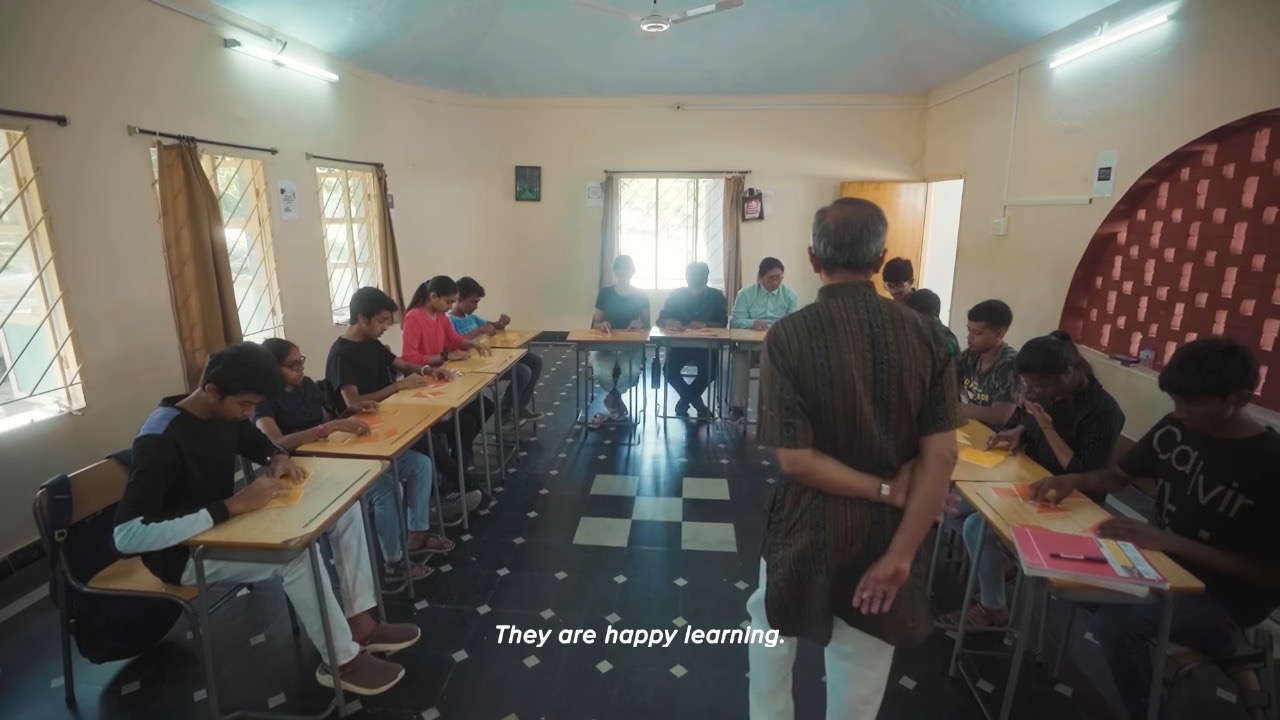
The first is the 1:5 teacher-student ratio. At this ratio, teachers genuinely know every student — not as a name on a register but as an individual with a specific learning profile, specific strengths, and specific areas that need attention. Principal Viraj Naidoo articulates this clearly: the key role of teachers is to be enablers and not enforcers, and when students are given significant agency in their growth and development, schooling becomes a transformational experience. The testimonials from the Nair and Harisankar families reflect exactly this — children who were supported to discover what they were good at and what was deeply important to them.
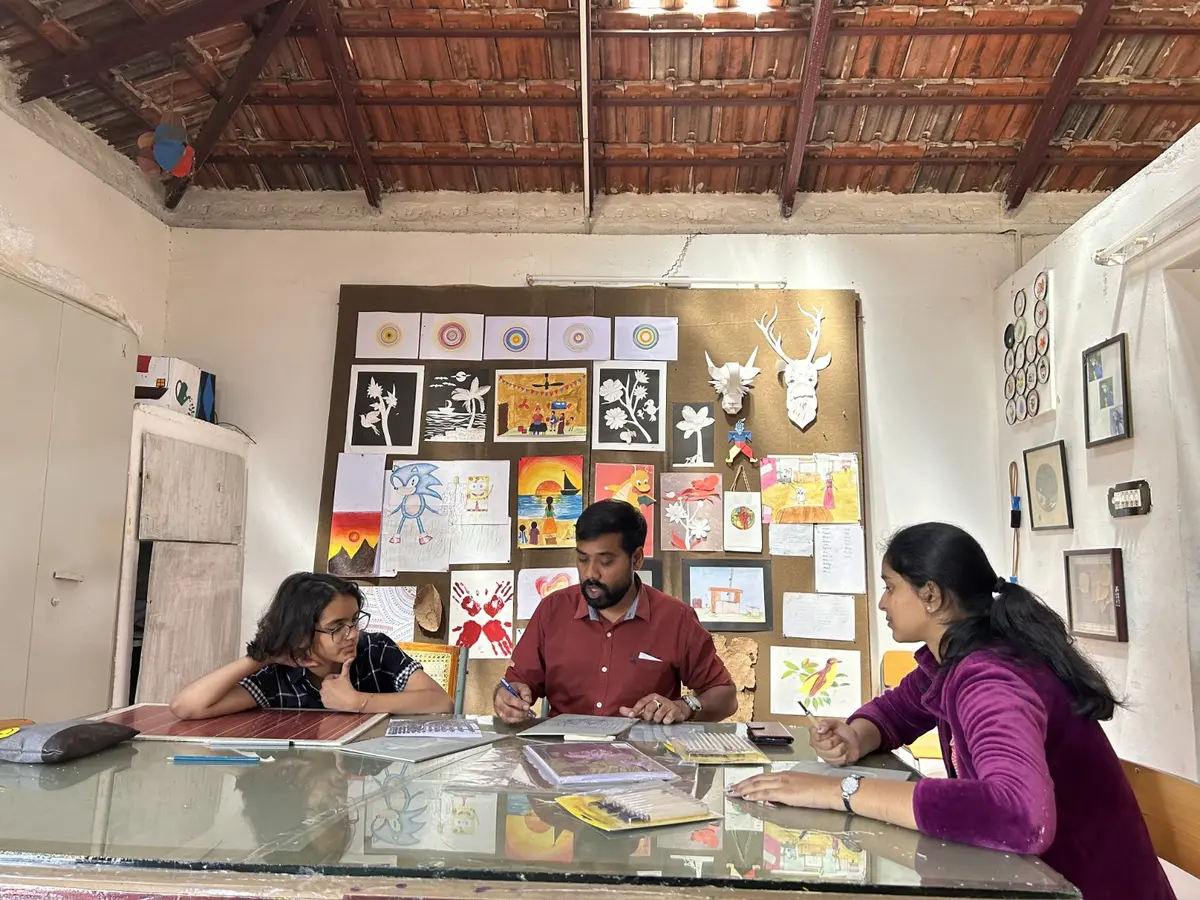
The second is the campus itself. Outdoor classes, bird-watching across 90+ species on the campus, trekking in forested hills, cycling, biodiversity studies, painting outdoors — these are not weekend activities. They are part of how the school teaches. The Founder, Sri M, describes them in his own note as crucial to the growth of young minds, and characterises teachers at PGS as friendly guides who inspire through dialogue and discussion rather than spoon-feeding. Executive Director Sunanda Ali frames this with particular clarity: education should open out the world for the child, encourage her to think on her own, and discover things for herself. This, she argues, inculcates a love of learning that should last a lifetime — and a skill in learning how to live with and learn from others, which she considers as important as any academic discipline.
The third is the breadth of what the curriculum includes. Yoga, Kalaripayattu, music, dance, and art are not optional extras at PGS — they are described as integral parts of the curriculum. Professionals are invited to interact with students on diverse topics. Nutritious vegetarian food is served from the school kitchen. An in-house nurse is available 24/7. An experienced psychological counsellor is on the campus team. The school runs career guidance as a structured programme. This is a school that has thought carefully about what a child actually needs — physically, mentally, emotionally, academically, and vocationally — and has built systems to address all of it on one campus.
An Honest Assessment: What to Know Before Applying
The Peepal Grove School offers a distinctive residential learning environment, and there are a few practical considerations families should understand before applying. It is a full residential school — students do not come home every week, and the adjustment to residential life, particularly for younger children enrolling in Grades IV or V, is real. The school is located in Gongivaripalli, Chittoor District — not a metro, not easily accessible for a spontaneous weekend visit. The campus is deliberately rural and nature-immersed, which is a strength for children who thrive in open, unhurried environments, and a significant adjustment for children accustomed to urban school life.
The school's teaching methodology focuses on building a strong conceptual foundation while encouraging students to think independently, ask questions, and develop a deeper understanding of every subject. The 1:5 teacher-student ratio enables teachers to provide close individual attention, identify each student's strengths and areas for improvement, and provide personalised support for their academic and individual growth. This approach helps students develop critical thinking, problem-solving skills, confidence, and independent learning habits. These skills can prepare students to approach competitive examinations and other academic challenges with greater clarity and confidence. By focusing on both academic development and individual growth, the school aims to equip students with the skills and confidence needed to pursue diverse academic pathways and future opportunities.
Among the best residential schools in Andhra Pradesh, The Peepal Grove School occupies a genuinely distinctive position — not because it is the largest or the most prominent, but because it is the most coherent. Every element of the school — the 1:5 ratio, the nature campus, the arts integration, the residential community, the Satsang Foundation ethos — points in the same direction. That coherence is what the parent testimonials reflect, and it is the most honest thing that can be said about this school. Families who want to learn more can visit The Peepal Grove School's official website directly for admissions information.
Note: Blogs by Yellow Slate are written based on information, knowledge and perspective of the writer. While every caution has been taken to provide readers with accurate information, please use your discretion before taking any decisions based on the information in this blog. In case you find any information that is factually wrong or something that could be made better, please write to us at contact@yellowslate.com.
Curious about how we arrived at this list? We believe parents deserve full transparency on how schools are evaluated and selected. to understand our school selection methodology.


