Global Exposure at Trio World School Bangalore — Student Exchange, MUN & IAYP
When parents search for the best schools in Bangalore, the question of academic rigour usually comes first. But close behind it — especially for families who have lived abroad, switched between boards, or simply thought carefully about where the world is heading — comes a quieter but equally important question: Does this school prepare my child to function as a citizen of the world, not just a student of a curriculum?
At Trio World School, Bangalore, the answer to that question is embedded in three distinct, structured programmes: the Model United Nations (MUN), the International Award for Young People (IAYP), and a dedicated Global Citizenship Programme. Together, these three initiatives form a coherent framework for global exposure — one that sits alongside the school's ICSE academics rather than competing with them. For parents evaluating the best ICSE schools in Bangalore, this combination is worth understanding in detail.
Model United Nations (MUN) at Trio World School Bangalore
What the MUN Programme at Trio World School Actually Involves
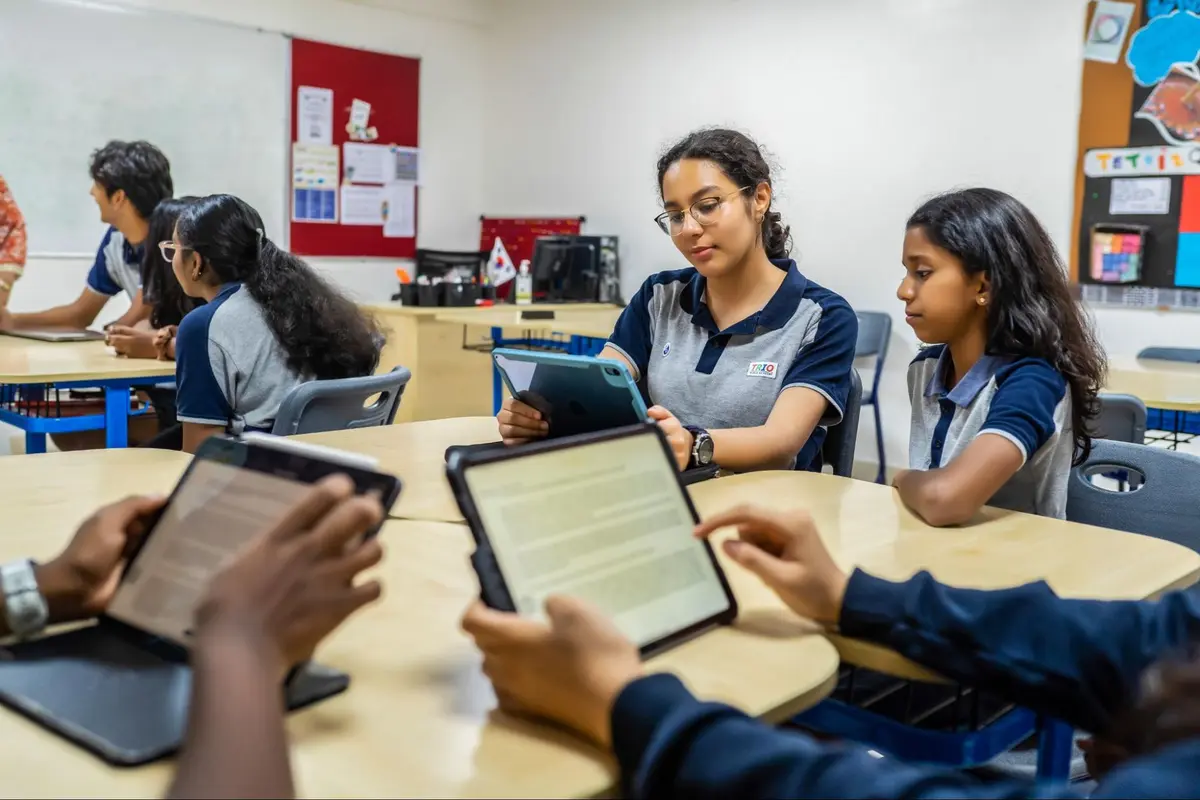
Most schools talk about MUN as a competition students go to. At Trio World School, the starting point is structured MUN training sessions conducted within the school itself. The sessions are designed to help students explore real-world issues from multiple perspectives, and the training covers a range of communication skills — body language, voice modulation, debate structure, and public speaking.
The event itself is held once a year. Topics are drawn from current events, and each student is assigned to represent a particular country as a delegate. From that position, they must research their assigned country's policies, understand its resources and constraints, and then work to resolve a real-world problem as that nation's representative. The output isn't just a speech — students are required to produce policy documents, an opening speech, research findings, and ultimately a resolution document on their assigned issue.
Why MUN Matters for ICSE Students Specifically
For ICSE high school students in Classes 8 to 10 — the cohort eligible for MUN at Trio — the programme has a specific and practical relevance that goes beyond general personality development. The research, writing, and analytical skills that MUN demands are the same skills that the ICSE board examinations reward. Students who go through MUN training are practising history, political science, geography, and economics in a live, consequential context. Those subjects don't just stay on the page — they become tools for thinking.
The skill set that MUN develops reads like a checklist for what universities and competitive entrance processes look for: leadership, research, critical thinking, diplomacy, active listening, and the ability to build consensus under pressure. Students learn to represent a position different from their own and to argue for it coherently — a form of intellectual discipline that strengthens analytical thinking and refines communication skills in equal measure. Among the best schools in North Bangalore, few offer this level of structured preparation for the post-school world within the school calendar itself.
What MUN Teaches Beyond Debate
Perhaps the less-discussed benefit of MUN is what it does for empathy and cultural awareness. Representing a different country means genuinely trying to understand that country's perspective on a global issue — its history, its interests, its constraints. Students at Trio World School who participate regularly describe it as a programme that broadens their worldview in a way that no textbook chapter on international relations can. The combination of negotiation, diplomacy, and cross-cultural understanding that MUN cultivates is precisely what the school's wider LEADS framework — Leadership, Empathy, Academic Excellence, Discipline, and Service — is designed to produce.
IAYP — The International Award for Young People at Trio World School
Understanding the Programme Trio Has Adopted
The International Award for Young People, globally recognised as the Duke of Edinburgh's International Award, is a non-competitive youth development programme for young people aged 14 to 25. Founded in 1956 in the United Kingdom, it currently operates in over 130 countries. In India, the programme has been active since 1962. What makes it internationally significant is its recognition across universities and employers worldwide — an IAYP certificate on a student's profile is understood in the same way regardless of which country that student applies to.
Trio World School Bangalore is a registered YES Centre for IAYP — YES stands for Youth Engaging Society, and it refers to institutions officially licensed to deliver the programme. This is not an informal arrangement. YES Centres provide the structure, mentorship, and quality standards required for students to pursue their Award, and they connect participants to a worldwide network. At Trio, the IAYP programme is implemented in lieu of SUPW (Socially Useful Productive Work), meaning it replaces a school-mandated requirement with something that carries internationally recognised weight.
The Structure of the Award: Three Levels, Four Sections
The Award progresses through three levels — Bronze, Silver, and Gold — and at each level, students must complete four sections:
- Skills — developing a personal interest or ability
- Service — engaging in meaningful community service
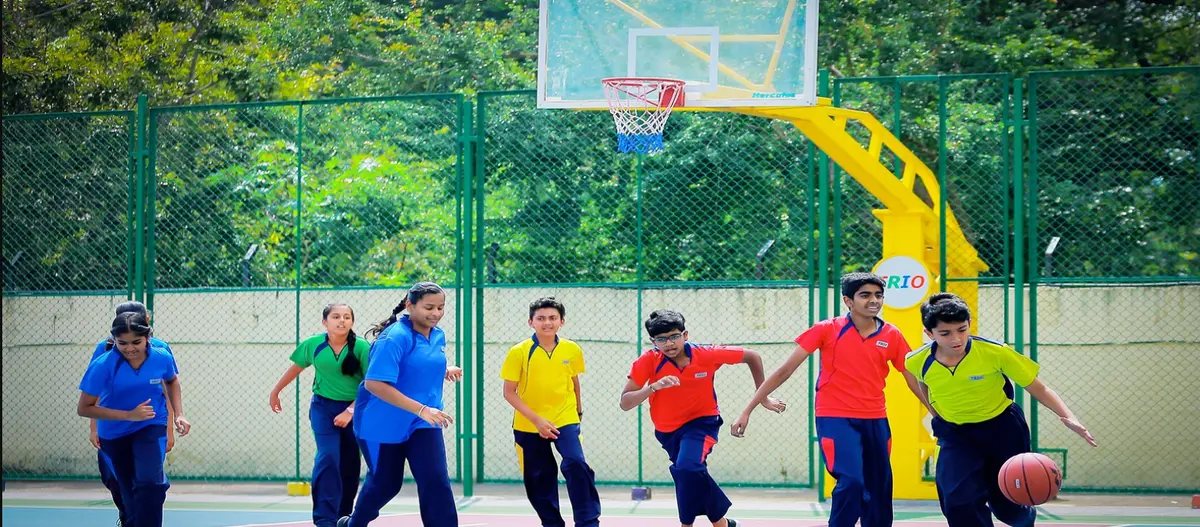
- Physical Recreation — working on fitness and wellbeing
- Adventurous Journey — completing a team-based expedition
The framework is deliberately broad. A student who loves music can develop that as their skill. A student who is passionate about the environment can channel that into the service component. The programme doesn't prescribe a fixed path; it provides a structure within which each student charts their own development. This flexibility, combined with the internationally recognised certification at the end, makes IAYP a genuinely differentiated offering among the best ICSE schools in Sahakar Nagar.
How Trio Students Engage with IAYP at Multiple Levels
What distinguishes Trio's approach to IAYP is the intentional layering of engagement — local, national, and global. At the local level, students participate in community service initiatives including volunteering programmes, environmental projects, and social outreach activities. At the national level, the programme encourages travel and experiential learning that exposes students to India's cultural and social diversity, with collaboration across communities. At the global level, students become part of an international peer network — connecting with participants from other countries, accessing global platforms, and developing perspectives that extend well beyond Bangalore or even India.
The cumulative effect of these experiences is substantial. Students build empathy and cultural understanding in a structured way, develop independence and personal resilience through the Adventurous Journey component, and graduate with a certification that is recognised by universities and employers internationally. For parents considering the best schools in Bangalore for a child they hope will study or work abroad, this is more than a co-curricular activity — it is a preparation.
The Global Citizenship Programme: Where Exposure Meets Purpose
Three Domains That Frame Global Thinking
At Trio World School, the Global Citizenship Programme is built around three core domains: Sustainable Futures, Artificial Intelligence and Design Thinking, and Entrepreneurship. Each domain is integrated into experiential, project-based learning rather than delivered as standalone theory.
In Sustainable Futures, students engage with the UN Sustainable Development Goals and the global challenges surrounding climate change, resource conservation, and social equity. The learning is active — green campus initiatives, waste-management drives, field trips to renewable energy plants and biodiversity hotspots, community outreach programmes, and campaigns where students amplify their own perspectives on climate action. This domain builds the kind of environmental stewardship that parents increasingly look for in the best schools in Bangalore, particularly those who want their children to grow up with a genuine sense of planetary responsibility rather than just an awareness of it.
AI, Design Thinking, and the Entrepreneurship Track
The second domain — AI and Design Thinking — is particularly relevant to the moment. Students explore the basics of artificial intelligence, machine learning, and emerging technologies, but the focus is not purely technical. Trio brings in the ethical dimensions of AI: questions of privacy, bias, and human responsibility in a world increasingly shaped by algorithmic decision-making. Hands-on workshops, coding sessions, and interactions with industry experts and innovators position students as active participants in the digital era rather than passive recipients of it.
Entrepreneurship, the third domain, takes the school's existing emphasis on leadership and discipline and gives it a practical business context. Students engage with the full arc of entrepreneurial thinking — from ideation and financial literacy to pitching and iteration. The activities include school-based entrepreneurship clubs and innovation labs, Shark Tank-style idea pitching competitions, student-led fundraising initiatives supporting community causes, and guest lectures from startup founders and social entrepreneurs. For students in the best schools in North Bangalore, exposure to real entrepreneurial thinking at this stage builds confidence and practical skills that remain relevant long after board exams are finished.
How the Three Programmes Connect
It's worth stepping back to see these three programmes — MUN, IAYP, and the Global Citizenship Programme — as a coherent system rather than a collection of individual offerings. MUN teaches students to understand the world's complexity and argue within it. IAYP challenges them to act within that world — to serve, to persist, and to venture beyond their comfort zones in a structured and internationally recognised way. The Global Citizenship Programme gives them the conceptual toolkit to understand the forces shaping the world they'll graduate into: sustainability, technology, and enterprise.
Together, they address what many parents feel is the gap between academic achievement and real-world readiness. Trio World School has chosen to fill that gap deliberately — not with token clubs or optional activities, but with structured programmes that carry international credentials, develop specific skills, and connect students to global peers. For families who want their child to emerge from school not just with strong ICSE results but with genuine global exposure, this combination is one of the clearest differentiators Trio offers among the best ICSE schools in Bangalore.
Connecting Global Exposure to College and Career Readiness
[btn_admissions id="9115"]
The increasingly global nature of college admissions — whether students are targeting Indian universities, UK institutions, or competitive programmes in the US or Singapore — means that extracurricular depth matters more than it once did. A student who has completed a level of IAYP, participated in MUN, and worked through the Entrepreneurship track of the Global Citizenship Programme is walking into an admissions process with a story to tell. These are not generic activities; they are structured experiences with recognisable credentials.
Among the best schools in Bangalore, it is relatively uncommon for an ICSE school to integrate this level of internationally recognised non-academic programming into its regular calendar. The fact that Trio World School does so — and that IAYP in particular is delivered in lieu of SUPW rather than as an optional add-on — reflects a genuine institutional commitment to preparing students for a world beyond the board exams.
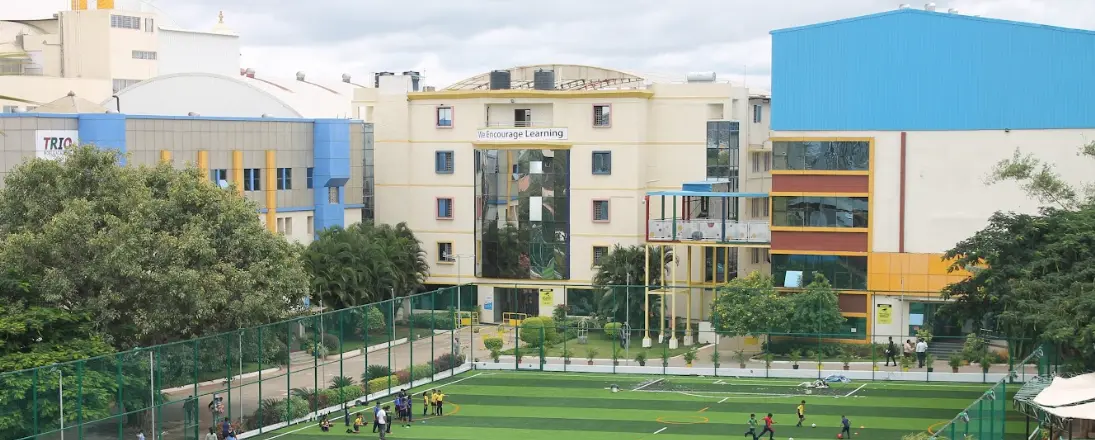
Parents who are weighing their options among the best ICSE schools in Sahakar Nagar and North Bangalore would do well to visit Trio's campus and speak with the admissions team to understand how these programmes are delivered and which grades are eligible. The official website has detailed information on each programme, and the school's admissions process is designed to be transparent and parent-friendly.
Note: Blogs by Yellow Slate are written based on information, knowledge and perspective of the writer. While every caution has been taken to provide readers with accurate information, please use your discretion before taking any decisions based on the information in this blog. In case you find any information that is factually wrong or something that could be made better, please write to us at contact@yellowslate.com.
Curious about how we arrived at this list? We believe parents deserve full transparency on how schools are evaluated and selected. to understand our school selection methodology.


