Life at The Peepal Grove School — What Your Child's Day Actually Looks Like
Most parents considering a boarding school for their child arrive at the same quiet worry: not the fees, not the curriculum, not even the distance. It's the image of a small person waking up in an unfamiliar dormitory, far from home, and wondering how to fill the hours of a day without you. What does that day actually look like? Who is there? What happens after breakfast, after dinner, after the lights go down? These are the questions that keep parents up at night — and they deserve real, specific answers.
At The Peepal Grove School, tucked into a 30-acre campus in the forested hills of Chittoor District, Andhra Pradesh, a child's day is anything but ordinary. Founded in 2006 by Padma Bhushan Sri M, and affiliated to the CISCE Board, The Peepal Grove School is a co-educational residential school serving Grades 4 through 12, with a philosophy built on the belief that real learning happens through experience, relationship, and the freedom to explore. Understanding what a typical day looks like here is, in many ways, understanding why this school exists at all.
Mornings at The Peepal Grove School — Starting the Day With Intention
The Peepal Grove School Daily Routine Begins at 6:30 AM
Get Admission
The day at The Peepal Grove School begins gently but purposefully. Morning activities start at 6:30 am — and this is not a passive roll-call. Students rotate through Yoga, Organic Farming, Music, and Fitness activities in this early hour, activities that are not extracurriculars tacked onto the end of a school day but are woven directly into the fabric of every morning. This says something significant about the school's priorities: before a child encounters a single textbook, they have already moved their body, connected with breath, or lifted their voice in song.
For parents who come from the world of competitive urban schooling, this might seem unusual. In most schools, morning time is hustle time — uniforms, tiffins, school buses, rushed goodbyes. At The Peepal Grove School, the morning is a transition into presence. After the morning activity, students move to breakfast, then to assembly, and then into the first block of classes. Classes at the school run for 45 to 90 minutes — a longer duration than the standard 40-minute period seen in most schools, allowing for deeper engagement with a topic rather than a surface-level skim before the bell rings.
Academics and the Classroom Experience at The Peepal Grove School
How The Peepal Grove School Structures Learning Through the Day
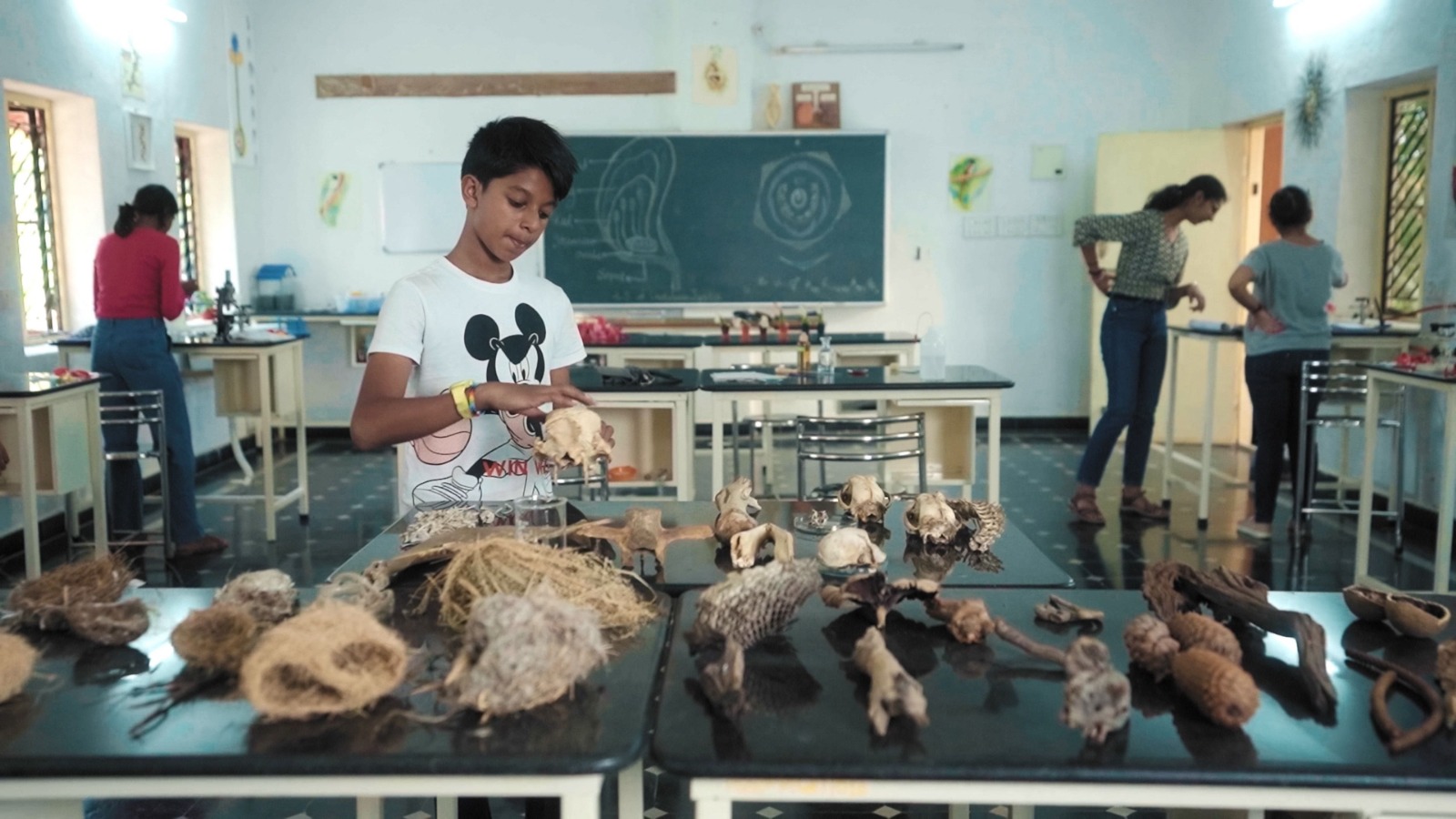
The academic programme at The Peepal Grove School is designed to give students both roots and wings. For students in Grades 4 to 8, the focus is on developing fundamental skills — Explanation, Interpretation, Application, Perspective, Empathy, and Self Knowledge — through collaborative, student-centric learning rather than direct instruction. This is a deliberate departure from the passive listen-and-repeat model. Students in these years are also taught spoken Sanskrit, a choice rooted in the school's belief that Sanskrit is the cultural base of all Indian thought.
From Grades 9 to 12, the approach becomes more rigorous in preparation for board examinations, with students making increasing use of multimedia facilities, a comprehensive library, and well-equipped laboratories. But even here, the school's insistence on critical thinking and open exploration of multiple dimensions remains non-negotiable. A variety of assessment tools — formative, diagnostic, summative, evaluative — are used across grades, and at the end of each term, parents receive a comprehensive progress report over email and meet each subject teacher individually for detailed, diagnostic feedback.
What makes the classroom experience distinct is the teacher-student ratio. At The Peepal Grove School, that ratio stands at 1:5 — one of the lowest in the country, the school notes — which makes individual attention not a privilege but a default. There is a maximum of 25 students per grade, with only one section per grade, meaning that a child here is genuinely known by their teachers. There is nowhere to hide academically, but also no reason to. The school draws a diverse mix of teaching faculty from across India, all with B.Ed degrees and Post Graduate qualifications, and oriented toward varied methodologies to reach different learning styles.
Additionally, professionals from varied domains are regularly invited to conduct workshops, giving students exposure to real-world knowledge that extends well beyond the syllabus. Among the best boarding schools in Andhra Pradesh, this commitment to bringing the outside world into the classroom is a consistent differentiator for The Peepal Grove School.
Afternoons — Rest, Reflection, and the Return to Activity
The Peepal Grove School's Afternoon Rhythm and What It Teaches Children
After lunch, something happens at The Peepal Grove School that many parents find quietly remarkable: there is a silent time of approximately two hours in the dormitories. During this time, students read books and rest. In an era of relentless stimulation — social media, streaming, constant notification — this enforced quiet is almost radical. It teaches children something that cannot be assessed on a mark sheet: how to be still, how to occupy their own inner space, how to find company in a book without being told to.
The dormitories themselves accommodate a maximum of eight students each. House parents live alongside students — described as more like friends than authority figures — and older children frequently mentor younger ones. This creates a familial atmosphere that takes the edge off homesickness, particularly for younger children who may be living away from family for the first time. Among the best residential schools in South India, this kind of intentional, small-community dormitory structure is rare and genuinely reassuring for parents.
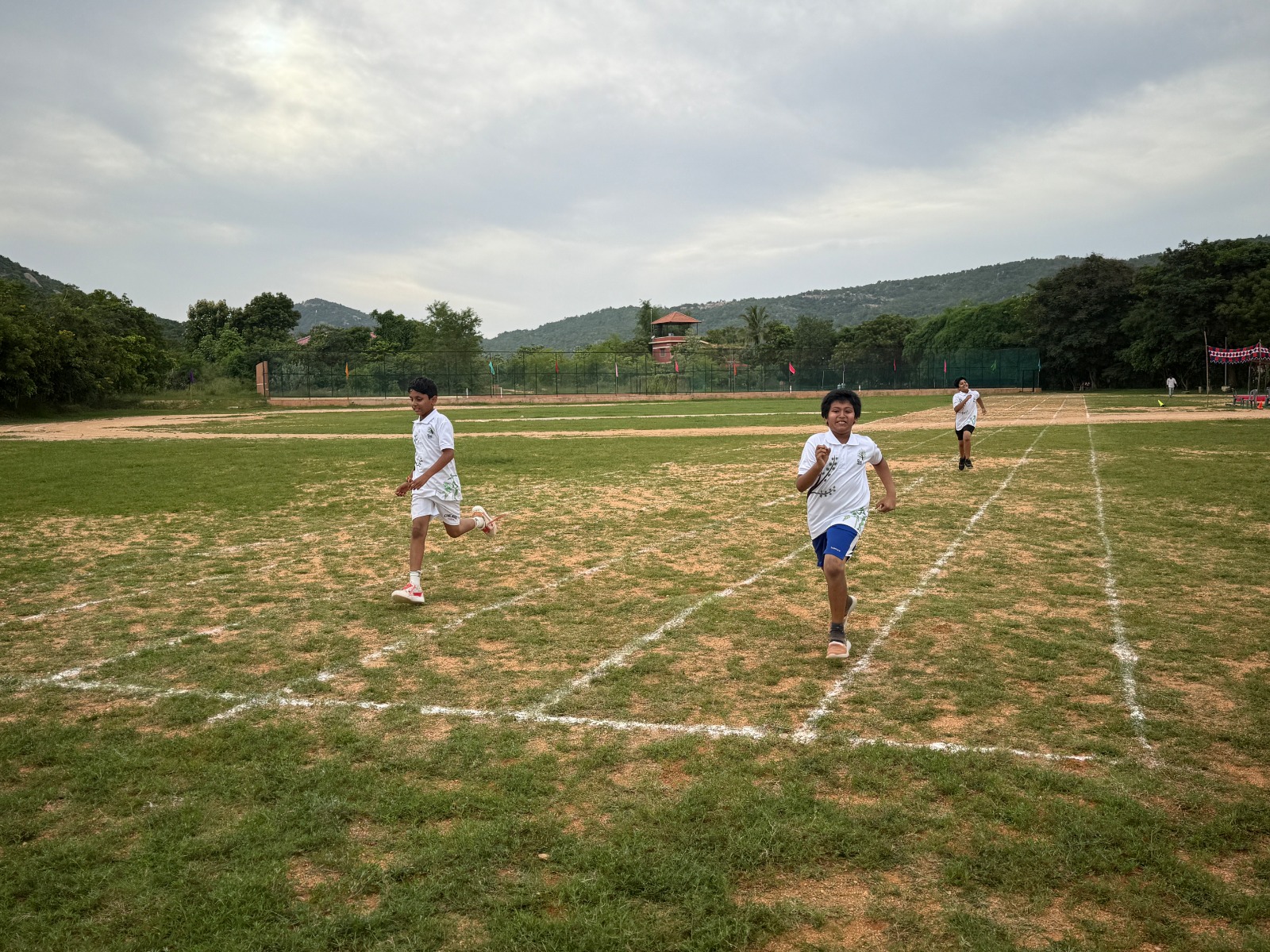
Sports hour follows the rest period — at 4:00 pm for junior students and 5:00 pm for seniors. Physical activity here is neither an afterthought nor a trophy pursuit. Snack time, shower, and dinner follow the sports hour, moving students through the latter part of the day with a steady, unhurried rhythm.
Evenings and Weekends — How The Peepal Grove School Fills Unstructured Time
The Peepal Grove School Approach to Evenings, Weekends, and Student Freedom
Post dinner, students at The Peepal Grove School assemble for an hour of prep time, followed by a period of leisure or self-study before retiring for the night. This is a school that values the transitional moments — the bedtime stories, the star gazing, the casual conversation in a dormitory corridor — as much as the formal learning hours. The school's website captures this with some warmth: children here are found building castles, writing letters, day dreaming, treasure hunting. These are not fanciful images; they are the natural consequence of what happens when you remove gadgets and daily city commute from a child's life and give them time, space, and each other.
On weekends, the campus comes alive in its own way. Students play sports matches on the grounds, cycle around the campus, and go on treks organised by the school. The Art Block, Music Room, and Kalaripayattu pit — the ancient South Indian martial art form — draw students on weekend afternoons. Teachers remain available on weekends for students who need academic support, without making weekend help feel like an extension of the school week.
Students are not permitted to keep money with them during the term. Should they need an item, the school procures it on their behalf and accounts for it as end-of-term expenses shared with parents. Internet access is available in the computer lab with restricted access. These policies are not punitive; they are architectural. They create a particular kind of childhood that is increasingly rare: one where attention is not constantly fractured and where boredom is treated as the beginning of creativity.
What Makes The Peepal Grove School's Daily Life Genuinely Different
The Peepal Grove School's No-Uniform, No-Gadget, Nature-First Philosophy in Daily Practice
Several features of The Peepal Grove School daily experience have no equivalent in conventional boarding schools across Andhra Pradesh or indeed across India. The school has no uniform — students adhere to a dress code of semi-formal attire, given a list of clothes they are permitted to bring. There is no uniform, but there is a shared aesthetic of simplicity. The kitchen serves nutritious vegetarian food exclusively. An in-house nurse is available round the clock, and there is also an experienced psychological counsellor on campus.
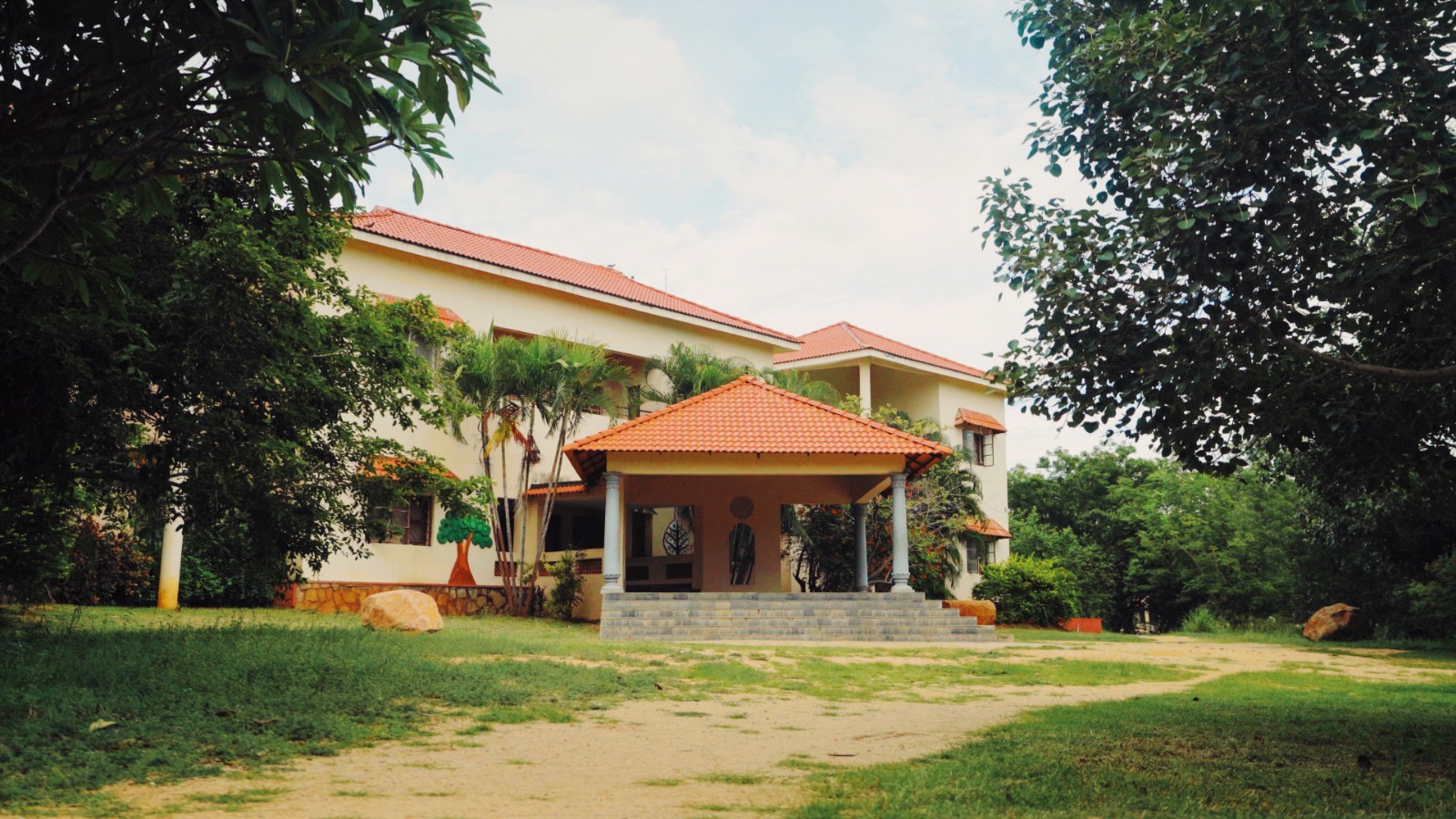
The campus itself is a participant in a child's daily life in a way that concrete-and-corridors schools simply cannot replicate. Surrounded by forested hills and ponds, the 30-acre grounds are home to 90-plus species of birds, and biodiversity studies are woven into learning. Students come from more than 20 states and countries, making every meal, every dormitory conversation, and every trek an encounter with cultural diversity. This multicultural texture — a child from Karnataka talking to one from Manipur and another from abroad over a vegetarian dinner — is something the school considers as much a part of education as any lesson.
Among the best alternative boarding schools in India, The Peepal Grove School is particularly distinctive in insisting that learning is not something that happens in a classroom and stops at the bell. The Peepal Grove School daily life is structured around the understanding that the whole environment — the meals, the silences, the birds, the friendships, the evening prep — is the curriculum. That is what makes answering "what does a day look like here?" such a meaningful question. The answer is: fuller, slower, and far more alive than most children experience in the cities their families come from.
Admissions and How to Take the Next Step
Admissions at The Peepal Grove School are open for the academic year 2026–27 for Grades IV to IX and Grade XI. Applications are received from October 15th to March 15th each year, and the academic session begins in June. For Grades 4 to 7, the process involves parent and student interviews. Grades 8 and 9 additionally require a written test in Mathematics and English, while Grade 11 requires a written test in the student's chosen subjects. The school does not admit students to Grades 10 or 12.
Annual Tuition and Boarding Fees for Grades IV–X stand at ₹6,55,000 per year, payable in two equal installments. For Grades XI–XII, the fee is ₹7,76,000 per year. A Registration Fee of ₹6,000 and an Admission Fee of ₹45,000 apply, along with a refundable Caution Deposit. The Tuition and Boarding Fee includes food, lodging, library, labs, games, and cultural activities. Books, excursions, medical expenses, and similar items are billed separately.
The school can be reached at +91-9398612347, +91-9346745933, or +91-9650078644, and by email at office@peepalgroveschool.org. The campus is located at Gongivaripalli Post, Sadum Mandal, Chittoor District, Andhra Pradesh — 517123, approximately 180 km from Bengaluru and 75 km from Tirupati.
If the picture of a child waking up to Yoga, spending the afternoon in quiet reading, cycling through forested hills on a weekend, and falling asleep under a sky full of stars resonates with what you want for your child — this is a school worth visiting.
Note: Blogs by Yellow Slate are written based on information, knowledge and perspective of the writer. While every caution has been taken to provide readers with accurate information, please use your discretion before taking any decisions based on the information in this blog. In case you find any information that is factually wrong or something that could be made better, please write to us at contact@yellowslate.com.
Curious about how we arrived at this list? We believe parents deserve full transparency on how schools are evaluated and selected. to understand our school selection methodology.


