Reasons Why The Peepal Grove School, Chittoor Should Be on Every Parent's Shortlist
Most parents researching boarding schools eventually end up comparing the same shortlist — big-brand institutions with glossy brochures, impressive alumni networks, and familiar names. That's a reasonable place to start. But the parents who do a little more digging often discover schools that are doing something genuinely different — schools that have built an entire educational philosophy around a conviction, not a curriculum checklist. The Peepal Grove School, Chittoor is one of those schools.
Nestled in an enchanting valley in the Chittoor district of Andhra Pradesh, this co-educational residential school affiliated to the CISCE Board has been quietly producing independent, thoughtful, grounded young people for over sixteen years. It isn't trying to be everything to everyone — and that, paradoxically, is precisely what makes it worth knowing about. If you're a parent with a child between Grades IV and IX (or Grade XI) and you're genuinely open to an education that looks and feels different from convention, here are five reasons why The Peepal Grove School deserves a serious place on your shortlist.
Reason 1: A Teacher-Student Ratio That Changes Everything
Numbers in education are often thrown around without much meaning. But the 1:5 teacher-student ratio at The Peepal Grove School isn't just a statistic — it's the structural foundation of everything the school does well.
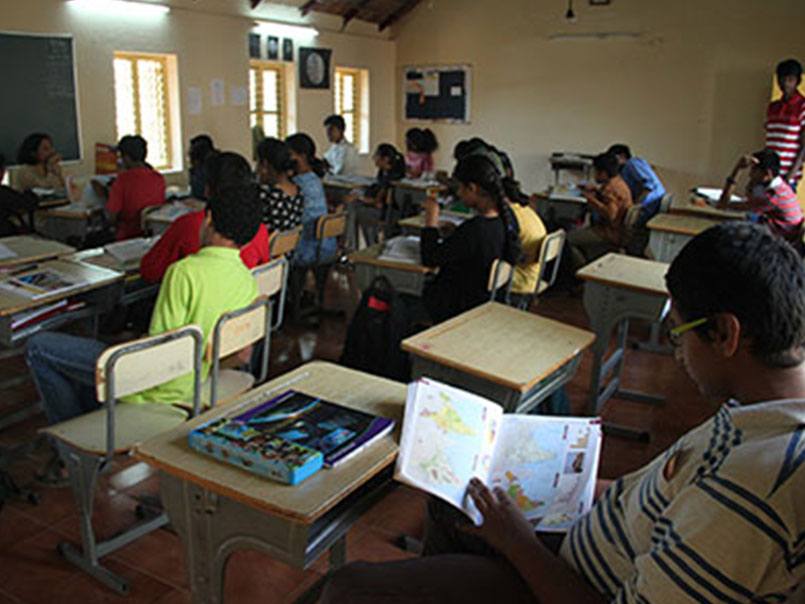
Think about what that actually means in practice. With a maximum of 25 students admitted to a single section per grade, every teacher knows every child by name, learning style, temperament, and pace. There's no falling through the cracks here. The school itself describes the atmosphere this creates as "familial" — house parents who are more like friends, older students who naturally take on mentorship roles, and an informal setting that allows for spontaneous conversations, bedtime stories, star-gazing, and the kind of genuine rapport that most school environments simply cannot manufacture.
This ratio also shapes how teachers teach. Because they're not managing thirty-five children in a room, they can afford to slow down when a child needs more time, push further when curiosity demands it, and build the kind of individual relationship that the school believes is the bedrock of a healthy learning environment. It's worth noting that teachers at PGS are available to support students facing academic difficulties — not just during class hours, but as an ongoing, accessible presence in the residential setting. Among the best boarding schools in Andhra Pradesh, a ratio like this is exceptionally rare.
Reason 2: A Campus That Teaches Before Any Teacher Does
There's a version of residential schooling where the campus is incidental — dormitories, a canopy of trees, a sports field. And then there's The Peepal Grove School, where the campus is a core part of the curriculum.
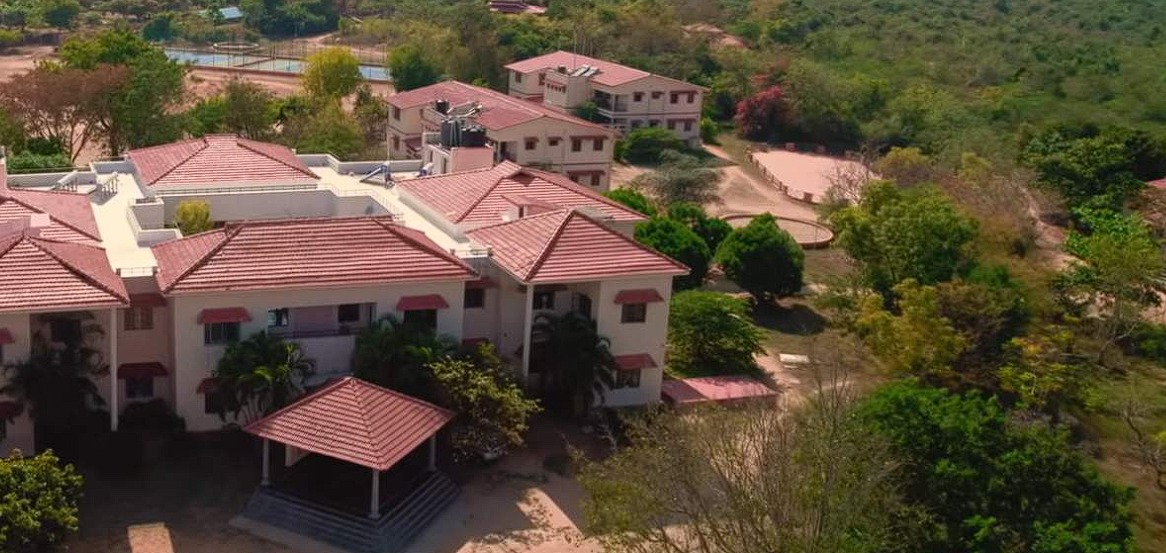
The school sits on a 25+ acre campus surrounded by forested hills and ponds. Over 90 species of birds have been recorded on the grounds — and students don't just observe this passively. Bird watching, biodiversity studies, cycling around the campus, half-day treks every term, and overnight camps at the neighbouring hillock for senior students are all built into the school's programme. The school's vision of an "outdoor" education isn't a weekend add-on; it's embedded in the structure of learning itself.
The About page makes this explicit: the campus enables trekking, bird watching, cycling, and biodiversity studies as regular features of student life. And the Learning page notes that Grade 11 and 12 students are taken for a night camp where they set up tents, build a fire, cook a basic meal, and learn to live frugally outdoors. That experience — which has no equivalent in a conventional day school — builds self-reliance, adaptability, and a relationship with the natural world that most children in urban settings never develop. For parents considering the best alternative residential schools in South India, the campus at PGS isn't just a location — it's an argument.
Why The Peepal Grove School, Chittoor Stands Apart in its Approach to Learning
The absence of smartphones and the daily city commute — which the school references deliberately — gives children something almost impossibly rare today: time. Time to cultivate skills, pursue hobbies, explore their surroundings, learn to share, and live together in what the school describes as a cross-cultural diaspora. Students come from over 20 states and countries, which means the campus is itself a lesson in diversity and coexistence, long before the subject appears in any textbook.
Reason 3: Kalaripayattu, Sanskrit, and an Education Rooted in Indian Culture
This is the reason that tends to surprise parents most — and then tend to stay with them the longest. The Peepal Grove School teaches Kalaripayattu as an integral part of its programme. Not as an elective, not as an after-school option, but as a core part of what children do here.
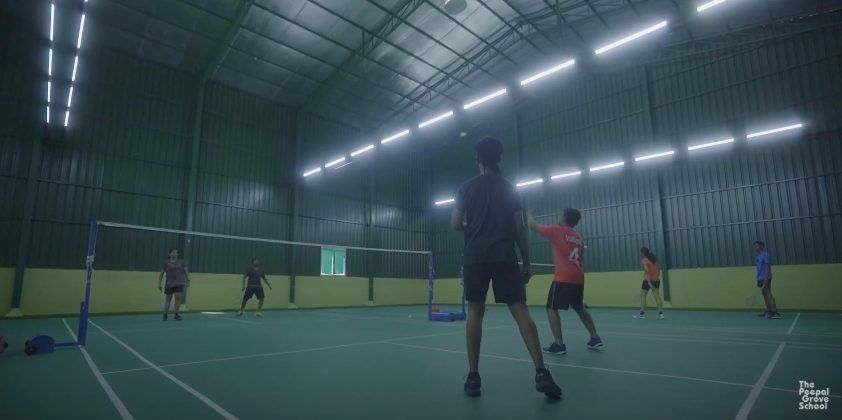
Kalaripayattu is one of the oldest martial art forms in the world, originating in Kerala and recognised for its extraordinary demands on physical discipline, flexibility, mental focus, and mind-body coordination. The school has a dedicated Kalaripayattu pit on campus — a proper facility, not an improvised space — and students engage with the practice with the same seriousness they bring to music, dance, yoga, and art. These aren't timetable fillers. Sports, art, dance, music, drama, yoga, and Kalaripayattu are described on the school's Learning page as "an intrinsic part of our programme" and students are encouraged to pursue them with equal vigour to academics.
Equally distinctive is the school's decision to teach spoken Sanskrit from Grades 4 to 8, treating it as the cultural base of Indian thought. This isn't rote memorisation of shlokas — it's an active, spoken engagement with a language that the school sees as fundamental to understanding India's intellectual heritage. Furthermore, in the absence of uniforms (the school has a dress code of semi-formal attire instead), students learn to exercise individual judgement even in something as ordinary as how they present themselves. Taken together, these choices reflect a school that has thought carefully about what Indian cultural identity means in a modern residential setting — and committed to it structurally.
Reason 4: A Philosophy Built for Critical Thinkers, Not Exam Machines
Here's a question worth sitting with: do you want your child to be good at school, or do you want them to be good at learning? They're related, but they're not the same thing — and which one you prioritise says a great deal about which school is right for your child.
At The Peepal Grove School, Chittoor, the educational philosophy is framed around five ethos pillars: Balance, Question, Relate, Assert, and Discover. Each one is a disposition, not a subject. Balance reflects the school's belief in the interconnectedness of life. Question refers to the commitment to grooming individuals who think sensitively, creatively, and critically. Relate speaks to the importance of close teacher-student relationships as the foundation of healthy learning. Assert refers to care for physical, mental, and emotional wellbeing — building self-confident, assured individuals. Discover reflects the process-oriented, hands-on approach to understanding.
From Grades 4 to 8, the academic programme focuses on developing six fundamental skills — Explanation, Interpretation, Application, Perspective, Empathy, and Self Knowledge — with emphasis on collaborative learning rather than direct instruction. The methodology is explicitly student-centric. From Grade 9 onwards, the programme becomes more rigorous as students prepare for their board examinations, with multi-media facilities, a comprehensive library, and well-equipped laboratories supporting deeper research. A diverse mix of assessment tools is used — formative, diagnostic, summative, evaluative, and informative — all benchmarked against national and international standards. Parents receive a comprehensive report at the end of each term. Moreover, professionals from varied domains are regularly invited to conduct workshops, broadening students' perspectives beyond what any single teacher can offer.
How The Peepal Grove School, Chittoor Creates Lifelong Learners
The school's Principal, Viraj Naidoo, captures the underlying philosophy with unusual clarity: the main focus must be to meet the fundamental needs of students — the need for autonomy, relatedness, and competence. The key role of teachers, he says, is to be enablers, not enforcers. That orientation — teacher as guide, student as agent — produces something that marks and rankings don't measure: a student who knows how to learn. Among the best ICSE boarding schools in South India, very few have articulated and institutionalised this philosophy as clearly as PGS has.
Reason 5: A Residential Community That Shapes Character
The fifth reason is perhaps the hardest to quantify, but experienced parents tend to rank it the highest. It's the question of what kind of person a school produces — not just academically, but as a human being who knows how to live with others.
The Peepal Grove School is a fully residential community where students from over 20 states and countries live, eat, study, trek, and grow together. The school's daily rhythm begins at 6:30 am with yoga, music, or fitness activities, followed by breakfast, assembly, and classes. Post-lunch, students have quiet time in the dormitories for reading and rest. Afternoons and evenings are filled with sports matches, cycles around campus, time in the Art Block and Music Room, or work in the Kalaripayattu pit. In the evening, teachers remain available for academic support. The school's kitchen serves nutritious vegetarian food, an in-house nurse is on call around the clock, and an experienced psychological counsellor is part of the support system.
Furthermore, the school runs a rural outreach programme — including garbage segregation, tree planting, waste recycling, rain-water harvesting, pollution control, rural education, and biodiversity studies — that places community responsibility at the heart of student life. The school also actively supports The Satsang Vidyalaya, a rural school for children from low-income communities in Madanapalle, through teacher training, coaching, participation in events, and ongoing student interactions. This kind of genuine community service doesn't appear on a CV by accident — it's the result of a school that has decided, from the outset, that character development is as important as academic performance.
For parents searching for the best residential schools in Andhra Pradesh, or comparing alternative boarding schools across South India, The Peepal Grove School presents a case that is genuinely difficult to ignore once you've looked closely enough.
Conclusion
Shortlisting a boarding school is one of the more consequential decisions a parent makes — and it deserves more than a comparison of facilities and fee structures. The Peepal Grove School, Chittoor offers something that goes considerably deeper: a 1:5 teacher-student ratio that makes individual attention genuinely possible; a 25+ acre campus surrounded by forested hills and 90+ bird species that turns the outdoors into a classroom; Kalaripayattu, spoken Sanskrit, and a culturally grounded programme that takes Indian heritage seriously; a pedagogical philosophy built around critical thinking and student agency; and a residential community shaped by diversity, service, and genuine human connection.
It isn't the right school for every child. It is, however, worth every parent's serious consideration. Visit the official PGS website to explore the admissions process, the academic programme, and to take the first step towards experiencing the school for yourself.
Note: Blogs by Yellow Slate are written based on information, knowledge and perspective of the writer. While every caution has been taken to provide readers with accurate information, please use your discretion before taking any decisions based on the information in this blog. In case you find any information that is factually wrong or something that could be made better, please write to us at contact@yellowslate.com.
Curious about how we arrived at this list? We believe parents deserve full transparency on how schools are evaluated and selected. to understand our school selection methodology.


